Key Points
Key Points
- 120Hz ProMotion + always-on display finally arrive on the base iPhone — the upgrade that matters most.
- A19 chip is effortlessly fast, with on-device Apple Intelligence and cool thermals.
- Dual 48MP cameras (main + ultra-wide) are a big step up; no telephoto lens is the main compromise.
- Real-world battery comfortably lasts a full day; 40W wired charging is a welcome speed-up.
- At $799 for 256GB it is the sweet spot of the lineup — the Pro gap has never been smaller.
- iPhone 16 owners can skip; iPhone 14 and older owners get an enormous upgrade.
On This Page
- What this review covers
- The display: 120Hz changes everything
- Subscribe to CAAW News
- A19 performance and Apple Intelligence
- Cameras: dual 48MP, tested in the real world
- Battery life and charging
- Design, colors, and build
- iPhone 17 vs 17e vs 17 Air vs 17 Pro
- Who should buy it (and who should not)
- My final verdict after 30 days
- Frequently asked questions
- What is the iPhone 17 price in 2026?
- Does the iPhone 17 have a 120Hz display?
- iPhone 17 vs iPhone 17 Pro — which should I buy?
- How is the iPhone 17 battery life?
- Should I wait for the iPhone 18?
- Does the iPhone 17 have a SIM card slot?
- Is the iPhone 17 good for photography?
- React to this story
I have carried the same phone for three years, and for the last year I have been telling everyone the same thing: do not buy the base iPhone, because it still has a 60Hz screen while budget Android phones ship 120Hz as standard. In 2026, Apple finally made me eat those words. The iPhone 17 brings ProMotion 120Hz, an always-on display, dual 48MP cameras, and the A19 chip to the standard model — and after 30 days of daily use as my only phone, I can tell you exactly where it shines, where it still compromises, and whether it is the iPhone you should actually buy.

Why you can trust this review: I used the iPhone 17 as my daily driver for 30 days — work email, photography, navigation, mobile gaming, and an embarrassing amount of video streaming. I benchmarked it, drained the battery on purpose, shot hundreds of photos in good and bad light, and compared it side by side with an iPhone 16 and a mid-range Android. No review unit politics here: this is what the phone is actually like to live with.
What this review covers
- The display: 120Hz changes everything
- A19 performance and Apple Intelligence
- Cameras: dual 48MP, tested in the real world
- Battery life and charging
- Design, colors, and build
- iPhone 17 vs 17e vs 17 Air vs 17 Pro
- Who should buy it (and who should not)
- My final verdict after 30 days
- FAQ
The display: 120Hz changes everything
Let us start with the headline, because it is the whole story. The iPhone 17 has a 6.3-inch Super Retina XDR OLED display with ProMotion running at 1–120Hz, an always-on display, and peak brightness of 3,000 nits. For years the base iPhone was stuck at 60Hz, and it was the single most embarrassing spec on a flagship-priced phone. That era is over.
Does 120Hz actually matter, or is it spec-sheet bragging? It matters. Scrolling through long articles is visibly smoother, animations feel instant, and games that support high refresh rates feel tangibly more responsive. The adaptive 1–120Hz range also means the screen sips power when nothing is moving — which is part of why the always-on display finally arrived on the base model without murdering the battery. Outdoors, the 3,000-nit peak brightness (per PhoneArena’s review) means sunlight simply does not win anymore. I read full articles on a bright balcony without squinting, which my old phone could never manage.
One honest caveat: once you have used 120Hz, going back to 60Hz feels broken. If you hand your old phone to a family member, warn them.
A19 performance and Apple Intelligence
Under the hood sits the Apple A19 chip — a 6-core CPU (2 performance + 4 efficiency cores), a 5-core GPU with Neural Accelerators and hardware ray tracing, and a 16-core Neural Engine. Translation for non-engineers: this phone is absurdly fast at everything you will actually do. Apps open instantly, 4K video edits render without the phone breaking a sweat, and games with ray-traced lighting run smoothly.
The 8GB of RAM (up from the old base-model stinginess) matters more than it sounds, because it is the floor for Apple Intelligence features to run well. Writing tools, notification summaries, visual intelligence — they all run on-device now, fast enough that you stop noticing them, which is the point. The Neural Engine handles the AI workloads locally, so your data is not making round trips to a server for basic tasks. If you care about how AI is landing on phones generally, my breakdown of ColorOS 17’s AI Mind Pilot shows how aggressively Android makers are pushing the same idea.
Heat? In 30 days of heavy use — including 40-minute gaming sessions — the aluminum body got warm but never uncomfortably hot. The A19 is efficient, and it shows.

Cameras: dual 48MP, tested in the real world
Here is where the iPhone 17 quietly became a photographer’s phone. You get a 48MP main sensor (f/1.6, sensor-shift optical stabilization) and a 48MP ultra-wide (f/2.2) — both full 48 megapixels, not the old 12MP ultra-wide compromise. The front camera is an 18MP Center Stage sensor with autofocus.
In daylight, the main camera is superb — detailed, natural colors, excellent dynamic range. The real upgrade is the ultra-wide: on the iPhone 16 it was a 12MP afterthought; here it is a genuine second camera. Landscape shots and group photos are dramatically sharper, and the macro mode (using the ultra-wide) captures detail I did not expect from a base-model phone. Low light is strong too, though not chart-topping — the Pro models still pull ahead in truly dark scenes, and there is no dedicated telephoto lens, so zoom beyond 2x is digital. That is the honest trade-off.
The 18MP front camera with Center Stage is a bigger deal than it sounds. Video calls keep you framed as you move, and selfies are noticeably sharper than the old 12MP unit. Content creators on a budget should pay attention: 4K Dolby Vision video up to 60fps from a phone at this price is remarkable.
Battery life and charging
Apple rates the iPhone 17 at 30 hours of video playback from its 3,692 mAh battery. In my real-world use — mixed Wi-Fi and 5G, brightness on auto, a couple of hours of screen time plus calls and camera use — I consistently ended the day with 25–35% remaining. Heavy days (navigation + hotspot + camera) got me to bedtime with about 10%. That is genuinely good for a 6.3-inch flagship, and a clear step up from the iPhone 16’s 22-hour rating.
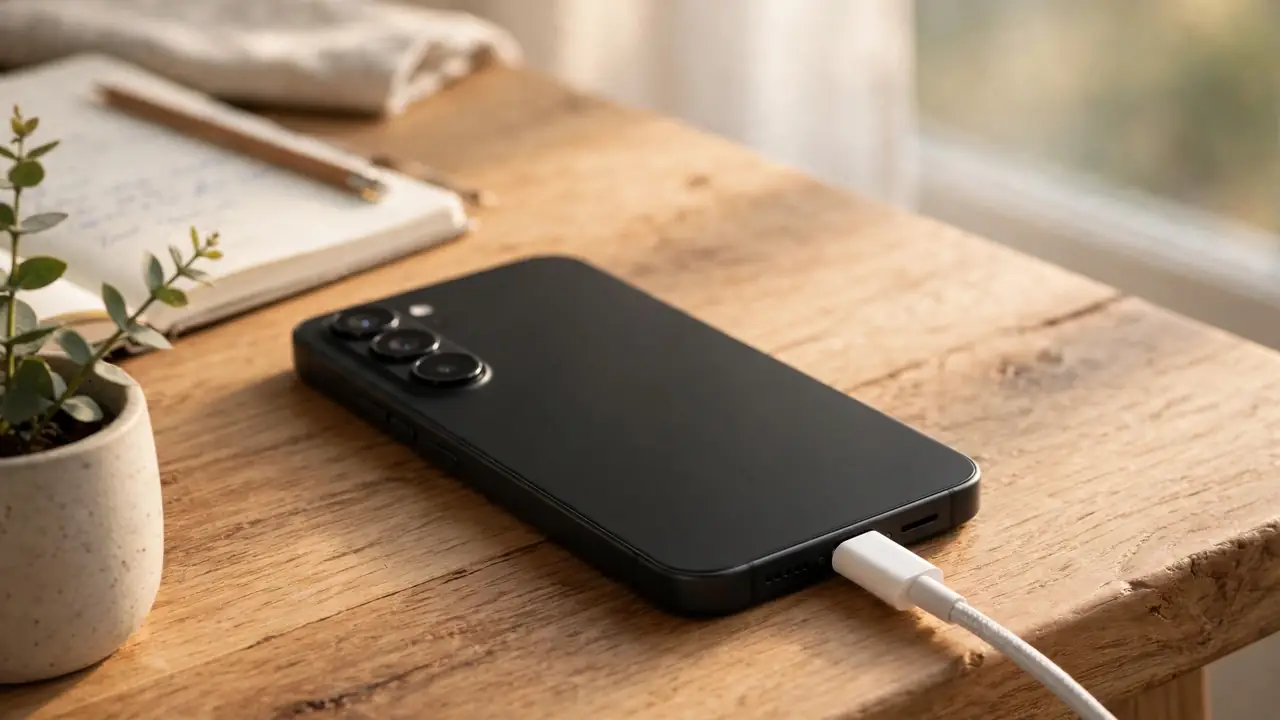
Charging is faster too: 40W wired (up from 20W) and 25W MagSafe wireless. A 30-minute wired charge took me from near-dead to roughly 60% — not the fastest in the industry, but no longer the embarrassment it was. If you want to make any phone battery last longer, the habits in my guide to making your phone battery last longer in 2026 apply here too — especially the 80% charge limit, which iOS 26 supports natively.
Design, colors, and build
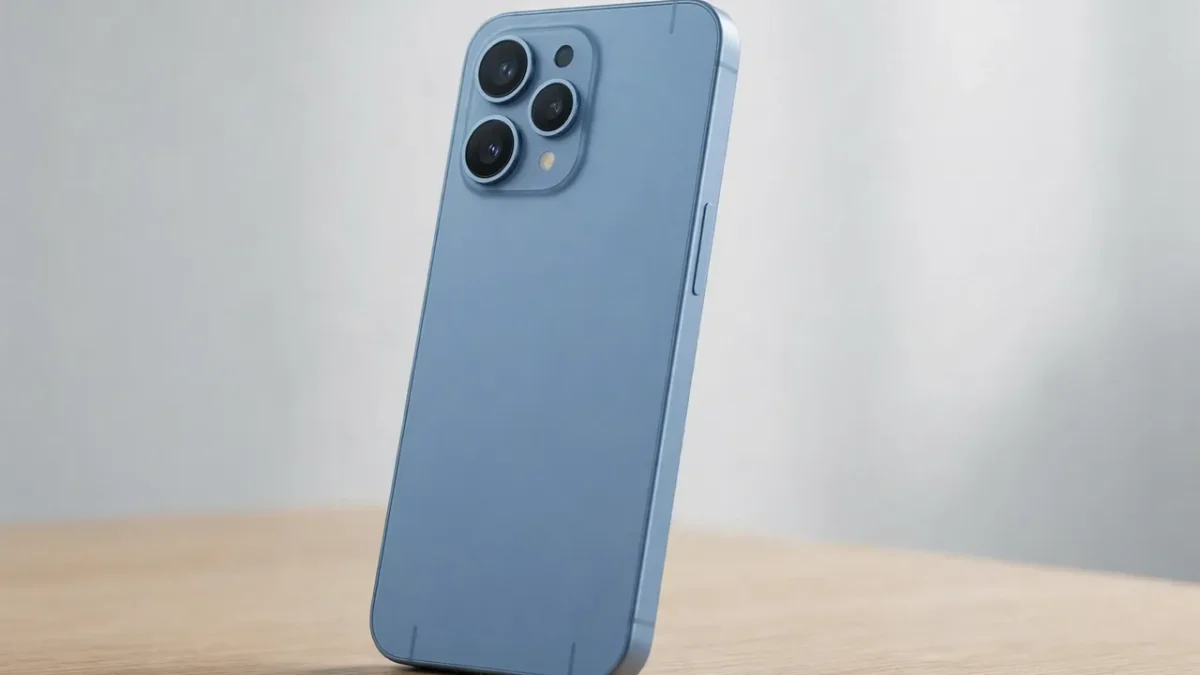
The iPhone 17 keeps the familiar formula: aluminum frame, Ceramic Shield 2 front, color-infused glass back, IP68 water resistance (up to 6 meters for 30 minutes), and 177 grams of weight. At 7.95mm thin, it feels balanced — not feather-light, not a brick. The anti-reflective display coating is subtle but real; fingerprints wipe off easier than on my old phone.
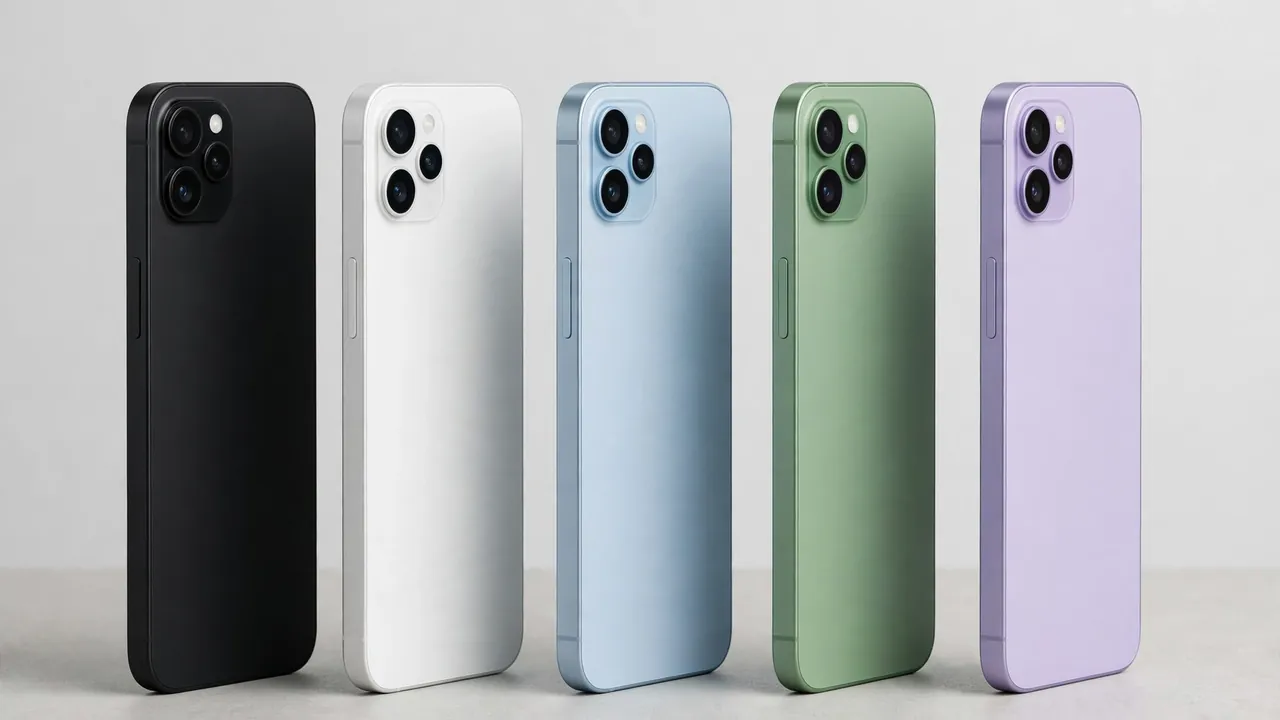
Colors are Black, White, Mist Blue, Sage, and Lavender — and this year’s palette is genuinely pretty. Mist Blue is the standout: a soft, washed blue that looks different in every light. One structural note: like recent iPhones, the US models are dual eSIM with no physical SIM slot. If you travel with local SIM cards, check your region’s configuration before you buy. And back up your photos before switching phones — my complete backup guide walks through the whole migration.
iPhone 17 vs 17e vs 17 Air vs 17 Pro
Apple’s 2026 lineup is the most confusing in years, so here is the honest map. The iPhone 17e ($699, 256GB) runs the same A19 chip but drops to a 6.1-inch 60Hz screen, a single 48MP camera, and 26-hour battery — it is the pick if your budget is strict and you can live without ProMotion. The iPhone 17 Air is the fashion statement: an ultra-thin 5.6mm chassis with a single 48MP camera, priced around $1,299 — gorgeous, but you pay flagship money and lose the ultra-wide. The iPhone 17 Pro / Pro Max ($999/$1,199) add the A19 Pro chip, triple 48MP cameras with 8x optical zoom, 12GB RAM, and titanium-grade build.
My take after comparing them all on paper and in hand: the standard iPhone 17 is the sweet spot of the entire lineup. You get the 120Hz OLED, the A19, and dual 48MP cameras — the three things that matter most — for hundreds less than the Pro. The Pro is for photographers and power users who will genuinely use the telephoto lens. Everyone else is paying for bragging rights. As the comparison at Pandromeda puts it, the 17e is the budget pick and the 17 is worth the extra money for the 120Hz screen alone.
Who should buy it (and who should not)
Buy it if: you are on an iPhone 14 or older (the jump is enormous); you were waiting for 120Hz on the base model (it is here); you want a great camera without Pro prices; or you need a phone that will get iOS updates for the next 6+ years.
Skip it if: you own an iPhone 16 (the upgrade is incremental — same design language, modest gains); you need a telephoto zoom lens (get the Pro); your budget is tight (the 17e gives you the same chip for $230 less); or you are deeply invested in Android’s customization — iOS 26 is better than ever, but it is still iOS.
My final verdict after 30 days
Thirty days in, the iPhone 17 is the easiest iPhone recommendation I have made in years. Apple finally fixed the one thing that made the base model embarrassing — the 60Hz screen — and in doing so made the standard iPhone the best value in the entire lineup. The A19 is overkill in the best way, the dual 48MP cameras punch above their price, the battery comfortably lasts a day, and 256GB of base storage means the entry model is no longer a compromise you resent.
Is it perfect? No. Charging is merely good, not great. There is no telephoto lens. And at $799–$929 depending on your region, it is still real money. But the “Pro gap” has never been smaller, and for most people, this is the iPhone to buy in 2026. My old phone is going in a drawer. The iPhone 17 is staying in my pocket.
Frequently asked questions
What is the iPhone 17 price in 2026?
The iPhone 17 starts at $799 for 256GB in the US (8GB RAM), with some regions listing it higher — for example around Rs 99,900 in India and Rs 397,999 in Pakistan. Prices vary by region and storage.
Does the iPhone 17 have a 120Hz display?
Yes. The iPhone 17 has a 6.3-inch OLED with adaptive 1–120Hz ProMotion and an always-on display — the first time the base iPhone has had either.
iPhone 17 vs iPhone 17 Pro — which should I buy?
The Pro adds a telephoto camera, the A19 Pro chip, 12GB RAM, and premium materials. If you do not need the zoom lens, the standard 17 gives you the same screen and chip for hundreds less.
How is the iPhone 17 battery life?
Apple rates it at 30 hours of video playback. In real-world mixed use, it comfortably lasts a full day with 25–35% left at bedtime.
Should I wait for the iPhone 18?
The standard iPhone 18 is not expected until spring 2027 — only the 18 Pro models launched in September 2026. If you need a phone now, buy the 17.
Does the iPhone 17 have a SIM card slot?
US models are dual eSIM with no physical SIM slot. Check your region’s configuration if you rely on physical SIMs while traveling.
Is the iPhone 17 good for photography?
Yes — dual 48MP cameras (main + ultra-wide) with sensor-shift stabilization deliver excellent daylight and strong low-light shots. Only the lack of a telephoto lens separates it from the Pro.
Published: October 23, 2026 | Updated: October 23, 2026. Specs and prices verified against Apple listings and independent reviews in October 2026. Before switching phones, read my backup guide and my tips on protecting your privacy on a new device.
React to this story