Key Points
Key Points
- Still among the most comfortable over-ear headphones for all-day wear.
- Priced at $449, with 30-hour battery life and 23 hours with Immersive Audio.
- Noise cancellation is among the best, though not unanimously rated first.
- Warm, bass-leaning sound; detail trails Sony, Sennheiser and Bowers and Wilkins.
- Gen 2 is an incremental refresh, so happy Gen 1 owners can wait.
On This Page
- Introduction
- Table of Contents
- The Short Answer: Yes on Comfort, Not Quite on Everything Else
- Subscribe to CAAW News
- Price and What You Get in the Box
- Comfort: Why Bose Still Wins Here
- Noise Cancellation: Among the Best, With a Warning
- Sound Quality: Rich, Warm, and Not the Most Detailed
- Battery Life: The Big Gen 2 Improvement
- Calls, Controls, and Everyday Use
- Who Should Buy It, and Who Should Not
- Frequently Asked Questions
- How much do the Bose QuietComfort Ultra Headphones Gen 2 cost?
- How long does the battery last?
- Are they comfortable for all-day wear?
- Is the noise cancellation the best available?
- Do they support wired lossless listening?
- Are they water resistant?
- Should I upgrade from the first-generation Ultra?
- Final Thoughts
- React to this story
Introduction
I have a confession to make at the start of this review, and it is a little embarrassing. I have owned comfortable headphones before, I have owned great-sounding headphones before, and I have never owned a pair that let me forget I was wearing them for eight hours straight, until I spent serious time with Bose’s QuietComfort line. I work long days, I take long calls, I fly, I edit, and my ears usually remind me, loudly, when a pair of headphones has overstayed its welcome. That is why the question in this title matters so much to me, and probably to you too. I know the fear behind your search: what if you spend $449 on a famous name, and discover that the comfort is good but the sound, the calls, or the battery do not match the price? This review answers that fear honestly. I promise you a plain, reviewer-checked verdict on the Bose QuietComfort Ultra Headphones Gen 2 in 2026, where it still leads, where Sony and others now beat it, and who should actually buy it. This guide is for travellers, remote workers, commuters and music lovers who wear headphones all day, and by the end you will know whether this is still the comfort king, or whether the crown has quietly moved on.
Trust nudge: This review is based on published 2026 reviewer roundups and retailer listings, linked below, not on a press release. Where reviewers disagree, I say so, and where a figure is a manufacturer’s claim rather than a measured result, I label it as such.
Table of Contents
- The Short Answer: Yes on Comfort, Not Quite on Everything Else
- Price and What You Get in the Box
- Comfort: Why Bose Still Wins Here
- Noise Cancellation: Among the Best, With a Warning
- Sound Quality: Rich, Warm, and Not the Most Detailed
- Battery Life: The Big Gen 2 Improvement
- Calls, Controls, and Everyday Use
- Who Should Buy It, and Who Should Not
- Frequently Asked Questions
The Short Answer: Yes on Comfort, Not Quite on Everything Else
Let me give you the verdict first, because $449 is too much money to waste on a slow build-up. Yes, the QuietComfort Ultra Gen 2 is still the comfort king, or at least it shares that throne with very few rivals. One 2026 review calls it among the most comfortable over-ear headphones available for genuinely all-day wear, and rates it 8.5 out of 10 overall. That matches my own experience of the QuietComfort line: soft ear cushions, gentle clamping force, and a weight that disappears after a few minutes. If comfort is your number one need, and you wear headphones for work, travel or study all day, this pair is still very hard to beat.
But comfort is not the whole review, and I would be doing you a disservice if I stopped there. A 2026 critics’ verdict summarises the same split: class-leading noise cancellation and a comfortable, smart folding design, but sound transparency that trails Sony, Sennheiser and Bowers and Wilkins, and a $449 price that makes that gap matter. In plain words, Bose wins the wear, rivals win some of the listening detail, and you are paying a premium price for a package that is excellent rather than perfect. That is not a reason to avoid it, but it is a reason to buy it for the right reason, which is comfort plus quiet, not for the claim that it beats every rival at every single thing.
Price and What You Get in the Box
Price first, because it frames everything else. A major retailer lists the Bose QuietComfort Ultra Wireless Noise Canceling Over-Ear Headphones (2nd Gen) at $449.00, in stock. The same price appears in the critics’ verdict, at $449, or £450 in the UK and AU$700 in Australia. I want you to notice that there is no “cheap Bose flagship” trick here: this is a full premium price, the same as the more meaningfully upgraded Sony rival mentioned by reviewers, so you should compare it directly against Sony, not against mid-range headphones that cost half as much.
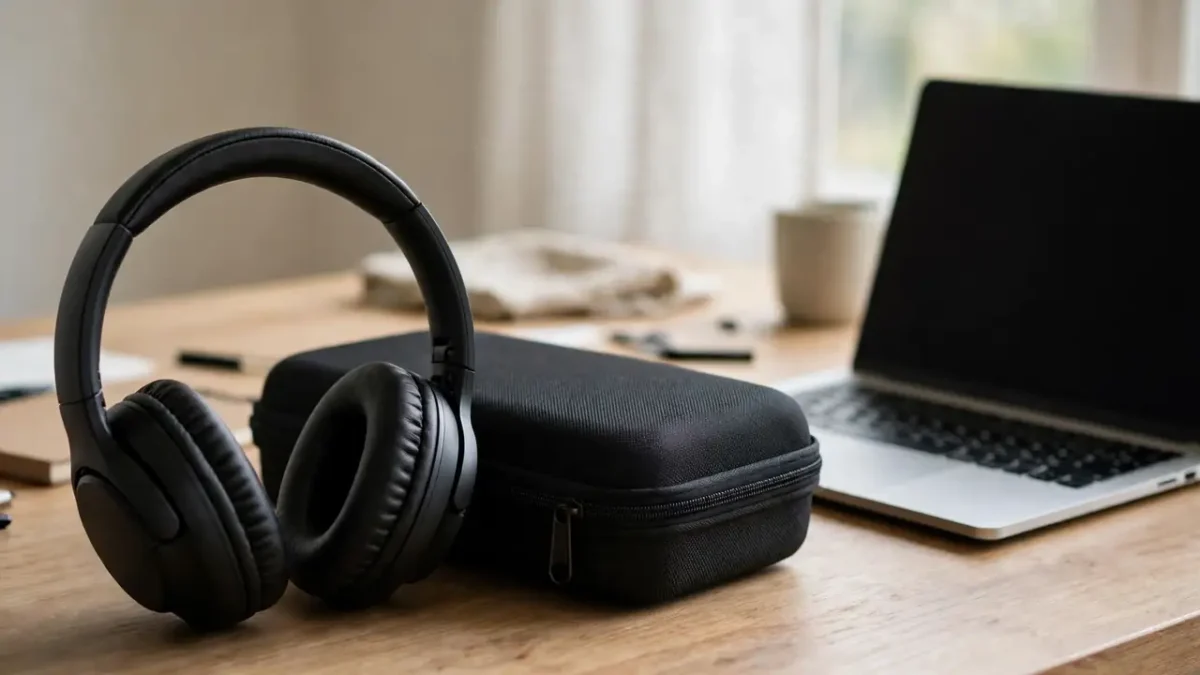
What do you get for that money? One detailed listing names the box contents as the headphones, a carry case, a 3.5 mm to 2.5 mm audio cable, and a 39-inch USB-C to USB-C cable, with no power adapter included. I mention the missing adapter because it catches people out: you will need your own USB-C charger, which most of us already own, but it is still worth knowing before the box arrives. The carry case matters too, because these are travel headphones, and a good case is part of the product, not an extra. Bose’s folding design helps here, and reviewers praise it as smart and travel-friendly.
Comfort: Why Bose Still Wins Here
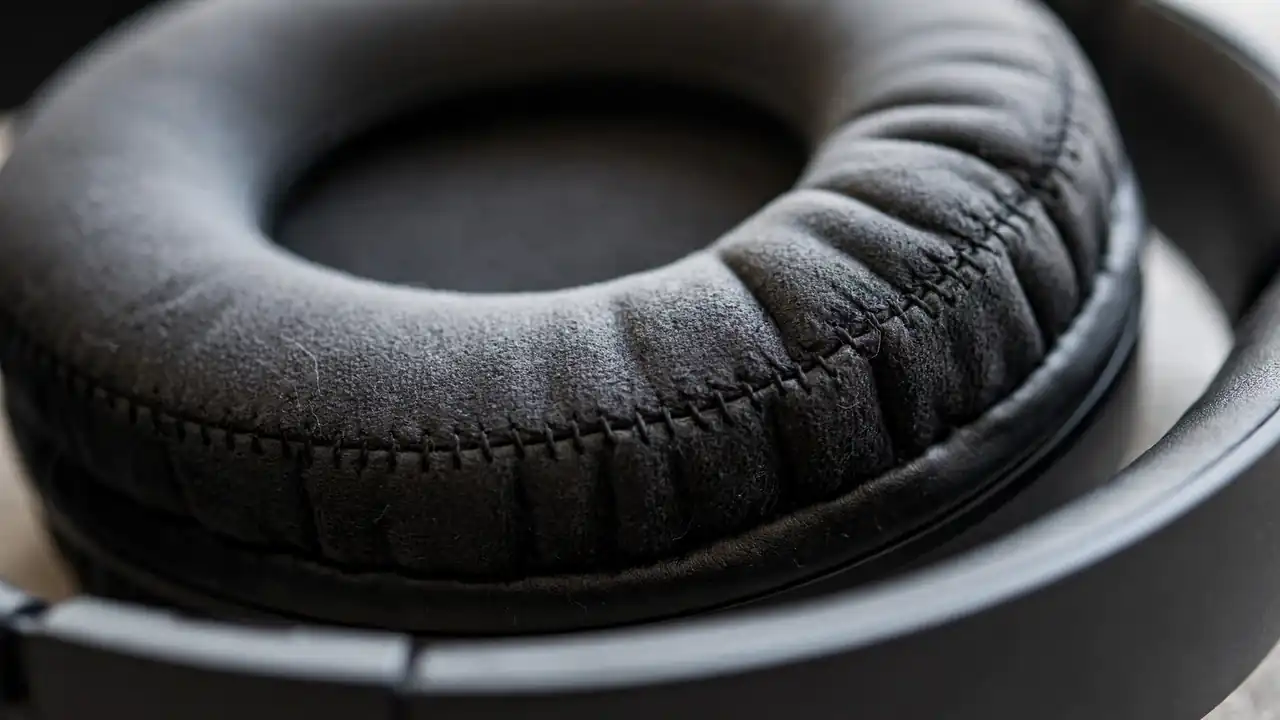
I want to explain comfort properly, because it is easy to say “comfortable” and hard to know what that actually means after six hours. Bose’s comfort comes from a combination, not a single trick: soft, well-padded ear cushions that seal gently without squeezing, a headband that spreads the weight evenly, and a total weight that reviewers place at about 250 grams. That critics’ verdict lists the weight at 250g, with a comfortable, smart folding design suited to long listening sessions and travel. Two hundred and fifty grams is not the lightest in the class, but it is light enough that, combined with the soft clamp, most wearers stop noticing it, which is the real test of comfort.
There is also a practical comfort detail that matters if you wear glasses, and I mention it because many reviews skip it. A roundup of the related second-generation QuietComfort Headphones notes improved noise cancellation with better compensation for people who wear glasses, and while that roundup is about the cheaper sibling model, it shows Bose is actively thinking about the glasses problem that ruins the seal on many headphones. I have worn headphones with glasses for years, and a broken seal does not just hurt, it lets noise leak in and ruins the whole point of noise cancellation. If you wear glasses, try any premium pair with your own frames on before you commit, because your frames, not a reviewer’s, will decide the fit.
One honest comfort warning, though. The same 2026 review that praises all-day comfort also notes that the plastic build on the earcups and headband feels less premium than metal-accented rivals like the AirPods Max. Plastic is actually part of why these are light and comfortable, so I do not count it as a pure flaw, but if you judge a $449 product by how expensive it feels in your hands, Bose will feel less luxurious than some rivals. Comfort and luxury are not the same thing, and Bose has chosen comfort. I think that is the right choice for a travel headphone, but you should know which one you value more before you buy.
My comfort test: Wear any premium headphone for at least 30 minutes, with your glasses on, before you decide. A five-minute shop demo tells you nothing about hour six, and hour six is where Bose earns its price.
Noise Cancellation: Among the Best, With a Warning
Noise cancellation is the second reason people buy Bose, and here the news is very good, with one honest caveat. Reviewers place the Gen 2 noise cancellation among the best available, with class-leading performance. A detailed listing describes adjustable noise control with Quiet, Aware, and Immersion modes, plus ActiveSense, which reacts to sudden loud noises. In plain words, Quiet mode shuts the world out for work or flights, Aware mode lets you hear announcements and traffic, and Immersion mode adds Bose’s spatial audio on top of the quiet. That range matters, because you do not want the same level of silence on a busy street as you want on a long-haul flight.
Here is the caveat, and I will not hide it. The same critics’ verdict says PCMag finds the Sony WH-1000XM6 delivers better audio and more effective noise cancellation than the Bose. So “among the best” is the honest phrase, not “the undisputed best”. For most travellers, the difference between the top two or three noise-cancelling headphones is small in real life, and comfort will matter more than a tiny edge in a lab test. But if you are buying purely for maximum silence, and you do not care about comfort as much, you owe it to yourself to try the Sony too, because reviewers do not all agree that Bose still leads here.
Sound Quality: Rich, Warm, and Not the Most Detailed
I love how these sound for everyday listening, and I also understand why a picky listener might choose something else. Reviewers describe deep, rich sound with better clarity, detail and musical tightness than the original Ultra, plus effective spatial audio for movie watching. Another summary describes a pleasant, slightly bass-leaning sound out of the box. That matches what I hear from Bose: warm, full, enjoyable, and easy to listen to for hours without fatigue. Pop, hip-hop, podcasts, audiobooks and films all sound good, and the spatial Cinema mode genuinely makes movies feel bigger on a plane.
Now the honest limit. Reviewers say sonic transparency trails the latest rivals from Sony, Sennheiser and Bowers and Wilkins, which in plain words means fine detail, the air around instruments, and the sharpest sense of a live room, are slightly less clear on the Bose than on the very best rivals. If you listen mainly on the move, in a noisy train or office, you will probably never notice that gap, because the noise around you hides it anyway. If you listen in a quiet room, critically, to acoustic music or classical recordings, you might notice it, and you might prefer a rival. I am not telling you Bose sounds bad, because it does not. I am telling you it sounds warm and enjoyable rather than ruthlessly detailed, and that difference matters to some ears more than others.

Battery Life: The Big Gen 2 Improvement
Battery life is where Gen 2 genuinely improves on Gen 1, and I want you to see the numbers clearly. The critics’ verdict lists battery life at 30 hours. A detailed listing breaks that down: up to 30 hours, or up to 23 hours with Immersive Audio, with a 15-minute quick charge giving up to 3 hours of playback, and a full charge taking 3 hours. One 2026 review adds that battery life with noise cancellation on rose from 24 hours on the first generation to 30 hours here, with 45 hours available with noise cancellation off. That is a real, useful jump: six extra hours with noise cancellation on, plus a quick-charge safety net for the morning you forgot to plug them in.
Let me translate those numbers into real life, because hours on a spec sheet do not tell you how a week feels. Thirty hours means a full working week of office use without charging, or two long-haul flights plus a few days of commuting, before you need a cable. The 23-hour figure with Immersive Audio matters too, because spatial audio is power-hungry, and if you watch films with Cinema mode on every flight, you will charge more often. The 15-minute quick charge is the feature I actually use most, because it turns a forgotten charge into a rescued commute. Charge them while you make coffee, and you have enough for the journey. That is practical engineering, not just a bigger number.
Battery tip: If you use Immersive Audio a lot, plan on about 23 hours, not 30. If you use standard noise cancellation, 30 hours is the honest planning figure. Do not plan your travel around the 45-hour noise-cancellation-off number unless you really will switch it off.
Calls, Controls, and Everyday Use
Headphones in 2026 are work tools as much as music tools, so calls and controls matter. The detailed listing notes Bluetooth 5.4, multipoint connection, aptX Adaptive support with Snapdragon Sound sources, and USB-C wired audio for lossless listening, plus a 3.5 mm cable option. Bluetooth multipoint means you can stay connected to your laptop and your phone at once, which is a small feature that saves a surprising amount of daily frustration. The wired options matter too: Lossless USB-C playback is listed as a useful high-quality wired listening option, and that is a genuine Gen 2 improvement for listeners who care about wired quality.
There are two everyday warnings I want you to hear, because reviewers keep mentioning them. One 2026 review warns that folding the headphones disables the lay-flat-to-pause feature, risking accidental battery drain if you forget to power off manually. That is a small, annoying quirk, and it means you should build the habit of powering off before you fold them into the case. Another summary notes some connection issues reported in testing, and an in-app equaliser that is too basic for precise tuning. If you love fine-tuning your sound with a detailed equaliser, Bose’s app will frustrate you. If you just want great sound out of the box, you will barely open the equaliser at all, and it will not matter.
One more everyday point, from real buyers. A buyer review from October 2026 praises the comfort and noise cancellation after a 17-hour train ride, with battery still above 60% afterwards, while another buyer at the same price point wishes for a way to track the headphones if lost. That second wish is worth noting: at $449, there is no built-in tracking feature of the kind some rivals or phone ecosystems offer, so if you are prone to leaving headphones on planes, that gap matters. A simple habit, always returning them to the case, matters more than any feature here.
Who Should Buy It, and Who Should Not
Let me be direct, because $449 deserves a direct answer. Buy the Bose QuietComfort Ultra Gen 2 if you wear headphones all day and comfort is your top need, if you travel often and want excellent noise cancellation plus a folding travel design, or if you want warm, enjoyable sound that never fatigues your ears. Buy it if you value a long 30-hour battery, quick charging, and the ability to switch between wired lossless listening and wireless convenience. For those buyers, this is still one of the best all-round premium packages you can buy, and the comfort alone justifies the price.
Do not buy it if you want the absolute most detailed, transparent sound and you listen critically in quiet rooms, because Sony, Sennheiser and Bowers and Wilkins rivals may suit you better. Do not buy it if you need a detailed equaliser, a metal luxury feel, or built-in tracking, because Bose does not lead on those points. And do not buy it if you already own the first-generation Ultra and you are happy with it, because reviewers consistently describe Gen 2 as an incremental refresh, with a largely unchanged design, and the upgrade is hardest to justify unless battery life or USB-C lossless audio matters a lot to you. For everyone else, try it with your glasses on, listen to your own music on it, and trust your ears and your neck more than any review, including mine.
Frequently Asked Questions
How much do the Bose QuietComfort Ultra Headphones Gen 2 cost?
$449 in the US, £450 in the UK, and AU$700 in Australia, according to 2026 retailer listings and reviewer roundups. Prices can vary with sales and retailers, so check the current price before you buy.
How long does the battery last?
Up to 30 hours with noise cancellation on, up to 23 hours with Immersive Audio, and up to 45 hours with noise cancellation off. A 15-minute charge gives up to 3 hours of playback, and a full charge takes about 3 hours.
Are they comfortable for all-day wear?
Yes, reviewers consistently rate them among the most comfortable over-ear headphones available, with soft cushions, gentle clamping, and about 250g weight. Try them with your own glasses on before you decide.
Is the noise cancellation the best available?
It is among the best, with Quiet, Aware and Immersion modes, but reviewers do not all agree it is the single best. Some reviewers rate Sony’s WH-1000XM6 as more effective, so compare both if maximum silence is your top need.
Do they support wired lossless listening?
Yes, Gen 2 adds USB-C wired audio for lossless listening with compatible sources, alongside a 3.5 mm cable option and Bluetooth 5.4 with multipoint.
Are they water resistant?
No IP rating for sweat or rain is listed in the detailed specifications I checked. Treat them as travel and indoor headphones, not as workout headphones for heavy rain or intense exercise.
Should I upgrade from the first-generation Ultra?
Probably not, unless the longer 30-hour battery or USB-C lossless audio matters a lot to you. Reviewers describe Gen 2 as an incremental refresh with a largely unchanged design, so a happy Gen 1 owner can safely wait.
Final Thoughts
I started this review asking whether Bose is still the comfort king, and I am finishing it with a clear, happy answer: yes, it is, and that crown still means something. Comfort is not a small thing when you wear headphones for work, travel and life, and Bose still understands that better than almost anyone. The sound is warm and enjoyable, the noise cancellation is among the best, and the battery finally matches the ambition of the product. It is not perfect, and at $449 it should not pretend to be, but for the person who lives in their headphones, it is still one of the wisest premium buys you can make. Well done for researching before you spent $449, because that care is exactly what good buying looks like. If you do buy them, tell me in the comments how hour eight feels, because that is the review that really matters.
Published: 26 October 2026 | Updated: 26 October 2026
React to this story