Key Points
Key Points
- A Mediterranean diet is a pattern, not a strict rule book: plants first, olive oil as the main fat, fish often, red meat rarely.
- Build a plate as half vegetables and fruit, a quarter whole grains, a quarter protein, finished with olive oil, lemon and herbs.
- Start with a small pantry shop — olive oil, lentils, chickpeas, tomatoes, grains and herbs — then add fresh food weekly.
- A 7-day sketch with repeats and leftovers beats a perfect week you cannot keep.
- Change one meal at a time, watch oil portions, and do not let one fast-food meal break the pattern.
On This Page
- Subscribe to CAAW News
- What You Will Find in This Guide
- What a Mediterranean Diet Is, and What It Is Not
- The Simple Plate: How to Build a Meal
- Your First Shopping List and a 7-Day Starter Sketch
- Budget Swaps That Keep the Flavour
- Common Beginner Mistakes
- What the Research Says, in Plain Words
- Questions Beginners Always Ask
- Can I follow a Mediterranean diet if I do not eat fish?
- Do I have to give up bread, rice, or pasta?
- Is olive oil the only fat I can use?
- Can I drink wine on a Mediterranean diet?
- How fast will I see results?
- Is this diet expensive?
- Can vegetarians follow it?
- What if I eat a fast-food meal one day?
- Final Thoughts
- React to this story
I used to think a Mediterranean diet meant eating like someone on holiday in Greece. I pictured long lunches, white houses, and food I could not afford. I also worried I would get it wrong. Would one wrong meal ruin the whole thing? Would I need special food from a special shop? That fear kept me stuck for a long time.
I am not a doctor, and I am not here to sell you a meal plan. I am a home cook who learned this way of eating slowly, one simple plate at a time. I have burned the fish. I have bought the wrong bread. I have also learned what makes this pattern easy to keep. In this guide, I will show you exactly what a Mediterranean diet is, what it is not, and how to start this week with normal food from a normal shop.
This guide is for you if you want simple, filling food, if you are tired of strict diets, and if you want a plan you can still follow on a busy day. By the end, you will know how to build a plate, what to buy first, what to skip, and which beginner mistakes to avoid. Let us start with the simple truth. This is not a race. It is a way of cooking and eating that you can learn step by step.
I will be honest where the facts are messy. I will show you my sources. Where two good sources give different numbers, I will say so plainly instead of picking the one that sounds best.
What You Will Find in This Guide
- What a Mediterranean Diet Is, and What It Is Not
- The Simple Plate: How to Build a Meal
- Your First Shopping List and a 7-Day Starter Sketch
- Budget Swaps That Keep the Flavour
- Common Beginner Mistakes
- What the Research Says, in Plain Words
- Questions Beginners Always Ask
What a Mediterranean Diet Is, and What It Is Not
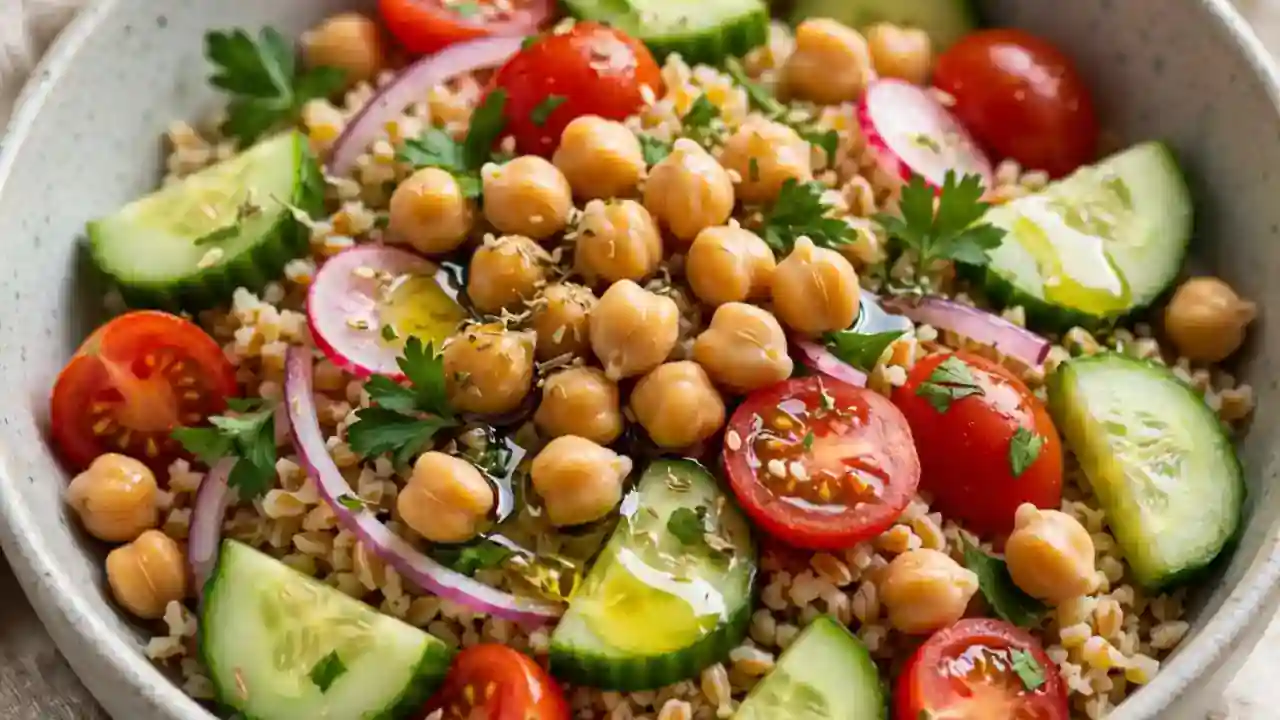
I learned this first: the Mediterranean diet is a pattern, not a strict rule book. It is based on how people around the Mediterranean Sea have long eaten. The pattern is rich in vegetables, fruit, whole grains, legumes, nuts, and olive oil as a main fat. Fish and seafood appear often. Dairy, poultry, and eggs appear in smaller amounts. Red meat and processed meat appear rarely.
That last point matters. I once thought this diet banned meat. It does not. It just moves meat away from the centre of the plate. Vegetables, beans, and grains take the main spot. Meat becomes a small guest, not the host. That one shift made the whole pattern feel possible for me.
It is also more than food on a plate. UNESCO describes the Mediterranean diet as skills, knowledge, rituals, and traditions around growing, cooking, and sharing food. Eating together is part of it. I love that part. It reminds me that a good meal is also about people, pace, and care.
Here is what it is not. It is not a low-carb diet. It is not a low-fat diet. It is not a fast weight-loss plan. It is not only for people who live near the sea. You do not need to buy imported food. You need a pattern you can repeat with food you can find near you.
I also want to be clear about one date. UNESCO’s list page records the Mediterranean diet as inscribed in 2013. Other published sources date the recognition to 2010. You may see both years online. I am noting both here because I do not want to hide a difference I found. The key point stays the same: UNESCO recognises this way of eating as living cultural heritage, not just as a menu.
The Simple Plate: How to Build a Meal
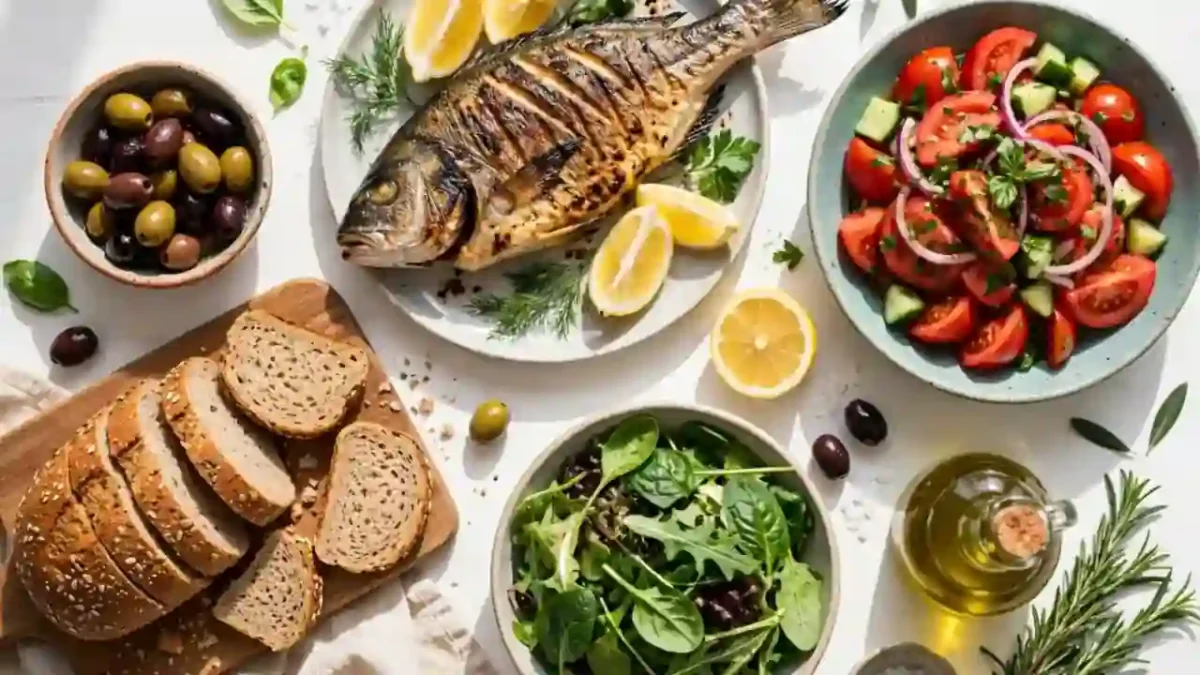
I keep my plate simple. I start with vegetables. I add a grain or a bean. I add a protein. I finish with olive oil, lemon, and herbs. That is it. When I follow that order, I do not need to count every bite.
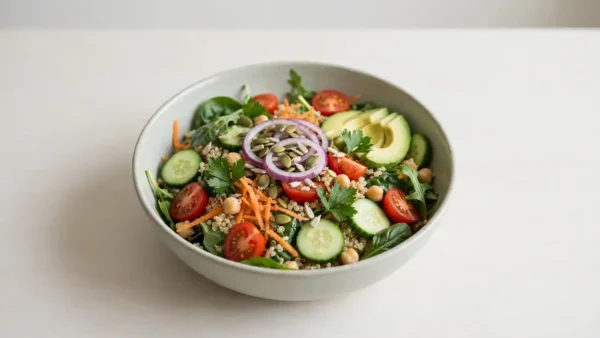
Think of your plate in three parts. Half the plate is vegetables and fruit. A quarter is whole grains or starchy food. A quarter is protein, such as fish, beans, eggs, or chicken. A spoon of olive oil and a handful of herbs bring it together. Salt stays low because herbs, garlic, lemon, and onion do the flavour work.
Vegetables come first. I use what is fresh and cheap that week. Tomatoes, cucumbers, onions, peppers, carrots, spinach, and cabbage all work. Cooked or raw both count. I roast a big tray when I have time. I keep a raw salad for days when I do not.
Legumes are my quiet heroes. Lentils, chickpeas, and beans are cheap, filling, and easy to store. I cook a large pot of lentils on Sunday. I use it in soup, in a salad, and on toast across the week. If you buy tinned beans, rinse them well.
Whole grains keep me full. I use wholegrain bread, brown rice, oats, barley, and bulgur wheat. White bread and white rice are not banned. I just choose whole grains more often because they keep me full for longer.
Olive oil is my main fat. I cook with it. I dress salads with it. I use it in place of butter most days. A good bottle lasts a while because I use spoons, not floods. If extra-virgin olive oil is too dear, I use a plain olive oil for cooking and save the better bottle for salads.
Fish is a regular guest, not a daily demand. A guide from Texas A&M University lists fish and seafood at two servings or more each week, legumes at two servings or more each week, and vegetables at two servings or more at every main meal. That shape helped me a lot. I aim for fish twice a week. Sardines, mackerel, and salmon are good choices when I can find them. Tinned fish counts too, and it saves money.
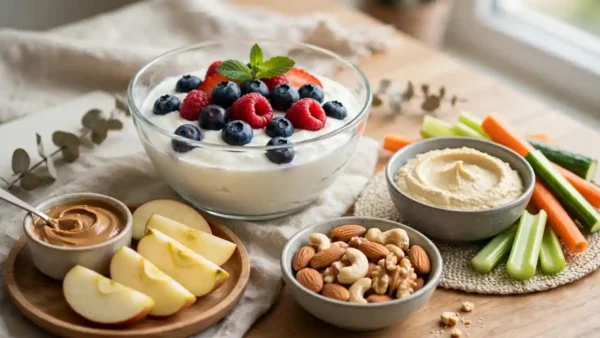
Nuts, seeds, and dairy stay small. I eat a small handful of nuts most days. I eat yoghurt or a little cheese. I do not pile cheese on everything. A little goes a long way when the rest of the plate is strong.
My one-plate rule: If half my plate is plants, I am already close. I do not chase perfection. I chase a plate I can make again tomorrow.
Your First Shopping List and a 7-Day Starter Sketch
I made my first shop too big. I bought ten new things and used three. Now I buy less and cook more. Start with what you already use. Add only a few new items each week.
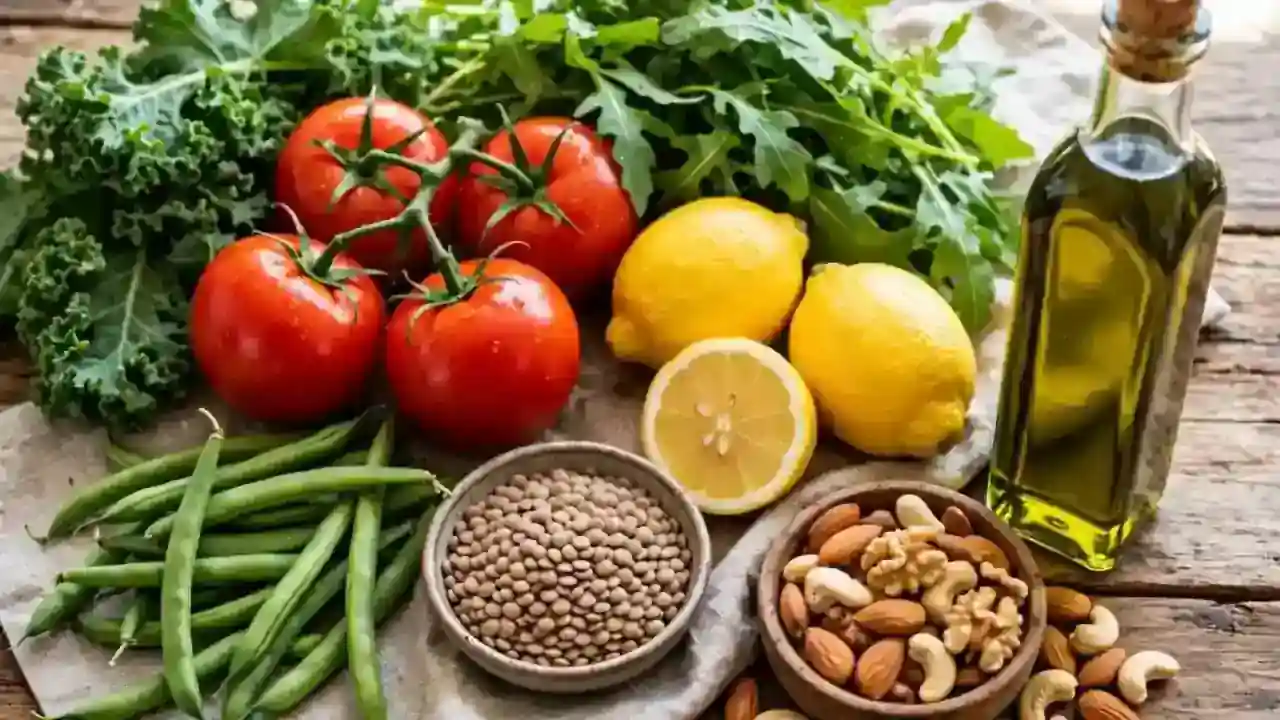
Pantry first. Olive oil, tinned tomatoes, lentils, chickpeas, beans, oats, brown rice or bulgur, wholegrain bread, garlic, onions, dried herbs, and lemons. These foods last. They save you on busy nights.
Fresh each week. Seasonal vegetables, salad leaves, fruit, eggs, yoghurt, and fish for two meals. Buy herbs fresh if you can. Parsley and mint change a plain plate fast.
Flavour without cost. Cumin, paprika, oregano, black pepper, chilli flakes, and vinegar. These small jars turn the same beans into three different meals.
Here is a simple 7-day sketch. It is a sketch, not a prescription. Swap any meal for food you like and can afford.
- Monday: Lentil soup with wholegrain bread, tomato salad, and olive oil.
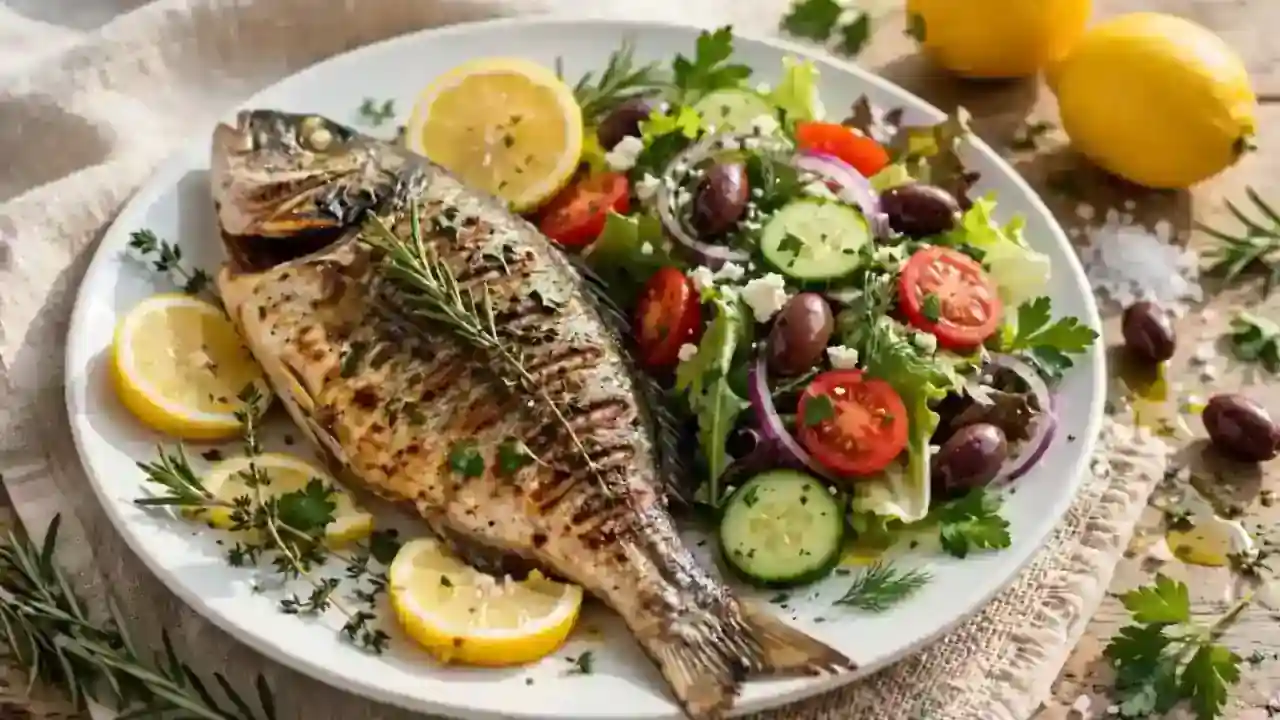
- Tuesday: Grilled or tinned fish, roasted vegetables, and brown rice.
- Wednesday: Chickpea salad with cucumber, tomato, onion, lemon, and herbs.
- Thursday: Vegetable and bean stew with bulgur wheat.
- Friday: Fish or eggs, green salad, wholegrain bread, and fruit.
- Saturday: Pasta with tomato, garlic, spinach, beans, and olive oil.
- Sunday: Roast chicken or a big vegetable tray bake, shared with family if you can.
I repeat meals. I cook once and eat twice. Leftovers are not a failure. They are the plan. A pot of beans on Monday becomes lunch on Tuesday. That is how real people keep this pattern going.
Budget Swaps That Keep the Flavour
I worried this diet was for rich people. It is not, if you shop with sense. The cheapest foods in this pattern are also the core foods: beans, lentils, oats, cabbage, carrots, onions, and seasonal fruit. Meat and fish cost more, so I use less of them and more of the cheap core.
Here are swaps I use every week. Tinned fish replaces fresh fish on busy days. Dried lentils replace half the meat in a stew. Frozen vegetables replace fresh ones when prices jump. Plain yoghurt replaces cream in a sauce. Herbs and lemon replace extra salt and sugary sauces.
I also buy in season. A tomato in season tastes better and costs less. A cabbage lasts in the fridge for days. A bag of carrots feeds many meals. I do not buy a fancy superfood to feel healthy. I buy more of the plain food I will actually eat.
Watch the trap of “Mediterranean” labels. A jar can carry a sunny label and still be full of salt, sugar, or cheap oil. I read the label. I check the first ingredients. If olive oil is not near the top, I put it back. A simple home dressing beats a fancy bottle most days: olive oil, lemon juice, garlic, and a pinch of salt.
My budget rule: Spend on olive oil, beans, and fresh vegetables. Save on meat, sauces, and snacks. Flavour comes from herbs, not from price.
Common Beginner Mistakes
I made most of these mistakes myself. I list them so you can skip the slow part.
Mistake one: I tried to change everything at once. I threw out all my food and bought a new shop. I got tired by day three. Now I change one meal a day. Breakfast first, then lunch, then dinner. Small wins last longer than big restarts.
Mistake two: I drowned good food in oil. Olive oil is a healthy fat, but it still has energy. I now measure with a spoon for a while until my eye learns the amount. Two spoonfuls can dress a salad for two people.
Mistake three: I feared bread and pasta. I cut all grains and felt hungry and grumpy. Whole grains are part of this pattern. A small bowl of pasta with vegetables and beans is a Mediterranean meal. A plate of pasta alone with cheese is not the same thing.
Mistake four: I ate fish once and called it done. One good meal does not make a pattern. The pattern is what you repeat. I put fish on my weekly list, not on my wish list.
Mistake five: I ate alone, fast, and stressed. I missed the sharing part. Now I sit down when I can. I eat slowly. I talk. Even a ten-minute calm meal feels different from food eaten over a sink.
Mistake six: I copied a photo, not a plate. A photo may show a feast. A real week shows soup, beans, and leftovers. Both can be Mediterranean. Do not judge your Tuesday soup against someone else’s Sunday feast.
What the Research Says, in Plain Words
I am not going to promise you a cure. No food pattern can do that. But I can share what a large trial found, in plain words.
The PREDIMED trial studied 7,447 men and women at high cardiovascular risk. People were placed in three groups: a Mediterranean diet with extra-virgin olive oil, a Mediterranean diet with nuts, or advice on a low-fat diet. There was no energy restriction and no special exercise plan. Over a median time of 4.8 years, the trial recorded 288 cardiovascular events, a combined measure of heart attack, stroke, or cardiovascular death.
The published summary reports hazard ratios of 0.70 for both Mediterranean diet groups compared with the control group. In simple terms, the rate of those events was lower in the Mediterranean diet groups than in the low-fat advice group. I must also be honest about the history here. The trial report was corrected and republished after problems with how some people were assigned to groups. A later account of the corrected analysis reports adjusted hazard ratios of 0.69 and 0.72, close to the earlier 0.70 figures but not identical. I am giving you both sets so you can see the correction, not just the headline.
Other research points the same way. The European Society of Cardiology reported research presented in April 2025 in which a Mediterranean diet was described as a plant-based diet with established health and environmental benefits, rich in seasonal fruit and vegetables, legumes, whole grains, and nuts, with olive oil as the main dietary fat. That matches the plate I described above. It is not a new fashion. It is an old pattern, studied again and again.
Still, research is about groups of people, not about you alone. Your health, medicines, allergies, and culture matter. This guide is general information. It is not personal medical advice. If you have heart disease, diabetes, kidney disease, food allergies, or you take regular medicine, talk to your doctor or a dietitian before you make a big change. That is not a small print trick. It is the safe way to start.
Questions Beginners Always Ask
Can I follow a Mediterranean diet if I do not eat fish?
Yes, you can follow the pattern with beans, lentils, eggs, dairy, and nuts as proteins. Fish is common in the pattern, but the pattern is wider than one food. Talk to a dietitian if you need help getting enough protein and healthy fats without fish.
Do I have to give up bread, rice, or pasta?
No. Whole grains are part of this pattern. Choose wholegrain versions more often. Keep portions modest. Pair grains with vegetables and beans so the meal stays balanced.
Is olive oil the only fat I can use?
Olive oil is the main fat in this pattern, but you do not need to fear every other fat. The point is to use olive oil most often, in place of butter and other animal fats, for cooking and dressing. Keep fried and processed fats rare.
Can I drink wine on a Mediterranean diet?
Some traditional descriptions include moderate wine with meals. I do not recommend starting to drink for health. If you do not drink, do not start. If you drink, keep it moderate and talk to your doctor if you have any health concern.
How fast will I see results?
I cannot promise a date. A pattern works over months, not days. I noticed better energy and fuller meals first. Weight, blood pressure, and blood sugar change at different speeds for different people. Judge the pattern by whether you can keep it, not by one week.
Is this diet expensive?
It can be, if you buy imported food and a lot of fish and meat. It can also be cheap, if your core foods are beans, lentils, seasonal vegetables, oats, and eggs. My cheapest weeks are often my most Mediterranean weeks.
Can vegetarians follow it?
Yes. The pattern is already rich in plants. Vegetarians can lean on legumes, whole grains, nuts, seeds, eggs, and dairy where they eat them. Vegans can adapt it too, with care around protein, vitamin B12, and other nutrients, ideally with dietitian advice.
What if I eat a fast-food meal one day?
Nothing breaks. One meal does not erase a pattern. I have done it many times. I just return to my normal plate at the next meal. Guilt never cooked a good dinner.
Final Thoughts
I started this way of eating because I was tired of diets that made me feel guilty and hungry. I stayed with it because the food tastes good, fills me up, and fits my real life. I still eat beans on busy nights. I still repeat meals. I still sit down when I can and share food with people I love.
You do not need a perfect first week. You need a first plate. Make half of it vegetables. Add beans or fish. Add a whole grain. Drizzle olive oil. Squeeze lemon. That is a start, and a start is enough.
Congratulations for reading this far. That already shows you care about how you eat. Now I want to hear from you. What is your first swap? What is your cheapest Mediterranean meal? Tell me in the comments. Your idea may help the next beginner more than my guide can.
This article is general information only. It is not personal medical advice. Talk to your doctor or a qualified dietitian before making a major diet change, especially if you have a health condition or take regular medicine.
Published: 26 October 2026 | Updated: 26 October 2026
React to this story