Key Points
Key Points
- Pro AMOLED starts at $1,199 for 47mm and $1,299 for 51mm.
- AMOLED brightness is about 2,000 nits; MicroLED at 4,500 nits is the brightest Pro.
- Satellite and LTE messaging need a mandatory inReach plan from $7.99 per month.
- Hardware and software are virtually identical to the regular Fenix 8 apart from connectivity.
- Battery is shorter than the regular Fenix 8, and far shorter on MicroLED.
On This Page
- Introduction
- Table of Contents
- The Short Answer: Brilliant, But Only for a Specific Buyer
- Subscribe to CAAW News
- Price: What $1,199 Actually Buys You
- The Bright AMOLED Screen: How Bright Is Bright?
- What Is Actually New Versus the Regular Fenix 8
- Satellite and LTE Messaging: The Feature That Changes the Maths
- Battery Life: The Trade-Off You Must Accept
- Training, Maps, and Everyday Use
- Who Should Buy It, and Who Should Not
- Frequently Asked Questions
- How much does the Garmin Fenix 8 Pro cost?
- How bright is the Fenix 8 Pro screen?
- Does the Fenix 8 Pro need a subscription?
- How long does the battery last?
- Can the Fenix 8 Pro replace a handheld inReach device?
- Does it work with Android and iPhone?
- What sizes does the Fenix 8 Pro come in?
- Final Thoughts
- React to this story
Introduction
I will be honest with you from the first line: I did not need a $1,199 watch. I already had a good watch, I already tracked my runs, and I already knew how to read a map. What I did not have was a watch that could send a message from a mountain with no phone signal, and once I understood what that actually means, I could not un-understand it. I train outdoors, I hike in places where my phone is a beautiful, useless rectangle, and I know the quiet worry that sits behind your search right now. What if you spend over a thousand dollars on the brightest, toughest Garmin ever, and discover that the headline features need a subscription, the battery drops when you use them, or the regular Fenix 8 would have done the same job for less? This review answers that worry head-on. I promise you a plain, reviewer-checked verdict on the Garmin Fenix 8 Pro in 2026, what is genuinely new, what the bright screen really costs you, and who should actually pay the Pro premium. This guide is for trail runners, hikers, ultra athletes and outdoor workers who train hard and travel far, and by the end you will know whether the Pro is worth it for you, or whether the regular Fenix 8 is the smarter buy.
Trust nudge: This review is based on published 2026 reviewer tests and Garmin specification summaries, linked below, not on Garmin’s marketing alone. Where reviewers disagree on brightness, battery or coverage, I say so, and where a feature needs a paid subscription, I label it clearly.
Table of Contents
- The Short Answer: Brilliant, But Only for a Specific Buyer
- Price: What $1,199 Actually Buys You
- The Bright AMOLED Screen: How Bright Is Bright?
- What Is Actually New Versus the Regular Fenix 8
- Satellite and LTE Messaging: The Feature That Changes the Maths
- Battery Life: The Trade-Off You Must Accept
- Training, Maps, and Everyday Use
- Who Should Buy It, and Who Should Not
- Frequently Asked Questions
The Short Answer: Brilliant, But Only for a Specific Buyer
Let me give you the verdict first, because $1,199 is serious money. The Fenix 8 Pro is the most capable Fenix Garmin has made, and its bright screen and wrist-based satellite messaging are genuinely new, not just marketing words. One October 2026 reviewer calls it the most capable Fenix, best in LTE areas, while warning that it is not a handheld inReach replacement. That sentence captures the whole review in miniature: this is a superb outdoor watch, it is best where mobile coverage exists, and it is not a substitute for a dedicated satellite device if your life depends on backcountry coverage. If you understand that limit, and you still want the Pro, you will love it. If you ignore that limit, you will be disappointed, and the disappointment will be expensive.
Here is my plain summary. The Pro is worth it if you train outdoors, travel to remote places, and want satellite messaging and a brighter screen on your wrist, and you accept the subscription and battery trade-offs that come with them. It is not worth it if you mostly train in cities, never leave phone coverage, or simply want a great Garmin training watch, because the regular Fenix 8 gives you almost the same watch for less money. I know that sounds like a cop-out, but it is actually the most useful thing I can tell you: the Pro’s value lives entirely in two features, the screen and the connectivity, and if you do not need both, you do not need the Pro.
Price: What $1,199 Actually Buys You
Price first, because it decides everything else. One 2026 Fenix guide lists the Fenix 8 Pro from $1,199.99, in 47mm and 51mm sizes, with DLC titanium and sapphire crystal throughout. A detailed review breaks that down: the 47mm AMOLED model starts at $1,199, the 51mm at $1,299, and a 51mm-only MicroLED version was listed at $1,999 at launch. A comparison against Apple lists the same $1,199 starting price for the 47mm Sapphire AMOLED model, against $799 for the Apple Watch Ultra 3, a $400 gap. I want you to hold that $400 gap in mind, because it is the price of Garmin’s battery life, training depth, and satellite messaging, against Apple’s smarter, cheaper, iPhone-only alternative.
Now a price conflict I must flag honestly, because you deserve to see it. That same Fenix guide lists the MicroLED model at $1,699.99, and says Garmin reduced the US price by $300 and the UK price to £1,499.99 from £1,730 in early 2026, while other sources still list the MicroLED launch price at $1,999.99. A March 2026 report also lists the MicroLED at $1,999.99, with the AMOLED from $1,199.99. My honest reading is that the MicroLED price has moved since launch, and you should check the current Garmin store price before you budget for it. The AMOLED prices, at $1,199 and $1,299, are consistent across sources, so those are the numbers I would plan around.
The Bright AMOLED Screen: How Bright Is Bright?
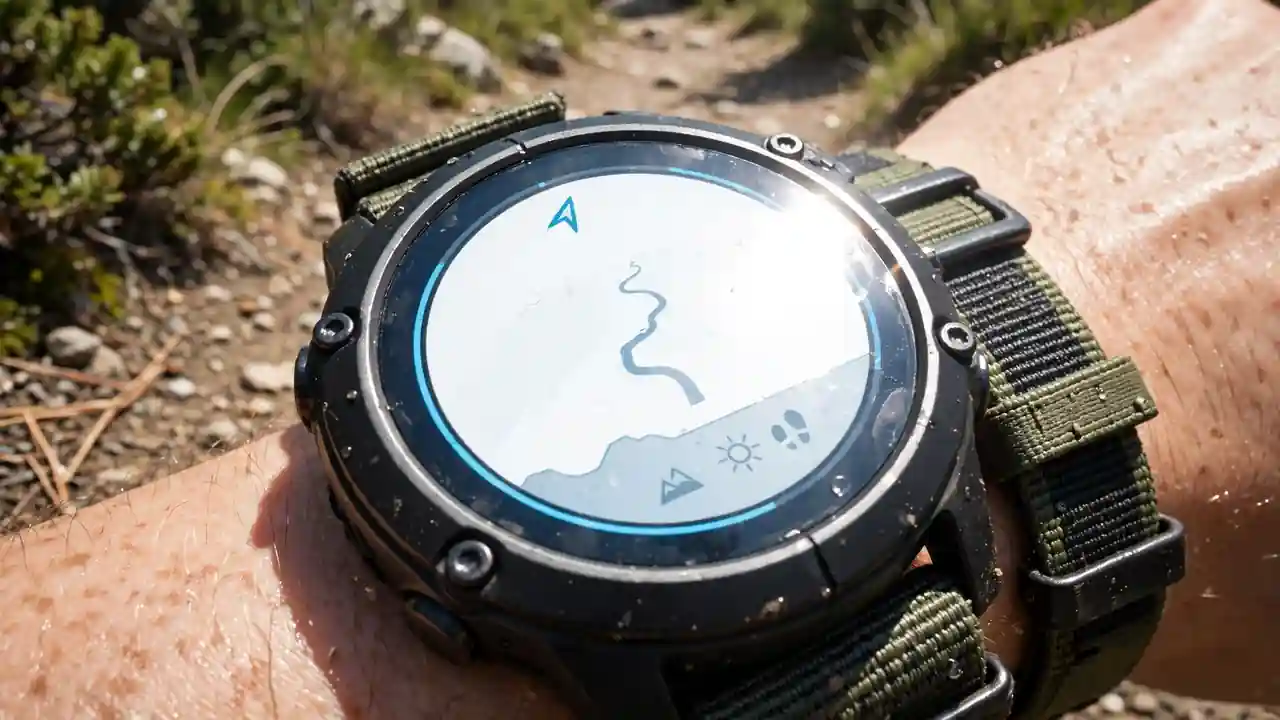
The title of this review asks about the brightest AMOLED watch, so let me answer that question precisely, because “brightest” can mean two different things here. One reviewer comparison lists the Pro 51mm AMOLED at about 2,000 nits, against about 1,000 nits for the regular Fenix 8 51mm, and the MicroLED Pro at about 4,500 nits. A detailed review agrees: the regular Pro’s screen is bumped up to 2,000 nits, which it calls impressively bright, while the MicroLED version puts out an astonishing 4,500 nits, more than double the regular version. So yes, the Pro AMOLED is roughly twice as bright as the regular Fenix 8 AMOLED, and the MicroLED is more than twice as bright again. That is a real, visible difference, not a rounding error.
But I need to correct a common misunderstanding in the title itself, because honesty matters more than a catchy headline. The Pro AMOLED is bright, but it is not the brightest screen in the Pro family. The MicroLED model is the brightest, at about 4,500 nits, and it is also the most expensive and the most battery-hungry. If you buy the AMOLED Pro expecting the absolute brightest screen Garmin makes, you will be buying the second-brightest, and that is still excellent, but it is not the record-holder. I flag this because many buyers confuse the two, and a $1,199 purchase should never rest on a confused spec.
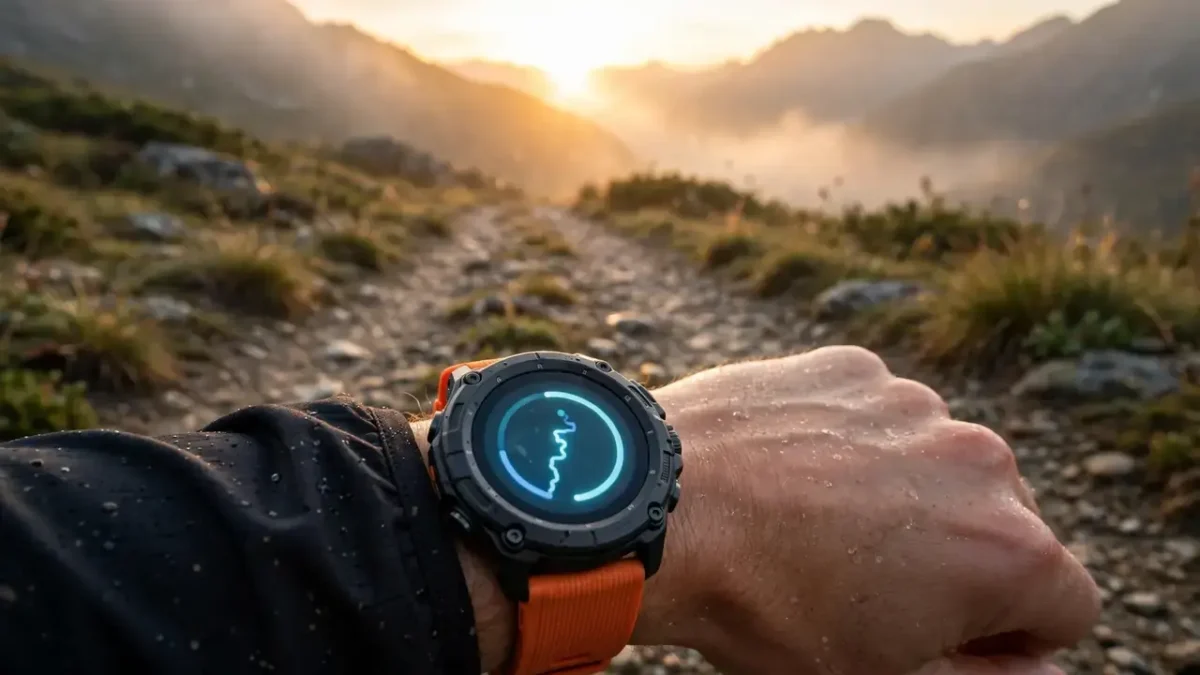
What does 2,000 nits actually feel like in real life? In plain words, it means you can read your watch in harsh midday sun, on snow, on water, and on a bright trail, without shading it with your other hand. I have squinted at dim watches on sunny ridges, and I have missed turns because I could not read the map quickly enough, so I do not treat brightness as a luxury. It is a safety and navigation feature, not a vanity feature. The MicroLED’s 4,500 nits goes further still, but for most outdoor athletes, 2,000 nits already solves the sunlight problem, and the extra brightness of MicroLED is a luxury you pay for in battery life, which I explain below.
Brightness in plain words: Regular Fenix 8 AMOLED, about 1,000 nits, good in sun. Pro AMOLED, about 2,000 nits, excellent in harsh sun. Pro MicroLED, about 4,500 nits, the brightest, but with a much shorter battery life. Choose the brightness you actually need, not the biggest number.
What Is Actually New Versus the Regular Fenix 8
I want to be precise here, because Garmin’s naming makes it easy to assume the Pro is a whole new watch, when in many ways it is not. One reviewer states plainly that hardware and software are virtually identical between the Fenix 8 and the Fenix 8 Pro, and the difference is the connectivity. A detailed review agrees: the Pro builds on the Fenix 8, sharing all the same features and accuracy, and adding satellite and LTE messaging, a brighter screen, a louder speaker, and a case 2.2mm thicker to fit the satellite hardware. That thicker case matters if you have small wrists or you wear the watch under tight sleeves, so try it on if you can. It is not a huge change, but it is a real one.
What does “same watch” actually mean for you? It means the same training analytics, the same maps, the same health tracking, and the same interface as the regular Fenix 8, which is already one of the deepest training platforms you can buy. A comparison lists Training Readiness, Stamina tracking, Hill Score, Endurance Score, and multi-sport transition support as part of the Pro’s training depth, well beyond what Apple currently provides. If you already own a Fenix 8 and you love it, the Pro does not give you a new training brain. It gives you a brighter screen and a new way to stay in touch when you are far from your phone. That is an important distinction, and it is why I keep coming back to the same question: do you need the connectivity, or do you just want a great Garmin?
Satellite and LTE Messaging: The Feature That Changes the Maths
This is the feature that justifies the Pro, and also the feature that needs the most careful explanation. The Pro adds inReach satellite and LTE-M connectivity to the AMOLED platform, with two-way messaging and SOS from the wrist without a paired phone. A March 2026 report explains that the watch can send and receive texts and relay GPS coordinates via satellite, with no phone required, but only where supported. In plain words, if you are on a trail with no phone signal, you can still send a text, share your location, and trigger an SOS from your wrist. For a solo hiker, a trail runner, or an outdoor worker, that is not a gadget feature. That is a safety net you wear.
Now the costs and limits, because they change the maths completely. That same guide states that the headline two-way messaging capability requires a mandatory inReach subscription from $7.99 per month. That subscription is not optional if you want the satellite features to work, and it is not included in the $1,199 purchase price. Over three years, that subscription adds roughly $288 to the cost of ownership, before any higher-tier plan you might choose. I am not saying that makes the Pro a bad deal, because safety is worth paying for, but I am saying you must budget for it honestly, or the Pro will cost you more than you planned.
There are two more limits you must hear. First, coverage is not universal. Garmin flagged that satellite communications are restricted or banned in some areas, and are not universally available. Satellite coverage via Skylo varies by region, and the guide advises checking Garmin’s coverage map for your area. Second, real-world coverage is not perfect even where it should work. One reviewer found the Pro’s LTE dropping in clear-coverage areas where an Apple Watch on the same network connected immediately, and warned that if you need backcountry-grade coverage, a regular Fenix 8 paired with a dedicated Mini device gave more reliable results in his testing. I am not telling you to ignore the Pro’s satellite feature, because for many people it will work well. I am telling you to test it where you actually train, and to carry a dedicated device if your trips truly depend on it.
Before you rely on it: Check Garmin’s coverage map for your exact training areas, confirm the inReach plan price for your region, and test messaging on a safe, familiar route before you trust it on a remote one. A safety feature you have never tested is not yet a safety feature.
Battery Life: The Trade-Off You Must Accept
Battery life is where the Pro’s brilliance costs you, and I want you to see the trade-off clearly before you buy. A comparison lists the Pro at up to 15 days in smartwatch mode and 44 hours with GPS, against about 42 hours in smartwatch mode and 20 hours with GPS for the Apple Watch Ultra 3. That is still a huge advantage over Apple, and it is why Garmin remains the choice for multi-day adventures. But the Pro is worse than the regular Fenix 8 on battery, because the brighter screen and the satellite hardware use more power. One reviewer comparison lists 53 hours of multiband GPS for the Pro 51mm, against 62 hours for the regular 51mm. That is a real loss of about nine hours on a long activity, and it matters on an ultra or a multi-day hike.
The MicroLED trade-off is far sharper, and it is why I would steer most buyers away from MicroLED unless they truly need maximum brightness. According to Garmin’s published specifications quoted there, GPS activity with always-on display drops from 49 hours on the AMOLED Pro to 15 hours on the MicroLED equivalent. Fifteen hours is still enough for a long day out, but it is not enough for a multi-day adventure without charging, and it turns a watch famous for battery life into a watch you must plan around. A detailed reviewer makes the same point plainly, saying he cannot imagine the need for MicroLED brightness, nor justify its reduced battery life, when the bump to 2,000 nits in the regular Pro is already impressively bright. I agree with him. For most athletes, AMOLED Pro is the sweet spot, and MicroLED is a specialist choice.

Training, Maps, and Everyday Use
Strip away the screen and the satellite features, and you still have a superb Garmin, and I do not want that to get lost in this review. The Fenix 8 Pro is a full multisport watch, with the deep training analytics, maps, and health tracking that make Garmin the default choice for serious athletes. It works with both iOS and Android, unlike the Apple Watch Ultra, which requires an iPhone, and that freedom matters if you ever switch phones or share a household with different phones. It is rated to 10 ATM for water resistance, it has a built-in flashlight, a speaker and microphone, Garmin Pay, music syncing over Wi-Fi, and access to third-party apps and watch faces. Those are not headline features, but they are the features you will use every day, and they are all here.
There are everyday trade-offs to know, too. The Pro is a chunky watch, at 47mm or 51mm only, with no smaller 43mm option like the regular Fenix 8, and the thicker case to fit satellite hardware makes it chunkier still. If you have small wrists, or you want a watch that disappears under a shirt cuff, try it on first, because a watch you do not enjoy wearing is a watch you will stop wearing. The interface is deep, which is a strength for athletes and a learning curve for beginners. Give yourself two weeks to learn it, customise the data screens to show only what you actually use, and turn off the notifications you do not need. A Garmin set up well is a joy. A Garmin left on default settings is a noisy wrist computer, and that is not Garmin’s fault, it is a setup job worth doing properly.
Who Should Buy It, and Who Should Not
Let me be direct, because $1,199 plus a subscription deserves a direct answer. Buy the Fenix 8 Pro AMOLED if you train or work in remote places, you want wrist-based satellite messaging and SOS without carrying your phone, you train in harsh sunlight and need a 2,000-nit screen, and you accept the $7.99-per-month subscription and the slightly shorter battery than the regular Fenix 8. Buy it if you want the most capable Fenix, and you will actually use the features that make it Pro. For those buyers, this is a superb, genuinely useful tool, and the price, while high, buys something no other wristwatch currently offers in quite the same package.
Do not buy it if you mostly train in cities with phone coverage, if you never leave signal, or if you simply want a great Garmin training watch, because the regular Fenix 8 gives you almost the same watch, with better battery, for less money. Do not buy the MicroLED version unless you have a specific, proven need for 4,500 nits and you accept the much shorter battery life, because for most athletes it is brightness you will rarely need at a cost you will feel every trip. And do not buy the Pro as a replacement for a dedicated satellite device if your safety truly depends on backcountry messaging, because reviewers found its coverage less reliable than a dedicated device in testing. Buy the Pro for what it is, a brilliant training watch with a useful safety net, not for what it is not, and you will be happy with it for years.
Frequently Asked Questions
How much does the Garmin Fenix 8 Pro cost?
From $1,199.99 for the 47mm AMOLED model, and $1,299 for the 51mm AMOLED model. The 51mm-only MicroLED model was listed at $1,999 at launch, with later guides listing $1,699.99 after a price reduction, so check the current Garmin price before you buy.
How bright is the Fenix 8 Pro screen?
The AMOLED Pro reaches about 2,000 nits, roughly twice the regular Fenix 8 AMOLED at about 1,000 nits. The MicroLED Pro reaches about 4,500 nits, making it the brightest model in the family, not the AMOLED model.
Does the Fenix 8 Pro need a subscription?
Yes, for satellite and LTE messaging. The inReach subscription starts from $7.99 per month, and it is required for two-way satellite messaging and SOS from the wrist. Training, maps and health features do not need that subscription.
How long does the battery last?
Up to about 15 days in smartwatch mode and about 44 hours with GPS for the AMOLED Pro, according to comparison summaries, with multiband GPS listed at 53 hours for the 51mm Pro against 62 hours for the regular 51mm. The MicroLED model drops to about 15 hours of GPS with always-on display, so it needs far more frequent charging.
Can the Fenix 8 Pro replace a handheld inReach device?
Not fully. Reviewers warn it is not a handheld inReach replacement, and one reviewer found its LTE coverage less reliable than a dedicated device in side-by-side testing. Use it as a convenient safety net, and carry a dedicated device for trips where messaging is truly safety-critical.
Does it work with Android and iPhone?
Yes, unlike the Apple Watch Ultra, which requires an iPhone, the Fenix 8 Pro works with both iOS and Android.
What sizes does the Fenix 8 Pro come in?
47mm and 51mm only, in titanium with sapphire crystal. There is no 43mm Pro, unlike the regular Fenix 8, which also comes in 43mm.
Final Thoughts
I started this review doubting whether anyone needs a $1,199 watch, and I am finishing it understanding exactly who does. You do, if you train where phones fail, if you hike alone, if you work outdoors, or if you simply want the brightest practical Garmin screen with a safety net on your wrist. You do not, if you train in the city and just want a great Garmin, and recognising that is not a failure, it is smart buying. Well done for asking the hard questions before you spent over a thousand dollars, because that care is what turns an expensive gadget into a trusted tool. If you do buy the Pro, test its satellite messaging on a safe route first, tell me in the comments where you train, and wear it with the confidence that comes from knowing exactly what you bought, and why.
Published: 26 October 2026 | Updated: 26 October 2026
React to this story