Key Points
Key Points
- First sub-250g drone with a true 1-inch CMOS sensor, 50MP stills, 4K/120fps.
- Omnidirectional sensing plus LiDAR helps in near-darkness, but is not crash-proof.
- Standard battery gives roughly 36-40 minutes; Battery Plus reaches around 52 minutes.
- Around 249g with the standard battery, but Battery Plus pushes it over 250g.
- True vertical shooting uses the full sensor, ideal for social video.
- Mini 4 Pro remains the smarter buy for daylight-only flying on a budget.
On This Page
- What You Will Learn in This Review
- The Headline Change: A 1-Inch Sensor Under 250 Grams
- Subscribe to CAAW News
- Flight Time: Read the Fine Print Before You Believe the Number
- Obstacle Sensing That Actually Works in the Dark
- Travel Weight, Size, and the 250-Gram Rule
- Transmission, Wind, and Real-World Flying Feel
- Price, Bundles, and the Mini 4 Pro Question
- Frequently Asked Questions
- Do I need to register the DJI Mini 5 Pro?
- Is the Mini 5 Pro good for beginners?
- How long does the battery really last?
- Can it shoot vertical video for social media?
- Is it better than the Mini 4 Pro?
- Does it work in the dark?
- What should I buy with it?
- Final Thoughts
- React to this story
I have crashed a drone into a tree, lost one to a sudden gust over a lake, and once spent an entire holiday filming with a drone too heavy to carry up a mountain. Each of those mistakes taught me the same lesson. The best travel drone is not the one with the longest spec sheet. It is the one you actually bring with you, fly without fear, and trust to capture the shot when you only get one chance. That is why the DJI Mini 5 Pro caught my attention the moment I saw its specs, and why I spent weeks reading every review I could find before writing this. In this DJI Mini 5 Pro review, I will give you the honest verdict: the camera, the flight time, the obstacle sensing, the price, and the catches nobody mentions in the headline. If you want one drone for travel in 2026, this review will help you decide whether this is the one.
Trust nudge: I am not sponsored by DJI. The specs and prices below come from public reviews and retailer listings I checked during my research, and where sources disagree, I flag the difference instead of hiding it.
What You Will Learn in This Review
- What makes the Mini 5 Pro different from every Mini before it
- How good the 1-inch camera really is, in daylight and at dusk
- Real flight time, not just the headline number
- Whether the obstacle sensing keeps beginners safe
- Travel weight, rules, and the 250-gram question
- Price, bundles, and whether the Mini 4 Pro is the smarter buy
- Answers to the questions buyers ask most
The Headline Change: A 1-Inch Sensor Under 250 Grams
Let me start with the fact that defines this drone. The Mini 5 Pro is the first sub-250-gram drone with a true 1-inch CMOS sensor, shooting 50-megapixel stills, 4K HDR video at 60 frames per second, and 4K slow motion at 120 frames per second, behind an f/1.8 lens. Reviewers consistently describe this as the biggest single upgrade in the Mini line’s history, and I agree with them, because sensor size is the one thing no software trick can fake. A bigger sensor gathers more light, and more light means cleaner images, better dynamic range, and footage that survives colour grading instead of falling apart.
To understand why this matters, compare it with the Mini 4 Pro. That drone used a 1/1.3-inch sensor, and reviewers put the Mini 5 Pro’s sensor at roughly 2.4 times the light-gathering area. In daylight, both drones shoot lovely footage, and a casual viewer may struggle to tell them apart. At dusk, in a forest, or in a dim old town, the difference shows up fast. The Mini 5 Pro holds detail in shadows where the older sensor turns muddy, and highlights do not blow out as quickly. If most of your flying happens in golden hour, which is when travel footage looks best anyway, this sensor is worth real money.
The camera also shoots in 10-bit D-Log M and HLG, which are flat colour profiles for people who grade their footage afterwards. If you have never graded footage, do not worry. You can shoot in the normal colour mode and get beautiful video straight out of the drone. But if you do edit, those flat profiles give you far more room to shape the look, and that room is what separates amateur-looking travel videos from professional ones. The gimbal also rotates 225 degrees for true vertical shooting, using the full sensor instead of cropping, which matters enormously if your videos end up on social platforms in portrait format.
Flight Time: Read the Fine Print Before You Believe the Number
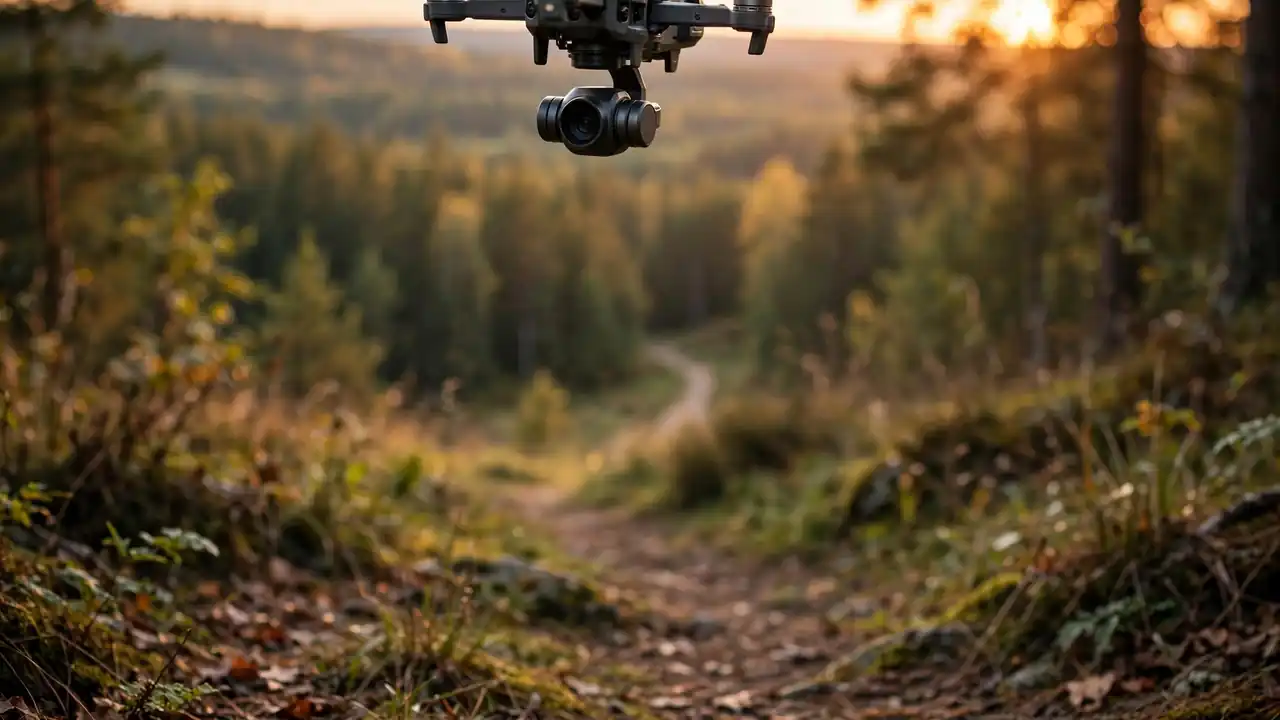
Here is where I need to be honest with you, because the flight time figures in different reviews do not agree. One review reports up to 36 minutes per battery. Another reports around 40 minutes. A third reports up to 52 minutes, but that figure is for the Intelligent Flight Battery Plus, the larger extended battery, not the standard one. The honest summary is this: expect roughly 36 to 40 minutes of calm, hovering flight on the standard battery in ideal conditions, and up to around 52 minutes with the larger Battery Plus where it is available.
Real-world flying always delivers less than the headline. Wind, cold, fast flying, and hovering while you frame a shot all eat battery. I plan my flights around two-thirds of the claimed time, and that habit has never left me short. If a review promises 40 minutes, I plan for 27 minutes of useful flying, and I land with reserve. That caution sounds boring until you watch someone else’s drone auto-land in a field because they believed the box.
For travel, the practical answer is the Fly More kit. One battery is never enough on a trip. You want at least three, plus a charging hub, so you can fly in the morning, charge at lunch, and fly again at sunset. Yes, it costs more. But a drone sitting dead in your bag at golden hour is the most expensive drone of all, because the shot you missed cannot be bought back at any price.
Obstacle Sensing That Actually Works in the Dark
I crashed my early drones because they were blind. They could not see the tree branch, the wire, or the wall, and neither could I on a small phone screen in bright sun. The Mini 5 Pro changes that story in a serious way. It carries omnidirectional obstacle sensing, covering forward, backward, sideways, upward, and downward, paired with APAS routing that steers around obstacles instead of just stopping. Reviews also highlight a forward LiDAR sensor that helps the drone sense obstacles in near-darkness, where normal cameras struggle.
Let me be clear about what this means and what it does not. It means a beginner flying carefully in an open area is far safer than on any earlier Mini. It means tracking shots through light trees and around buildings are far more forgiving. It does not mean the drone is crash-proof. Thin wires, bare branches against a bright sky, and fast sideways flight can still fool any sensor. I still fly with the same rule I teach every beginner: keep the drone where you can see it, fly slowly near obstacles, and treat the sensors as a safety net, not a pilot. A net saves you sometimes. It does not make you invincible.
The tracking is genuinely impressive too. ActiveTrack 360 degrees follows a subject from any angle, and automated modes like QuickShots and MasterShots create cinematic moves with one tap. For a solo traveller, this is the feature that matters most after the camera. You can film yourself walking through a market, cycling a coastal road, or standing on a viewpoint, without a second person holding a camera. I have filmed trips alone that would have been impossible without tracking, and that freedom alone justifies the upgrade for many creators.
Travel Weight, Size, and the 250-Gram Rule
The Mini 5 Pro weighs around 249 grams with the standard battery, just under the 250-gram threshold that matters in many countries. In the United States, recreational pilots generally do not need to register a drone under 250 grams with the FAA, though commercial pilots need Part 107 certification regardless of weight. In Europe and many other regions, sub-250-gram drones also face lighter rules, though local laws still apply. That weight is not an accident. DJI engineered this drone to sit just under the line, because crossing it changes the paperwork for millions of travellers.
But here is the catch you must know. The weight figure has a small tolerance, and reviewers note that an individual unit can land slightly above 250 grams. More importantly, fitting the larger Battery Plus pushes the drone over 250 grams, which can change its registration requirements. Accessories add weight too. Before your first flight in a new country, check that country’s current rules, and check them again before you travel, because drone laws change often. I keep a simple habit: I check the rules the week I book, and again the week I fly, and I carry proof of registration when it is required.
For packing, the Mini line remains unbeatable. The drone folds down small, the controller fits in a jacket pocket, and the whole kit disappears into a daypack corner. I have carried larger drones on trips, and I always regretted it by the second day, when the weight made me leave the drone in the hotel. The Mini 5 Pro is the drone you actually carry up the mountain, and that single fact matters more than any spec on paper.
Transmission, Wind, and Real-World Flying Feel
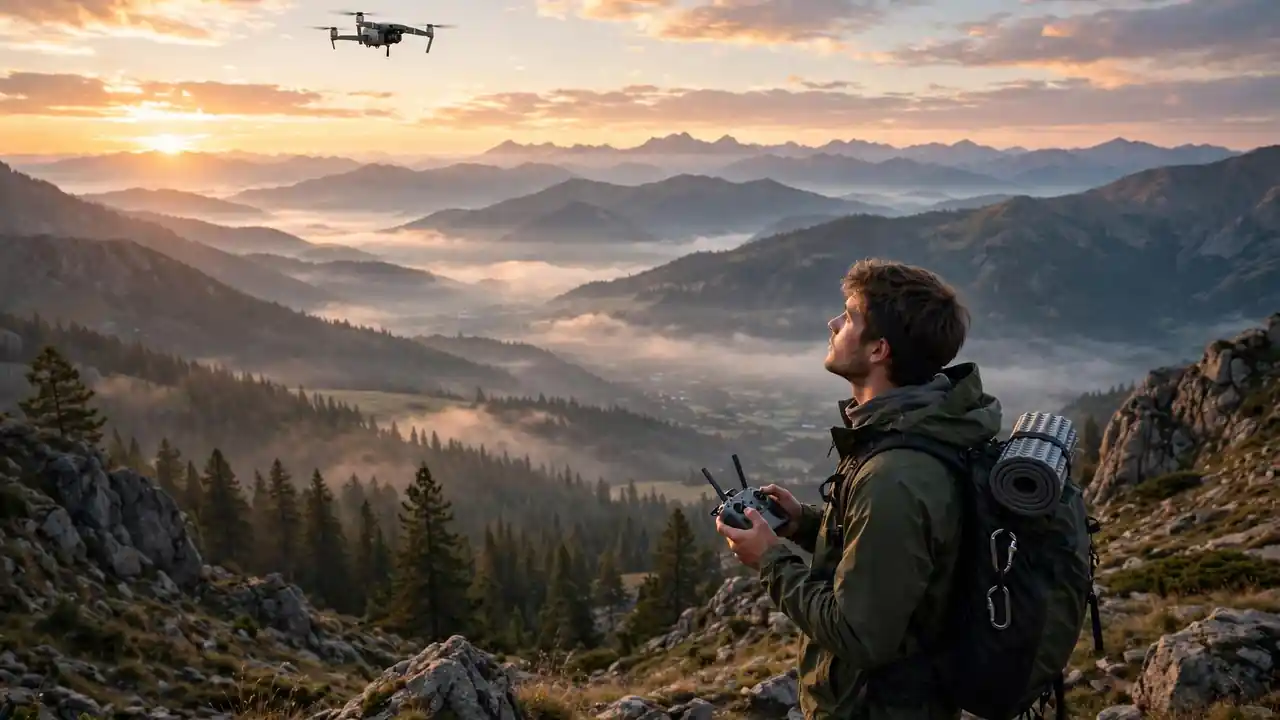
The Mini 5 Pro uses DJI’s O4+ transmission system, with reviewers reporting stable video feeds over multi-kilometre ranges, with one listing quoting up to 20 kilometres in ideal conditions. In practice, you should never fly that far, and in most countries you legally cannot, because you must keep the drone in sight. What long-range transmission really gives you is a rock-solid feed at normal distances, even with trees and buildings between you and the drone. A feed that never stutters is the difference between a confident flight and a nervous one, and this drone delivers that confidence.
Wind resistance is rated to around Beaufort scale 5, which means winds up to roughly 38 kilometres per hour. Reviews confirm the Mini 5 Pro holds position more confidently than the Mini 4 Pro, thanks to stronger motors and updated propellers. But I will say this plainly from experience: a sub-250-gram drone in strong wind is still a light object in a strong wind. On coastal cliffs and mountain ridges, I fly early in the morning when the air is calm, and I land the moment gusts make the drone fight to hold position. No footage is worth losing the drone over a cliff.
The drone also carries 42 gigabytes of internal storage according to reviewers, plus GNSS positioning from GPS, Galileo, and BeiDou satellites for fast lock and reliable return-to-home, and built-in Remote ID broadcasting. Internal storage is a quiet lifesaver. I have forgotten memory cards before, and internal storage saved the whole shoot. It is not a headline feature, but on a real trip, it is the feature you thank.
Price, Bundles, and the Mini 4 Pro Question
Now the question everyone actually wants answered: what does it cost, and should you buy it? The standalone Mini 5 Pro launched at around $759 with the RC-N3 controller, and deal trackers recorded it at $679 during October 2026 sale events, its lowest price at the time. Fly More bundles with extra batteries and a better controller cost more, with listings showing Fly More Combo prices above $1,100. Prices vary by region and seller, and reviewers note that availability through official channels has been uneven in the United States, with some buyers using third-party sellers, which can affect warranty and DJI Care coverage. Check your seller carefully before you buy, and confirm what warranty you actually get.
So, should you buy the Mini 5 Pro, or save money on the Mini 4 Pro? My honest answer depends on you. If you shoot mainly in good daylight, at normal frame rates, and the Mini 4 Pro is significantly cheaper when you buy, it remains an excellent drone, and the saving is real. If you shoot at dusk, want 4K slow motion at 120 frames per second, want the best obstacle sensing, or want the most future-proof Mini available, the Mini 5 Pro is the clear choice. The sensor and the sensing are not small upgrades. They are the two things that change what you can film and how safely you can film it.
Who should skip it? Pure beginners on a tight budget should look at cheaper DJI models first, because crashing a cheaper drone hurts less while you learn. Pilots who regularly fly in strong wind or need to carry payloads should look at larger drones. Everyone else who wants the best travel drone available in 2026, and can afford it, will be happy with this one. I say that with confidence, because the combination of a 1-inch sensor, full obstacle sensing, and sub-250-gram weight has simply never existed before.
Frequently Asked Questions
Do I need to register the DJI Mini 5 Pro?
With the standard battery, it weighs around 249 grams, which is under the 250-gram recreational registration threshold in the United States, though the small weight tolerance means an individual unit can vary. The larger Battery Plus pushes it over 250 grams. Commercial pilots need Part 107 certification regardless of weight, and rules differ by country, so always check local rules before flying.
Is the Mini 5 Pro good for beginners?
Yes, it is one of the safest drones a beginner can buy, thanks to omnidirectional sensing, LiDAR-assisted low-light sensing, and automated flight modes. But no drone is crash-proof, and beginners should still learn in open areas, fly slowly near obstacles, and keep the drone in sight.
How long does the battery really last?
Reviewers report roughly 36 to 40 minutes on the standard battery in ideal conditions, and up to around 52 minutes with the larger Battery Plus. Real flights deliver less, especially in wind or cold, so plan around two-thirds of the claimed time and carry spare batteries.
Can it shoot vertical video for social media?
Yes. The gimbal rotates 225 degrees for true vertical shooting, using the full sensor instead of cropping the image. That makes it ideal for portrait-format platforms without losing quality.
Is it better than the Mini 4 Pro?
For image quality, slow motion, and obstacle sensing, yes, clearly. The 1-inch sensor, 4K at 120 frames per second, and LiDAR-assisted sensing are major upgrades. For daylight-only flying on a budget, the Mini 4 Pro remains excellent and cheaper.
Does it work in the dark?
It performs far better in low light than earlier Minis, thanks to the larger sensor and LiDAR sensing, but it is not a night-vision drone. Dawn, dusk, and dim interiors look much better than before, but true darkness still defeats any small camera.
What should I buy with it?
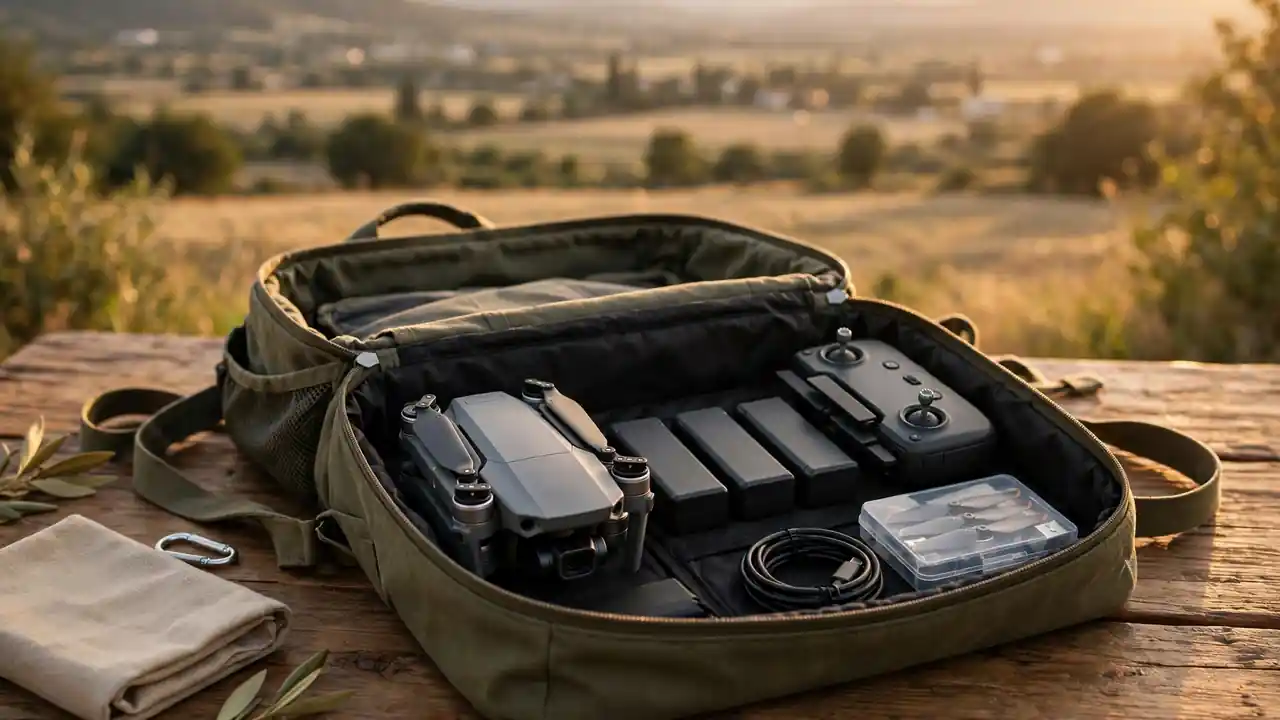
At minimum, spare batteries and a charging hub, plus neutral density filters if you shoot video in bright sun. A good bag that fits the folded drone, controller, and batteries will decide whether you actually carry it on every trip.
Final Thoughts
I started this review with my crashes, and I will end with what they taught me. A travel drone earns its place not by surviving a spec comparison, but by surviving a real trip: the early morning, the mountain climb, the one chance at golden light. The Mini 5 Pro is the first Mini that gives you professional-grade images, serious safety sensing, and a weight you can carry anywhere, all at once. It is not cheap, and it is not perfect in strong wind, but for most travellers and creators, it is the closest thing to a perfect travel drone that exists in 2026. If you buy it, fly it carefully, learn its limits slowly, and let it show you your travels from an angle you have never seen before. That view, from above, is the reason any of us fly at all. Now tell me in the comments: where would your first flight with it be? I read every answer, and your dream location might become my next trip.
React to this story