Key Points
Key Points
- Most breakfasts contain under 10 grams of protein; 25 to 40 grams is a practical target.
- Greek yogurt has about 15 grams per 6-ounce serving; one egg has about 6.2 grams.
- Combining eggs and yogurt easily reaches a strong protein total.
- Oats alone are mostly carbohydrate; add yogurt, milk, or eggs for protein.
- Plant-based plates like tofu scramble and beans on toast can hit the target.
- Simple, rotated breakfasts beat elaborate plates abandoned in a week.
On This Page
- What You Will Learn
- Why My Old Breakfast Left Me Hungry
- Subscribe to CAAW News
- Eggs Versus Greek Yogurt: Why I Use Both
- Ten Breakfasts That Actually Hit the Target
- Fast, No-Cook, and Make-Ahead Mornings
- Plant-Based Breakfasts That Still Deliver
- Mistakes That Make High-Protein Breakfasts Fail
- Frequently Asked Questions
- How much protein should breakfast have?
- Is coffee a high-protein breakfast?
- Can I get enough protein without eggs or dairy?
- Do I need protein powder for a high-protein breakfast?
- What if I am not hungry in the morning?
- Is overnight oats high in protein?
- Will a high-protein breakfast help me lose weight?
- Final Thoughts
- React to this story
I used to start my day with toast, jam, and coffee, and then wonder why I felt hungry again by ten o’clock, reaching for biscuits and snacks before lunch had even started. I thought I lacked willpower, and I blamed myself for months, until a friend suggested a simple change that embarrassed me with how easy it was. She said, try adding real protein to your breakfast, just one proper protein food, and see how your morning feels. I tried scrambled eggs with Greek yogurt on the side, and the difference shocked me. I felt full, steady, and calm until lunch, without thinking about food every twenty minutes. That one change is the heart of this guide. In it I will share the best high-protein breakfasts in 2026, how much protein actually helps, and ten easy plates you can make in ten minutes or less. If your mornings feel hungry, rushed, or shaky, this guide is for you, and we will build your breakfast step by step, without diets, guilt, or complicated cooking.
Trust nudge: I am not a dietitian, and this is general information, not medical or diet advice. Protein figures come from public nutrition guides I checked during my research, and they vary by brand and portion, so treat them as useful estimates. If you have kidney disease, allergies, or any condition that affects your diet, please talk to a qualified professional before changing how you eat.
What You Will Learn
- Why breakfast is the meal where most people get too little protein
- How much protein at breakfast actually helps, in plain numbers
- Eggs versus Greek yogurt, and why you do not have to choose
- Ten easy high-protein breakfasts, sweet and savoury, with and without meat
- Fast, no-cook, and make-ahead options for busy mornings
- Plant-based breakfasts that still hit a strong protein target
- The mistakes that make high-protein breakfasts boring or unsustainable
- Answers to the questions I hear most about morning protein
Why My Old Breakfast Left Me Hungry
My old breakfast was almost all carbohydrate, with very little protein, and that is the pattern most people share. A typical breakfast of cereal, toast, or porridge often lands under 10 grams of protein, while guides for a satisfying breakfast suggest roughly 25 to 40 grams per meal, as a practical way to spread protein across the day. You can read that plain guidance in this high-protein breakfast guide, which also shows simple plates hitting 25 to 30 grams, from Greek yogurt with berries and nuts to scrambled eggs with cheese, to a smoothie with protein powder, milk, and banana.
Protein is more filling than carbohydrate or fat, which is why a protein-rich breakfast can cut mid-morning cravings and help you feel steady until lunch. I felt that in my own mornings within a week. I stopped raiding the biscuit tin at ten, I stopped feeling shaky before meetings, and I stopped thinking about lunch from nine o’clock onwards. That steadiness is not magic, and it is not a promise of weight loss. It is simply what happens when a meal contains enough of the nutrient that keeps you full, and it is a feeling I now protect every morning.
Another guide I checked puts the sweet spot for breakfast satiety at roughly 30 to 40 grams, noting that the average breakfast protein intake is only around 10 to 15 grams, and that reaching 30 grams does not require an enormous plate, just the right ingredients. I agree from experience, because my best breakfasts look normal. They look like eggs, yogurt, toast, and fruit, arranged with a little intention, and they take no longer than my old toast and jam. For the bigger picture of daily protein, I also recommend our guide to how much protein you really need, which settles the daily total question that breakfast alone cannot answer.
Eggs Versus Greek Yogurt: Why I Use Both
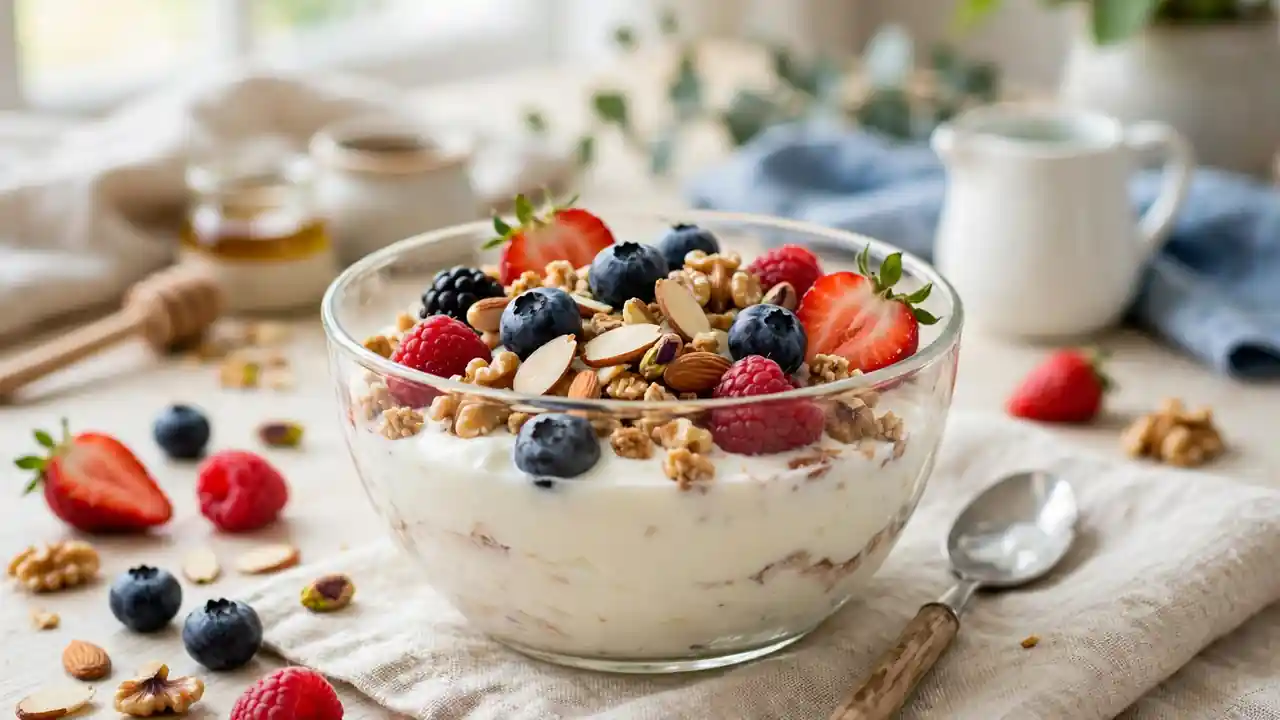
People love to ask me whether eggs or Greek yogurt are better, and my honest answer is that both are excellent, for different reasons, and I use both in the same week. Greek yogurt offers slightly more protein per serving than eggs. A serving of about 6 ounces of Greek yogurt contains about 15 grams of protein, while one whole large egg contains about 6.2 grams, according to this medically reviewed comparison. That means two or three eggs match one serving of Greek yogurt for protein, but eggs bring different nutrients, including folate, vitamin D, iodine, B vitamins, and choline, while Greek yogurt brings calcium, probiotics, and gut-friendly benefits.
I stopped choosing a winner and started combining them, because a combined breakfast hits a strong protein total without feeling like a diet plate. Three scrambled eggs with one cup of plain Greek yogurt and berries, for example, is reported at roughly 42 grams of protein in one popular breakfast guide, and it feels like a real meal, not a supplement. On sweet mornings I have Greek yogurt with berries, nuts, and seeds. On savoury mornings I have eggs with spinach, tomatoes, and toast. On busy mornings I have both, quickly, with hard-boiled eggs I cooked on Sunday and a pre-portioned yogurt pot. Variety keeps me from getting bored, and boredom, not hunger, is what usually breaks a good breakfast habit.
Choose plain Greek yogurt when you can, because flavoured yogurts often add sugar without adding protein, and add your own sweetness with berries or a drizzle of honey if you want it. Choose eggs cooked in a way you enjoy, because a breakfast you dread will not survive a month, no matter how perfect its protein count looks on paper. I scramble, boil, poach, and fry, depending on my mood and my time, and all of them count. The best high-protein breakfast is the one you will actually eat tomorrow, and the day after that.
Ten Breakfasts That Actually Hit the Target
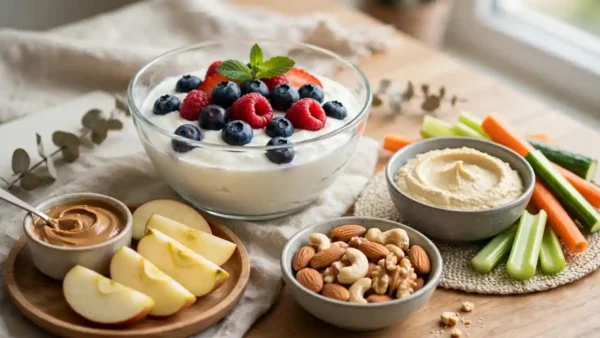
Here are ten plates I rotate through, each aiming for roughly 20 to 40 grams of protein, with honest estimates that move with brands and portions. First, Greek yogurt parfait: one cup of plain Greek yogurt with berries, a tablespoon of chopped walnuts, and cinnamon, roughly 25 to 30 grams with the nuts and seeds. Second, veggie egg scramble: three eggs scrambled with spinach, peppers, and a sprinkle of cheese, roughly 20 to 22 grams, more with toast. Third, cottage cheese bowl: one cup of cottage cheese with fruit and cinnamon, roughly 25 grams, and cottage cheese on toast with tomato is a lighter version at roughly 12 to 14 grams per half cup.
Fourth, smoked salmon and eggs: two scrambled eggs with about two ounces of smoked salmon and wholegrain toast, roughly 22 to 25 grams, with cucumber or tomato for freshness. Smoked salmon can be high in sodium, so compare labels if you watch salt. Fifth, overnight oats, done properly: oats alone are mostly carbohydrate, so stir in Greek yogurt, milk, and seeds, or have an egg on the side, to lift the plate into the 20-gram range. Sixth, tofu and edamame scramble: six ounces of firm tofu crumbled with spinach and a quarter cup of shelled edamame, roughly 18 to 22 grams, a brilliant plant-based savoury option. Seventh, a protein smoothie: milk, banana, and a scoop of protein powder, roughly 30 grams, perfect for mornings when chewing feels like too much work.
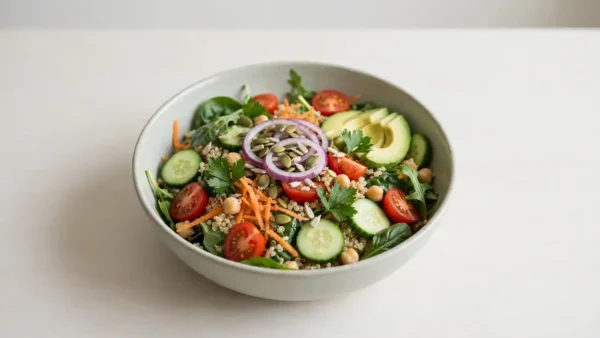
Eighth, beans on toast with yogurt on the side, roughly 18 to 22 grams, a humble, cheap, and deeply satisfying plate that deserves more respect. Ninth, leftover chicken or fish with rice, roughly 25 to 30 grams for 100 grams of chicken, because breakfast does not have to look like breakfast advertising. Tenth, my favourite savoury bowl: two eggs, 150 grams of skyr or Greek yogurt, spinach, half an avocado, cherry tomatoes, pumpkin seeds, and olive oil, roughly 30 grams, a plate I return to whenever I want a morning that feels complete. You can find more no-powder ideas in this collection of high-protein breakfasts without protein powder, which I used to check several of the figures above.

Fast, No-Cook, and Make-Ahead Mornings
Busy mornings are where good breakfasts die, so I plan for them honestly. On Sunday I hard-boil six eggs, peel them, and store them in the fridge, so weekday mornings need only a yogurt pot and berries to become a complete breakfast. I also make overnight oats in jars, with oats, milk, yogurt, and chia seeds, so I can grab one and eat it cold or warmed. Cottage cheese pots, pre-portioned nuts, and washed berries live at the front of my fridge, because a breakfast I can see is a breakfast I will eat, while a breakfast hidden at the back is a breakfast I will forget.
No-cook options matter too. Greek yogurt with berries and nuts needs no cooking at all. Cottage cheese with fruit needs no cooking. A smoothie needs only a blender and two minutes. If you truly cannot face food early, start small, with a yogurt pot or a boiled egg, and let your appetite grow as the habit settles. A smaller protein snack still counts, and it beats a sugary pastry that leaves you hungry an hour later. I also keep breakfast simple on work days and save the bigger cooked breakfasts for weekends, because a plan that fits weekdays is a plan that survives real life.
For readers watching sugar as well as protein, our sugar guide pairs well with this article, because many breakfast products hide sugar behind healthy-sounding labels. Plain yogurt, plain oats, and whole fruit give you control over sweetness, and that control is worth more than any branded breakfast product I have tried. I also enjoy our healthy snacks guide for the same reason, because a good breakfast and a good snack share the same principle. Protein plus fibre plus real food beats a sweet, empty plate every time.
Plant-Based Breakfasts That Still Deliver
Plant-based breakfasts can hit strong protein targets too, with slightly larger portions, because plant sources usually contain less protein per 100 grams than animal sources. My favourite plant plates are tofu scramble with edamame and spinach, soy yogurt with nuts and seeds, beans on toast with a soy yogurt on the side, and overnight oats made with soy milk, soy yogurt, and chia seeds. Peanut butter on wholegrain toast with a soy yogurt adds up nicely as well, and lentil soup leftovers, eaten warm for breakfast, are a secret weapon I wish more people tried.
I do not use protein powder every day, but I keep a tub for smoothie mornings, because it is the fastest way to lift a fruit smoothie into the 25 to 30-gram range. If you prefer to avoid powder entirely, the egg, yogurt, cottage cheese, tofu, and bean plates above prove you do not need it. Powder is a tool, not a requirement, and a breakfast built from real food will always feel more satisfying to me than a shake alone. Whatever path you choose, aim for variety across the week, because different protein foods bring different nutrients, and variety is what keeps breakfast interesting for months, not just for a week.
Mistakes That Make High-Protein Breakfasts Fail
My first mistake was making breakfast too complicated. I cooked elaborate plates that took thirty minutes, and I quit within a week, because weekday mornings do not have thirty minutes to spare. Simple plates, repeated happily, beat impressive plates abandoned quickly. My second mistake was eating the same breakfast every day until I hated it. Rotation is not indulgence. It is maintenance, and I now rotate at least four breakfasts across the week to keep my appetite interested. My third mistake was ignoring fibre and fruit, and eating protein alone. A breakfast of eggs without vegetables or fruit feels heavy and dull, while eggs with spinach, tomatoes, and berries feel complete and satisfying.
My fourth mistake was trusting labels without reading them. Flavoured yogurts, breakfast bars, and instant oat packets often promise protein while delivering sugar, and the protein figure on the front can hide a disappointing ingredient list on the back. I now read the label, choose plain versions, and add my own fruit and nuts. My fifth mistake was skipping breakfast entirely on busy days and then overeating at lunch. A small protein snack, even a boiled egg and a yogurt pot, protects my whole day far better than an empty morning followed by a frantic lunch, and I wish I had learned that years earlier.

Related reading on CAAW News: our DASH diet beginner guide, our Mediterranean diet guide, and what intermittent fasting research actually proved.
Frequently Asked Questions
How much protein should breakfast have?
A practical target is 25 to 40 grams per meal, which is roughly a quarter of a daily target of 100 to 160 grams for many adults. Even 20 grams is meaningfully better than the 5 to 10 grams in a typical cereal-and-toast breakfast, so start where you are and build up gradually.
Is coffee a high-protein breakfast?
No. Coffee is a beverage, not a meal, and it contains almost no protein. Pair your coffee with real food, like eggs, yogurt, or tofu, so your morning has the protein your body needs to feel full and steady.
Can I get enough protein without eggs or dairy?
Yes, with slightly larger portions. Tofu scramble, soy yogurt with nuts and seeds, beans on toast, lentil leftovers, and smoothies with plant-based protein powder can all reach a strong protein target without eggs or dairy.
Do I need protein powder for a high-protein breakfast?
No. Eggs, Greek yogurt, cottage cheese, tofu, beans, and fish all reach the target without powder. Powder is a convenient tool for smoothies and busy mornings, but it is never a requirement for a good breakfast.
What if I am not hungry in the morning?
Start small, with a yogurt pot, a boiled egg, or a small smoothie, and let your appetite adjust over a week or two. A smaller protein snack still counts, and it is far better than skipping breakfast and feeling ravenous by mid-morning.
Is overnight oats high in protein?
Oats alone are mostly carbohydrate, so plain overnight oats are not a high-protein breakfast. Stir in Greek yogurt, milk, or seeds, or have an egg on the side, and the same oats become a genuinely protein-rich plate.
Will a high-protein breakfast help me lose weight?
Protein is more filling than carbohydrate or fat, so a protein-rich breakfast may reduce mid-morning cravings and total daily intake for many people. That is a helpful effect, not a guaranteed result, and overall diet, activity, sleep, and health conditions all matter too.
Final Thoughts
I started this guide with toast, jam, and a ten o’clock crash, and I want to end it with the steady mornings I enjoy now. One proper protein food at breakfast changed how my whole day felt, and it cost me no extra time, no special diet, and no guilt. I simply swapped an empty plate for a fuller one, and my mornings thanked me within a week. Try one breakfast from this guide tomorrow, just one, and notice how you feel at ten, at eleven, and at lunch. Then tell me in the comments which plate you chose, and whether your morning felt steadier, because your honest answer might be the nudge another reader needs to fix their own hungry mornings.
React to this story