Key Points
Key Points
- Tart cherries and kiwis have the most direct sleep research behind them.
- Magnesium and tryptophan support calm evenings through food, not pills.
- Finish dinner about three hours before bed and keep late snacks small.
- Avoid caffeine and alcohol in the evening, as both disturb deep sleep.
- A calm evening routine matters more than any single food.
- Food supports sleep; it does not treat insomnia or sleep disorders.
On This Page
- What You Will Learn
- How Food and Sleep Are Connected
- Subscribe to CAAW News
- Tart Cherries: The Most Studied Sleep Fruit
- Kiwis: Two Small Fruits, Surprising Research
- Magnesium, Tryptophan, and the Calm-Evening Nutrients
- Evening Drinks, Snacks, and What to Avoid
- My Simple Evening Routine
- Frequently Asked Questions
- What is the single best food for sleep?
- How long before bed should I eat?
- Does warm milk really help you sleep?
- Should I take magnesium or melatonin supplements?
- What foods should I avoid before bed?
- Can food help with insomnia?
- Is tart cherry juice too sugary for evenings?
- Final Thoughts
- React to this story
I used to lie awake at night, staring at the ceiling, replaying the whole day in my head, and then I would blame my mattress, my pillow, and my noisy neighbours, in that order. I bought a new pillow, I tried a sleep app, and I changed my bedtime three times, but I kept waking up tired. Then one evening, almost by accident, I changed what I ate instead. I had two kiwis after dinner, a small handful of nuts, and a cup of chamomile tea, and I slept more deeply than I had in weeks. One good night does not prove anything, I know that, and I am not claiming a miracle cure here. But it made me curious, and that curiosity sent me reading properly about food and sleep for the first time. In this guide I will share the best foods for better sleep in 2026, what the research actually says, what it does not say, and how I use these foods in a calm evening routine. If you toss and turn, wake up groggy, or simply want steadier nights, this guide is for you, and we will keep every claim honest and gentle.
Trust nudge: I am not a doctor, and food is not a treatment for insomnia or any sleep disorder. The studies I mention are small in several cases, and I say so where that matters. If poor sleep lasts for weeks, affects your days, or worries you, please talk to a qualified health professional rather than relying on any food alone.
What You Will Learn
- How food can influence sleep, in plain language, without hype
- The fruits with the most direct sleep research: tart cherries and kiwis
- The minerals and nutrients that support calm evenings: magnesium and tryptophan
- The best evening snacks and drinks, and the right timing for them
- The foods and drinks that tend to disturb sleep, and when to avoid them
- A simple evening routine I use, from dinner to lights out
- Answers to the questions I hear most about food and sleep
How Food and Sleep Are Connected
Your body runs on a daily rhythm, often called the circadian rhythm, and food is one of the signals that rhythm listens to. Certain foods contain the building blocks your body uses to make sleep-related chemicals. Tryptophan is an amino acid the body uses to make serotonin and then melatonin, the hormone that signals that it is time to wind down. Magnesium is a mineral involved in muscle and nerve function, and it is often described as supporting relaxation. Melatonin itself occurs in small amounts in some foods, including tart cherries and some nuts. None of this means that one food will knock you out like a sleeping pill, and anyone who promises that is selling something, not science. What it means is that a pattern of calm, nutrient-rich evening eating can support the body’s own wind-down, night after night, and that support is worth having.
Timing matters as much as the food itself. A heavy, spicy, or very large meal close to bedtime can keep you awake through discomfort, while a light snack an hour or so before bed can feel comforting without overloading digestion. Many guides I read agree on a simple rhythm. Finish your main meal about three hours before bed, and if you want a snack, keep it small, about an hour before lights out. I follow that rhythm loosely, not rigidly, because life does not always allow perfect timing, but on the nights I follow it, I notice the difference in how settled I feel when I lie down.
I also learned to look at the whole evening, not just one food. Dim lights, less screen time, a cooler bedroom, and a regular bedtime all support sleep, and food works best as one part of that pattern. If you eat two kiwis and then scroll bright videos until 2 a.m., the kiwis will not save you, and I say that with love, because I have been that person. Food is a helper, not a hero, and this guide treats it that way throughout.
Tart Cherries: The Most Studied Sleep Fruit
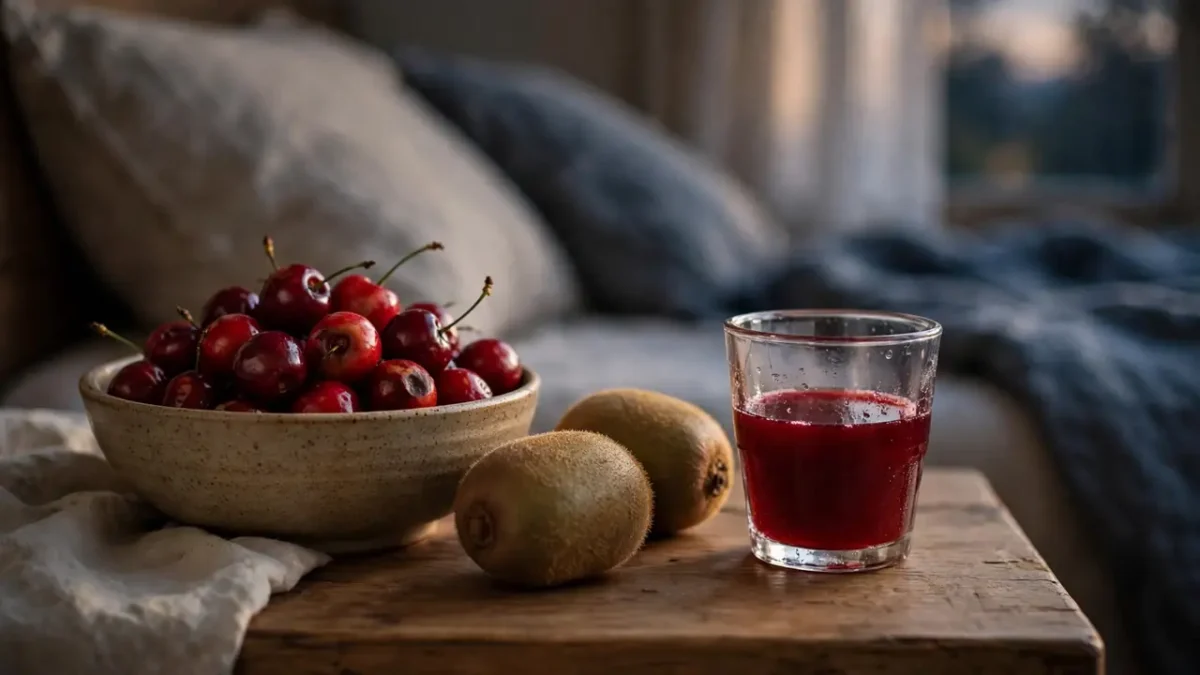
Tart cherries, especially as juice, are the sleep food with the most talked-about research, and I want to present it fairly. Tart cherries contain small amounts of natural melatonin, and they may also help the body use tryptophan for longer. Small studies of tart cherry juice have reported modest improvements in sleep duration and insomnia symptoms, including faster sleep onset and fewer night-time awakenings in some participants. One widely reported finding is that two one-cup portions of tart cherry juice daily were linked with falling asleep faster, more overall sleep time, and fewer awakenings, as summarised in this summary of sleep fruit research.
I keep my expectations modest, because the studies are small and the results are encouraging rather than conclusive, a point made clearly in recent evidence summaries. Tart cherry juice also contains sugar, so I keep portions small, usually one small glass in the evening, and I choose unsweetened juice where I can find it. If you take medication, have diabetes, or watch your sugar intake, check with a professional before adding regular juice to your evenings. For me, tart cherry juice is a pleasant evening drink that may help a little, and that honest framing is exactly why I still use it. I do not need it to be magic. A little help, night after night, is enough.
Kiwis: Two Small Fruits, Surprising Research
Kiwis surprised me more than any other food in this guide, because they have direct sleep research behind them. A small study in the Asia Pacific Journal of Clinical Nutrition found that adults who ate two kiwis an hour before bed reported falling asleep faster and sleeping longer, and that study has been repeated in many summaries since. Kiwis contain serotonin, folate, antioxidants, and fibre, and serotonin is related to sleep regulation, including rapid eye movement sleep. When kiwis were eaten over four weeks in research summaries, they were linked with improved sleep onset, duration, and efficiency, as described in the same fruit research summary linked above.
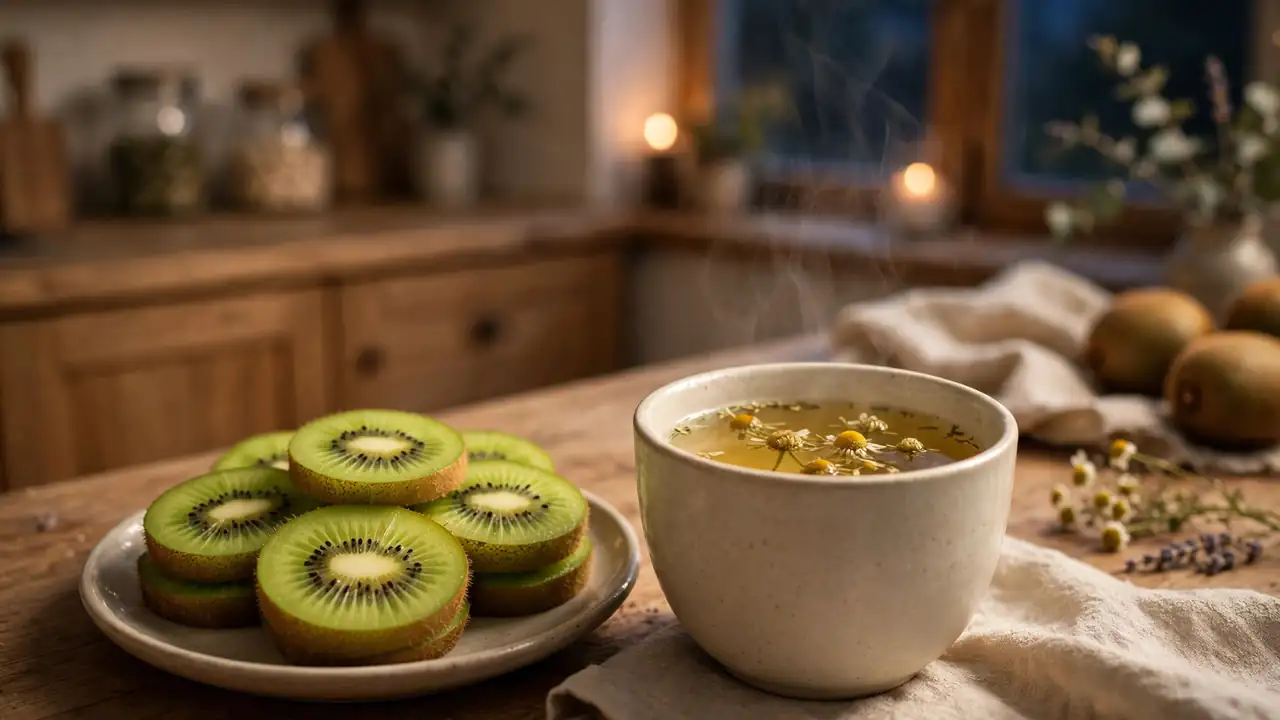
I eat two kiwis about an hour before bed, usually sliced, sometimes with a spoon, and I enjoy the ritual as much as the fruit. The ritual matters, because a calm, repeatable evening habit signals to your brain that bedtime is coming, and that signal is powerful on its own. One honest caution: a single small study does not prove kiwis work for everyone, and people with kiwi or latex-fruit allergies should skip them entirely. If kiwis do not suit you, the other foods in this guide offer similar nutrients without the same allergy risk, and that is fine. Sleep is personal, and your best food is one you enjoy, tolerate, and repeat.
Nutritionists also highlight kiwis alongside tart cherries, walnuts, bananas, and pumpkin seeds as foods that may naturally support sleep, as reported in this nutritionist’s five-food recommendation, which notes that eating two kiwis before bed may help you fall asleep faster and sleep more deeply. I like that this advice comes with a reminder to avoid excess caffeine and alcohol in the hours before bed, because those two habits undo more good than any food can repair.
Magnesium, Tryptophan, and the Calm-Evening Nutrients
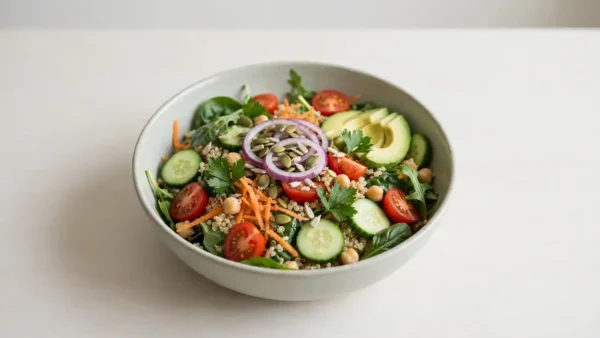
Magnesium and tryptophan are the two nutrients I hear about most in sleep conversations, so let me explain them simply. Magnesium is found in leafy greens, pumpkin seeds, almonds, and dark chocolate, and it supports muscle and nerve function, which is why it is often linked with relaxation and less night-time restlessness. Tryptophan is found in turkey, chicken, milk, eggs, nuts, and seeds, and your body uses it to make serotonin and melatonin. Pairing a protein food with a carbohydrate food may help tryptophan reach the brain more effectively, which is why a classic evening snack like wholegrain toast with almond butter, or Greek yogurt with berries, feels like a sensible combination, not just a tasty one.
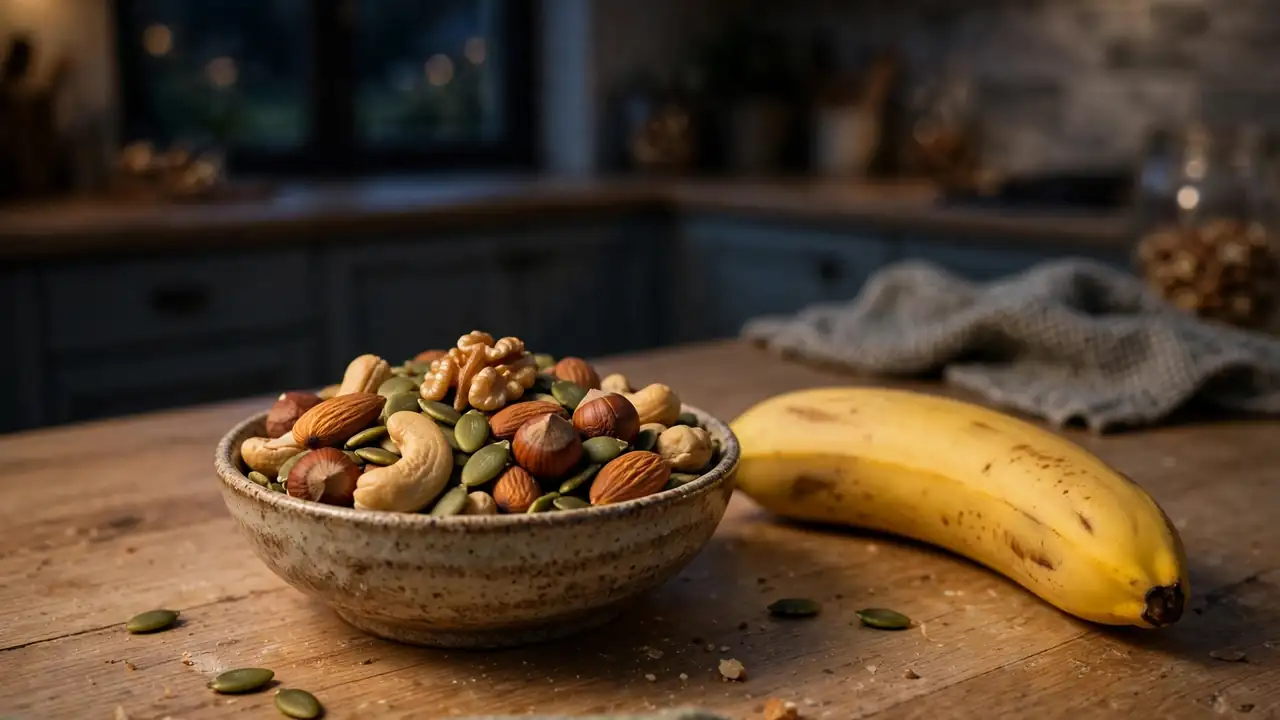
Bananas deserve a mention here too, because they combine magnesium, potassium, vitamin B6, and tryptophan in one familiar fruit. Potassium and magnesium support muscle relaxation, and the nutrients together support the production of serotonin and melatonin. I often eat a banana in the evening when I want something simple and filling, and I never feel heavy afterwards, which is exactly what an evening snack should do. Walnuts and almonds are similar evening allies. Walnuts contain some melatonin and plant-based omega-3 fats, while almonds provide magnesium and melatonin, and a small handful, about 28 grams, is a sensible portion, because nuts are filling and calorie-dense.
Fatty fish, like salmon, also appears in sleep guides, because it provides omega-3 fats and vitamin D, and some research links those nutrients with better sleep quality. I eat fatty fish at dinner a couple of times a week, not as a sleep trick, but as part of a balanced diet that happens to support my nights as well as my days. If you do not eat fish, the plant foods in this guide still give you useful magnesium, tryptophan, and fibre, and a varied diet matters more than any single superfood. For daytime balance, I also enjoy our Mediterranean diet guide and our healthy snacks guide, which both favour the same whole foods that help my evenings feel calmer.
Evening Drinks, Snacks, and What to Avoid
Warm milk is the oldest sleep advice I know, and it still has a gentle logic. Milk contains tryptophan, though the amount in one cup is small, and the real benefit may come as much from the calming ritual as from the nutrient. Chamomile tea is similar. It contains apigenin, a compound studied for mild calming effects, though human evidence on sleep is limited and mixed. I drink chamomile most evenings because I enjoy the ritual, the warmth, and the pause it creates, and I never present it as a medicine. If you are allergic to ragweed or related plants, or you take blood-thinning medication, check with a pharmacist before using chamomile regularly, because even gentle herbs deserve care.
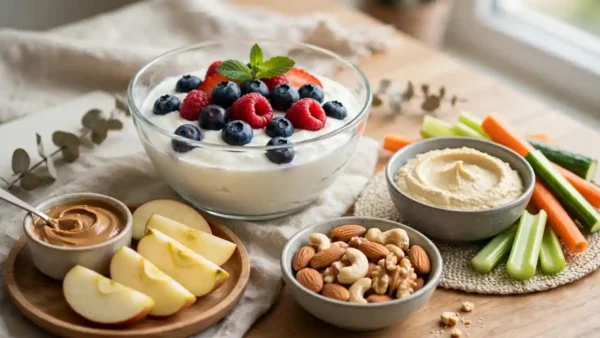
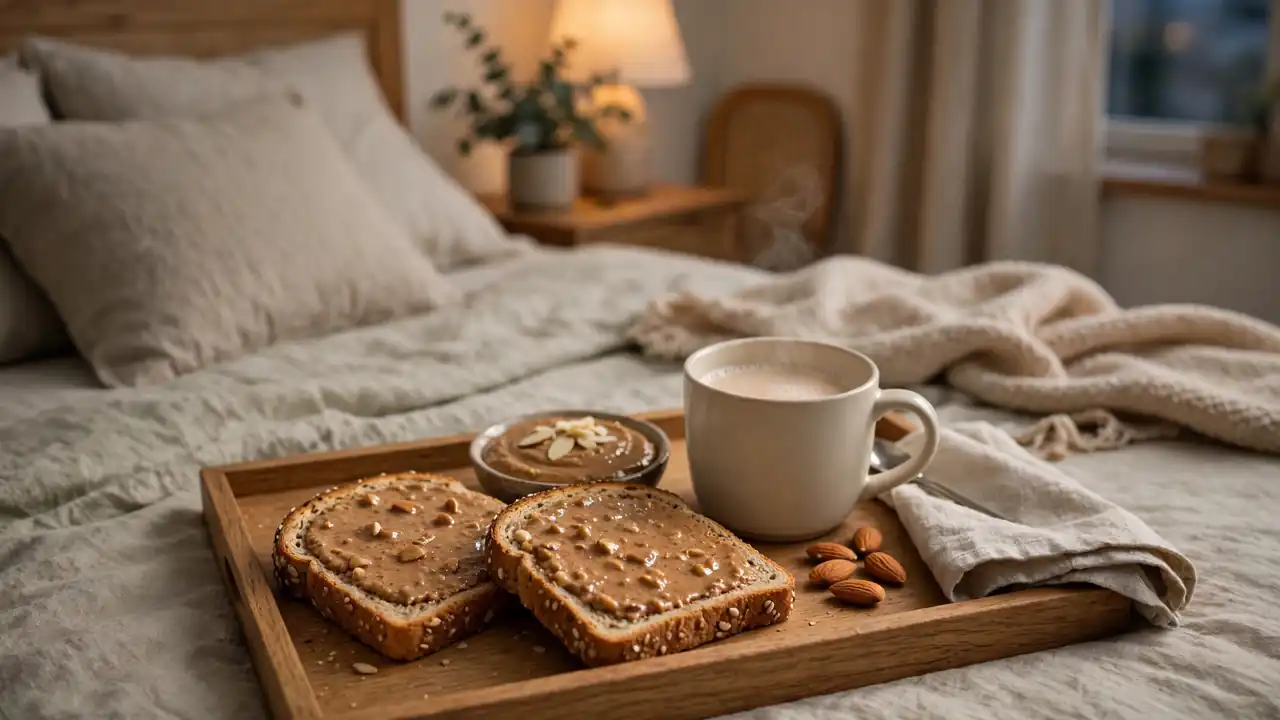
My favourite evening snacks are simple, small, and easy to repeat. Wholegrain toast with almond butter, Greek yogurt with berries, a banana with a small handful of nuts, or warm milk with wholegrain crackers. Each one combines a little protein with a little carbohydrate, feels comforting, and never leaves me heavy. I avoid large, spicy, or very fatty meals in the last few hours before bed, because they cause discomfort that wakes me up. I also avoid caffeine in the afternoon and evening, and alcohol in the evening, because alcohol may help me fall asleep quickly but severely disrupts deep sleep later in the night, a point every sleep guide I read repeats. Sugary drinks late at night are another quiet disturber, linked with shorter sleep in several summaries, so I keep sweet drinks for earlier in the day.
My Simple Evening Routine
Here is the routine I actually follow, and you can steal it freely. Dinner is balanced and finished about three hours before bed, with vegetables, a protein food, and wholegrains where possible. About an hour before bed, I dim the lights, put my phone on charge outside the bedroom, and make a small snack if I am hungry, often two kiwis, or yogurt with berries, or toast with almond butter. I drink chamomile tea slowly, without rushing, and I let the day wind down instead of forcing it to stop. Then I go to bed at roughly the same time each night, in a cool, dark room, and I read a few pages of a paper book until my eyes feel heavy.
I do not follow this perfectly, and you should not expect to either. Some nights I eat late, some nights I watch a show too long, and some nights I simply cannot sleep, and that is human. What matters is the pattern over weeks, not perfection on one night. When I return to the routine after a messy night, I sleep better again within a few days, and that recovery is what keeps me trusting the routine. If poor sleep persists for weeks despite a calm routine, or if you snore loudly, wake gasping, or feel exhausted every day, please seek professional help, because those signs deserve proper checking, not another food list.
Related reading on CAAW News: why you feel loneliest at 2 a.m., how to protect yourself from workplace stress, and our beginner yoga guide.
Frequently Asked Questions
What is the single best food for sleep?
There is no single winner, but tart cherries and kiwis have the most direct sleep research behind them. Tart cherry juice may modestly improve sleep duration, and two kiwis before bed were linked with faster sleep onset in a small study. Both are worth trying, but neither replaces good sleep habits.
How long before bed should I eat?
Finish your main meal about three hours before bed, and keep any late snack small, about an hour before lights out. A light snack combining protein and carbohydrate, like yogurt with berries or toast with almond butter, is a sensible choice that should not overload digestion.
Does warm milk really help you sleep?
Milk contains tryptophan, but the amount in one cup is small, so the benefit may come mostly from the calming ritual. If warm milk helps you wind down and you enjoy it, keep it. If you avoid dairy, a warm fortified plant milk gives you the same comforting ritual.
Should I take magnesium or melatonin supplements?
This guide is about food, not supplements, and supplements are a personal medical decision. Food sources of magnesium, like leafy greens, nuts, and seeds, are a safe starting point for most people, but please talk to a qualified professional before starting any supplement, especially if you take medication or have a health condition.
What foods should I avoid before bed?
Avoid caffeine in the afternoon and evening, alcohol in the evening, large or spicy meals close to bedtime, and sugary drinks late at night. Alcohol may help you fall asleep fast, but it disrupts deep sleep later, and caffeine delays sleep onset even when you feel used to it.
Can food help with insomnia?
Food can support better sleep as part of a calm routine, but it cannot replace treatment for insomnia or other sleep disorders. If poor sleep lasts for weeks, affects your work or mood, or worries you, please seek professional help, because proper assessment matters more than any diet change.
Is tart cherry juice too sugary for evenings?
Juice does contain sugar, so keep portions modest, choose unsweetened juice where possible, and consider eating whole tart cherries if you can find them. If you watch your sugar intake or have diabetes, ask a professional whether regular juice suits you.
Final Thoughts
I started this guide staring at my ceiling, and I want to end it with the calmer nights I enjoy now. Food did not cure my sleep, and I would never claim it did. What food gave me was a gentle evening rhythm, two kiwis, a warm drink, a small snack, and a reason to slow down before bed, and that rhythm gave my body permission to rest. I hope you try one small change this week, just one, and notice how it feels over a few nights. Then tell me in the comments which food you tried first, and whether your nights felt any calmer, because your honest story might be the encouragement another tired reader needs to try their own first step.
React to this story