
Key Points
Key Points
- Match the playlist to the workout type, not just your taste
- Running needs a steady beat; lifting needs confident, steady energy
- HIIT needs short, high-energy tracks with clear changes
- Keep main lists around 45 minutes and refresh a third monthly
- Test new songs on a light day before a hard session
- Separate lists for cardio, lifting and HIIT work better than one mixed list
On This Page
- In this guide
- Match the music to the workout, not the other way round
- Subscribe to CAAW News
- Build a running playlist that holds your pace
- Choose lifting music that keeps you steady under the bar
- Survive HIIT without a playlist that gives up halfway
- Fix the common mistakes that kill a good session
- Keep your playlist fresh without starting from scratch
- Frequently asked questions
- Final thoughts
- React to this story
I used to dread the last ten minutes of my run. My legs were fine, my lungs were coping, and then the music would die — a slow song would slide in, my pace would fall apart, and I would start counting lampposts instead of enjoying the run. I am not a professional athlete, and I do not train for medals. I train because it clears my head, because it helps me sleep, and because I feel better afterwards. The fear that held me back was simple: I worried I was wasting my effort by training with the wrong soundtrack, and that everyone else in the gym somehow knew a secret I did not. This guide promises something practical: by the end, you will know exactly which kind of playlist fits running, lifting, HIIT and low-energy days, and you will have a simple way to build your own in under fifteen minutes. If you work out at home, in a gym, or on the road, and you want music that actually carries you through the hard part, this is for you. So lace up, press play, and let us fix your soundtrack together.
I have tested these ideas on real runs and real gym sessions, not just on paper — and I still get some sessions wrong, which is exactly why the system below works.
In this guide
- Match the music to the workout, not the other way round
- Build a running playlist that holds your pace
- Choose lifting music that keeps you steady under the bar
- Survive HIIT without a playlist that gives up halfway
- Fix the common mistakes that kill a good session
- Keep your playlist fresh without starting from scratch
Match the music to the workout, not the other way round
I learned this lesson the embarrassing way, on a treadmill, in front of strangers. I had loaded a playlist I loved for driving, full of songs I sang along to, and I expected it to work for a hard run. It did not. The tempos jumped all over the place, one ballad arrived right when I needed a push, and I spent more time skipping tracks than running. That day taught me that a workout playlist is a tool, not a greatest-hits collection. The job of the music is to match what your body is doing, and when it does, everything feels easier.
Think about it in three simple buckets. For steady cardio, you want a consistent beat you can settle into, something that feels like a metronome with personality. For lifting, you want something heavier and more confident, music that makes the rest between sets feel short and the lift itself feel deliberate. For HIIT, you want short bursts of energy with clear changes, so your body gets a signal when to push and when to recover. I keep three separate playlists now, and I never mix them, because the wrong energy at the wrong moment is worse than silence.
You do not need to study music theory to do this well. Just ask one question before you add a song: does this make me want to move at the speed of this workout? If the answer is not a quick yes, leave it out. Your future self, halfway through a tough set, will thank you for being ruthless now.
Build a running playlist that holds your pace
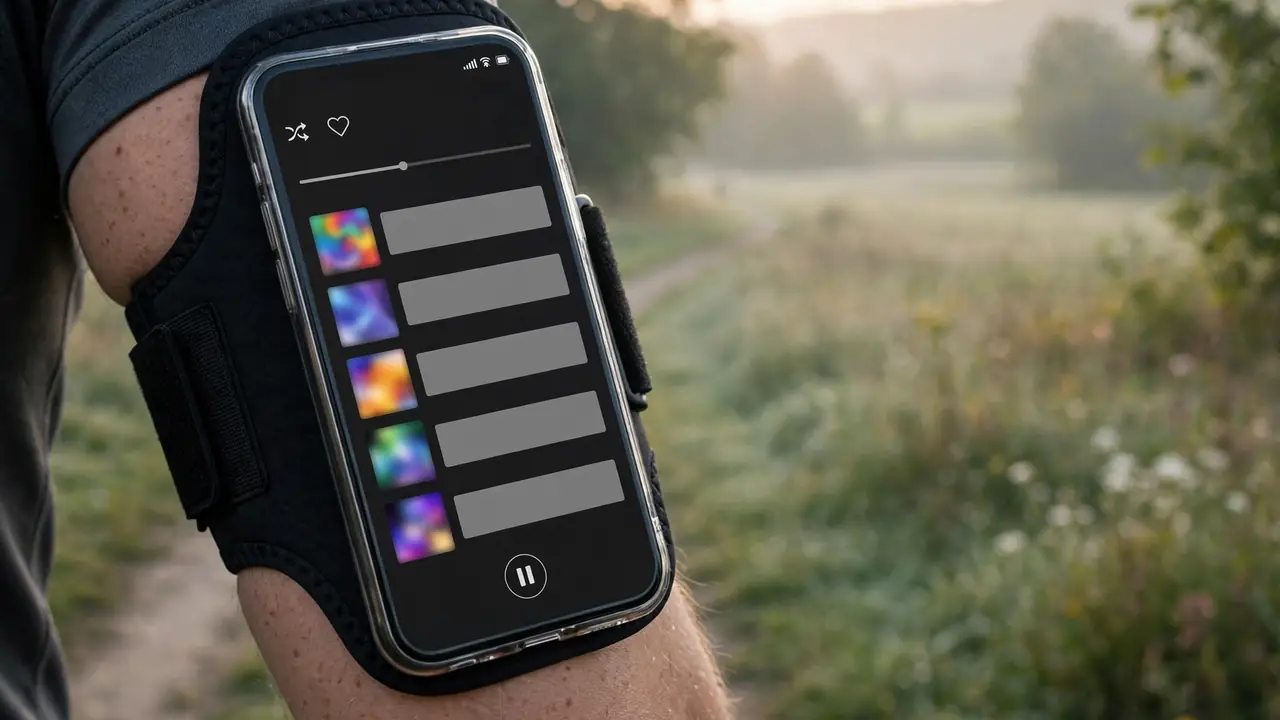
My best runs have a shape, and I stole that shape from how I actually warm up. I start with two songs that are upbeat but not frantic, the kind that let my legs find their rhythm without forcing it. Then I move into the main block, where the beat stays steady and the songs feel like they are pulling me forward. I save one favourite, a song I genuinely love, for the final stretch, because I know I will need a reward when I am tired. That structure has carried me through more runs than any single perfect song ever could.
If you are building a running list for 2026, start from the kind of upbeat, current playlists that streaming services already curate for workouts, and then edit them hard. A Spotify workout playlist can give you a strong starting point, with recent pop and dance tracks that many runners already use, but do not accept it as finished. Delete anything that makes you slow down, anything with a long quiet intro, and anything you skip twice. A playlist you never skip is worth more than a playlist with a hundred famous names.
I also keep a second, shorter running list for bad days. It is only about twenty minutes long, and every song on it is one I know by heart. On days when motivation is low, I do not try to be ambitious. I press play on the short list, I tell myself I only have to finish that, and most of the time I keep going. That is not cheating. That is designing for the person you actually are, not the person you wish you were at six in the morning.
Choose lifting music that keeps you steady under the bar
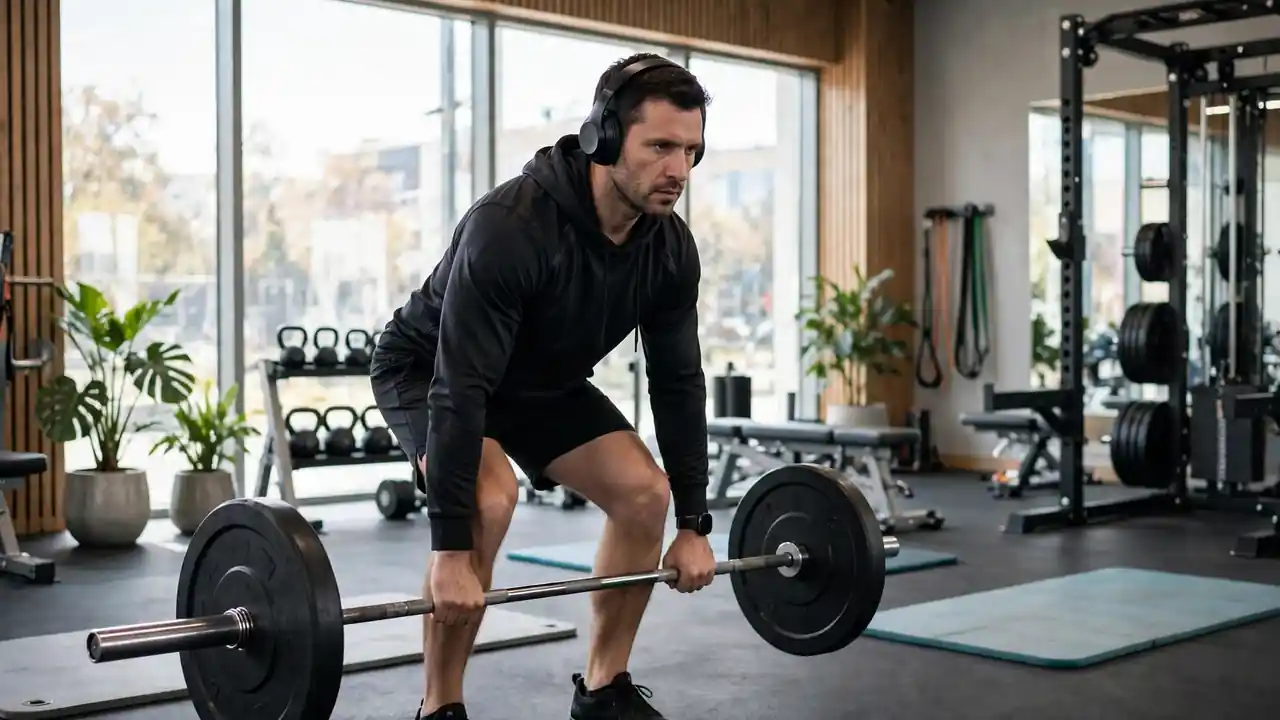
Lifting taught me a different lesson, and it came from a failed personal best. I had a fast, chaotic song playing during a heavy set, my breathing went ragged trying to match it, and I lost focus. I realised that lifting music should feel like a spotter: present, strong, and not distracting. I want a beat I can breathe with, a chorus that arrives when I need confidence, and no sudden quiet moments that break my concentration.
Hip-hop, rock and heavier electronic tracks tend to work well here, which is why so many gym playlists lean that way. A curated guide to workout playlists points to the same pattern, grouping tracks by training style rather than by chart position, from cardio and running through to strength training and CrossFit. I use that idea in my own gym list: I group songs by how they feel under load, not by artist, and I test a new song on a light day before I trust it on a heavy day.
One practical trick changed my lifting sessions completely. I put my phone on do-not-disturb and I stop touching it between sets. If a song is not working, I let it play and I note it afterwards, instead of breaking my rhythm to skip it. That small discipline keeps my rest times honest, and it stops a playlist problem from becoming a workout problem. If you train at home, our guide to strength training at home pairs well with this approach, and the best home workout equipment can help you build a space where you actually want to train.
Survive HIIT without a playlist that gives up halfway
HIIT is where most playlists fall apart, and I know because mine did, repeatedly. A HIIT session is short, sharp and unforgiving, and a playlist built for a long run will feel flat within minutes. I once tried to do intervals to a chill playlist because I liked the artist, and by the third round I was staring at the timer, willing it to end. The music was not bad. It was simply doing a different job from the one I needed.
For intervals, I want songs with a clear, driving beat and a structure I can feel in my body. Short tracks help, because a three-minute song can cover a whole work block without overstaying its welcome. I also like playlists built specifically for gym motivation, where the energy stays high from start to finish, such as the gym motivation playlist on Spotify that leans into high-energy electronic and dance tracks. I still edit it, because no generic list knows my taste, but the starting energy is right.
Here is my rule for HIIT: if a song does not make you want to move within five seconds, it does not belong in the interval block. Save it for the cool-down, where slower music actually helps. That cool-down matters more than people admit. I finish every HIIT session with two slower songs, I stretch while they play, and I let my breathing come down gradually instead of collapsing on the floor. It sounds small, but it is the difference between dreading the next session and looking forward to it.
Fix the common mistakes that kill a good session
I have made every playlist mistake in this section, so I write it with some humility. The first mistake is building a playlist that is too long and never finished. A two-hour list sounds impressive, but if you only train for forty minutes, you hear the same first twenty songs forever, and the rest of the list might as well not exist. I keep my main lists around forty-five minutes, which matches a real session, and I rotate songs in and out instead of endlessly adding to the end.
The second mistake is letting one song ruin the flow. We all have a song we love that simply does not work for training, because it is too slow, too sad, or too complicated to follow while moving. I kept one in my running list for months because I felt loyal to it, and every run it broke my stride. Letting it go felt like a small betrayal, but my runs immediately improved. Love the song elsewhere. Keep the workout list sacred.
The third mistake is never updating the list. Familiarity is comforting, but after a few weeks the same songs stop giving you a lift, because your brain has heard every beat drop coming. I refresh about a third of each playlist every month, keeping the anchors I love and swapping in new discoveries. If you need a companion for calmer sessions, our best study playlists show how a different tempo can serve a different kind of focus, and the same principle applies here: match the music to the task, every time.
Keep your playlist fresh without starting from scratch
I used to think refreshing a playlist meant starting over, and that belief kept me stuck with stale lists for months. Now I treat it like tidying a room: I take out what no longer works, I keep what still lifts me, and I add a few new things in the gaps. That takes ten minutes, not an afternoon, and it keeps the list feeling like mine. I do it on a Sunday evening, when I am planning the week, and it has become a small ritual I actually enjoy.
Discovery does not have to be hard work. I let streaming recommendations, friends, and even gym background music do the first round of filtering, and then I test candidates on a walk before they earn a place in a workout list. If a song survives a walk and a light session, it gets promoted. If it fails twice, it goes, no matter how popular it is. That test has saved me from many fashionable songs that sounded exciting for thirty seconds and exhausting for three minutes.
Finally, remember that the best playlist is the one you will actually use. It does not need to impress anyone, it does not need to be cool, and it does not need to follow a genre rule. If a cheesy pop song gets you through the last kilometre, it belongs. If a classic rock anthem makes your heavy set feel possible, keep it. Your workout, your rules, your soundtrack. And if your sleep is suffering after late training, foods for better sleep may help your recovery as much as any playlist can.

Try this today: Build three short lists this week — one for cardio, one for lifting, one for HIIT — each about forty-five minutes long, and test them on a light day before you trust them on a hard day.
Frequently asked questions
How long should a workout playlist be? Aim for the length of your session, usually thirty to sixty minutes. A list much longer than your workout means you keep hearing the same opening songs, while a list that is too short will loop awkwardly mid-session.
Is it better to use a ready-made playlist or build my own? Start ready-made, then edit ruthlessly. Ready-made lists give you energy and discovery, but only your own edits can match the list to your pace, your taste, and the workout you actually do.
What tempo works best for running? A steady, consistent beat works better than a constantly changing one. You do not need an exact number to start — choose songs that feel natural to run to, and keep the ones that hold your pace without you thinking about them.
Should I listen to music for every workout? Not necessarily. Music helps most people push through hard efforts, but some sessions, especially technique work, are better with less distraction. Try both, and notice which sessions feel better with sound and which feel clearer without it.
How often should I refresh my playlist? Refresh about a third of it each month. That keeps enough familiarity to feel comfortable, while adding enough novelty to keep your brain engaged and your energy up.
Can I use the same playlist for gym and running? You can, but you will get better results with separate lists. Running rewards steady momentum, lifting rewards steady confidence, and HIIT rewards sharp bursts — one list rarely serves all three well.
Final thoughts
I started this journey with a playlist that kept letting me down, and I ended it with a system that rarely does. That change did not come from finding one magic song. It came from matching music to movement, from being honest about what actually works for my body, and from refreshing the list before it went stale. If you have ever felt your energy collapse mid-session because the wrong song arrived at the wrong moment, you are not alone, and you are not doing it wrong — you just need a better fit.
You have done the hard part already by reading this far, so congratulations on taking your training seriously enough to fix the soundtrack too. Now build those three short lists, test them on a light day, and keep the songs that carry you. Then come back and tell me in the comments: which song always gets you through the last, hardest part of your workout? I would love to steal your best pick for my own list.
React to this story