Key Points
Key Points
- Choose by feeling, not map size: curiosity beats a large empty map
- Elden Ring rewards unguided exploration and leaving hard bosses for later
- Tears of the Kingdom offers creative freedom through Ultrahand building
- Red Dead Redemption 2 feels alive; Witcher 3 has story-rich side quests
- Cyberpunk 2077, Minecraft and Forza Horizon cover sci-fi, cosy and driving worlds
- Play by direction not checklist, and take breaks between epics
On This Page
- In this guide
- Choose an open world by feeling, not by map size
- Subscribe to CAAW News
- Explore the Lands Between in Elden Ring
- Build and wander freely in Zelda: Tears of the Kingdom
- Live a story in Red Dead Redemption 2 and The Witcher 3
- Try a neon city, a space frontier, or a cosy alternative
- Play open worlds well: pace, icons, and burnout
- Frequently asked questions
- Final thoughts
- React to this story
I still remember the first time I walked away from the main quest on purpose. I was supposed to be saving a kingdom, and instead I spent an hour riding across a plain just to see what was over the next hill. Nothing important happened, and it was the best hour I had spent in a game for months. I am not a completionist, and I do not chase every trophy. I play open-world games because they give me something real life rarely does: a whole world to explore at my own pace, with no one telling me to hurry. My fear, when I started, was that these huge games would overwhelm me, that I would get lost, bored, or stuck on a boss I could never beat. This guide promises a calmer way in: by the end, you will know which open worlds suit pure exploration, deep story, creativity, or a living, breathing setting, and how to start each one without drowning in icons. If you have a console or a PC and a few free evenings, and you want a world worth wandering in, this is for you. So pick a direction, ignore the map for a while, and let us find your next world together.
I have abandoned more open worlds than I have finished — and learning why taught me exactly which ones are worth your time.
In this guide
- Choose an open world by feeling, not by map size
- Explore the Lands Between in Elden Ring
- Build and wander freely in Zelda: Tears of the Kingdom
- Live a story in Red Dead Redemption 2 and The Witcher 3
- Try a neon city, a space frontier, or a cosy alternative
- Play open worlds well: pace, icons, and burnout
Choose an open world by feeling, not by map size
My biggest mistake with open-world games was choosing by size. I assumed the biggest map would be the best game, and I ended up in a beautiful world that felt empty, driving for ten minutes between identical missions. Size means nothing if the world does not reward curiosity. Now I ask a different question: does this world make me want to walk towards the horizon without a marker telling me why? If the answer is yes, the game earns my evenings. If the answer is no, I move on, no matter how many hours of content the box promises.
That question is exactly how many 2026 rankings judge these games. A ranking by exploration quality puts Elden Ring first, then Red Dead Redemption 2 and Tears of the Kingdom, and it is explicit about its method: open-world design and exploration carried the heaviest weight, alongside game quality, world reactivity, content breadth, playability and genre impact. I agree with that order of priorities, even when I disagree with the exact ranking, because a world worth exploring beats a world that is merely large.
Think about what you actually enjoy. Do you love uncovering secrets? Do you love a story that makes you care about its people? Do you love building strange machines, or riding through a landscape that feels alive? There is no single best open world, only a best fit for your mood. The games below cover each of those feelings, so you can start with the one that sounds like you, not the one with the loudest marketing.
Explore the Lands Between in Elden Ring
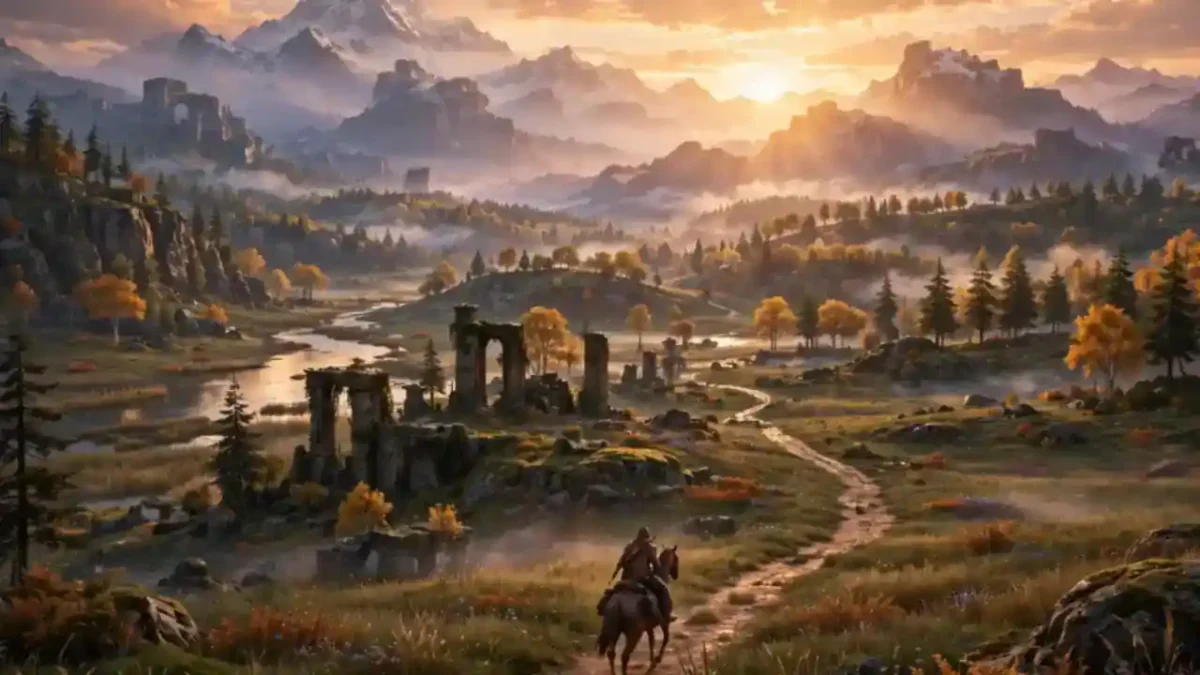
Elden Ring changed how I think about exploration, and it did so by trusting me. There are few map markers, few specific objectives spelled out for you, and a constant invitation to discover caves, dungeons and hidden bosses simply because you wandered in the right direction. A GameSpot guide to open-world games describes it the same way: Elden Ring takes FromSoftware’s difficult, methodical combat and places it in an open-world setting, where exploration and discovery are what the genre is all about, and where the game rewards players for scouring new areas, so long as you can defeat what is lurking there.
I will be honest about the difficulty, because it stopped me at first. I died, a lot, and I almost quit in the opening hours, convinced the game was not for me. What kept me going was the freedom to leave a hard fight, explore somewhere else, grow stronger, and come back later with better gear and a better plan. That freedom is the secret of Elden Ring. You are never truly stuck, because the world is always offering another path, another cave, another strange ruin over the hill. If you play it, give yourself permission to walk away from bosses. The world will reward you for it.
My advice for newcomers is simple: explore on horseback, follow your curiosity rather than a checklist, and do not worry about doing things in the right order. There is no right order. There is only your journey through the Lands Between, and the stories you will tell afterwards about the boss you found by accident, or the hidden area you discovered because you refused to fast-travel. Those stories are why Elden Ring still tops lists in 2026, years after its release.
Build and wander freely in Zelda: Tears of the Kingdom
If Elden Ring is about trusting you to explore, Tears of the Kingdom is about trusting you to invent. Hyrule is filled with puzzle shrines to tackle, enemies to defeat, and chests to crack open, and the same GameSpot guide notes that building on Breath of the Wild’s foundation, Tears of the Kingdom offers a ton of freedom thanks to the Ultrahand ability, which lets you combine objects to build flying machines, monster trucks and long bridges, giving you complete control over how you explore. I spent my first evening building a terrible raft, watching it fall apart, and laughing harder than I had in weeks. That is the game in miniature: try, fail, laugh, try again, and suddenly you have built something wonderful.
I recommend Tears of the Kingdom to anyone who finds Elden Ring too punishing, because it is far more forgiving while keeping the same joy of discovery. The difficulty curve is gentler, the tutorial systems teach gradually, and the world encourages play rather than punishment. You can climb, glide, cook, and experiment, and the game rarely tells you that you are doing it wrong. If you have a Switch or Switch 2, and you want an open world that feels like a playground, start here.
One tip from my own playthrough: resist the urge to look up every shrine solution online. The joy of this game lives in the moment you solve a puzzle your own way, even if your solution is gloriously messy. A bridge made of three logs and a prayer counts. A flying machine held together by hope counts. Your Hyrule does not need to look like anyone else’s, and that is precisely the point.
Live a story in Red Dead Redemption 2 and The Witcher 3
Some open worlds are not about freedom first. They are about feeling like you live inside a story, and no two games do that better than Red Dead Redemption 2 and The Witcher 3. Red Dead Redemption 2 is the game I recommend when someone says they want a world that feels alive: mud on boots, weather that changes the mood, strangers with stories on the road, and a main character whose choices carry real weight. The exploration-quality ranking calls it the best for a world that feels alive, and after a slow evening riding through its frontier, I understand why.
The Witcher 3 is different, and I love it for a different reason: its side quests. In most games, side quests feel like chores. In The Witcher 3, they feel like short stories, with moral choices that are rarely clean and consequences that linger. A Polygon guide to Breath of the Wild replacements notes that experiencing its vast world, with its massive, intricate narrative and story-based expansions, could easily take over a hundred hours, and that is both a warning and a promise. Do not rush it. Play a few quests, live in the world for a while, and let the story unfold at walking pace.
I made the mistake of trying to finish The Witcher 3 quickly, and I burned out. When I came back months later and played slowly, one quest at a time, it became one of my favourite games ever. That is my advice for both of these epics: treat them like novels you read a chapter at a time, not races you must win. Your evenings will be better for it, and the stories will stay with you longer.
Try a neon city, a space frontier, or a cosy alternative
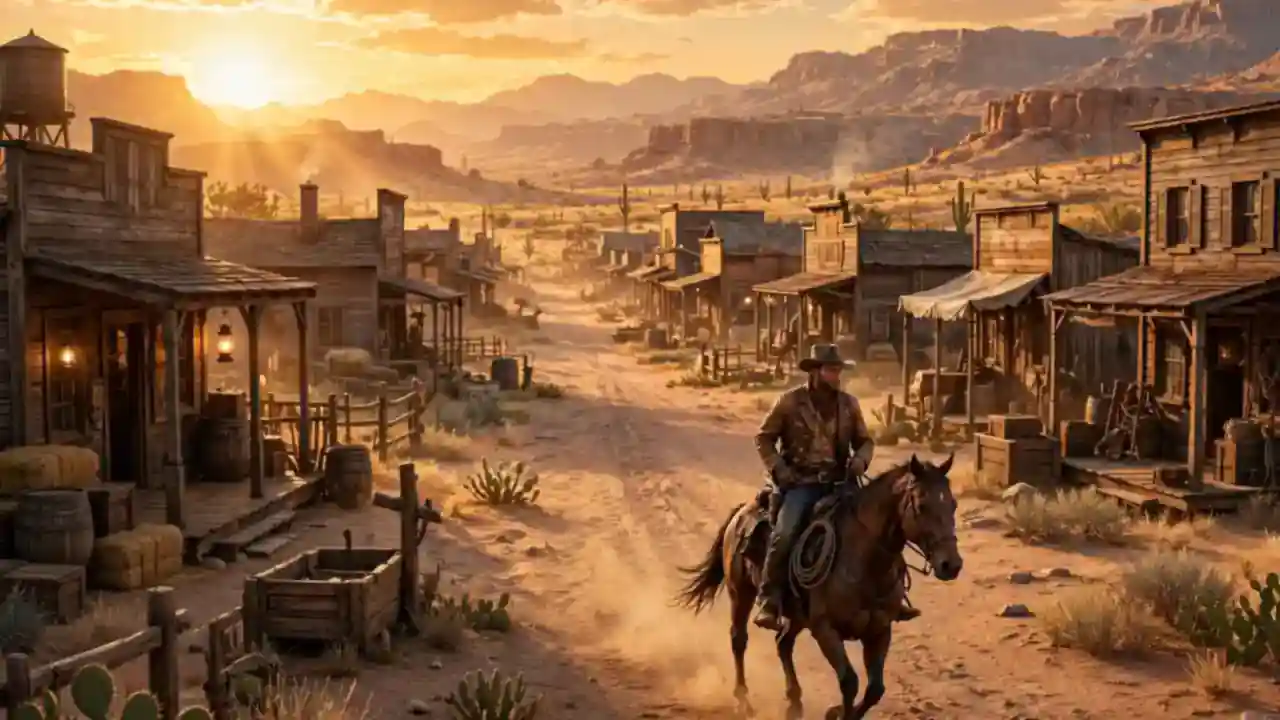
Not every great open world is fantasy, and I am glad, because variety keeps the genre fresh. Cyberpunk 2077, after years of updates, offers a dense neon Night City full of branching stories and side content that rewards curious players. I went in expecting style over substance, and I found a city that genuinely rewards wandering, talking to strangers, and choosing your own path through its districts. If science fiction appeals to you more than swords and horses, this is a strong, modern pick, and it is worth playing in its current, updated form rather than judging it by its launch reputation.
For a change of pace entirely, consider a cosy or creative open world. Minecraft remains the purest version of this: a world you shape yourself, at your own speed, alone or with friends. If you want something gentler after a hard week, our best cosy games are a perfect companion to this list, because they prove that an open world does not need danger to be worth exploring. Sometimes the best world is the one that lets you build, plant, and breathe.
And if you love speed more than swords, do not overlook open driving worlds. A 2026 exploration ranking lists Forza Horizon 6 as a change of pace, and the idea is sound: an open world can be a festival of roads, landscapes and cars, not just a fantasy map. Pair it with our best racing games if you want to explore that side of the genre properly. The point is not to pick the most serious world. It is to pick the world you will actually return to.
Play open worlds well: pace, icons, and burnout
I have burned out on open worlds more times than I care to admit, and the pattern was always the same: I treated the map like a to-do list, I cleared icons in strict order, and I turned exploration into admin. The fix, which I now use for every open world, is embarrassingly simple. I pick a direction, not a destination. I walk or ride towards something that looks interesting, I let random events find me, and I only check the map when I am genuinely lost. That habit, which a guide to open-world adventure also recommends, transforms the experience from checklist to journey.
I also reduce fast travel for the first half of a playthrough, at least when I can. Travelling on foot or horseback lets small details surface: ambient conversations, a hidden cave, a stranger in trouble, a view you would have skipped. Those moments become the stories you tell friends, while fast-travelled missions blur together. Later, when you know the world, fast travel is a kindness. Early on, it is a shortcut that costs you the best part of the game.
Finally, take breaks between open worlds. These games are huge, and playing two epics back to back is a recipe for fatigue, not enjoyment. I now alternate a big open world with a shorter game, a cosy game, or a good television show — our best TV shows of 2026 are useful for that reset. When you return to your world fresh, it feels new again, and the horizon calls you back instead of weighing you down.
Try this today: Start your next open world by picking one direction and walking that way for thirty minutes, with no fast travel and no checklist — just curiosity.
Frequently asked questions
What is the best open-world game in 2026? For pure exploration, Elden Ring remains the strongest overall choice, followed closely by Red Dead Redemption 2 for a living world and Tears of the Kingdom for creative freedom. The best choice depends on whether you prefer challenge, story, or invention.
Which open-world game is best for beginners? Tears of the Kingdom is the most beginner-friendly of the major picks, with a gentle difficulty curve and gradual tutorials. Minecraft is also welcoming, because you set your own goals and pace.
Do I need to play previous games first? Most entries on this list stand alone. Tears of the Kingdom benefits from familiarity with Breath of the Wild but works on its own, and Red Dead Redemption 2 functions as a complete prequel to the first game.
How long do these games take to finish? Expect tens of hours for a main story, and well over a hundred hours if you explore thoroughly. The Witcher 3 alone can easily pass a hundred hours with its story expansions included, so play at your own pace rather than racing.
Are open-world games too big and overwhelming? They can feel that way if you treat the map as a checklist. Pick a direction instead of a destination, reduce fast travel early on, and take breaks between epics — the world becomes a pleasure rather than a chore.
Can I play open-world games casually? Yes. Games like Tears of the Kingdom, Minecraft and Forza Horizon suit short, relaxed sessions well, because you can explore, build or drive for half an hour and still feel you accomplished something.
Final thoughts
I started this guide as someone who had walked away from kingdoms to stare at hills, and I finish it convinced that was never a waste of time. Open worlds are at their best when they trust you: to explore, to invent, to live a story, or simply to ride towards a sunset because it looks beautiful. The games here earn that trust in different ways, and whichever one you choose, I hope it gives you evenings that feel like adventures, not obligations.
Congratulations on choosing a world worth wandering in, rather than another game you will finish and forget. Now pick your direction, press start, and resist the map for just a little while. Then come back and tell me in the comments: which open world made you forget the main quest entirely, and what did you find instead? Those stories are my favourite part of this genre, and I cannot wait to hear yours.
React to this story