Key Points
Key Points
- Keep Driving by YCJY Games turns road-trip hazards into turn-based combat encounters
- CASSETTE BOY, Never Grave: The Witch and The Curse, Whiskerwood, and Esoteric Ebb lead the overlooked standouts
- September 2026 roundups highlight Well Dweller, Order Automatica, Songs of Glimmerwick, Cat Me If You Can, MONOWAVE, and Little Ghost
- Small teams can take creative risks that big-budget studios cannot afford
- Practical pipeline: follow small outlets, browse store tags, wishlist ruthlessly, and join player communities
- Match the game to your mood rather than to a ranking
On This Page
- Subscribe to CAAW News
- What You Will Find in This Guide
- Why Great Indie Games Disappear
- Keep Driving: A Road Trip Where Traffic Is Combat
- Four More Overlooked Standouts Worth Your Evening
- The September Surprises: Songs, Cats, and Small Wonders
- Why Small Teams Can Take Risks Big Studios Cannot
- How to Find Hidden Gems Yourself
- Frequently Asked Questions
- Are these games available on console, or only on PC?
- Which game on this list should I play first?
- Why have I never heard of these games?
- Are indie games shorter than big-budget games?
- Do I need a powerful computer to play indie games?
- How can I support small developers?
- Final Thoughts
- React to this story
I have a habit I am slightly embarrassed about. Every few months I open my games library, scroll past the big famous titles I already own, and realise I have spent more time choosing what to play than actually playing anything. Then a friend sends me a message about a tiny game I have never heard of, I play it that same night, and I wonder why nobody told me about it sooner. That feeling, of finding something wonderful that the spotlight missed, is what this guide is about.
2026 has been a strange year for games. The biggest releases took up all the oxygen, the store pages filled with familiar names, and underneath all that noise a crowd of small teams released brave, weird, funny, and beautiful games that most players never saw. Some of them were made by a handful of people. Some of them try ideas that a big studio would never approve. All of them deserve a weekend of your time.
If you are tired of scrolling, if your library is full of games you do not love, or if you just want to feel excited about games again, this guide is for you. I have gathered the overlooked indie games that kept coming up in 2026 roundups and player recommendations, I have played or closely followed the ones I could, and I will tell you honestly what each one is, who it is for, and why it slipped past most people. No hype, no scores, just a fellow player pointing at good games.
I have not played every game on this list to completion, and I will not pretend otherwise. Where I describe a game from roundups and player reports rather than my own finished playthrough, I say so, and I have avoided inventing release dates, prices, or review scores I could not verify.
What You Will Find in This Guide
- Why so many great indie games disappear in 2026
- A road trip turned into turn-based combat
- Co-op curses, mouse cities, and dice-driven role-playing
- Cozy games for quiet evenings: cats, songs, and musical woodlands
- How to find hidden gems yourself, without drowning in store pages
- Which of these to play first, depending on your mood
Why Great Indie Games Disappear
I used to assume that good games naturally rise to the top. If a game was great, people would find it, talk about it, and it would sell. After years of following indie releases, I have learned that this is not how it works at all. In 2026, thousands of games release on PC storefronts, and the store algorithms can only show you a fraction of them. A small team without a marketing budget is competing for attention against companies that spend more on one trailer than the indie team spent on the entire game.
The other problem is timing. A tiny game that launches in the same week as a giant blockbuster can vanish from the front page within days, no matter how good it is. And many players, myself included, buy games from wishlists and familiar names rather than browsing the unknown. The result is a strange situation: the most original games of the year are often the ones you have to go looking for, because nobody is paying to put them in front of you.
That is why lists like this one matter, and why player recommendations matter even more. Almost every game below reached me through another player, a small site, or a creator who cares about the genre, not through a storefront banner. Keep that in mind as you read, because at the end I will show you how to build your own pipeline of recommendations, so you stop missing the next one.
Keep Driving: A Road Trip Where Traffic Is Combat
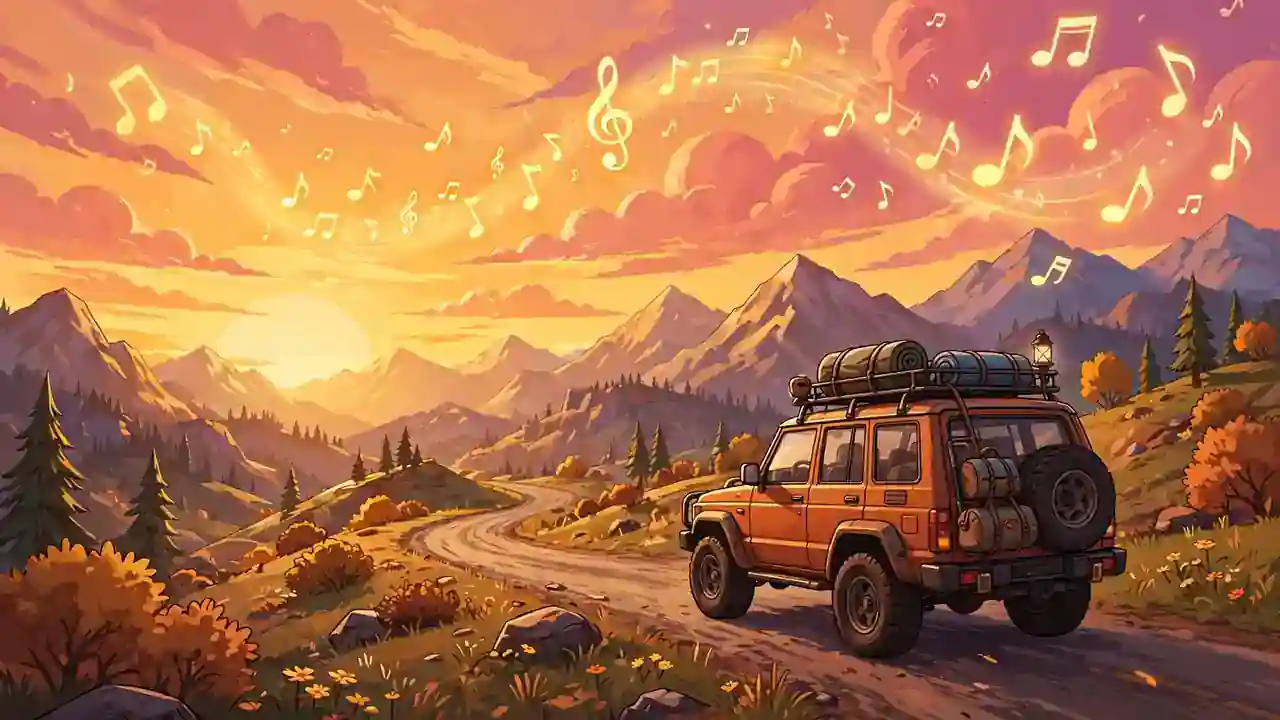
I want to start with the game that charmed me most, because its idea sounds like a joke until you play it. Keep Driving, from developer YCJY Games, turns a simple road trip into something unexpectedly deep. Highway hazards you would normally ignore, construction zones, breakdowns, aggressive drivers, become turn-based combat encounters, and the whole journey is wrapped in an emotional story with an indie-rock soundtrack featuring real bands.
What I love about this idea is how honest it is about travel. A road trip is not really about the destination. It is about the small problems, the strange people, the songs on the radio, and the feeling of being between places. Keep Driving takes that feeling seriously and builds a game system out of it, instead of treating the road as empty space between missions. It launched to modest attention, according to 2026 roundups, and has quietly built a devoted following since, which is the classic hidden-gem story in miniature.
Play this one if you like story-driven games, turn-based combat that does not feel like homework, and soundtracks you will still be humming the next day. Skip it if you need constant action, because this is a game about the journey, and it is happy to take its time.
Four More Overlooked Standouts Worth Your Evening
I grouped these four together because they kept appearing side by side in 2026 hidden-gem roundups, and because they show how wide indie games have become. There is something here for almost every mood.
CASSETTE BOY is a puzzle platformer built around perspective-shifting design, hailed in roundups as a 2026 standout. I am always suspicious of puzzle games that rely on one trick, but the trick here is the point: changing how you see a level changes what the level is, and that is the kind of idea that stays with you after you stop playing.
Never Grave: The Witch and The Curse is a roguevania, a mix of roguelike structure and Metroidvania exploration, built around hat-possession combat, and it supports four-player co-op. If you have a group of friends who like exploring strange places together and laughing when everything goes wrong, this is the one to try first. Co-op games live or die on whether they are fun when you fail, and the possession mechanic gives failure a funny, chaotic flavour.
Whiskerwood is a cozy city-builder about a mouse colony, praised for a clean interface that keeps building simple. I know a city-builder about mice sounds like a joke, but cozy builders work precisely because they lower the stakes. Nobody is going to invade your mouse town. You are just making a nice place, at your own pace, and for a tired evening that is exactly enough.
Esoteric Ebb is a dice-driven role-playing game with a fiercely devoted fanbase. Dice in a role-playing game are not just randomness, they are a way of telling stories about luck, risk, and consequences. If you like games where your choices and a roll of the dice together decide what happens next, and you enjoy deep narrative role-play, this is the cult favourite of the bunch.
The September Surprises: Songs, Cats, and Small Wonders
I pay attention to monthly indie roundups, because a single month can hold more good games than most players try in a year. September 2026 was one of those months, and several of its standouts deserve a place here.
Well Dweller was described by one indie roundup as one of the best games of 2026, which is a bold claim for a game most players missed. I include it here with that context rather than my own verdict, because bold claims deserve checking, but a game earning that kind of praise from a dedicated indie outlet is exactly the signal this guide is built to pass on.
Order Automatica is a dark tactical roguelite where positioning, synergies, and automated battles collide on a tiny three-by-three ritual grid. One writer described it as chess with demons, and I cannot improve on that description. If you like tactics games but you are short on time, a tiny grid with deep decisions is a gift.
Songs of Glimmerwick takes you to a musical woodland fantasy world where casting a spell is as easy as playing a song. You attend classes, grow a university garden, befriend classmates and townsfolk, and explore an island full of oddities. It is a story-driven witch academy role-playing game, and it is the warmest-sounding game on this list. Play it when you want a world to live in for a while, not a challenge to beat.
Cat Me If You Can is a charming, cozy game where you explore handcrafted black-and-white worlds, searching for hidden cats to photograph and bringing colour back into the world as you find them. I smiled the first time I read that description, and I have not stopped smiling since. Some games earn their place through beauty, some through challenge, and some, like this one, through pure delight.
MONOWAVE is a puzzle adventure through colourful worlds powered by four emotions, playable alone or with a friend, where you express feelings through song, empathise with spirit friends, and solve puzzles to move forward. And Little Ghost is a chill Metroidvania built around non-linear exploration with no combat and no currency, where you gain friends and abilities and collect strange media, tarot cards, odd podcasts, and songs from more than twenty bands, inside a surreal papercraft world. Both are gentle in a way that big games rarely dare to be, and both reward curiosity over reflexes.
Why Small Teams Can Take Risks Big Studios Cannot
I think it is worth pausing to appreciate why these games exist at all. A big studio with hundreds of people and a huge budget cannot easily bet everything on an idea like hat-possession combat or a road trip where traffic is the enemy. Too many jobs depend on the game selling millions of copies. A small team can take that bet, because their costs are lower and their audience, while smaller, is often more forgiving and more enthusiastic.
Accessible tools have helped enormously. Engines and crowdfunding platforms have lowered the barrier for small teams and solo developers, which is one reason 2026 saw such an explosion of creative titles. That explosion is a double-edged sword: more great games exist, but more games of every quality exist too, and finding the good ones takes more work than it used to. The answer is not to complain about the flood. It is to build better filters, and other players are the best filter there is.
How to Find Hidden Gems Yourself
I promised you a pipeline, so here is mine, built over years of missing games and then finding them too late. First, follow two or three small indie outlets or creators whose taste matches yours, not the biggest gaming sites. Small outlets cover small games because they love them, not because a publisher paid for coverage. Second, browse store tags instead of the front page. Search for the exact kind of game you want, a cozy city-builder, a dice role-playing game, a puzzle platformer, and sort by recent releases rather than best sellers.
Third, use wishlists ruthlessly. When you see an interesting game, wishlist it immediately, even if you are not ready to buy. Wishlists are how small developers measure interest, and they are how you remind yourself later. Fourth, join one community, a forum or a chat group, where people post what they are actually playing, not what is trending. The best recommendations I have ever received came from a stranger saying “I played this last night and I cannot stop thinking about it”. Fifth, give a new game thirty honest minutes before you judge it. Indie games often teach their best ideas slowly, and the first ten minutes are rarely the whole story.
My honest take: You do not need to play every game on this list. Pick one that matches your mood tonight, play it for an hour, and see how it feels. If it clicks, you have found something the algorithm missed. If it does not, try the next one. The joy of hidden gems is not in collecting them, it is in the moment one of them surprises you.
Frequently Asked Questions
Are these games available on console, or only on PC?
Availability varies by game, so check the store page for the platform you play on before buying. Many indie games start on PC and reach consoles later, while others launch on several platforms at once.
Which game on this list should I play first?
If you want story and charm, start with Keep Driving. If you want something cozy, try Whiskerwood or Cat Me If You Can. If you want a challenge with friends, try Never Grave: The Witch and The Curse. Match the game to your mood, not to a ranking.
Why have I never heard of these games?
Small teams usually cannot afford big marketing, and storefront algorithms show only a fraction of new releases. Many of these games launched near bigger titles, or built their audience slowly through player recommendations instead of launch-week publicity.
Are indie games shorter than big-budget games?
Often, yes, but not always. Many indie games are designed to be finished in a few evenings, which is part of their appeal. Length is not a measure of quality, and some of the most memorable games I have played lasted only a few hours.
Do I need a powerful computer to play indie games?
Most indie games are far less demanding than big-budget releases, and many run well on modest hardware. Check each game’s listed system requirements, but do not assume you need an expensive machine.
How can I support small developers?
Buy the game rather than waiting for a deep sale, leave an honest review, wishlist their next project, and tell a friend. For a small team, one genuine recommendation can matter more than any advertisement.
Final Thoughts
I started writing this guide with a list of names, and I finished it thinking about why I play games at all. The big releases give me spectacle, and I enjoy that. But the small games give me something else: the feeling that a few people cared enough about a strange idea to build it, and that I get to discover it like a secret. That feeling is worth protecting, and it only survives if players keep looking past the front page.
So here is my challenge. Pick one game from this list tonight, just one, and give it a real chance. Then come back and tell me in the comments which one you chose and whether it surprised you. And if you have your own hidden gem from 2026, a game you love that nobody talks about, share it too. The next person who reads this guide might be looking for exactly that game, and you might be the one who finally puts it in front of them.
React to this story