Key Points
Key Points
- Lo-fi means low fidelity: deliberate imperfections like vinyl crackle and tape hiss are the point
- Most lo-fi sits around 60 to 90 beats per minute, close to a resting heart rate
- A 2026 statistics roundup reports around 65 percent of listeners are aged 18 to 24
- Listening peaks in daytime study and work hours, around 40 percent between 8am and 6pm
- YouTube hosts around 80 percent of lo-fi content globally, per the same roundup
- Practical routine: one playlist, low volume, 50-minute blocks, and real breaks
On This Page
- Subscribe to CAAW News
- What You Will Learn in This Guide
- What Lo-Fi Actually Is, and Why the Crackle Matters
- Why Your Brain Likes It When You Need to Focus
- Who Is Listening in 2026, and When They Press Play
- How a Bedroom Sound Became a Daily Habit
- How I Actually Use Lo-Fi to Get Work Done
- The Honest Downsides Nobody Puts in the Playlist Description
- Frequently Asked Questions
- Does lo-fi music actually help you study?
- Why does lo-fi have vinyl crackle and tape hiss?
- What tempo is lo-fi music usually?
- Who listens to lo-fi the most?
- Is lo-fi on YouTube or Spotify better for studying?
- Is a lot of lo-fi now made by AI?
- Can lo-fi help you sleep?
- Final Thoughts
- React to this story
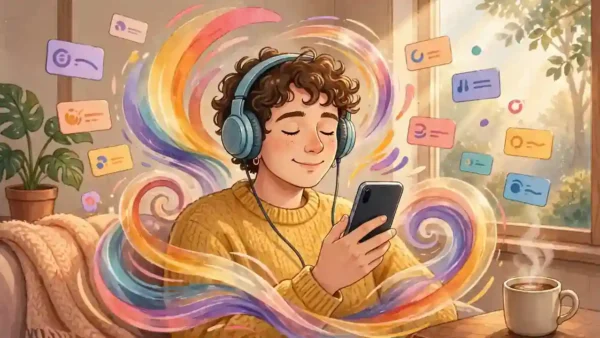
I first noticed it during exam season, though I did not have an exam to sit. I was working late, the house was quiet, and a friend sent me a link with a message that said nothing more than “try this”. I pressed play, and a soft piano loop started over a gentle crackle, like an old record playing in another room. Three hours later I looked up, my work was done, and I could not remember a single track that had played. That was the point, and that was the first time I understood lo-fi.
Lo-fi music is not trying to impress you. It is not trying to make you dance, cry, or sing along. It is trying to disappear just enough that you can think. And in 2026, millions of people study, work, and fall asleep to it every single day. Students leave the same stream running for hours. Remote workers build their whole workday around it. Parents play it for children at bedtime. Somewhere along the way, a bedroom hobby became the soundtrack of concentration itself.
If you have ever wondered why such simple music works so well, why it took over YouTube and Spotify, or whether it actually helps you focus or just feels nice, this guide is for you. I will walk you through what lo-fi really is, why your brain likes it, who is listening and when, and how to use it well without falling into the trap of letting it play on autopilot forever. I will also be honest about the parts nobody talks about, including the flood of lookalike tracks and the question of whether machines are now making the music.
I am a listener and a writer, not a neuroscientist, and I will not pretend a playlist can rewire your brain. Where I mention research or statistics, I point to the source, and where the evidence is mixed or preliminary, I say so plainly.
What You Will Learn in This Guide
- What lo-fi actually sounds like, and why the imperfections are the point
- Why your brain finds it easier to focus with lo-fi than with silence or pop songs
- Who listens to lo-fi in 2026, and when they press play
- How YouTube streams and Spotify playlists turned a niche sound into a daily habit
- How to build a study routine around lo-fi that actually works
- The honest downsides: sameness, AI-made tracks, and the artists fighting to stand out
What Lo-Fi Actually Is, and Why the Crackle Matters
I used to think lo-fi meant low quality, and in a technical sense it does. The name is short for low fidelity, music that is recorded or mixed to sound less clean than modern technology allows. You hear tape hiss. You hear the crackle of vinyl. A piano sounds slightly distant, as if it were recorded in a room with the window open. A drum beat shuffles along softly instead of punching through the speakers. Nothing is perfect, and that is deliberate.
The sound has a few recognisable ingredients. The tempo is slow to medium, usually somewhere around 60 to 90 beats per minute, which sits close to a resting heart rate. The drums borrow from 1990s hip-hop, soft and swung rather than hard and driving. The melodies are simple, often a jazzy piano or guitar loop sampled from an older record, repeated until it feels familiar. Ambient sounds drift underneath: rain on a window, distant traffic, birdsong, the hum of a café. Vocals are rare, and when they appear they are usually buried deep in the mix, more texture than message.
Here is the part that changed how I hear it. Those imperfections are not flaws the producer failed to fix. They are the whole emotional trick. A perfectly clean studio recording can feel cold and distant, like a showroom. A lo-fi track feels like a room you have already been in, warm and a little worn. That feeling of cosiness is a big part of why people reach for it when they are stressed, tired, or facing a long evening of work. It does not demand your attention, and it does not leave you alone in silence either.

Why Your Brain Likes It When You Need to Focus
I am not going to tell you lo-fi is magic, because it is not. But I can tell you why it feels so different from studying in silence or studying to your favourite pop playlist, because I have tried all three and the difference is obvious.
Silence sounds like a good idea until you try it in a noisy house. Every small sound becomes an interruption: a door closing, a phone buzzing, a neighbour’s television. Lo-fi fills that silence with something steady and predictable, so small interruptions have less room to grab you. Your brain stops patrolling for the next unexpected noise, because the background is already occupied by something gentle.
Pop songs fail for the opposite reason. Lyrics compete with language. When you are reading or writing, your brain is already busy with words, and a singer delivering different words at the same time creates a traffic jam. Lo-fi mostly removes that problem by removing the words. A simple loop, repeated without surprise, gives your brain something to rest on without giving it a puzzle to solve. That is also why the repetition matters. The tenth time you hear the same piano loop, your brain barely registers it, and that is exactly what you want when you are trying to think about something else.
Research in this area is genuinely interesting, though I want to be careful with it. A 2026 academic paper on lo-fi and academic focus discusses studies finding positive effects on student concentration and cognitive performance compared with silence and other genres, while also framing much of this as an emerging field rather than settled science. My own experience lines up with the cautious version of that claim: lo-fi helps me start work, helps me stay seated, and helps the hours feel shorter. Whether it makes me smarter is a claim I would not make. Whether it makes work feel easier is something I notice every single week.
Who Is Listening in 2026, and When They Press Play
I was surprised when I looked at who actually listens to lo-fi, because the picture is much younger and much more daytime than I expected. A 2026 statistics roundup reports that around 65 percent of lo-fi listeners worldwide are aged 18 to 24, and that listening peaks during study and work hours, with around 40 percent of users streaming between 8 in the morning and 6 in the evening. That matches what I see around me: students at desks, young professionals with headphones on, and a long quiet stretch of daytime listening rather than a late-night niche.
The platforms tell their own story. The same roundup reports that YouTube hosts around 80 percent of lo-fi content globally, with around 70 percent of views coming from mobile phones. That makes sense when you think about how people actually use it. You do not sit down to watch a lo-fi stream the way you watch a film. You open it on your phone, you leave it running, and you get on with your work. The video, often a looping animation of a quiet room, matters less than the feeling that something calm is present.
The scale is hard to grasp until you see a single channel. Lofi Girl, the channel that began as ChilledCow, is reported to sit at roughly 15.8 million subscribers and around 2.6 billion views, running one of the longest continuous streams on YouTube. Its animated study girl has become a symbol of the whole genre, and the channel’s reach, reported at around 190 countries, shows how far a bedroom idea can travel. Spotify’s numbers are large too, with the same statistics roundup reporting around 15 billion lifetime lo-fi streams on Spotify alone.
How a Bedroom Sound Became a Daily Habit
I think lo-fi grew for three reasons that came together at the right time, and none of them was a big marketing campaign. The first was lifestyle. Remote work, online classes, and long hours at a screen became normal for millions of people, and all of those people needed background sound that would not distract them. Lo-fi was already there, waiting, simple and cheap and endless.
The second was the format. A 24/7 stream is a different product from an album. You do not choose a track, you do not build a playlist, you just press play and the music never stops. That suits focus work perfectly, because every decision you avoid is a little energy saved for the work itself. Creators earn on listening time rather than clicks, because listeners leave the stream running for hours instead of watching once and leaving.
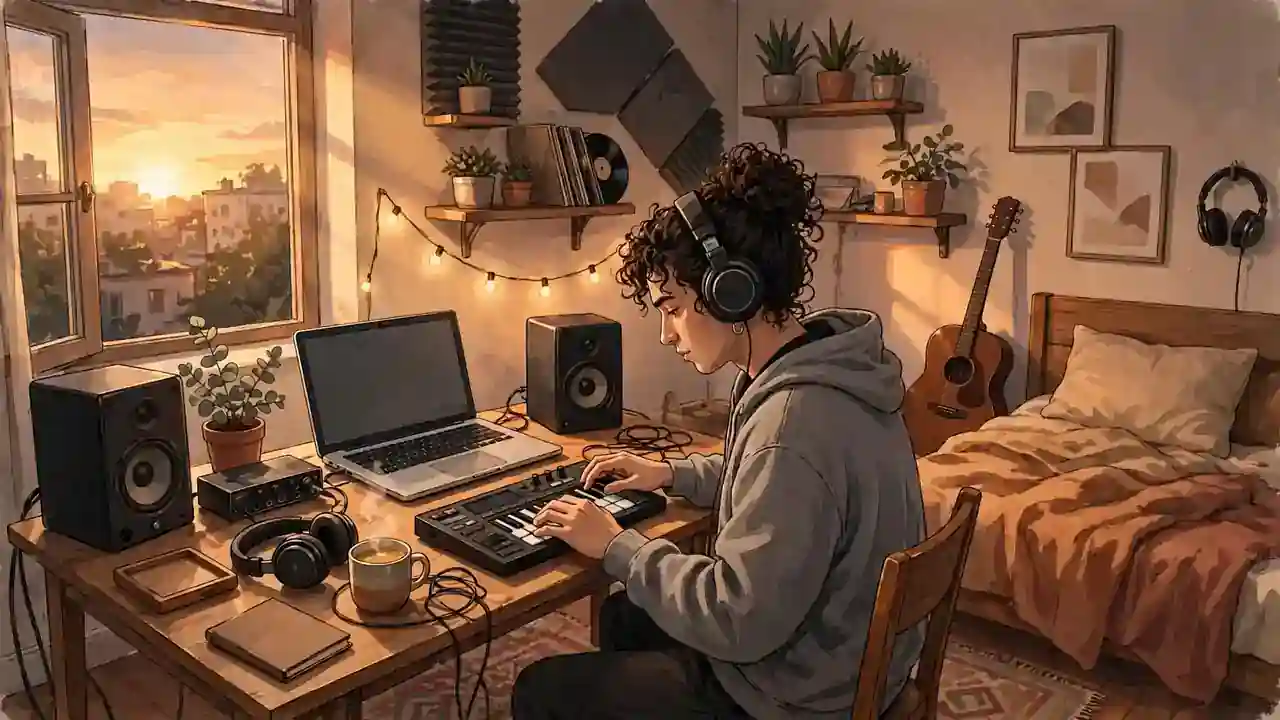
The third was accessibility. Lo-fi can be made at home by one person with a computer and basic software. You do not need a studio, a band, or a record deal. That low barrier is why so many independent producers built audiences of their own, and why the genre feels personal in a way that polished chart music often does not. Many creators fund themselves through streaming revenue, listener support platforms, and licensing their tracks for videos, rather than through major labels, and many actively choose to stay independent.
There is also a visual side I should mention, because it matters more than it should. The lo-fi aesthetic, muted colours, hand-drawn rooms, rain on windows, a cat asleep on a desk, gives the music a place to live in your imagination. When I press play, I am not just hearing a beat. I am stepping into a quiet room for a while. That little mental holiday is part of the focus effect, even if nobody can measure it neatly.

How I Actually Use Lo-Fi to Get Work Done
I want to move from theory to practice, because a playlist only helps if you use it with a little intention. Here is the routine I settled into after a lot of trial and error, and I offer it as a starting point you can adjust, not as a rule.
First, I pick one stream or playlist before I start working, and I do not switch it mid-session. Switching is a decision, and decisions break focus. Second, I keep the volume low, low enough that I could hold a conversation over it. If I can hear every detail, it is too loud to be background. Third, I work in blocks of around 50 minutes, then I take a real break, and I let the music stop during the break. That pause matters, because it stops the music from becoming invisible wallpaper that plays for twelve hours straight.
Fourth, I match the energy to the task. For writing and reading, I choose the softest, most repetitive tracks I can find. For lighter admin work, I allow myself something a little brighter. And fifth, I have one playlist I only use for deep work, so that pressing play becomes a cue. After a few weeks, my brain learned the association: this sound means it is time to work. That cue effect, more than any single track, is what made the biggest difference for me.
One more honest tip. If you find yourself listening to lo-fi for six hours and getting nothing done, the music is not the problem and it is not the solution either. It can hold the door open for focus, but it cannot walk you through it. The work still needs a plan, a deadline, and a first sentence.
The Honest Downsides Nobody Puts in the Playlist Description
I love this music, but I would be doing you a disservice if I only praised it. The first problem is sameness. Because lo-fi is simple by design, and because thousands of producers are making it, a lot of it sounds alike. A soft piano, a crackle, a rain sample, and you have heard the recipe before. Listeners who live inside the genre can usually tell the difference between a thoughtful track and a formula, but a casual listener hears a pleasant blur, and that blur can make genuinely creative producers harder to find.
The second problem is the rise of machine-made tracks. In 2026, AI tools let anyone generate lo-fi style beats quickly, and that flood of easy content makes it harder for human producers to stand out. One recent analysis notes that AI music changed shape in 2026, with different platforms taking different approaches to downloads and commercial rights after legal settlements. For listeners, the practical risk is not dramatic: you might spend an evening listening to music nobody actually made, and you would never know. For producers, the risk is real, because their work competes with an endless supply of soundalikes.
The third problem is the money and rights side, which is less visible but worth knowing. YouTube’s rules treat collections of songs from different artists as a particular kind of reused content, which can complicate monetisation for stream channels even when permissions are in place. That is one reason many lo-fi creators lean on direct listener support and licensing rather than ad revenue alone. If you love a producer’s work, following them directly and supporting them where they ask matters more than leaving a stream running in the background.
My honest take: Lo-fi is not a productivity hack, it is a comfort tool that happens to help many people focus. Use it to make starting easier, keep the volume low, take real breaks, and go looking for the human producers behind the sound. The genre is at its best when you treat it as music made by real people, not as endless background noise.
Frequently Asked Questions
Does lo-fi music actually help you study?
Many listeners find it helps them start and sustain work, and some studies report positive effects on concentration compared with silence or other genres. The evidence is promising but still emerging, so treat it as a useful tool rather than a proven brain boost, and notice what works for your own focus.
Why does lo-fi have vinyl crackle and tape hiss?
Those imperfections are deliberate. They give the music warmth and a feeling of familiarity, like an old record in a cosy room, and they help the sound sit in the background without demanding attention.
What tempo is lo-fi music usually?
Most lo-fi tracks sit around 60 to 90 beats per minute, close to a resting heart rate, with soft swung drums borrowed from 1990s hip-hop and simple repeated melodies.
Who listens to lo-fi the most?
A 2026 statistics roundup reports around 65 percent of listeners worldwide are aged 18 to 24, with listening peaking during daytime study and work hours between 8am and 6pm.
Is lo-fi on YouTube or Spotify better for studying?
It depends on your habit. YouTube suits long, unbroken streams you leave running, while Spotify suits curated playlists and offline listening. Pick the one you will actually use, and avoid switching mid-session.
Is a lot of lo-fi now made by AI?
AI tools have made it much easier to generate lo-fi style beats, and the volume of machine-made tracks is a real concern for human producers. Supporting named producers directly is the simplest way to keep human-made music visible.
Can lo-fi help you sleep?
Many people use slow, minimal lo-fi and ambient tracks for sleep, and sleep-focused playlists are among the genre’s growing areas. Keep the volume very low, and use a sleep timer so the music does not play all night.
Final Thoughts
I still remember that first evening, the piano loop and the crackle and the work somehow getting done. What I did not know then was that millions of other people were having the same quiet evening in their own rooms, in their own countries, with the same sound in the background. There is something comforting about that, a shared silence that is not quite silence.
So tonight, when you sit down to work, try it with intention. Pick one stream, turn it down low, and give yourself fifty honest minutes. Then tell me in the comments: does lo-fi help you focus, or does it just make the work feel less lonely? Both answers are worth hearing, and I read every one.
React to this story