Key Points
Key Points
- K-pop took six of Asia's top ten touring spots in 2026, led by SEVENTEEN.
- BTS topped the world touring chart with over 465 million dollars from the ARIRANG tour.
- TWICE, TXT, BLACKPINK and ENHYPEN also placed in Asia's touring top ten.
- Album sales neared 100 million copies for the year, driven by collectible physical albums.
- Dance, fan culture and years of training explain the global spread better than any single hit.
- New groups like RESCENE are already topping brand rankings, keeping the wave alive.
On This Page
- What You Will Learn
- The Stadiums Tell the Story First
- Subscribe to CAAW News
- BTS and the Comeback That Changed Everything
- It Was Never Just One Group
- Training, Dance and the Fan Machine
- Albums Still Matter, and That Surprised Me
- What K-pop Means for New Fans in 2026
- Frequently Asked Questions
- Is K-pop still popular in 2026?
- Who is the biggest K-pop group in 2026?
- Do I need to understand Korean to enjoy K-pop?
- Why do K-pop fans buy so many physical albums?
- Is BTS still active after military service?
- What is the best K-pop group for a new fan?
- Will K-pop keep growing after 2026?
- Final Thoughts
- React to this story
I still remember the first time I tried to explain K-pop to my best friend. I played him a song on my phone, and he laughed and asked why the video had so much colour, so much dancing, and so many people singing at once. I did not have a good answer then. I just knew I could not stop listening. That was years ago. Now I walk into a shop in my city and hear a K-pop song on the speakers. I see teenagers copying the same dance moves I once tried to copy in my bedroom. I see stadium tours selling out in minutes. So if you have ever felt confused by K-pop, or you love it already and want to understand how it grew so big, this article is for you. I will show you, step by step, how K-pop conquered the world in 2026, with real numbers, real tours, and real names. By the end, you will know exactly why this music is everywhere, and you will have a clear place to start if you want to join in.
Trust nudge: I am a fan writing as a fan, not a music industry insider, and I have not been paid by any group or agency mentioned here. Every tour figure and chart claim below is linked to a public source I checked during my research, and where a source is a fan blog or a less formal outlet, I say so plainly.
What You Will Learn
- How big K-pop touring became in 2026, in real numbers
- Why BTS, BLACKPINK, SEVENTEEN and TWICE still lead the story
- How training, dance and fan culture built a global machine
- What streaming, albums and physical sales tell us about 2026
- How new groups are keeping the wave alive for the next generation
- Where to start if you are new, without feeling lost
- Answers to the questions I hear most about K-pop
The Stadiums Tell the Story First
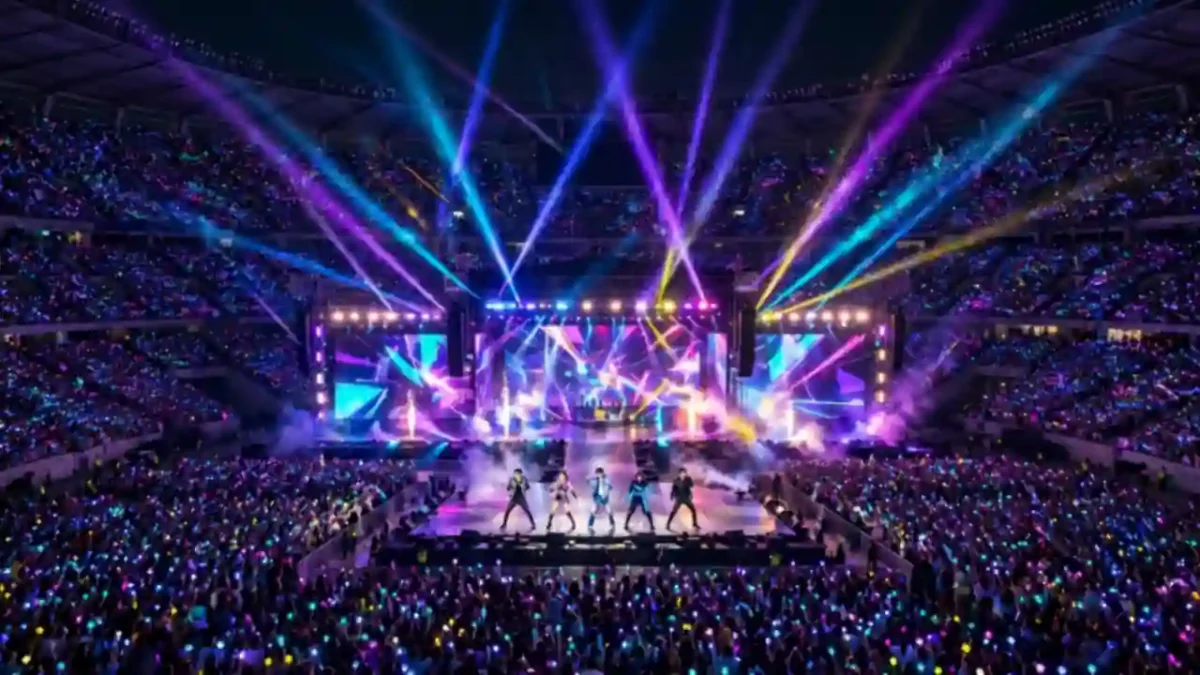
I learned the size of K-pop in 2026 not from a chart, but from a queue. I tried to get tickets for a stadium show, and the queue page told me I was number forty thousand in line. I laughed, then I sat there, because I knew most of those people would not get a ticket either. That feeling is now normal for K-pop fans around the world. The numbers back it up. K-pop acts took six of the ten highest-grossing touring spots in Asia over the past year, led by SEVENTEEN, who grossed 97.4 million dollars and sold 661,088 tickets, according to Pollstar’s Asia Focus chart reported by The Korea Times. TWICE came second in Asia with 76.18 million dollars, and BTS grossed 49.07 million dollars in Asia as part of their ARIRANG world tour. Those are not small club numbers. Those are stadium numbers, repeated city after city.
The global picture is even bigger. Pollstar’s worldwide figures, reported in October 2026, put BTS at the top of the world’s touring artists for 2026, with more than 465 million dollars through the ARIRANG World Tour, and global concert revenue passing 6 billion dollars for the first time, as reported by Suaragarut’s report on Pollstar’s data. I read that number twice, because it sounds impossible for one group. But it makes sense when you think about what a BTS tour looks like now: huge stadiums, fans flying in from other countries, and shows that feel more like national events than concerts. I have friends who saved for a year just to fly to one show. That is not casual listening. That is devotion, and it pays for stadiums.
Touring matters because it proves something streaming alone cannot prove. Anyone can stream a song once. Very few acts can fill a stadium in Seoul, Tokyo, London and Los Angeles in the same year. K-pop can, and in 2026 it did so again and again. If you want one simple test for whether a genre has truly conquered the world, ask this: can it sell out stadiums on every continent? In 2026, K-pop passed that test with room to spare.

BTS and the Comeback That Changed Everything
I was nervous when BTS went quiet for military service, like many fans were. I wondered if the world would move on. I should not have worried. BTS returned to touring after completing compulsory military service in South Korea, and they have been selling out large stadiums in major cities, as the same touring report notes. Their fifth studio album, ARIRANG, became the engine of that return. Industry reporting on HYBE’s second-quarter results says the album helped push HYBE’s recorded music revenue up 43 percent year on year to 326.8 billion won, with total revenue more than doubling to a record 1.45 trillion won, as reported by Indonesia Now’s report on HYBE and BTS streaming. I am not an accountant, but I know what a record quarter means: the comeback was not just emotional, it was commercial, on a scale few acts ever reach.
What I love most about the BTS story is how ordinary it feels at its heart. Seven young men who trained for years, who wrote honest songs about pressure, youth and hope, and who talked to fans like friends. That honesty is why ARMY, their fanbase, did not drift away during the quiet years. Fans kept streaming, kept buying albums, and kept waiting. When the tour finally came, that patience turned into the biggest touring year in the world. I think every new artist should study that lesson. Fame fades fast when it is only hype. It lasts when fans feel truly seen.
BLACKPINK proved the same point from a different angle. They are not a group that needs to be everywhere at once to stay huge. Their power is in the event: a comeback, a tour leg, a song that lands everywhere at the same time. In Pollstar’s Asia chart, BLACKPINK ranked eighth, still inside the top ten in a year crowded with huge tours. That staying power, years after their debut, is rare in pop music, where most acts peak and fade in three years. BLACKPINK did not fade. They became a permanent part of global pop, the way a classic rock band becomes permanent. Young fans discover them through a song, then stay for the style, the confidence and the performances.
It Was Never Just One Group
I used to think K-pop meant BTS, and BTS meant K-pop. I was wrong, and 2026 proved it beautifully. SEVENTEEN topped the Asia touring chart. TWICE came second. TXT and ENHYPEN also placed in the top ten in Asia. That depth is the real conquest. One group can be a phenomenon. Five or six groups filling stadiums at the same time is an industry, and an industry is much harder to stop. When I talk to new fans now, I do not start with one group. I ask what kind of music they like, because there is now a K-pop group for almost every taste: bright pop, dark and powerful concepts, soft ballads, hard hip-hop, and everything in between.
The October 2026 singer brand reputation rankings in South Korea show the same depth. The top ten included RESCENE, BTS, Lim Young Woong, ATEEZ, IVE, BLACKPINK, ILLIT, Stray Kids, and others, based on analysis of more than 129 million pieces of singer-related data, as reported by KStarTrend’s report on the October 2026 rankings. I love that list because it mixes veterans with newer names. It tells a new fan something important: you are not late. The story is still being written, and new groups are reaching the top right now. RESCENE reaching number one in that ranking, ahead of BTS, is a perfect example. The old guard is still huge, but the next wave is already here.
This depth also protects K-pop from the fate of past music crazes. When one act rests, another tours. When one sound gets tired, another group tries something fresh. I have watched friends who came for BTS stay for SEVENTEEN’s choreography, or come for BLACKPINK and stay for IVE’s clean pop sound. That chain of discovery is how a genre becomes a permanent part of world culture, not just a trend. It is also why record labels around the world now study the Korean system so closely. They want to copy the depth, not just the hits.
Training, Dance and the Fan Machine
I tried to learn one K-pop dance routine in my living room once. I lasted twenty minutes, and my legs hurt for two days. That small humiliation taught me more than any article about why K-pop looks so sharp on stage. These performers train for years before they debut: singing, dancing, languages, media training, and live stamina. When you watch a two-hour stadium show with almost no break, you are watching the result of that system. I respect it deeply, even when I argue about its pressure. The system is demanding, and we should talk honestly about that pressure, but its output is undeniable: performances that feel like sport and theatre at the same time.
Dance is the secret language of K-pop’s global spread. You do not need to speak Korean to copy a chorus dance. You do not need a translation to feel a beat drop. I have seen children in my neighbourhood learn a dance from a short video before they knew the song’s title. That is how K-pop crossed language barriers that stopped other genres. The music videos help too: bright, fast, full of story and style, made to be watched again and again. A great K-pop video is not just a promotion for a song. It is the song’s second half, and fans treat it that way.
Then there is the fan machine, and I mean that with love. K-pop fans organise streaming parties, charity projects, birthday ads on buses and billboards, and fan-made videos that reach millions. They translate lyrics within hours. They welcome new fans with guides and playlists. I have never seen another music fanbase work this hard, for free, out of love. That work is a huge reason K-pop conquered the world. The agencies built the groups, but the fans built the bridges to every new country. If you join a fandom, you are not just buying an album. You are joining a team, and that team will teach you everything you need to know.

Albums Still Matter, and That Surprised Me
I thought albums were dead. Everyone streams now, so why would anyone buy a physical album? K-pop proved me wrong again. The Korea Times report notes that K-pop album sales were closing in on 100 million copies for the year, alongside the touring surge. I buy albums myself now, and I understand why. A K-pop album is not just music. It is a photo book, a set of photo cards, posters, and a small piece of art you can hold. Fans trade the cards, display the books, and collect versions the way others collect football cards. Streaming gives you the song. The album gives you the feeling of belonging.
This matters for the music industry far beyond Korea. While many Western acts struggle to sell physical copies, K-pop acts sell millions, because they treat the album as an experience, not a leftover. HYBE’s results show albums and digital music bringing in 326.8 billion won in one quarter, almost matching merchandise and licensing at 310.6 billion won. When I read those numbers, I understood the business model clearly. The song brings you in. The concert makes you a fan for life. The album, the merch and the fan events keep you close between comebacks. It is a full circle, and it works because every part respects the fan’s love.
Streaming still plays its part, of course. BTS reaching huge streaming milestones shows that the digital audience is just as real as the stadium audience. But the lesson of 2026 is that streaming alone does not conquer the world. You need the live show, the physical product, and the community, all working together. K-pop built all three, and that is why it leads while other genres chase single viral moments. A viral song lasts a week. A fandom lasts a decade.
What K-pop Means for New Fans in 2026
I get asked one question more than any other: where do I start? My answer is simple. Start with one song you already like, not with a whole group’s history. If you like powerful pop, start with BLACKPINK. If you like emotional, honest songs, start with BTS. If you love dance, watch SEVENTEEN’s performance videos. If you like bright, fun pop, try TWICE. Then let the algorithm and the fans guide you. Watch one music video, then one live stage, then one funny interview. By the third video, you will know if this world is for you. Most people, in my experience, stay.
Do not worry about knowing every member’s name on day one. I did not, and I still mix up names in newer groups sometimes. Fans will help you, not judge you. Do not worry about the language either. Start with the feeling, then learn a few words as you go. If you want to learn in a structured way alongside your music, our Coursera programme review covers online courses and certificates, and our drone review is handy if you ever film a concert trip. Many fans tell me they learned their first Korean words from song lyrics, and that joy is part of the journey. And if you create content yourself, whether videos, newsletters or blogs, remember that this fan energy is a lesson too: people stay where they feel welcomed and helped. I learned that from reading guides like our email newsletter guide, which shows how trust, not hype, builds a lasting audience.

Frequently Asked Questions
Is K-pop still popular in 2026?
Yes, and the touring numbers prove it. K-pop acts filled six of Asia’s top ten touring spots, BTS led the world touring chart, and album sales approached 100 million for the year. That is not a fading trend. That is a genre at its peak.
Who is the biggest K-pop group in 2026?
By world touring revenue in 2026, BTS leads, with more than 465 million dollars from the ARIRANG tour. By Asia touring, SEVENTEEN leads. Different measures give different winners, which is itself a sign of how deep K-pop now is.
Do I need to understand Korean to enjoy K-pop?
No. The melodies, dances and videos carry the feeling, and fans publish translations very quickly. Many fans learn Korean words gradually through songs, but understanding every lyric is not required to enjoy the music.
Why do K-pop fans buy so many physical albums?
Because the albums include photo books, photo cards, posters and collectible versions. Fans collect and trade them, and the album becomes a keepsake, not just a way to hear songs you can already stream.
Is BTS still active after military service?
Yes. BTS returned to touring after completing compulsory military service, launched the ARIRANG album and world tour, and topped the 2026 world touring chart. Their return is one of the biggest stories of the year.
What is the best K-pop group for a new fan?
Start with your taste, not with a ranking. Try BTS for emotional pop, BLACKPINK for powerful pop, SEVENTEEN for dance, and TWICE for bright pop. Watch one live stage from each, and follow the group that makes you smile first.
Will K-pop keep growing after 2026?
Nothing grows forever without change, but the depth of new groups, the touring strength, and the fan culture all point to staying power. New groups are already topping brand rankings, which suggests the wave has a next chapter, not just a peak.
Final Thoughts
I started this article with a friend laughing at a colourful music video, and I will end it with the truth I learned since then. K-pop conquered the world in 2026 because it gave people something complete: songs you can sing, dances you can learn, shows you will never forget, albums you want to keep, and a community that welcomes you in. I am proud to be a small part of that community, and I am grateful for every fan who translated a lyric for me, shared a playlist, or explained a dance move without making me feel silly. If you are new here, congratulations. You picked a wonderful time to arrive, with the biggest tours, the freshest new groups, and a whole world of music waiting for you. Now tell me in the comments: which group brought you into K-pop, and which song should a new fan hear first? I read every answer, and your pick might become my next favourite song.
React to this story