Key Points
Key Points
- Teremana is reportedly valued at ~$3.5B, scaled from the Casamigos $1B precedent against 1M+ annual cases
- Launched March 2020 via Siete Bucks Spirits with Dany Garcia, Jenna Fagnan, Ken Austin — plus the Lopez family and Mast-Jägermeister as co-owners
- Johnson's exact stake is undisclosed; analysts commonly assume ~30% (~$1.05B on paper)
- Unlike Clooney, Reynolds and McGregor, Johnson has refused to sell — compounding growth instead
- The brand's edge: real producers with equity, serious distribution, and six years of founder involvement
On This Page
- Subscribe to CAAW News
- What’s inside this article
- The $3.5 billion number — where it actually comes from
- How Teremana actually started (March 2020)
- Who really owns Teremana — the ownership web
- Why it worked when most celebrity liquor brands die
- The one decision that separates Johnson from Clooney
- 5 lessons I’d steal if I were building a brand
- Your questions, answered
- How much of Teremana does Dwayne Johnson actually own?
- Did Dwayne Johnson sell Teremana?
- Who makes Teremana tequila?
- Is Teremana really worth $3.5 billion?
- What other businesses does Dwayne Johnson own?
- Is Dwayne Johnson a billionaire now?
- Final thoughts
- React to this story
I’ll be honest with you: when Dwayne Johnson launched a tequila brand in March 2020, I rolled my eyes. I’d seen this movie before. A famous face slapped on a bottle, a big launch party, and then silence. But six years later, the Economic Times reported in October 2026 that Teremana has been valued at roughly $3.5 billion. That’s not a vanity project. That’s a real business.
Here’s my promise: in this article I’ll break down exactly how Teremana got that valuation, who actually owns the company (it’s not just The Rock), why it survived when most celebrity brands crash, and what any of us can learn from it. If you’ve ever wondered whether celebrity brands are all smoke and mirrors — or if you’re dreaming of building one yourself — this one’s for you. Let’s dig in.
Why trust this breakdown? I’ve spent the last week reading every major report on Teremana’s valuation — from the Economic Times’ October 2026 ownership piece to InvestorMint’s detailed stake analysis — and I’ll name every source as I go. I cross-check numbers against the public record, and where something is estimated rather than confirmed, I’ll say so plainly.
What’s inside this article
- The $3.5 billion number — where it actually comes from
- How Teremana actually started (March 2020)
- Who really owns Teremana — the ownership web
- Why it worked when most celebrity liquor brands die
- The one decision that separates Johnson from Clooney
- 5 lessons I’d steal if I were building a brand
- Your questions, answered

The $3.5 billion number — where it actually comes from
Let’s start with the elephant in the room. A $3.5 billion valuation sounds absurd for a tequila brand that didn’t exist six years ago. So I traced where that number came from, and it’s more grounded than you’d think.
The figure was first widely reported by the Spirits Business and Fox Business in December 2024, and it was echoed again by the Economic Times in October 2026: roughly $3.5 billion. Analysts got there using a simple comparison — the Casamigos deal. George Clooney sold Casamigos to Diageo in 2017 for about $1 billion when the brand was selling roughly 175,000 cases a year.
Now look at Teremana’s numbers. In its first year (2020), Teremana sold over 300,000 cases and shipped nearly 400,000 — nearly double what Casamigos sold in the year it fetched a billion. By 2023, Teremana had surpassed 1 million cases a year. Scale the Casamigos math up to a million cases, and you land right around $3.5 billion.
Now, here’s the thing: I want to be straight with you. Not everyone agrees on the number. InvestorMint’s analysis works with a range of $2 billion to $3.5 billion, noting the lower end applies a discount for brand maturity and market conditions. And these are analyst estimates, not a confirmed deal price. Teremana is privately held, so nobody outside the owners knows the real number. But the direction is clear — this brand sells serious volume.
Johnson himself called Teremana “the biggest launch in the history of the spirits business — of any spirit, ever.” A bold claim. But with 300,000+ cases in year one, it’s a claim with data behind it.
How Teremana actually started (March 2020)
Teremana launched in March 2020 through a private company called Siete Bucks Spirits — a play on Johnson’s Seven Bucks Productions. The four co-founders were Johnson himself, his business partner and ex-wife Dany Garcia, spirits industry veterans Jenna Fagnan and Ken Austin.
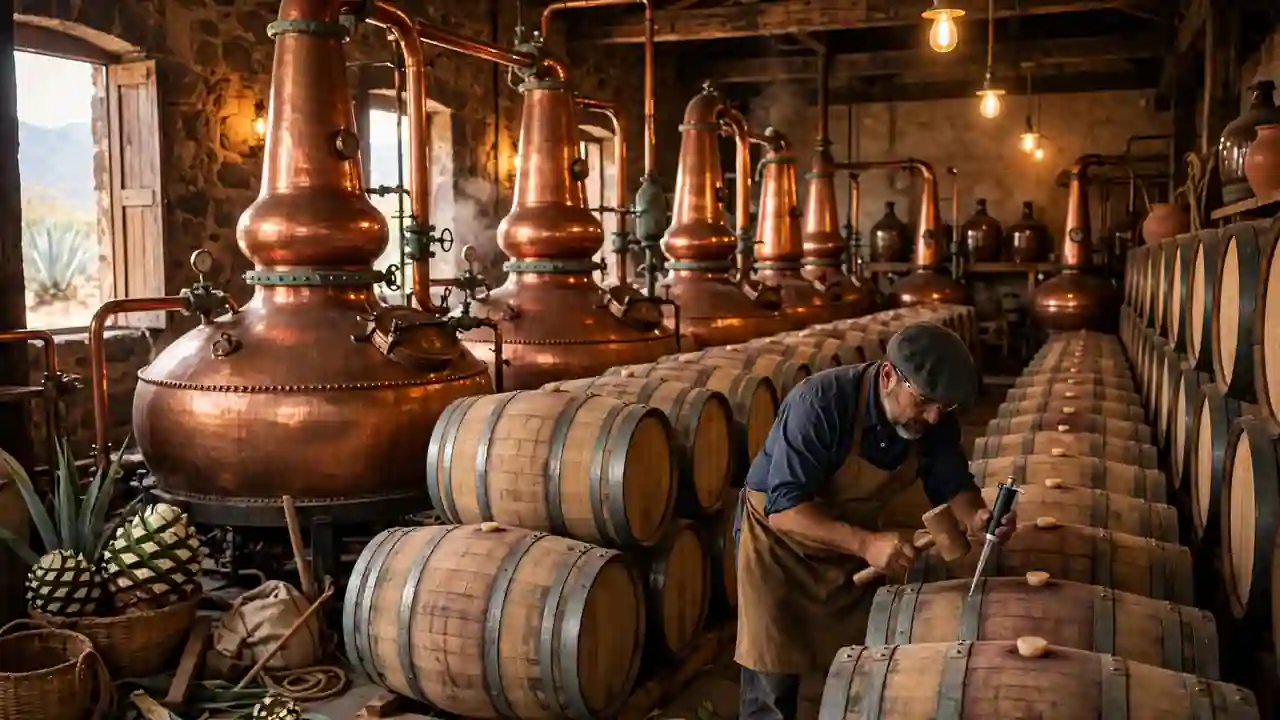
But here’s what most coverage misses: the actual tequila is made by the Lopez family in Jalisco, Mexico, who are also co-owners of the venture. This wasn’t some white-label operation where a factory pumps out generic tequila and a celebrity signs the label. The family that grows and distills it has skin in the game.
And the timing? Launching a spirits brand in March 2020 sounds insane — the world was shutting down. But it turned out to be a strange blessing. People were drinking at home, buying premium bottles online, and Johnson had over 400 million social media followers giving the brand instant visibility without traditional advertising spend. As the Economic Times put it, that following gave Teremana instant reach that money literally couldn’t buy.
Who really owns Teremana — the ownership web
This is the part I find most interesting, because the public story is “The Rock’s tequila” and the real story is a careful partnership structure. Johnson is co-founder and chairman, but he’s not the sole owner — not even close.
Here’s the ownership web as reported by the Economic Times:
- Dwayne Johnson — co-founder and chairman, the face and driving force
- Dany Garcia — co-founder, Johnson’s long-time business partner
- Jenna Fagnan and Ken Austin — co-founders, spirits industry operators
- The Lopez family — co-owners, the Jalisco producers who make the tequila
- Mast-Jägermeister SE — the German spirits giant that took an equity stake in 2022
That 2022 investment matters. Sharkalytics notes that bringing in Mast-Jägermeister added serious distribution muscle and institutional credibility. Individual stakes have never been disclosed, which is normal for a private company. Industry analysts most often work with a ~30% assumption for Johnson’s personal stake — at a $3.5 billion valuation, that would be roughly $1.05 billion on paper. But I have to stress: that’s an estimate built on an estimate. Nobody has confirmed his actual percentage.
And this is the adult-in-the-room lesson. Most celebrity “brands” are really licensing deals — the star gets a check, the company gets a face. Teremana’s structure is different. The star is an owner-operator sitting alongside industry veterans, a producing family, and a global spirits company. That’s why it behaves like a real business.
Why it worked when most celebrity liquor brands die
I’ve watched a lot of celebrity brands launch and fade. Here’s my honest take on the four things Teremana got right that most get wrong.
1. The product is genuinely made by experts. The Lopez family isn’t a marketing prop — they co-own the company. When your producers have equity, quality isn’t someone else’s problem. Most failed celebrity brands fail here first: the star cares about the launch, not the liquid.
2. Distribution was treated as seriously as fame. Fame gets you trial; distribution gets you repeat purchases. Teremana brought in Mast-Jägermeister in 2022 and has been expanding across Europe, Africa, and Asia, according to The Drinks Business, as reported by InvestorMint. International reach directly lifts both case volume and valuation.
3. Johnson showed up — constantly. This sounds small, but it isn’t. He didn’t do one photoshoot and disappear. His personal involvement has been the brand’s marketing engine for six years, and it costs a fraction of traditional spirits advertising. If you’re interested in how people build product businesses online, I’ve covered what actually sells on Etsy and where the real money is in affiliate marketing — the same rule applies everywhere: the founder’s own energy is the cheapest marketing there is.
4. It entered a category that rewards authenticity. Tequila drinkers care about where it’s made and how. “Small-batch from the highlands of Jalisco, made by the family that owns part of the company” is a story that sells itself. A celebrity vodka, by contrast, has nowhere to hide.

The one decision that separates Johnson from Clooney
Here’s the part that fascinates me most. Look at the track record of celebrity spirits exits:
- George Clooney sold Casamigos to Diageo at year 6 (2017, ~$1B)
- Ryan Reynolds sold Aviation Gin at year 2
- Conor McGregor sold the majority of Proper No. Twelve at year 2.5
- Dwayne Johnson — six years in, has not sold a thing
Johnson has shown zero interest in cashing out. And from a business standpoint, that might be the smartest move in the whole story. Every year Teremana grows its case volume and international footprint, the eventual exit price — if one ever comes — gets bigger. As InvestorMint’s analysis puts it, at five-plus years with no sale in sight, the growth runway looks longer and the potential acquisition premium higher.
But I also see the other side, and I’ll say it plainly: a $3.5 billion valuation on paper is not $3.5 billion in the bank. Sharkalytics makes this point well — equity in a private brand isn’t liquid wealth until a sale or liquidity event happens. Johnson’s overall net worth is estimated at around $800 million, and the Teremana stake is the biggest single lever that could push him past a billion.
The lesson for the rest of us? Don’t sell your winners early just because someone offers you money. Growth compounds. If you’re building anything — a brand, a blog, a side business — starting cheap and owning the asset beats renting someone else’s platform every time.
5 lessons I’d steal if I were building a brand
I’m not launching a tequila brand tomorrow. But I’ve pulled five lessons from Teremana that apply to any business — including the kind of online businesses I write about on caawnews.com:
1. Own, don’t endorse. Johnson is a founder and chairman, not a paid face. Equity beats fees. The same applies online — affiliate commissions are fine, but owning the product is where real wealth builds.
2. Partner with people who know the craft. Johnson brought in spirits veterans and a producing family. Whatever you’re building, find the people who’ve done it before and give them a real stake.
3. Treat distribution as the business. A great product nobody can buy is a hobby. Teremana’s expansion into Europe, Africa, and Asia is the boring work that drives the exciting valuation.
4. Play the long game. Six years, no exit, compounding growth. Most people quit or cash out too early.
5. Your audience is an asset — use it honestly. 400 million followers is only valuable if the product behind the posts is real. Johnson’s audience trusted him because the tequila held up. Betray that trust once and the asset is gone.
• Launched: March 2020 (Siete Bucks Spirits)
• Year 1: 300,000+ cases sold, nearly 400,000 shipped
• 2023: 1M+ cases a year
• Reported valuation: ~$3.5B (Economic Times, Oct 2026; Spirits Business/Fox Business, Dec 2024)
• Conservative estimate: $2B (InvestorMint)
• Casamigos comparison: sold 2017 for ~$1B at ~175,000 cases
• Key investor: Mast-Jägermeister SE (equity stake, 2022)
• Johnson’s stake: undisclosed (~30% is the common analyst assumption)
Your questions, answered
How much of Teremana does Dwayne Johnson actually own?
Nobody knows for sure — individual stakes have never been disclosed. Industry analysts most often assume around 30%, which at a $3.5 billion valuation would be worth about $1.05 billion on paper. But that’s an estimate built on an estimate. Treat it as directional, not exact.
Did Dwayne Johnson sell Teremana?
No — and that’s the interesting part. As of 2026, Johnson has shown no interest in selling, unlike Clooney (Casamigos), Ryan Reynolds (Aviation Gin), and Conor McGregor (Proper No. Twelve), who all exited. Teremana keeps growing instead.
Who makes Teremana tequila?
The Lopez family in Jalisco, Mexico — and they’re co-owners of the venture, not just contractors. The brand operates through Siete Bucks Spirits, founded by Johnson, Dany Garcia, Jenna Fagnan, and Ken Austin.
Is Teremana really worth $3.5 billion?
That’s the reported analyst valuation, scaled from the Casamigos precedent ($1B at 175,000 cases) against Teremana’s 1M+ annual cases. Conservative estimates put it closer to $2 billion. It’s a private company, so the true number is only known to the owners — but the sales volume behind it is real.
What other businesses does Dwayne Johnson own?
Beyond Teremana, his portfolio includes Seven Bucks Productions (which he co-owns), the Project Rock fitness brand with Under Armour, ZOA Energy drinks, the Papatui men’s grooming line, and a board seat plus equity at TKO Group Holdings (WWE/UFC’s parent), per CelebrityFees and the Times of India.
Is Dwayne Johnson a billionaire now?
Not confirmed. His net worth is estimated at around $800 million. If the $3.5 billion Teremana valuation and the assumed ~30% stake are both accurate, his paper wealth would cross a billion — but paper wealth isn’t cash until a liquidity event happens.
Final thoughts
I started this article as a skeptic, and I’ll end it as something else: impressed, but clear-eyed. Teremana isn’t proof that celebrity brands always work. It’s proof that celebrity ownership works when the star acts like a founder — brings in real operators, respects the craft, builds distribution, and refuses to cash out early.
The $3.5 billion number might be high or low. The ownership percentages might surprise us if they’re ever disclosed. But the cases sold are real, the growth is real, and the strategy is one any of us can learn from. Own your work. Partner with experts. Play long.
If this breakdown helped you, I’d love to hear your take — do you think Johnson should sell, or keep building? Drop a comment below.
Published: October 24, 2026 · Updated: October 24, 2026
React to this story