Key Points
Key Points
- US TikTok Shop affiliate entry is about 1,000 followers, age 18+, plus identity verification.
- Creators under 5,000 followers start in a 30-day pilot with shoppable posting limits.
- Average 2026 rates sit near 13%, with beauty highest and electronics lowest.
- Products in the $20 to $100 range with 10%+ rates give videos a real chance to pay.
- Problem-and-fix, honest first try, and before-and-after videos sell best.
- Disclosure and honest claims protect your account and your long-term trust.
On This Page
- What You Will Learn in This Guide
- How TikTok Shop Affiliate Works
- Subscribe to CAAW News
- Who Can Join, and the Pilot Program You Must Know
- What TikTok Affiliates Really Earn
- The Video Formats That Sell Without Feeling Like Ads
- Picking Products That Fit Your Account
- Rules, Disclosure, and Mistakes That Hurt Accounts
- Live Streams, Repurposing, and Turning One Win Into Income
- Frequently Asked Questions
- How many followers do I need for TikTok Shop affiliate?
- Do I need to show my face on TikTok to sell?
- How much can a small creator earn on TikTok Shop?
- What products sell best on TikTok Shop?
- Do I have to buy every product I promote?
- Can TikTok affiliate income replace a blog?
- What gets TikTok affiliate accounts in trouble?
- Final Thoughts
- React to this story
I still remember posting my first TikTok affiliate video. I had filmed it in one take, pointed at a product I barely knew, and said buy this link in bio. It got 400 views and zero sales. I felt silly, and I almost decided TikTok was not for me. Then I watched a creator I liked, and I noticed what she did differently. She did not sell. She showed a real problem, fixed it on camera in thirty seconds, and only then mentioned the product. I copied that structure, not her words, and my tenth video made my first TikTok sale. That sale taught me the whole game. In this guide, I will show you how affiliate marketing on TikTok really works in 2026, what it pays, who can join, and the video system I use now. If you make short videos, or you want to start, this guide is for you. If you hate being on camera, I will show you a way in too. Let us start with the truth about the money.
Trust nudge: I earn affiliate income from TikTok Shop, and no seller paid me to write this. The rates and rules below come from public 2026 guides and TikTok Shop policy summaries I checked during my research, and rates vary by seller, so I give ranges, not promises.
What You Will Learn in This Guide
- How TikTok Shop affiliate actually works, step by step
- Who can join in 2026, and what the pilot program limits mean
- What creators really earn by category
- The video formats that sell without feeling like ads
- How to pick products that fit your account
- The rules and mistakes that get accounts in trouble
- How to turn one winning video into steady income
- Answers to the questions new TikTok affiliates ask most
How TikTok Shop Affiliate Works
I explain this to friends in one sentence. You make a short video, you tag a product from TikTok Shop in it, and when someone buys through your video, the seller pays you a commission. You do not handle stock, shipping, or customer service. TikTok handles the checkout inside the app, which is why it converts so well. A viewer can go from watching to buying without leaving the video feed. That short path is TikTok’s biggest advantage over old-style affiliate links, where a reader had to click away, think, and maybe come back.
There are two main ways to get products. In open collaboration, a seller sets a public rate, and any eligible creator can add the product to their videos. In targeted collaboration, a seller invites specific creators, often with a different rate or a free sample. I started with open collaboration, because it needs no pitching and no waiting. Later, when a few of my videos performed well, sellers started inviting me directly. That is the normal path. If you want a second, beginner-friendly walkthrough, read the TikTok Shop affiliate beginners guide on this site, which covers the same steps from a different angle. You earn invitations by proving you can sell, not by asking for them before you have proof. If you are new, start open, prove yourself with a few honest videos, and let the invitations come to you.
Who Can Join, and the Pilot Program You Must Know
I wish someone had explained the pilot program to me before I joined, because it explains a lot of early frustration. In the United States, TikTok Shop affiliate creators need at least 1,000 followers, to be at least 18 years old, to pass an identity check, and to keep an account in good standing. Requirements differ by country, so always check the current policy for your own country before you apply. I applied through TikTok Studio on my phone, confirmed my age, verified my identity, and added my payout details. Approval took a few days, which felt long at the time but is normal.
Here is the part most guides skip. Creators under 5,000 followers start in a 30-day pilot program, according to 2026 guides summarising TikTok’s policy. During the pilot, you can only promote products from high-rated shops, you can post up to three shoppable videos a day and three shoppable live streams a week, and you cannot join campaigns. You leave the pilot at 5,000 followers plus 30 days in the program. I treated the pilot as training, not punishment. Three videos a day is plenty to test hooks, formats, and products. If you are still growing your account, use that time to learn what your audience actually responds to, so you graduate with skill, not just followers.
What TikTok Affiliates Really Earn
I will give you the ranges honestly, because single numbers here are usually lies. Sellers set their own rates, and TikTok allows a wide range, from 1% to 80% of the order value, according to a 2026 commission guide. In practice, most creators see far narrower bands. One 2026 guide reports an average TikTok Shop affiliate rate of about 13% across US categories, with beauty and personal care highest at 15% to 30% and electronics lowest at 5% to 10%. Another guide gives similar bands: beauty and skincare at 10% to 20%, fashion at 5% to 15%, and home and kitchen at 5% to 12%. The exact number depends on the seller and the product, so always check the rate on the product itself before you film.
Let me make that concrete with simple maths I use before filming. A $40 beauty product at 15% pays $6 per sale. Ten sales from one video is $60. One hundred sales is $600. That is why product price matters as much as rate. A 30% rate on a $10 product pays $3, while a 10% rate on a $100 product pays $10. I now pick products mostly in the $20 to $100 range with rates of 10% or more, because that maths gives a video a real chance to pay for its effort. I also check refunds, because a full refund means no commission. If a product has many complaints, I skip it, no matter how high the rate looks.
One more honest note about income. Most videos earn little. A few videos earn a lot. That uneven pattern is normal on TikTok, and it is why volume plus learning matters. I post regularly, I study which videos sold, and I make more of what sold, with a new angle each time. Chasing one viral video is a lottery ticket. Building a repeatable format is a business. Choose the business.
The Video Formats That Sell Without Feeling Like Ads
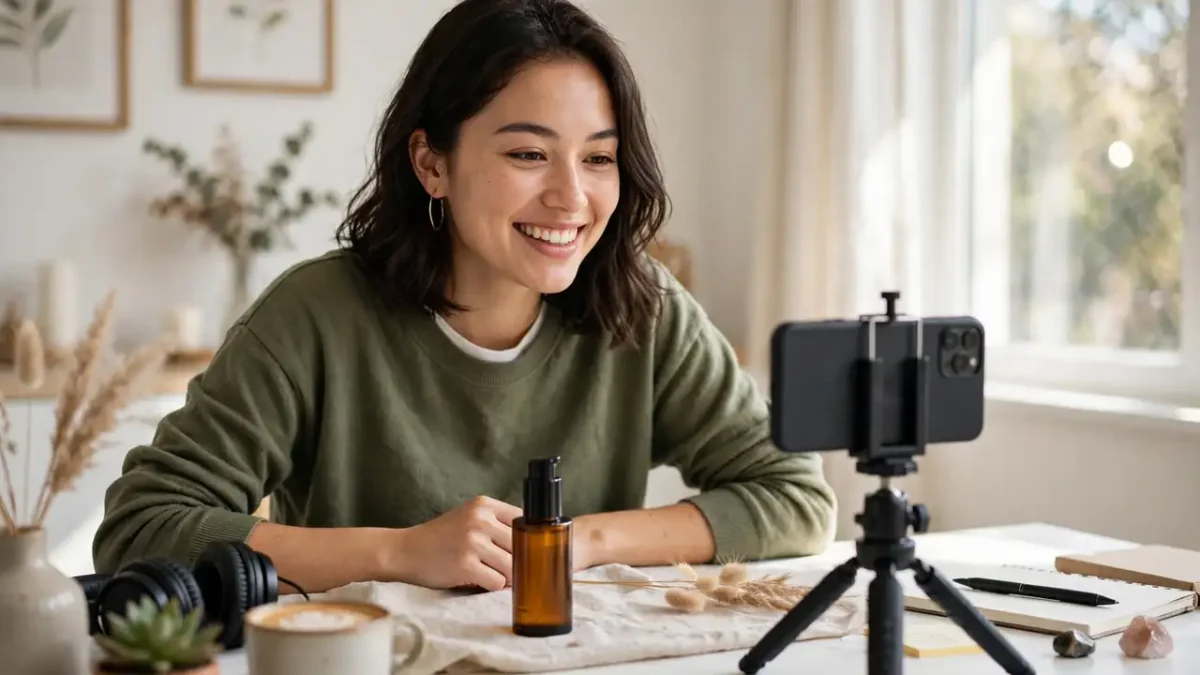
I tested a lot of formats, and three of them do almost all of my selling. The first is the problem and fix video. I show a real, small problem in the first three seconds, then fix it on camera with the product. A tangled cable, a stained shirt, a dull kitchen tool. The viewer stays because they want to see the fix, not because they want to shop. The product appears as the solution, not as the star. The second format is the honest first try. I open the product on camera, I use it for the first time, and I say what surprised me and what disappointed me. Viewers trust first tries more than polished ads, because they can see my real reaction.
The third format is the before and after. It works best for beauty, cleaning, and home products, where the change is visible. I film the before in the same light, I use the product properly, and I film the after without filters that lie. If the change is small, I say so. Honesty in a before and after builds more long-term trust than one exaggerated video ever will. Whatever format you pick, keep the first three seconds strong. TikTok decides fast whether to show your video to more people, and a slow start kills even a great product. Start with the problem, the result, or the surprise, never with hello and a long introduction.

Picking Products That Fit Your Account
I made my biggest TikTok mistake here, so let me be blunt. I once promoted a gadget that had nothing to do with my account, because the commission was high. My regular viewers ignored it, new viewers did not trust me, and the video flopped. Then I promoted a simple tool my audience had already seen me use, and it sold the same week. The lesson was clear. Product fit beats commission rate, on TikTok even more than on a blog, because TikTok shows your video first to people who already know you. If they do not believe you use it, they will scroll past in a second. The same fit rule applies on other visual platforms, as my Pinterest affiliate guide shows, where the product must match the board, not just the trend.
My product checklist is now short and strict. Does this product fit videos I already make? Have I used it, or can I test it properly before filming? Is the seller rated well, with real reviews I can read? Is the price in the range my audience actually spends? Would I recommend it to a friend without a commission? If any answer is no, I skip it, even if the rate is tempting. I also keep a simple list of products that sold, with the rate, the price, and the video format. That list is my real asset. It tells me what to repeat, and it stops me from guessing every time I open the app.
Rules, Disclosure, and Mistakes That Hurt Accounts
I take TikTok’s rules seriously, because losing an account costs months of work. Always disclose that a video is a paid partnership or contains a shop product, using TikTok’s own tools where available, and say it plainly in your words too. Do not make health claims you cannot support, do not show before and after results that are faked or filtered beyond recognition, and do not promise income or results a product cannot deliver. I have seen creators lose reach for exaggerated claims, and the short-term sales were never worth the long-term damage.
The other mistakes are quieter but just as costly. Posting ten shoppable videos a day burns out your audience and looks like spam, even if the pilot allows three a day. Copying another creator’s script word for word teaches you nothing and risks a complaint. Promoting products you never received, using only seller photos, makes your video feel fake, because it is. And ignoring comments costs sales, because a viewer who asks a question and gets a helpful answer is far more likely to buy than a viewer who is ignored. I reply to early comments on every video, even short ones, because those first replies often decide whether a video keeps spreading.
Live Streams, Repurposing, and Turning One Win Into Income
I was nervous about live streams for months, and I waited too long to try them. When I finally did, I learned they sell differently from videos. In a live stream, viewers ask questions in real time, you answer them while using the product, and the trust builds live. A viewer who watches you struggle honestly with a product for two minutes trusts you more than a viewer who saw a perfect thirty-second edit. I now do one short live stream a week around a product I know well, and I keep it relaxed. I answer questions, I show the product from different angles, and I never pressure anyone to buy. The sales come from the conversation, not from the pitch.
Repurposing is my other growth habit. A video that sells well on TikTok can become a short blog section, an email recommendation, and a longer tutorial elsewhere, each adapted to that place, not copied blindly. My guide on affiliate marketing with email newsletters shows how a list turns one-time viewers into repeat buyers, and my Coursera affiliate review shows how a focused education program compares with fast-moving social traffic, which is the missing piece for many TikTok creators. TikTok gives you reach. Email gives you a home for the people who liked you. Together, they turn a viral moment into something steadier. If you only build on TikTok, an algorithm change can hurt you overnight. If you also build a list, you keep a direct line to your best people, no matter what changes.

Frequently Asked Questions
How many followers do I need for TikTok Shop affiliate?
In the United States, guides summarising TikTok’s 2026 policy put the bar at 1,000 followers, plus age 18 or over and identity verification. Creators under 5,000 followers start in a 30-day pilot with posting limits. Rules differ by country, so check TikTok’s current policy for your country.
Do I need to show my face on TikTok to sell?
No, but it helps. Hands-only videos, voiceovers, and product demonstrations can sell well, especially for kitchen, cleaning, and tool products. Face videos build trust faster for beauty and personal products, where viewers want to see a real person using it.
How much can a small creator earn on TikTok Shop?
It varies hugely by niche, product price, and rate. A small creator with a few thousand followers might earn a few sales a week from steady videos, while a single strong video can earn far more. Treat early earnings as learning income, not rent money, and grow from what actually sells.
What products sell best on TikTok Shop?
Products with a visible result in under a minute sell best: beauty, cleaning, kitchen gadgets, and simple home tools. Products that need long explanations or high trust struggle in short video, unless you build that trust over many videos first.
Do I have to buy every product I promote?
You do not have to, but you should test what you promote. Many sellers offer samples to creators, especially in targeted collaboration. If you cannot test a product properly, do not promote it as if you have. Honesty about what you have and have not tried protects your account.
Can TikTok affiliate income replace a blog?
It can complement a blog beautifully, but I would not replace a blog with TikTok alone. A blog and an email list give you search traffic and direct reach that no algorithm can take away. Use TikTok for reach, and send your best viewers somewhere you own.
What gets TikTok affiliate accounts in trouble?
Exaggerated claims, fake before and after results, undisclosed paid promotion, and misleading health or income promises are the fastest routes to penalties. Keep claims modest, disclose clearly, and show the product honestly, and you stay on safe ground.
Final Thoughts
I started this guide with a 400-view flop, and I want to end with what it taught me. TikTok affiliate marketing is not about being famous, and it is not about shouting buy now at strangers. It is about showing one real problem, fixing it honestly on camera, and letting the right product be part of the story. Pick one niche, test products you believe in, open with the problem, and disclose clearly every time. Then post again tomorrow, and study what sold, because your audience will teach you faster than any course. Your first sale may come from your tenth video, or your fiftieth, but when it comes, it will prove that a stranger trusted a thirty-second story you told. That trust is worth protecting with everything you have. For a full beginner checklist, revisit the TikTok Shop beginners guide before you post your first shoppable video. I am cheering for your first TikTok sale, and for the video after it, which proves you can do it again. Now tell me in the comments: what niche will your first TikTok affiliate video be about? I read every answer, and your niche might be the one I wish I had picked first.
React to this story