Key Points
Key Points
- Artemis II astronauts saw five distinct impact flashes on the Moon's dark side during April's crewed flyby, NASA's preliminary science report reveals.
- The flashes — including one commander Reid Wiseman called out with 'I just saw a flash! 100%' — are likely the faintest ever observed by human eyes.
- NASA's science team believes the impactors were only several centimetres across; onboard cameras reviewed afterward captured none of the flashes.
- The observations add vital data on the meteoroid hazard for future lunar bases, since the airless Moon lets even pebble-sized rocks strike at full speed.
- The full 800GB dataset — 11,000 images, 8.5 hours of crew audio — was released on 7 October 2026 and is now open to researchers worldwide.
On This Page
- “I Just Saw a Flash! 100%” — Five Flashes During a Lunar Eclipse
- Subscribe to CAAW News
- The Faintest Flashes Ever Seen by Human Eyes
- Why the Instruments Missed Them
- A Hazard Map for the Moon’s Future Residents
- The Colourful Moon: Yellows, Greens and ‘Swamp-Like’ Tones
- What the 800GB Archive Means for Lunar Science
- React to this story
“I Just Saw a Flash! 100%” — Five Flashes During a Lunar Eclipse
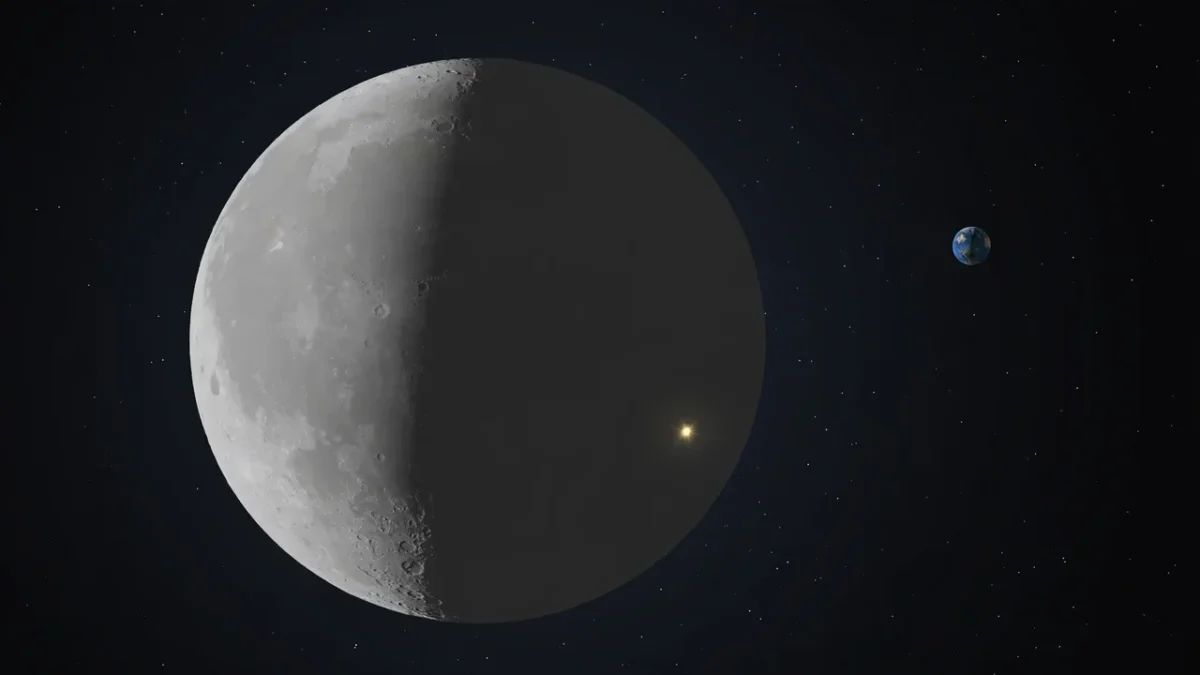
During April’s historic Artemis II flight around the Moon, commander Reid Wiseman was watching the lunar surface when something caught his eye. “I just saw a flash! 100%,” he said inside the Orion spacecraft. About ten minutes later he saw another — and this time, fellow crew member Jeremy Hansen had seen it too: a pinpoint of light, “just like a bloop.”
The exchange is preserved in NASA’s Artemis II Preliminary Lunar Science Report, released on October 7, 2026, which counts five distinct impact flashes reported by the crew while the Sun was behind the Moon. Several were seen by more than one astronaut at once. The crew told scientists afterward that they may have seen more, but left any ambiguous flashes off the annotated image they sent down to Earth.
The detail matters enormously. All five flashes were on the unlit part of the Moon; none were seen in earthshine or sunlight. And NASA’s science team called them likely the faintest impact flashes ever observed by human eyes — suggesting the incoming space rocks were only several centimetres across. What the astronauts witnessed, in other words, was the Moon being pelted by some of the smallest projectiles ever seen striking another world.
Apollo astronauts recorded flashes from lunar orbit on at least three occasions — one on Apollo 16 and two on Apollo 17 — and Earth-based telescopes have logged 443. The Artemis II sightings add a precious new dataset: human eyes, close up, watching the smallest impacts ever directly observed.
The Faintest Flashes Ever Seen by Human Eyes
An impact flash is the brief, brilliant glow produced when a meteoroid slams into the Moon at tremendous speed. With no atmosphere to slow it down, even a pebble-sized rock arrives at full cosmic velocity, and the sudden release of energy vaporises the impactor and a spray of lunar soil, producing a flash of light visible for a fraction of a second.
The Artemis II flashes were extraordinary because of how faint they were. At the time of the sightings, Orion was approximately 46,000 miles (about 74,000 kilometres) from the Moon — and yet the crew could see pinpricks of light from impacts by objects just a few centimetres wide. That the human eye could register such tiny events at such a distance speaks both to the darkness of the eclipsed lunar surface and to the attentiveness of the crew.
The crew’s discipline in reporting is itself a scientific asset. Rather than logging every flicker, the astronauts excluded anything ambiguous, marking only the flashes they were confident about on an annotated image. Colours on the image identify which astronaut saw which flash — a careful piece of observational science conducted in real time, a quarter of a million miles from the nearest laboratory.
For planetary scientists, the flashes are more than a curiosity. Each one is a data point in the meteoroid flux — the rate at which space debris strikes the Moon. Knowing how often the Moon gets hit, and by what sizes of objects, is fundamental to understanding the impact environment of the entire inner solar system.
Why the Instruments Missed Them
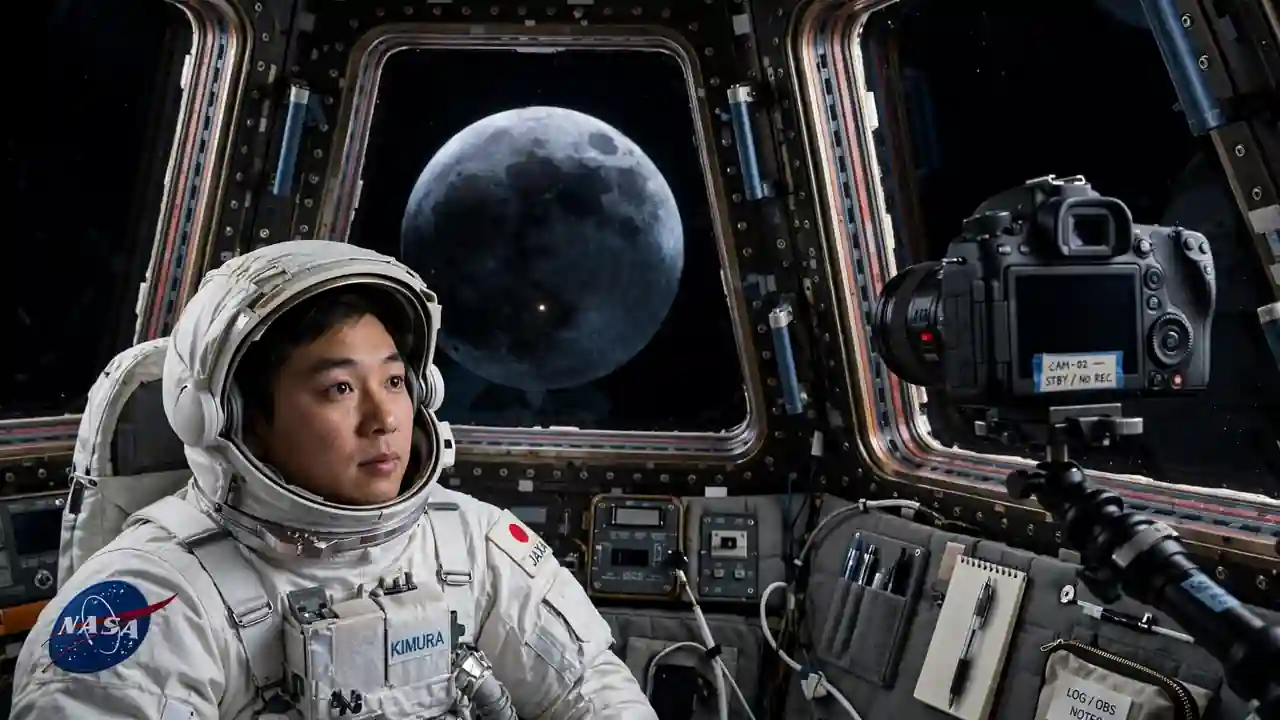
In a twist that underscores the value of human observers, NASA’s instruments did not back up the crew’s sightings. NASA’s Meteoroid Environment Office reviewed Orion exterior-camera video of about two minutes during the eclipse, recorded at 30 frames per second, and found no flashes — though the clip covered only a short stretch of the observing period.
Follow-up with the Lunar Reconnaissance Orbiter is probably out, the report says. Craters from such small impacts would be too small for its camera to resolve, and the crew’s location information — marked by hand on an image — is too rough to aim the orbiter’s narrow-field camera with any confidence.
The gap between human eyes and cameras is a striking detail. Automated systems are superb at many things, but the adaptive, pattern-seeking human visual system, dark-adapted and attentive, caught what the cameras missed. It is a quiet vindication of flying trained observers — and a reminder that for all the sophistication of robotic exploration, there are observations that still benefit from a person looking out of a window.
The report’s honesty about the limits of verification is also noteworthy. Rather than inflating the findings, NASA’s scientists laid out exactly what was seen, what was checked, and what could not be confirmed — the kind of careful reporting that lets other researchers build on the work with confidence.
A Hazard Map for the Moon’s Future Residents
The five flashes carry practical weight for the future of lunar exploration. NASA’s Artemis programme aims to establish a sustained human presence on the Moon, with a surface base at the lunar south pole. Understanding the meteoroid hazard is essential to designing habitats, spacesuits and surface equipment that can survive it.
The Moon has virtually no atmosphere, which means even the smallest space rocks reach the surface completely unhindered. On Earth, the atmosphere burns up all but the largest meteoroids; on the Moon, a centimetre-sized pebble travelling at tens of kilometres per second is a genuine threat to anything it hits.
The Artemis II observations help scientists better calculate just how often the Moon gets hit — and by extension, how often future lunar bases will need to weather such strikes. The flashes seen by Wiseman, pilot Victor Glover, mission specialist Christina Koch and Canadian Space Agency astronaut Jeremy Hansen are, in effect, the first entries in a hazard log for humanity’s return to the Moon.
As mission planners design shielding, bury habitats under regolith, and schedule surface operations, data like this — real impacts, observed by real people, at the actual destination — will feed directly into the engineering. The Moon is not the serene, unchanging place it appears from Earth; it is an active shooting gallery, and the Artemis II crew watched it happen.
The Colourful Moon: Yellows, Greens and ‘Swamp-Like’ Tones
The impact flashes were only one revelation in the preliminary report. Over nearly seven hours of focused observation time, the crew captured some 814 gigabytes of photos, video and audio as they swept past major geological targets that NASA’s lunar science team had pre-selected as the mission’s “Big Fifteen” — looping within about 4,000 miles (6,400 kilometres) of the surface.
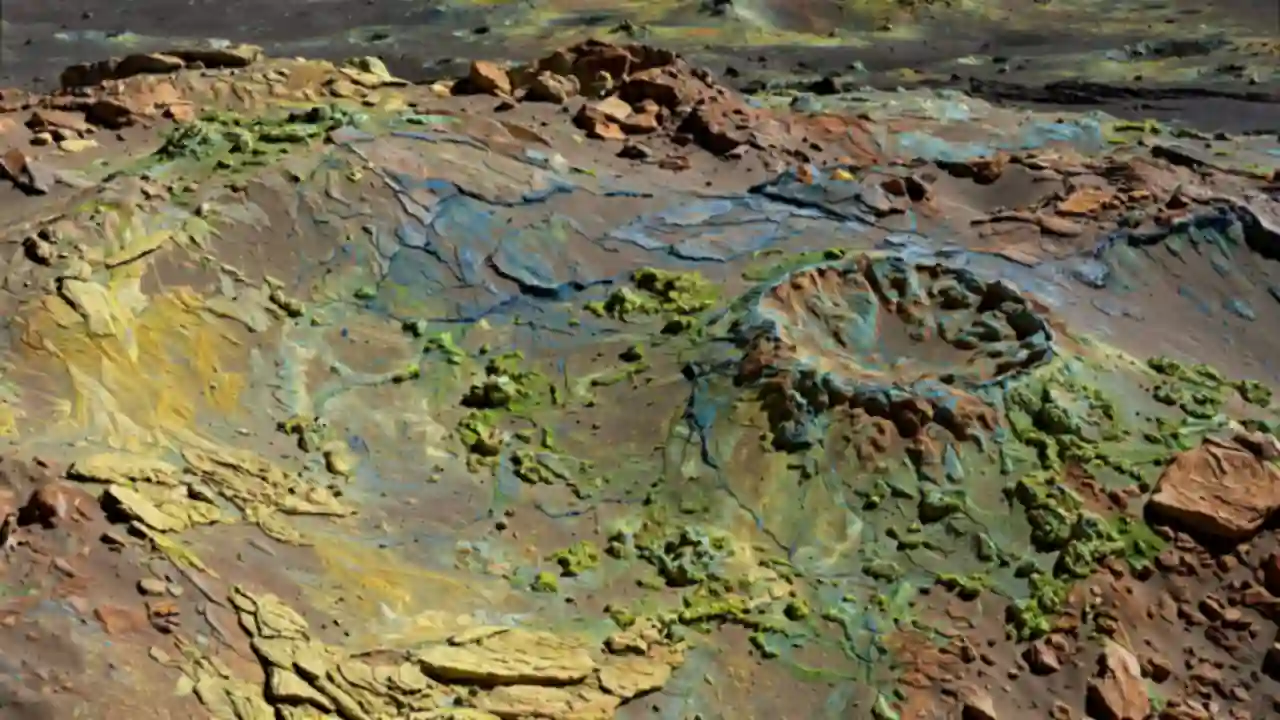
What startled the scientists reviewing the data was colour. For more than half a century, popular culture has treated the Moon as a stark grey cue ball — but the Artemis II crew described the near side and limb painted in muted yellows, greens, blues, browns and even “swamp-like” tones. The Moon, seen up close by trained observers, looks less like a monochrome marble and more like a wild colour map.
The colours are not decoration; they encode the Moon’s volcanic past. Different hues mark different mineral compositions — ancient lava flows, impact ejecta, the scars of billions of years of bombardment. For future explorers choosing landing sites and prospecting for resources, those colour variations are a practical guide to what lies beneath the surface.
The crew’s real-time assessments of the Moon’s colour, brightness and surface changes complement data accumulated during the Apollo missions and by robotic probes. It is among the first planetary science datasets in over half a century formed primarily through direct human observation — and the vividness of the descriptions shows what was lost in the decades when only robots were watching.
What the 800GB Archive Means for Lunar Science
The full dataset — more than 800 gigabytes including over 11,000 full-resolution images and video, 8.5 hours of audio of the crew describing the surface, and the astronauts’ handwritten annotations — was unveiled on October 7 at the 77th International Astronautical Congress in Antalya, Türkiye, where NASA Deputy Administrator Matt Anderson presented the preliminary findings. The archive is now available to researchers worldwide through NASA’s Planetary Data System.
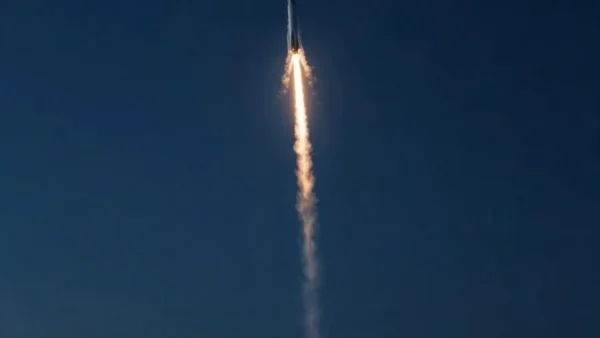
Artemis II, which launched on April 1 and returned on April 10, 2026, was humanity’s first crewed trip around the Moon since the Apollo era — a ten-day mission that proved deep-space transit, life support and the SLS/Orion vehicle system under crewed conditions. The science return, as the October report shows, was always meant to be part of the mission, not an afterthought.
Among the publicly released data, the five faint impact flashes stand out as the kind of discovery that only happens when humans go. Robots can photograph the Moon tirelessly; it took four attentive people, watching a darkened lunar surface during an eclipse, to notice the smallest impacts ever seen by human eyes.
As NASA looks toward Artemis III and the first landing of the programme, the preliminary report is both a scientific harvest and a preview. The Moon is colourful, it is active, and it is being hit — right now, in real time — by the debris of the solar system. The Artemis II crew didn’t just fly around the Moon. They watched it, listened to it, and saw it flash.
React to this story