Key Points
Key Points
- AI speeds up target finding and molecule design, the slowest early steps
- Insilico's ISM9528 is a non-opioid pain candidate that outperformed morphine in preclinical models
- Insilico's blood cancer discovery uses PROTAC molecules that destroy a target protein
- OpenPep aims to speed up peptide drug discovery with open data and AI models
- No AI-discovered drug had FDA approval as of October 2026
- Phase II efficacy, not Phase I safety, is where AI candidates face their hardest test
On This Page
- What You Will Learn in This Guide
- Why Finding a New Drug Was So Slow Before AI
- Subscribe to CAAW News
- The Three Jobs AI Actually Does in the Lab
- A Painkiller That Could Outperform Morphine, Without Opioids
- A Blood Cancer Discovery Built on a Different Idea
- New Ideas Beyond Cancer and Pain: Peptides and Antivirals
- The Honest Reality Check: No AI-Discovered Drug Is Fully Approved Yet
- What AI Is Quietly Improving Besides New Molecules
- Frequently Asked Questions
- Has AI discovered a fully approved drug yet?
- Why does drug discovery still take so long if AI is so fast?
- What is a PROTAC, in simple terms?
- Could AI help find treatments for my condition?
- Is AI replacing scientists in drug discovery?
- What should I watch for next in this field?
- Final Thoughts
- React to this story
I still remember the first time someone explained drug discovery to me in plain language, and how long the timeline sounded. A scientist finds a promising idea, tests it in a lab, tests it in animals, tests it in people, and if almost everything goes right, a new medicine might reach patients a decade later. Most candidates never make it. That is why the news coming out of labs in 2026 stopped me in my tracks. Scientists are now using artificial intelligence to do in months what used to take years, and some of the candidates they have found are already being tested in people. If you have ever waited for a better treatment, for yourself or for someone you love, this matters to you personally, not just as science news. In this guide I will explain, in simple language, how scientists actually use AI to discover new drugs, what it has already found, what it has not yet proved, and what you should believe when you see the next headline. This is for curious readers, patients, families, and students, not for specialists, and by the end you will be able to tell a real breakthrough from a promising early result.
Trust nudge: I am not a doctor, and this article is not medical advice. Where I describe a specific drug or trial, I link to the published report behind it, and where results are early or unproven, I say so directly, because in medicine the difference between promising and proven can be a matter of life and death.
What You Will Learn in This Guide
- How drug discovery worked before AI, and why it took so long and cost so much
- The three jobs AI actually does in a modern drug lab, explained without jargon
- Real examples from 2026, including a non-opioid pain candidate and a blood cancer discovery
- Why no AI-discovered drug has yet been fully approved, and what that really means
- How to read the next AI drug headline without being misled
Why Finding a New Drug Was So Slow Before AI
I like to start here, because without this background, AI sounds like magic, and it is not magic at all. It is a tool that speeds up specific slow steps. Traditionally, finding a new drug meant first understanding a disease well enough to pick a target, which is usually a protein in the body that, if blocked or boosted, changes the course of the disease. Then scientists had to design or screen thousands, sometimes millions, of chemical compounds, testing each one to see whether it bound to that target, whether it was stable, whether it was safe, and whether it could actually become a pill or an injection a person could take. Most compounds failed at one of those steps, and the few that survived then faced years of animal testing and human trials.
That is why the often-quoted figure, that roughly nine out of ten potential drugs that reach human testing fail to become approved medicines, is so important. It is not a sign that scientists are careless. It is a sign that the human body is extraordinarily complex, and that a compound that works in a test tube can fail in a person for reasons nobody predicted. Time was the other enemy. Traditional methods typically took two and a half to four years just to select a candidate for human testing, according to researchers at Insilico Medicine describing their own comparisons, and the full journey to approval could take a decade or more. AI entered this picture not by replacing scientists, but by attacking the slowest, most repetitive parts of that journey.
The Three Jobs AI Actually Does in the Lab
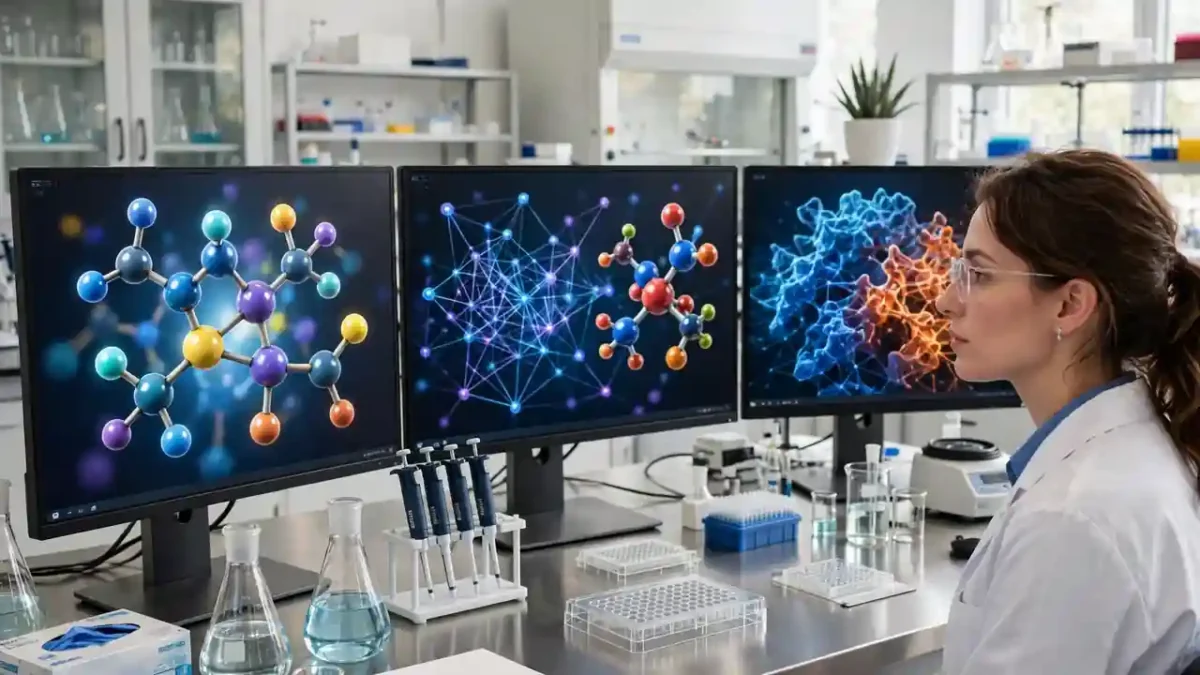
When I talk to people about AI drug discovery, I find it helps to break it into three jobs, because headlines usually blur them together. The first job is finding the target. AI platforms such as PandaOmics, used by Insilico Medicine, scan vast amounts of biological data, including gene activity, protein behaviour, and published research, to suggest which proteins are most likely involved in a disease and most likely to respond to a drug. A human scientist still checks and validates that suggestion, but AI can surface a target a human team might have taken years to spot, or might have missed entirely.
The second job is designing the molecule. Once a target is chosen, another AI platform, such as Insilico’s Chemistry42, designs chemical structures shaped to fit that target, much like designing a key for a particular lock, while also checking whether the molecule looks stable, safe, and drug-like. Traditionally, chemists designed these molecules by hand, one at a time, testing and refining each version. AI can propose thousands of candidates, rank them, and help chemists focus on the most promising handful, which is where much of the time saving comes from.
The third job is predicting what will happen next. AI models try to predict whether a molecule will be absorbed by the body, whether it will reach the right tissue, whether it might be toxic, and whether it is likely to succeed in later trials. This is the hardest job, and the one where AI is least proven, because the human body still surprises us. A model trained on past data can be wrong about a genuinely new molecule, and that is one reason so many candidates still fail in human trials. Understanding these three jobs separately is the key to reading any AI drug story honestly: AI is strongest at the first two jobs, and still learning at the third.
A Painkiller That Could Outperform Morphine, Without Opioids
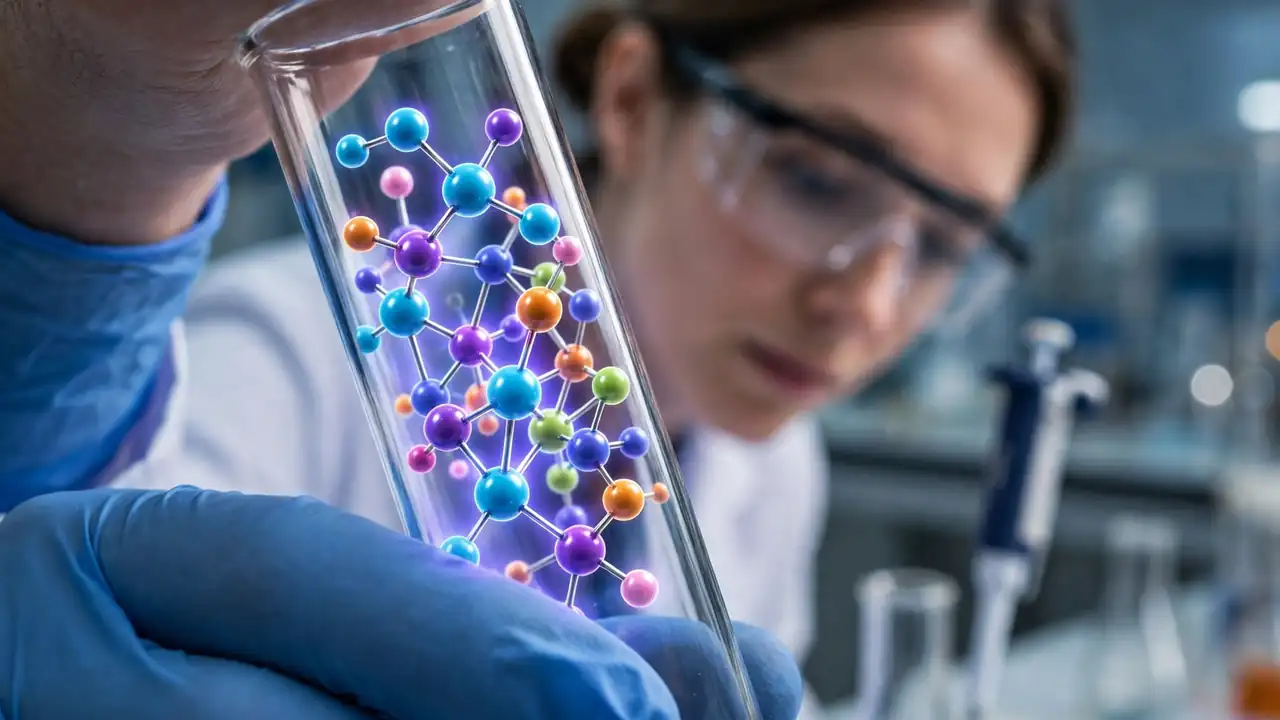
I want to tell you about a story from October 2026 that made me sit up, because it touches a problem millions of families know too well. Researchers at Insilico Medicine, working at the company’s AI and drug discovery centre in Masdar City, Abu Dhabi, used AI to develop a painkiller candidate called ISM9528, intended to treat acute and chronic pain. According to reporting in The National, the candidate produced promising results in initial trials, and researchers believed it could be more effective than morphine in preclinical models, which means laboratory and animal studies before human testing. The company’s president and co-founder, Alex Aliper, described seeing a non-opioid candidate outperform morphine in preclinical models as unprecedented.
Why does this matter so much? Because morphine and other opioids work well for pain, but they carry a serious risk of dependence and addiction, and the world urgently needs effective pain relief that does not carry that risk. The global pain medicine market is worth more than $100 billion, according to the same reporting, which tells you how many people live with pain that current medicines do not fully solve. Insilico reported a clean safety profile in preclinical studies across several species so far, while stressing that extensive safety evaluation in further clinical trials is still to come. That last sentence matters more than the headline, and I want you to hold onto it. A promising result before human testing is a beginning, not a medicine, and the human trials are where safety and effectiveness must be proved, not just suggested.
The same team is also in the early stages of developing a drug candidate that could treat several cancers, including glioblastoma, an aggressive brain cancer. That work is even earlier than the painkiller, and it would be wrong to raise hopes about it beyond what the researchers themselves have claimed. But together, these examples show the pattern of modern AI discovery: a target is identified with AI help, molecules are designed with AI help, and candidates reach testing far faster than traditional methods allowed, with Insilico typically taking 12 to 18 months to select a candidate for further testing, compared with two and a half to four years traditionally.
A Blood Cancer Discovery Built on a Different Idea
A second Insilico discovery from October 2026 shows a different and fascinating idea, and I think it is worth understanding because it explains a whole new class of medicines. Researchers in Abu Dhabi used AI to discover a class of drugs that could help treat blood cancers, by targeting a protein called Bruton’s tyrosine kinase, which helps malignant cells in blood cancers grow and spread, including in some leukaemias and lymphomas. The details were published in the Journal of Medicinal Chemistry, which is the kind of peer-reviewed step that separates a serious finding from a press release.
What makes these new substances different is that they are PROTACs, double-ended molecules that work differently from conventional drugs. A conventional drug usually binds temporarily to a target protein and blocks it, like putting a cap on a bottle. A PROTAC drags the target protein to the cell’s own disposal system and destroys it entirely, which is a more decisive intervention, and potentially a more powerful one. AI accelerated both steps here: PandaOmics helped identify the disease-related target proteins, and Chemistry42 helped design molecules shaped to attach to the chosen protein. As one Insilico chemist, Ahmad Alghaith, put it, traditionally you would have to design your own molecules and try to fit them yourself, but with AI, the designs can be generated for you, and then tested and refined by human scientists.
I want to be honest about where this stands. This is a discovery, published and promising, not a treatment you can ask your doctor for. It still faces the long road of further testing, and many discoveries at this stage do not survive it. But it shows AI doing something genuinely useful: not just speeding up old work, but helping scientists explore a newer, more ambitious kind of medicine that would have been much harder to design by hand.
New Ideas Beyond Cancer and Pain: Peptides and Antivirals
AI drug discovery is not only about cancer and pain, and two other 2026 stories show how broad it has become. At the University of Toronto, a team led by Joseph Brown is building an open-access platform called OpenPep, supported by $2.3 million in funding through the Google.org Impact Challenge for AI in science, to identify peptides with therapeutic potential. Peptides are short chains of amino acids, smaller than a protein but larger than a conventional small-molecule drug, and they are having a moment: many adults have tried a peptide drug, and a growing share of newly approved drugs are peptides. The problem, as Brown explains, is that there is not much existing data for peptide discovery, so developing peptide medicines is still remarkably slow. OpenPep aims to gather large amounts of data so chemically informed models can predict which peptides will bind to target proteins, speeding up a field that has been held back by missing data.
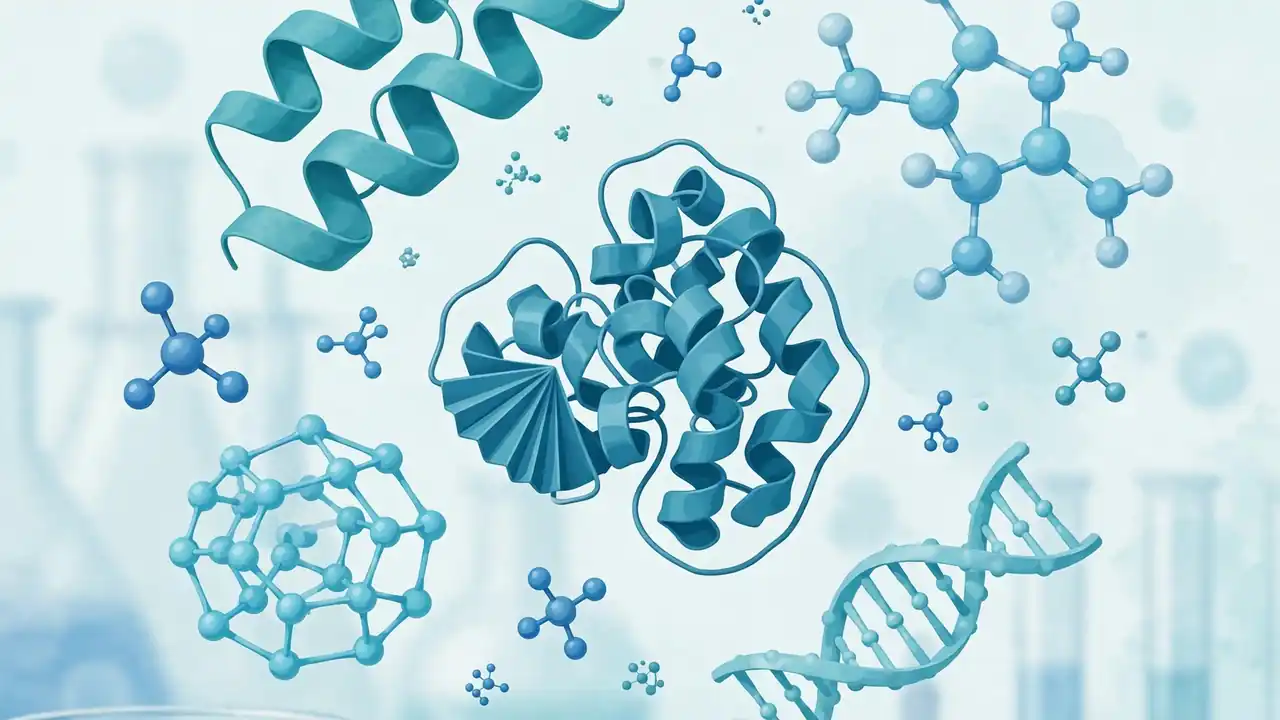
In a different direction, researchers at Korea University used an AI-guided strategy to discover molecules that inhibit DHPS, a human enzyme involved in a process that supports the replication of a broad range of viruses, including HIV-1 and SARS-CoV-2. This is an example of host-directed therapy, which treats infections by targeting the host’s own biological pathways rather than attacking the virus directly, an approach that could be harder for viruses to evade through resistance. What impressed me about this study, published in the Journal of Cheminformatics in August 2026, is that the researchers did not just trust the computer. They systematically benchmarked thirteen machine-learning models and ten molecule-generation methods, and then experimentally tested the AI-generated molecules, rather than leaving them as computer predictions. That experimental step is what separates serious AI science from AI hype, and I always look for it now.
The Honest Reality Check: No AI-Discovered Drug Is Fully Approved Yet
Now I have to tell you the part that headlines often bury, and I think you deserve it plainly. As of October 2026, no drug whose target and molecule were both discovered using AI has received approval from the US Food and Drug Administration, according to a detailed 2026 reality check on AI drug discovery and FDA approvals. The furthest-advanced case, Insilico Medicine’s rentosertib, a lung drug, entered Phase III testing with a trial initiated in July 2026 and a first patient dosed in September 2026, and that large final study is not expected to finish until October 2029. It is not approved anywhere yet.
Why, after so much investment and so many promising candidates, has none crossed the finish line? The same reality check points to a telling pattern. AI-designed candidates have shown a genuine advantage in Phase I safety testing, with success rates reported around 80 to 90 percent, compared with historic averages of 40 to 65 percent. But their Phase II efficacy success rate, which measures whether the drug actually works in patients, sits around 40 percent, statistically indistinguishable from the historic industry baseline. In plain language, AI is helping scientists find candidates that are safer to test, but it has not yet proved it can reliably predict which ones will actually work in sick people. That is the hardest problem in medicine, and it is not solved by faster molecule design alone.
Some experienced chemists argue the core bottleneck is not a lack of ambition, but a lack of predictive insight into two things: choosing the right target in the first place, and predicting human toxicity accurately. Those are exactly the two things that kill most drug programmes, and current AI models have not solved them. This does not mean AI is a failure. It means AI has changed the early part of discovery dramatically, while the later, human-testing part remains slow, expensive, and uncertain, exactly as it should be when people’s safety is at stake. The global AI drug discovery market was valued at $6.93 billion in 2025, according to one market estimate cited in the same reality check, which tells you how much belief and money stands behind this field, but money and belief do not shorten a human trial, and they should not be allowed to.
What AI Is Quietly Improving Besides New Molecules
I find this part encouraging, because it is less glamorous than a new drug headline, but it may help patients sooner. AI is increasingly used to design clinical trials better, to find suitable patients for trials faster, and to manage trial data more efficiently, with some reports documenting cost reductions of up to 50 percent in clinical trial data management and trial durations shortened by more than a year in certain cases. If a trial can recruit the right patients faster, and analyse its data sooner, then even a traditionally discovered drug reaches patients sooner, and that benefit is real even before AI designs a single approved drug itself.
AI is also helping scientists understand diseases better, by finding patterns in genetic and protein data that suggest new targets, and by predicting which patients are most likely to respond to a given treatment. That points toward more personalised medicine, where a treatment is matched to a patient’s biology rather than given to everyone with the same diagnosis. That future is still emerging, and it raises important questions about data privacy, fairness, and access, because a model trained mostly on one population may work less well for another. Those questions deserve as much attention as the technology itself, and I hope future reporting gives them that attention.
How to read the next AI drug headline: Ask four questions. Was the result in a computer, in cells, in animals, or in people? Was it published in a peer-reviewed journal, or only announced in a press release? Is the drug in Phase I, II, or III, or already approved? And does the article say what is still unknown? If you cannot answer those four, you do not yet have a breakthrough, you have a beginning, and beginnings deserve curiosity, not celebration or despair.
Frequently Asked Questions
Has AI discovered a fully approved drug yet?
No, not as of October 2026. No drug whose target and molecule were both discovered using AI has received FDA approval. The furthest-advanced candidate, Insilico’s rentosertib for lung disease, entered Phase III testing in 2026 and is not expected to finish that trial until 2029.
Why does drug discovery still take so long if AI is so fast?
Because AI mainly speeds up the early steps: finding targets and designing molecules. Human trials, which prove safety and effectiveness in real patients, cannot and should not be rushed, and most candidates still fail at that stage, whether or not AI helped design them.
What is a PROTAC, in simple terms?
A PROTAC is a double-ended molecule that drags a harmful protein to the cell’s disposal system and destroys it, rather than just temporarily blocking it like a conventional drug. Researchers are exploring PROTACs for blood cancers and other diseases where destroying the target may work better than blocking it.
Could AI help find treatments for my condition?
Possibly, in time, but this article cannot answer that for any individual condition. If you are interested in a trial, talk to your doctor, who can check reputable trial registries and advise whether any trial is suitable and safe for you. Never start, stop, or change a treatment based on a news article.
Is AI replacing scientists in drug discovery?
No. AI proposes targets and molecules, and human scientists validate, test, refine, and make the judgement calls, especially about safety. The best results in 2026 come from AI and scientists working together, not from either working alone.
What should I watch for next in this field?
Watch for Phase II results, which show whether a drug actually works in patients, and for Phase III completions, which are the final large trials before approval. A Phase I safety success is encouraging, but Phase II is where most candidates face their hardest test.
Final Thoughts
I began this guide with a long timeline, and I want to end it with a shorter one, but not a falsely short one. AI has genuinely shortened the journey from an idea to a testable candidate, from years to months in some leading labs, and that is a remarkable achievement that deserves celebration. It has not yet shortened the journey from a candidate to a proven, approved medicine, and that honesty matters, because patients and families deserve hope grounded in reality, not hope built on headlines. The scientists I have described here are not promising miracles. They are building tools, testing them rigorously, and letting human trials decide what survives. That is how medicine should work, and AI, used well, is making that work faster at the start, while keeping it careful at the end. If you take one idea from this guide, let it be this: celebrate the beginnings, respect the trials, and keep asking the four questions that separate a breakthrough from a beginning. The next real breakthrough, when it comes, will survive those questions, and it will be worth the wait. If this guide helped you understand a headline you saw recently, share it with someone who is also waiting for better treatments, and tell me in the comments which part surprised you most.
React to this story