Key Points
Key Points
- The headline: a record 17 gigawatts in 2026
- Why the boom is bigger than official statistics show
- The six gigawatt markets — and the fast risers behind them
- What solar power means for ordinary families
- The gaps: manufacturing, money, and who still waits
- Frequently asked questions
On This Page
- Introduction
- Table of Contents
- The headline: a record 17 gigawatts in 2026
- Subscribe to CAAW News
- Why the boom is bigger than official statistics show
- The six gigawatt markets — and the fast risers behind them
- What solar power means for ordinary families
- The gaps: manufacturing, money, and who still waits
- Frequently asked questions
- How much solar will Africa install in 2026?
- Which African countries are installing the most solar?
- Why do official statistics underestimate Africa’s solar boom?
- Does Africa make its own solar panels?
- How many people has Mission 300 connected?
- Will solar alone give every African home electricity?
- Final thoughts
- React to this story
Introduction
I first understood Africa’s energy problem not from a report, but from a friend in Lagos who planned his evenings around when the power might cut out. He charged his phone like it was a ritual, he kept a torch by his bed, and he laughed about it, but the laugh never quite hid the frustration. That conversation stayed with me, because reliable power is not a luxury — it decides whether a child can study after dark, whether a clinic can keep vaccines cold, and whether a small shop can stay open. If you have ever wondered whether Africa’s solar story is real progress or just hopeful headlines, I share that doubt, and I have checked the numbers for you. In this guide I promise you the clearest picture of Africa’s 2026 solar boom: how big it really is, which countries are leading, who is still being left out, and what it means for ordinary families. This guide is for you if you care about Africa, clean energy, or simply how millions of people get their light. So let us start with the headline number, because it surprised even me.
Trust nudge: Every figure below comes from Ember’s 2026 analysis and its reporting partners, linked in the text, and where a figure is an estimate rather than a count, I say so.
Table of Contents
- The headline: a record 17 gigawatts in 2026
- Why the boom is bigger than official statistics show
- The six gigawatt markets — and the fast risers behind them
- What solar power means for ordinary families
- The gaps: manufacturing, money, and who still waits
- Frequently asked questions
The headline: a record 17 gigawatts in 2026
I will give you the number straight, because it deserves no decoration. Africa is on track for a record year of solar installations in 2026, up 45% year on year, driven largely by distributed solar, according to energy think tank Ember. That growth follows a 51% rise in 2025 and a 25% rise in 2024, which makes 2026 the third consecutive record year, and I find that run of three records more convincing than any single year’s figure alone. Africa is expected to install a record 17 gigawatts of solar in 2026, and that scale is hard to picture until you break it down: another report of the same analysis puts it at roughly 100,000 solar panels being installed every day.
I want to be precise about what “expected” means here, because honesty matters more than excitement. Ember’s estimate uses Chinese customs export data available through June 2026, then applies an installation rate based on patterns in the EU and five other markets, where around 73% of exported panels are typically installed within six months. That is a smart method, and it is also an estimate, not a year-end count, so the final figure may land a little above or below 17 gigawatts. What gives me confidence is the breadth: Ember expects 36 of Africa’s 54 countries to set installation records this year, which means this is not one country’s story, but a continent-wide shift. A boom that wide is much harder to fake than a boom in one place.
The power itself matters as much as the panels. The new solar installed in 2026 alone is expected to generate around 23 terawatt-hours a year, enough to meet Africa’s average annual electricity demand growth over the past decade. Read that again slowly, because it is the sentence that changed how I think about this story: one year’s solar build can cover roughly a decade’s worth of average demand growth. In more than half of Africa’s 54 countries, the rise in solar generation is expected to exceed the historic pace of demand growth, which means solar is not just keeping up — in many places, it is starting to pull ahead.
Why the boom is bigger than official statistics show
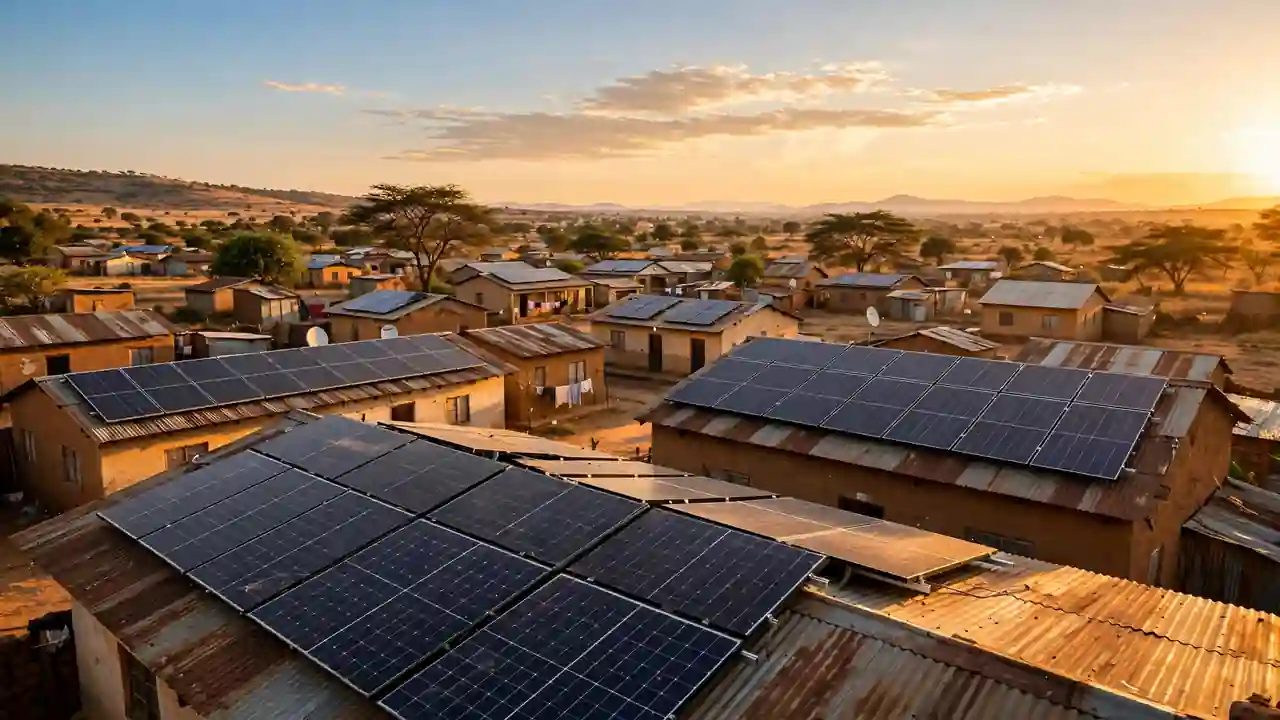
I found this part of the story fascinating, because it explains why you may not have heard how big the boom already is. Much of the new capacity is not a giant solar farm with a ribbon-cutting ceremony, but commercial rooftops, estate systems, and hybrid backup plants that national registers struggle to count. Around three-quarters of recent additions are small, distributed systems that often go unreported, leaving international agencies and many governments badly underestimating Africa’s clean-energy surge. That is why Ember turned to customs data and installer surveys, which see the panels arriving even when the registers miss them being fitted.
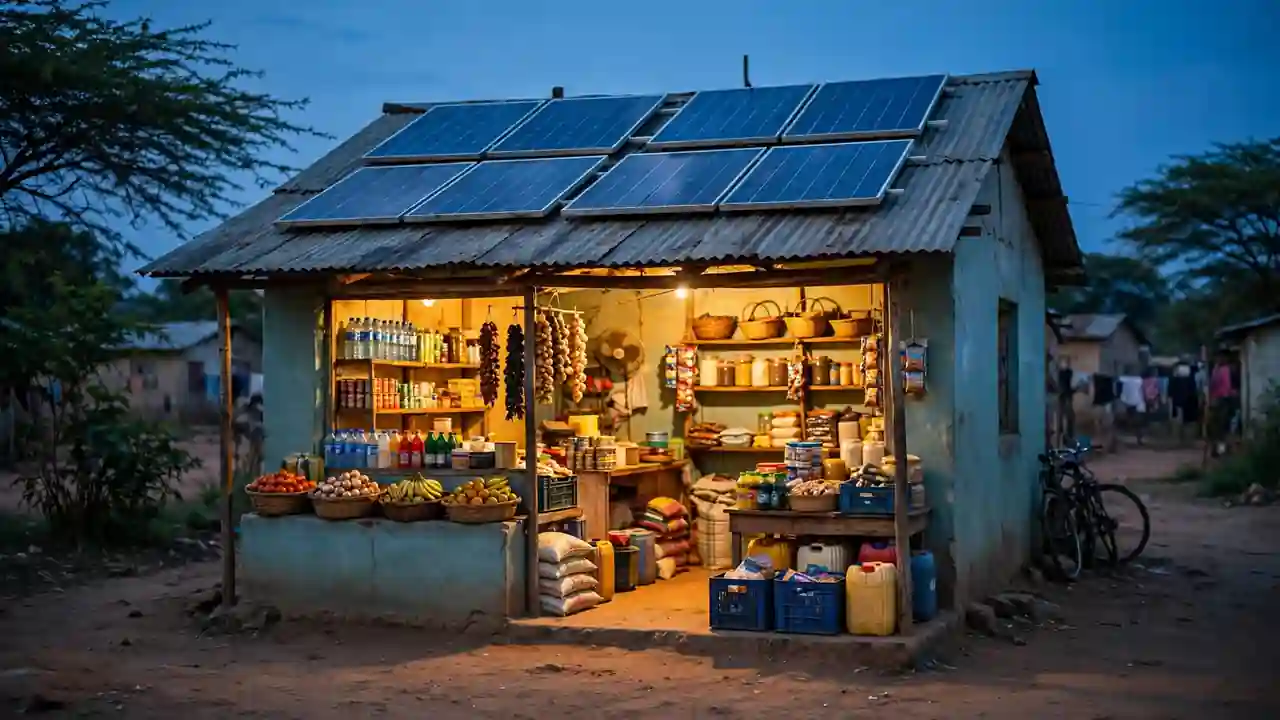
I think there is a human reason behind that pattern, and it is the same reason my friend in Lagos bought backup power: people and businesses are not waiting for the grid to reach them. A shop owner who loses stock every time the power fails does not need a national energy plan, she needs panels on her roof this month, and a factory that cannot afford another outage needs a hybrid system now. That bottom-up urgency is exactly what distributed solar serves, and it is why the boom looks quiet from the outside while feeling urgent on the ground. The lesson I take from this is simple: when you read official energy statistics for Africa, ask what they might be missing, because the fastest change is often the least visible one.
The six gigawatt markets — and the fast risers behind them
I love a league table when it is honest, and this one tells two stories at once: who leads, and how fast the rest are catching up. Six countries are now gigawatt markets on Ember’s estimate: South Africa at 3.3 gigawatts, Egypt at 2.0 gigawatts, Nigeria at 1.7 gigawatts, the Democratic Republic of the Congo at 1.7 gigawatts, Algeria at 1.4 gigawatts, and Morocco at 1.0 gigawatts. South Africa still leads, but its share tells the deeper story: South Africa’s share of African installations is expected to fall below 20 percent for the first time since 2019, because the rest of the continent is growing faster than the old leader.
The growth rates behind that shift are startling, and I checked them twice before writing them down. Year-on-year growth above 100 percent is estimated in 19 countries, including 544 percent in the Democratic Republic of the Congo, 282 percent in Zimbabwe, 176 percent in Egypt, and 117 percent in Zambia. Those percentages come from low starting points in some cases, so I will not pretend the Congo’s 544% means it has overtaken South Africa — it has not, at 1.7 gigawatts against 3.3. But the direction is unmistakable, and it matters most in the smaller countries: ten countries, home to a combined 190 million people, will see 2026’s new solar add more than 10% to annual electricity generation, led by Sierra Leone at 97%, Togo at 24%, and Somalia and Djibouti at 21% each. For Sierra Leone, adding nearly as much generation again in a single year is not a statistic, it is a transformation.
What solar power means for ordinary families
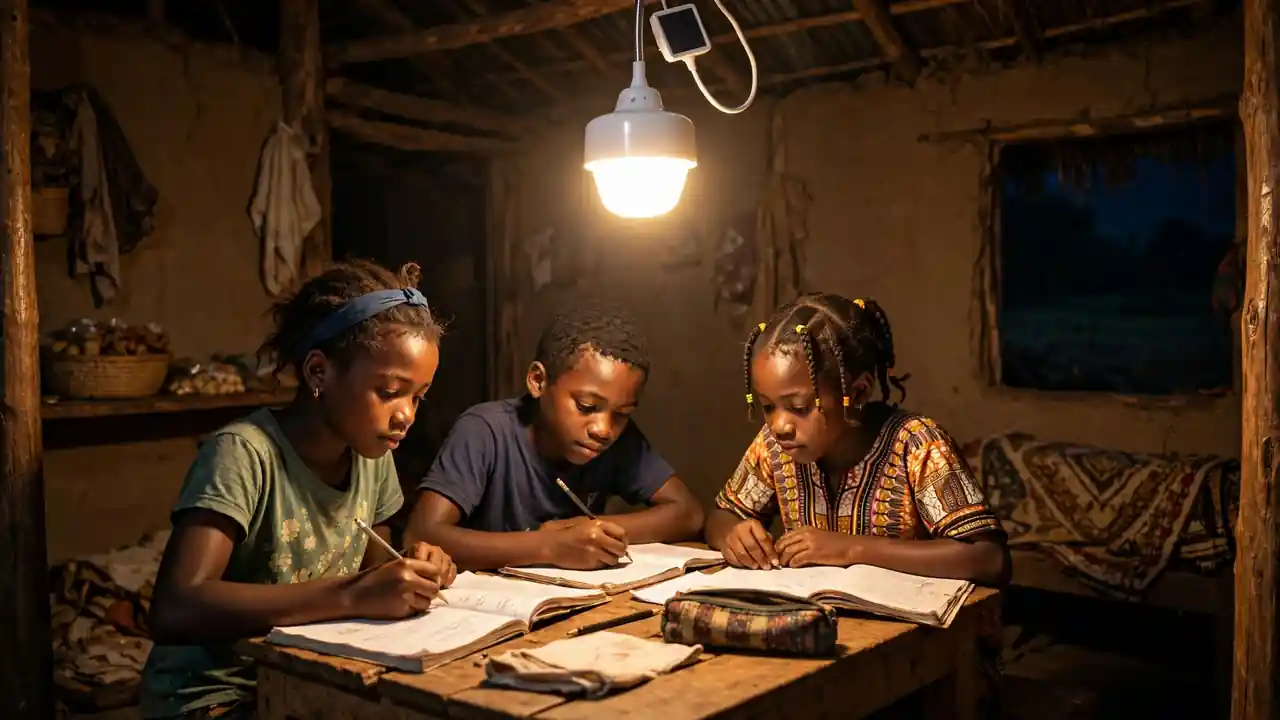
I keep coming back to my friend in Lagos when I read these numbers, because national gigawatts only matter if they reach a kitchen, a classroom, or a clinic. The wider access story gives real grounds for hope: in June 2026 the World Bank Group and the African Development Bank said Mission 300 had connected more than 50 million people across 40 countries since July 2023, with Tanzania, Nigeria, and Ethiopia the leading beneficiaries, Kenya connecting about two million people, and Malawi about 1.9 million. Fifty million people is a population larger than most countries, and every one of those connections means light after dark, a charged phone, or a fridge that stays cold.
But I owe you the other half of that sentence too, because hope without honesty is just marketing. The same reporting notes that the pace, while real, is still well short of the 2030 target, and I think you should hold both truths together: millions connected is a triumph, and millions still waiting is a scandal that solar alone cannot fix. What solar does brilliantly is move fast where grids move slowly, and that is why rooftops and small systems matter so much. A family that gets a solar home system this year does not have to wait for a substation that may arrive in five years, and a clinic that gets panels and a battery can protect its vaccines tonight. That is the human scale of 17 gigawatts, and it is the scale I care about most.
The gaps: manufacturing, money, and who still waits
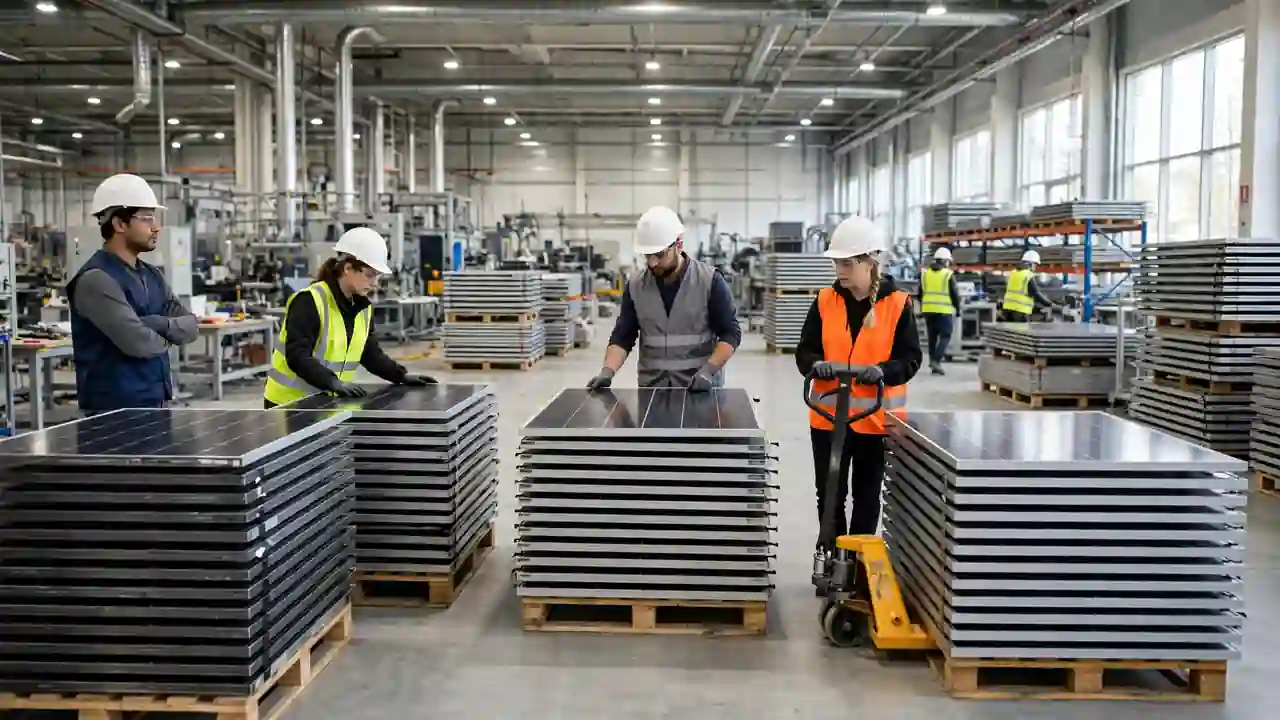
I would be misleading you if I ended on celebration alone, because the boom has two weak spots that could slow it down, and both deserve daylight. The first is manufacturing: Africa’s solar panel manufacturing is set to quadruple in 2026, reaching around 3.5 gigawatts as new plants come online in Egypt and Tanzania, yet 94% of the panels installed across Africa are still imported from China, and most of the new local output is destined for export to the United States. I find that bittersweet: African factories are growing, but the panels lighting African homes are still overwhelmingly imported, which leaves the boom exposed to shipping costs, tariffs, and supply shocks.
The second gap is money for connections. The International Energy Agency has said universal access in Africa needs on the order of $15 billion a year, against less than $2.5 billion committed for new connections in sub-Saharan Africa in 2023. That gap is the difference between a boom and a transformation, and closing it will take grids, batteries, and financing, not just panels. So here is my honest verdict: Africa’s solar boom in 2026 is real, record-breaking, and widely spread, but it is not yet a finished job. Celebrate the 17 gigawatts, absolutely, and then ask the harder question: who gets connected next, and how fast?
Frequently asked questions
How much solar will Africa install in 2026?
Ember estimates a record 17 gigawatts in 2026, up 45% year on year, after a 51% rise in 2025 and a 25% rise in 2024. That would make 2026 the third consecutive record year for African solar installations.
Which African countries are installing the most solar?
South Africa leads at an estimated 3.3 gigawatts, followed by Egypt at 2.0, Nigeria and the Democratic Republic of the Congo at 1.7 each, Algeria at 1.4, and Morocco at 1.0 gigawatts. Nineteen countries are growing by more than 100% year on year.
Why do official statistics underestimate Africa’s solar boom?
Because about three-quarters of recent additions are small, distributed systems — rooftops, commercial systems, and hybrid backup plants — that national registers often miss. Ember’s analysis uses Chinese customs export data and installer surveys to capture them.
Does Africa make its own solar panels?
Only a small share so far. Manufacturing is set to quadruple to around 3.5 gigawatts in 2026 with new plants in Egypt and Tanzania, but 94% of panels installed in Africa are still imported from China, and much of the new local output is headed for export.
How many people has Mission 300 connected?
More than 50 million people across 40 countries since July 2023, according to the World Bank Group and the African Development Bank in June 2026, with Tanzania, Nigeria, and Ethiopia the leading beneficiaries.
Will solar alone give every African home electricity?
Not on its own. Solar is growing fast enough to cover roughly a decade’s average demand growth in a single year, but universal access also needs grids, batteries, and far more connection financing — about $15 billion a year, according to the International Energy Agency.
Final thoughts
I started this guide thinking about one friend planning his evenings around power cuts, and I am finishing it thinking about millions of families whose evenings are quietly changing. Seventeen gigawatts will not fix everything, and I will not insult you by claiming otherwise, but it is real, it is widespread, and it is driven by people who refused to wait in the dark. So congratulations to every installer, shop owner, and family behind those panels — you are building something the official statistics almost missed. If this story moved you, please leave a comment and tell me what power means in your home or your town, because the next chapter of Africa’s energy story will be written by the people living it, not just the people counting it.
Published: 25 October 2026 | Updated: 25 October 2026
React to this story