Key Points
Key Points
- The 2026 headline: intra-African trade hits $230 billion
- What AfCFTA actually is, in plain language
- Three engines driving trade in 2026
- The small-business reality: discovery, documents, and delays
- What a small business can do in 2026 — a practical checklist
- Frequently asked questions
On This Page
- Introduction
- Table of Contents
- The 2026 headline: intra-African trade hits $230 billion
- Subscribe to CAAW News
- What AfCFTA actually is, in plain language
- Three engines driving trade in 2026
- The small-business reality: discovery, documents, and delays
- What a small business can do in 2026 — a practical checklist
- Frequently asked questions
- What is AfCFTA in simple terms?
- How many countries are in AfCFTA?
- How much is intra-African trade worth in 2026?
- What is PAPSS, and why does it matter for small businesses?
- Why do small businesses still struggle under AfCFTA?
- What should a small business do first to trade under AfCFTA?
- Final thoughts
- React to this story
Introduction
I once watched a small trader in Accra explain why she sold only in her own city, even though customers in three neighbouring countries had asked for her products. It was not lack of ambition that held her back, she told me, it was paperwork, border delays, and the fear that her goods would sit at a border post until her profit had rotted away. That conversation stuck with me, because it captures the promise and the problem of African trade in one story. If you run a small business, or you simply wonder why African countries trade so little with each other, you probably share her frustration. In this guide I promise you an honest 2026 verdict on the African Continental Free Trade Area (AfCFTA): what is actually moving, what is still stuck, and what a small business can realistically do about it this year. This guide is for you if you own, work in, or cheer for a small African business, or if you want to understand the biggest trade deal on earth in plain language. So let us start with the number that made me sit up, because for the first time in years, it is moving in the right direction.
Trust nudge: Every figure below is linked to its source in the text, and where a figure is a forecast rather than a result, I label it as one.
Table of Contents
- The 2026 headline: intra-African trade hits $230 billion
- What AfCFTA actually is, in plain language
- Three engines driving trade in 2026
- The small-business reality: discovery, documents, and delays
- What a small business can do in 2026 — a practical checklist
- Frequently asked questions
The 2026 headline: intra-African trade hits $230 billion
I will start with the forecast that frames everything else, because it is the clearest sign yet that this deal is moving from paper to practice. Afreximbank expects intra-African trade to grow 10% in 2026, from $210 billion to $230 billion, about 16% of the continent’s total trade. That forecast comes from its African Trade and Economic Outlook 2026, published on 30 March 2026, and it sits against total African trade of about $1.4 trillion in 2025. I know a one-point rise in share — from roughly 15% to 16% — sounds small, and I will not oversell it, but in money it is $20 billion of new business between African companies in a single year, and that is the kind of number a small trader can feel.
To understand why that matters, you need the comparison that has frustrated African economists for decades. Roughly 15% of the continent’s trade happens between African countries, against more than 60% inside Europe or Asia, which means Africa has been selling far more to the rest of the world than to itself. A continent that trades mostly with outsiders leaves money, jobs, and resilience on the table, and that is exactly what AfCFTA was created to change. So when I see intra-African trade forecast to reach $230 billion, I do not celebrate a finish line, I celebrate a direction: after years of promises, the line is finally bending upward, and small businesses deserve to know why.
The mix of that trade matters too, because it tells you where the opportunity actually sits. Manufacturing and agri-food are expected to make up 48% to 50% of intra-African trade flows, which means this is not an abstract story about minerals and mega-deals, it is a story about food, clothes, furniture, and everyday manufactured goods — exactly the things small and medium businesses make. If you make, grow, or process something, this trade growth is happening in your world, not in someone else’s, and that is why the rest of this guide focuses on the practical barriers in your way.
What AfCFTA actually is, in plain language
I explain AfCFTA to friends like this: imagine 54 neighbouring shops agreeing to stop charging each other entry fees, to use the same basic rulebook, and to let each other’s customers shop freely. That is the idea, and the scale is what makes it historic. As of September 2026, 54 African countries had signed the agreement, with 50 having ratified it, and Somalia became the 50th country to formally ratify on 4 September 2026, making AfCFTA one of the largest free trade areas in the world by number of participating countries. I find that ratification count encouraging, because a deal that almost every country has signed is much harder to ignore than a deal signed by a few.
The long-term prize, if the deal works fully, is enormous, and I quote it carefully because it is a projection, not a promise. According to the World Bank, full implementation of AfCFTA, alongside reforms covering investment and competition, could generate income gains of up to $571 billion and uplift 50 million Africans out of extreme poverty by 2035. I do not want you to read that as a guarantee, because “could” is doing heavy work in that sentence, and full implementation is still years away. But it explains why governments, banks, and businesses are investing real effort in this deal: the upside is not a slightly bigger market, it is a fundamentally different African economy, and small businesses stand to gain the most if they can get through the door.
Three engines driving trade in 2026
I like to think of 2026’s growth as driven by three engines, because that helps a small business owner see where to plug in. The first engine is the AfCFTA itself, cutting tariffs and, just as importantly, chipping away at non-tariff barriers such as border delays, duplicated inspections, and conflicting standards along key trade corridors. The second is payments: the PAPSS payment system cuts foreign-exchange costs by an estimated 20% to 30%, which matters enormously when a trader currently loses money converting currencies twice just to sell to a neighbour. The third is the AfCFTA Digital Trade Protocol, which aims to make digital trade — the online shops, the mobile payments, the digital services — work across borders instead of stopping at them.
Real examples make those engines concrete, and Ethiopia gave us a good one this year. Ethiopia’s export volume under the AfCFTA framework climbed to $23.6 million by August 2026, less than a year after the nation officially commenced commercial shipments under the agreement, having entered the active export phase in October 2025 after tariff concessions under Regulation No. 574/2025. I know $23.6 million is small beside $230 billion, and I will not inflate it, but for a country that only started trading under the deal in late 2025, reaching that milestone by August 2026 is a genuine proof of concept. It shows the system can work for a real country, with real goods, in real time — and that is the kind of proof small businesses need before they risk their own money.
Governments are also putting money behind the promise, at least in Nigeria. Nigeria’s federal government approved a $1 billion AfCFTA Adjustment Fund credit facility to support exporters and small businesses, announced by the Minister of Industry, Trade and Investment, Jumoke Oduwole, at the second-quarter 2026 meeting of the AfCFTA Central Coordination Committee in Abuja. A credit facility is not cash in your hand, and I will not pretend it is, but it signals that at least one major government recognises the real bottleneck: small firms need working capital to produce, certify, and ship before they can earn from a new market. Watch how that facility actually reaches firms, because its delivery will matter more than its announcement.

The small-business reality: discovery, documents, and delays
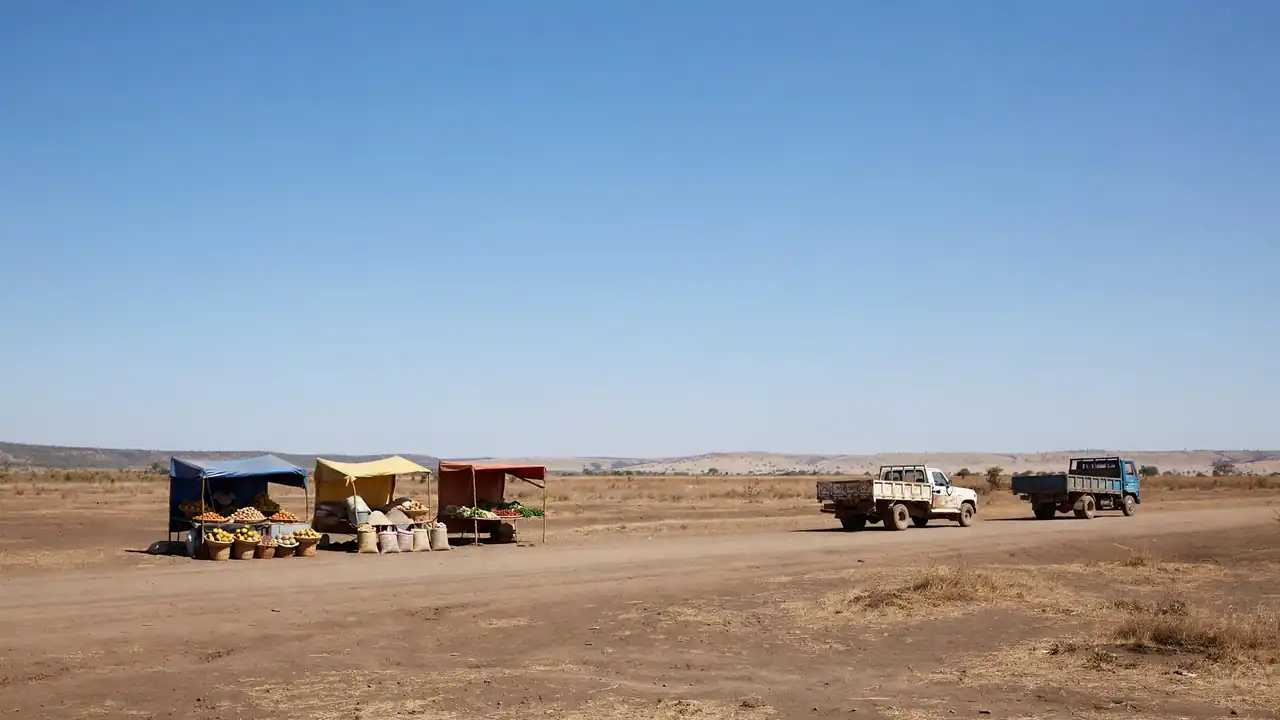
I promised you honesty, so here is the part that tempers the celebration, and I want you to hear it clearly because it affects your planning. The first barrier for small firms is not tariffs at all, it is discovery: the first barrier for SMEs is not tariffs but discovery — knowing which tenders, buyers, and partners exist across language lines. I have seen this myself: a brilliant product sits unsold across a border simply because its maker never learned that a buyer existed, and no tariff cut can fix a meeting that never happened. That is why the new business guides and trade information portals matter so much, even though they sound boring.
Sierra Leone and Ethiopia both launched exactly those tools this year, and I think they deserve more attention than they get. Sierra Leone launched a practical trading guide and a digital information portal with support from the United Nations Economic Commission for Africa, designed particularly to support small and medium-sized enterprises, including women- and youth-owned businesses, and Ethiopia validated a similar step-by-step guide and trade information portal at its high-level stakeholder forum. These guides explain documentation, rules of origin, and procedures in plain steps, which is precisely what a first-time exporter needs. If your country has one, get it before you ship anything, because it is the cheapest expert advice you will ever receive.
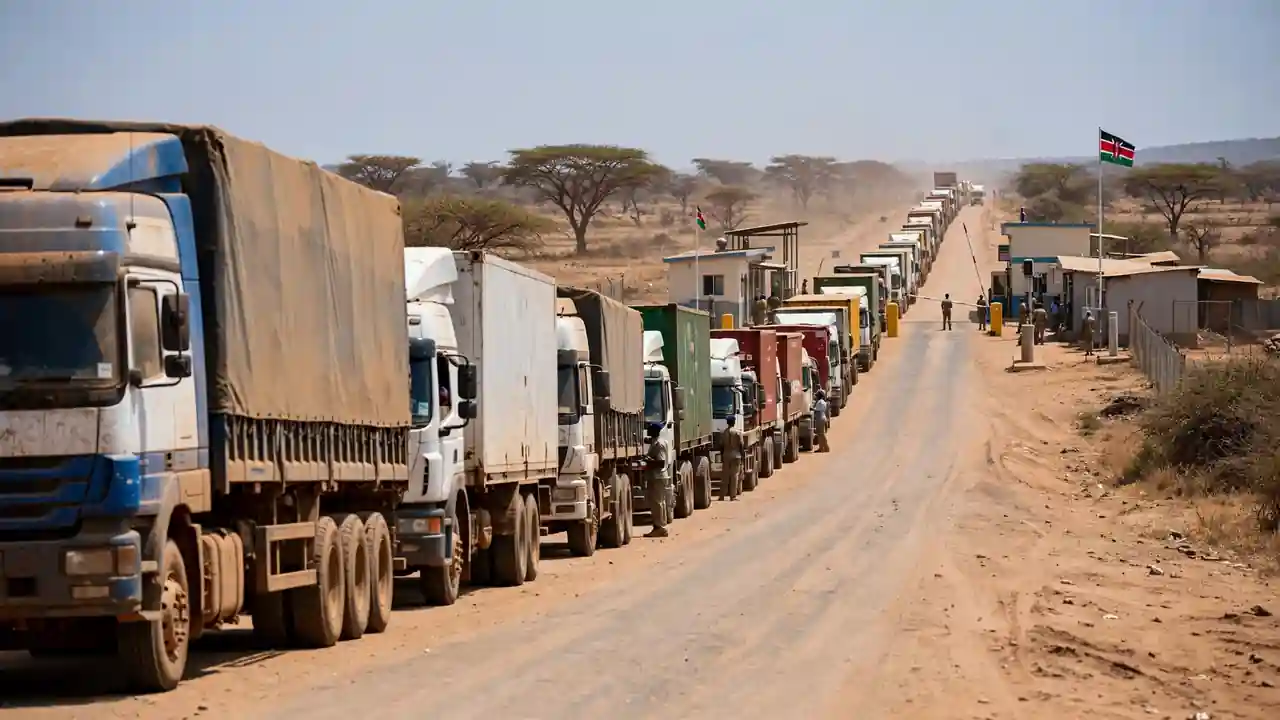
Then come the harder, structural barriers, and I will not soften them. Only 37 countries have submitted tariff schedules, dwell times of about 126 hours and logistics costs equating to nearly double the global average have been identified as main non-tariff barriers, and only about half the non-tariff-barrier complaints lodged through the AfCFTA Secretariat’s African Trade Observatory were resolved by 2025. Read those numbers as a trader would: some borders still take five days, shipping still costs roughly twice the world average, and half of all complaints about unfair barriers went unresolved. Add the financing wall — an estimated annual trade finance gap of between $80 billion and $120 billion, particularly affecting small and medium-sized enterprises — and you see why my honest verdict is “working, but not yet working for everyone.” The deal has crossed from treaty to operations, but it has not yet reached scale, and small firms still carry the heaviest costs.
What a small business can do in 2026 — a practical checklist
I will finish the practical part with a checklist I would give my trader friend in Accra if she asked me tomorrow, because advice without action is just noise. First, find your country’s AfCFTA guide or trade information portal, and read the section for your product before you spend a cent on shipping. Second, check whether your product qualifies for preferential tariffs by understanding its rules of origin — the rules that decide whether your product counts as “made in Africa” for the deal — because that single check decides whether the tariff cut applies to you at all. Third, price the full journey, not just the product: transport, border time, certification, and payment conversion, because the cheapest product can become the most expensive deal once logistics double your costs.
Fourth, start with one neighbouring market, not ten, and find one buyer, one logistics partner, and one payment route you trust before you expand. Fifth, ask your bank, your chamber of commerce, or your trade ministry what export finance or AfCFTA support exists in your country — Nigeria’s $1 billion facility shows such support is emerging, and even a small working-capital loan can be the difference between fulfilling an order and turning it down. Finally, log every barrier you hit through the official non-tariff-barrier channels, because unresolved complaints only get fixed when they are counted. I know that sounds slow, and it is, but every trader who reports a barrier makes the road smoother for the next one, and that is how a treaty becomes a market.
Frequently asked questions
What is AfCFTA in simple terms?
AfCFTA is the African Continental Free Trade Area, a trade agreement led by the African Union to create a single market for goods and services across Africa by reducing tariffs and other trade barriers between participating countries.
How many countries are in AfCFTA?
As of September 2026, 54 African countries had signed the agreement and 50 had ratified it, with Somalia becoming the 50th ratifying country on 4 September 2026.
How much is intra-African trade worth in 2026?
Afreximbank forecasts intra-African trade will grow 10% in 2026, from $210 billion in 2025 to $230 billion, or about 16% of Africa’s total trade.
What is PAPSS, and why does it matter for small businesses?
PAPSS is the Pan-African Payment and Settlement System, which lets traders pay across African borders more cheaply. It is estimated to cut foreign-exchange costs by 20% to 30%, which directly protects a small trader’s margin.
Why do small businesses still struggle under AfCFTA?
The main barriers are finding buyers across language lines, understanding documentation and rules of origin, long border dwell times of about 126 hours, logistics costs near double the global average, and a trade finance gap of $80 billion to $120 billion a year.
What should a small business do first to trade under AfCFTA?
Get your country’s official AfCFTA trading guide or information portal, check whether your product qualifies under the rules of origin, price the full delivery journey, and start with a single neighbouring market and a single trusted buyer.
Final thoughts
I started this guide with a trader who sold only in her own city, and I am finishing it with genuine hope for her, because the numbers finally point her way. A $230 billion market, a $1 billion support facility in Nigeria, new guides in Sierra Leone and Ethiopia, and a first real export milestone in Ethiopia — none of these alone changes her life, but together they mean the door she feared is starting to open. The road is still long, the borders are still slow, and the finance is still scarce, and I will not pretend otherwise. But if you take one step this year — read your country’s guide, find one buyer across one border, and ship one careful order — you will be part of the trade story Africa has waited decades to tell. So congratulations for reading this far, and please leave a comment telling me what you sell and which market you dream of reaching, because your ambition is exactly what this deal was made for.
Published: 25 October 2026 | Updated: 25 October 2026
React to this story