Key Points
Key Points
- Skin is built from protein, healthy fats and antioxidants in food
- Oily fish twice a week supports the skin moisture barrier
- Colourful vegetables provide carotenoids and vitamin C for collagen
- Nuts, seeds and protein help skin repair itself daily
- Food supports skin but never replaces sunscreen or medical care
On This Page
- What You Will Learn
- How Food Actually Reaches Your Skin
- Subscribe to CAAW News
- Fatty Fish and Avocado: Food for Your Skin Barrier
- Colourful Fruits and Vegetables: Your Daily Antioxidants
- Nuts, Seeds and Protein: The Repair Crew
- What to Limit, Honestly
- Building Your Skin-Friendly Week
- Frequently Asked Questions
- Can food really improve my skin?
- What is the single best food for skin?
- Does sugar really affect skin?
- Can food replace sunscreen?
- Do collagen supplements work?
- How long before I see a change from diet?
- Final Thoughts
- React to this story
I spent years buying expensive creams before I asked a simpler question: what am I actually feeding my skin? My skin was dull, it broke out when I was stressed, and no jar on my shelf seemed to change that for long. Then I started cooking differently, not perfectly, just differently, and slowly my skin calmed down, looked healthier, and needed less covering up. If you are tired of chasing miracle products, if your skin feels dry or tired no matter what you put on it, or if you simply want to know which foods genuinely help, this guide is for you. By the end of it you will know the foods worth eating every week, the ones worth limiting, and how to build a simple plate that supports your skin without turning your life upside down.
I am not a dermatologist, and food is not a replacement for sunscreen or medical advice. What follows is what I learned from research and from my own kitchen, honestly shared, including the part where no single food transformed my skin overnight.
What You Will Learn
- How food reaches your skin, in plain language
- The fatty fish and healthy fats that support your skin barrier
- Why colourful fruits and vegetables matter more than any single superfood
- The nuts, seeds and proteins that help your skin repair itself
- What to limit, and how to build a skin-friendly week
How Food Actually Reaches Your Skin
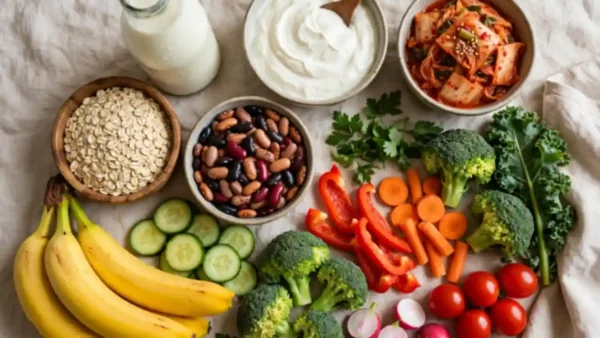
I used to think of skin as something separate from the rest of my body, as if it only responded to what I rubbed on it. Then I learned the obvious truth I had been ignoring: skin is living tissue, built and repaired from what I eat. It needs protein to make collagen and keratin, fats to maintain its moisture barrier, and antioxidants to help defend its cells against everyday damage from sun, pollution and stress.
Dermatologists interviewed about this topic put it clearly: nutrition can influence inflammation, oxidative stress, the microbiome and skin-barrier function, so what is good for your overall metabolic health tends to be good for your skin as well. That framing, from dermatologists explaining whether you can eat your skincare, changed how I shop. I stopped hunting for one magic ingredient and started eating a wider, more colourful diet, which is less exciting on social media and far more useful in real life.
That honesty matters, because the research is encouraging but not miraculous. A recent summary of the evidence notes that no single food can dramatically transform your skin, and that a healthy dietary pattern, particularly a Mediterranean-style pattern, supports healthier-looking skin over time, while still needing to complement, not replace, topical skincare. I keep that sentence in mind whenever a trend promises overnight radiance, because patience is the unglamorous ingredient that actually works.
Fatty Fish and Avocado: Food for Your Skin Barrier
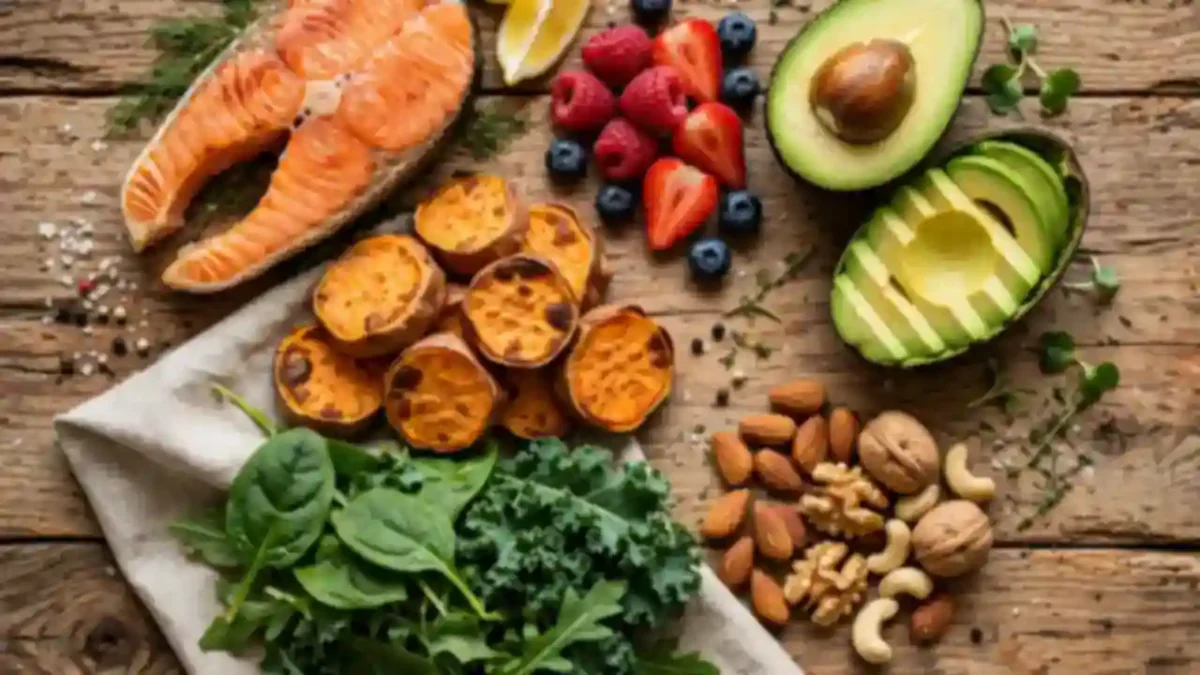
If I could only change one thing about my diet for my skin, I would eat oily fish twice a week. Salmon, sardines and mackerel are rich in omega-3 fatty acids, which are incorporated into skin cell membranes, help reduce inflammation, and support the skin barrier that keeps moisture in. I noticed the difference most in winter, when my skin usually felt tight and flaky, and regular oily fish, along with a decent moisturiser, made that season far easier.
Avocado earns its place for a different reason. It provides monounsaturated fats that support skin moisture and barrier function, along with vitamins C and E, and it is one of the easiest foods to add to a meal. I mash it on toast, add it to salads, or eat it with eggs, and it never feels like a health chore. Dermatologists recommending skin-friendly foods regularly list eggs, avocados, flaxseeds, walnuts, dark chocolate and salmon as a starting point, which is a practical shopping list rather than a fantasy one.
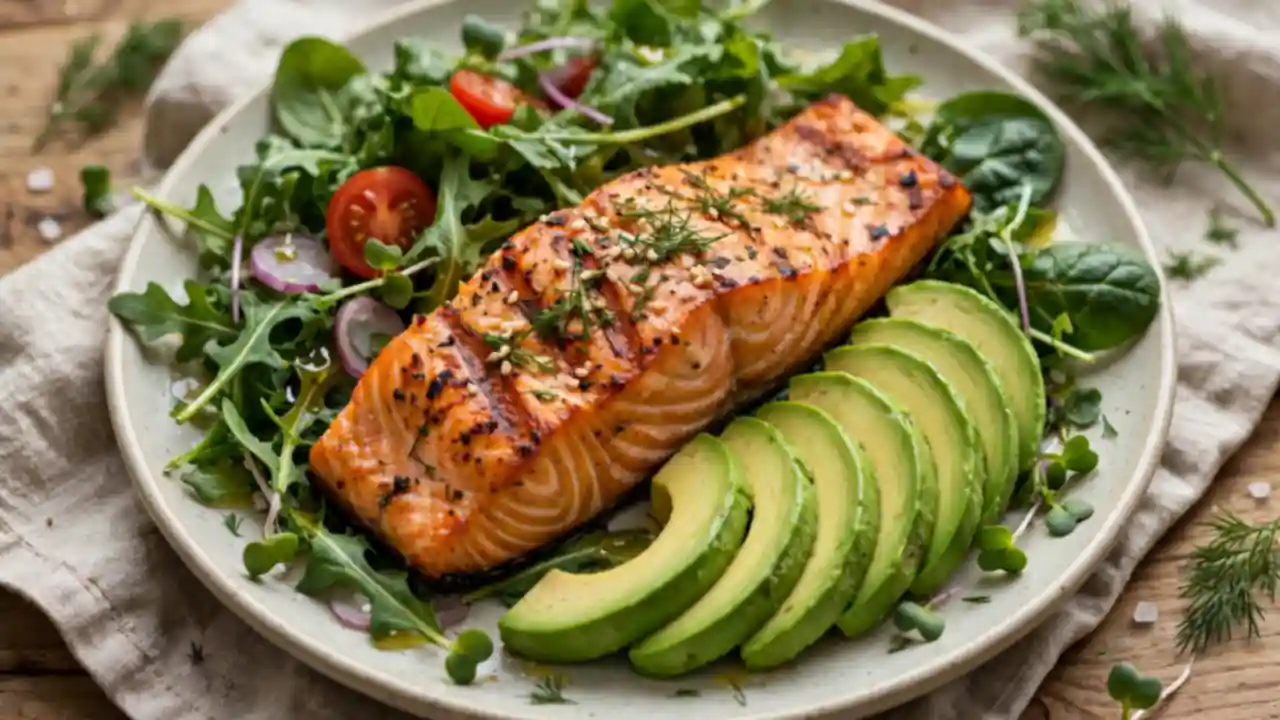
I also learned not to fear fat in general. For years I avoided it, thinking it would harm my skin, when in fact the right fats help my skin hold moisture. The fats to be careful with are the ones in heavily processed food, not the fats in fish, avocado, nuts and olive oil. That distinction changed my cooking more than any single recipe did.
Colourful Fruits and Vegetables: Your Daily Antioxidants
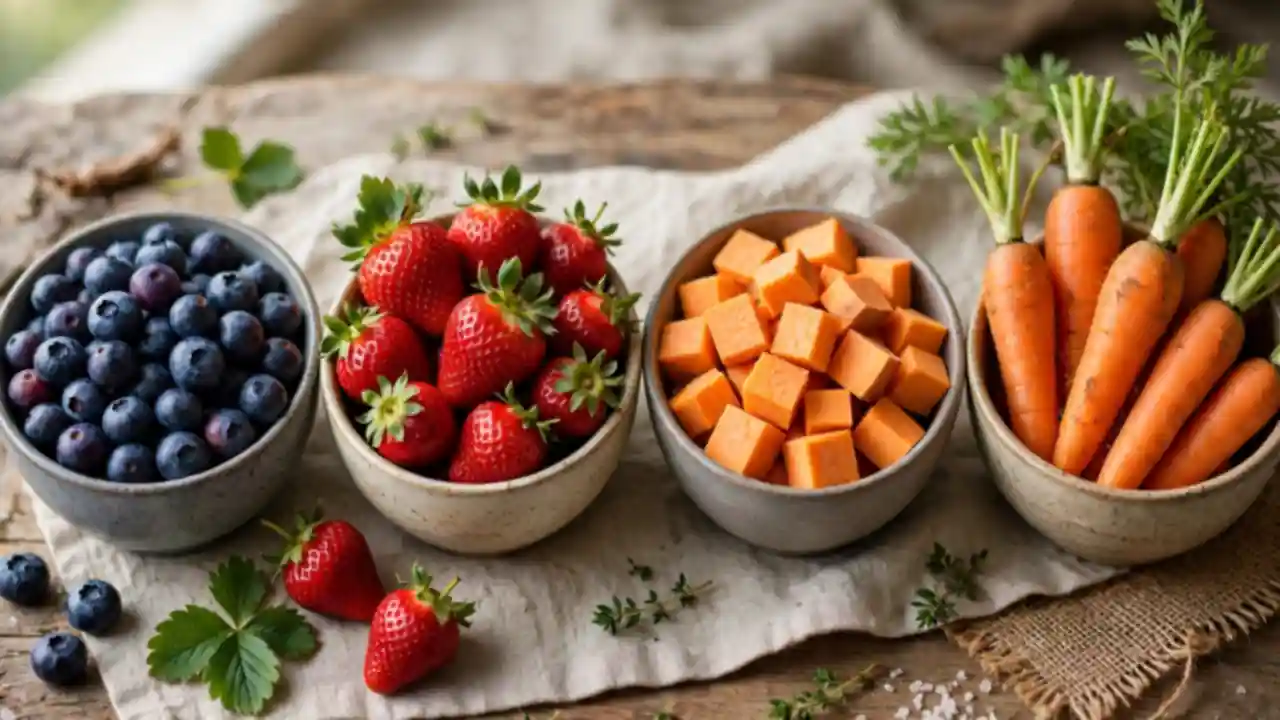
I now eat the rainbow, not because it sounds pretty, but because colour in plants usually means carotenoids and other antioxidants, and those compounds genuinely matter for skin. Carrots, peppers and tomatoes contain carotenoids such as beta-carotene and lycopene, which can accumulate in tissues and may offer a small baseline level of protection against sun damage, though they never replace sunscreen. I repeat that last part deliberately, because food is an extra layer of defence, not an oral sunscreen.
Recent reporting on this research describes how colourful fruits and vegetables rich in carotenoids can stimulate skin cells to produce hyaluronic acid, which helps maintain firmness and elasticity, and how one study found that eating a modest portion of mango several times a week reduced wrinkles in post-menopausal women over sixteen weeks, while a much larger daily amount had the opposite effect. That detail, reported by the BBC and summarised in this report on dietary secrets for healthier skin, taught me something important: more is not always better, and regular, moderate amounts beat heroic portions.
Sweet potatoes are my favourite example, because they are cheap, filling and rich in beta-carotene, which the body converts into vitamin A for normal skin-cell turnover. Berries bring polyphenols and vitamin C, and red peppers are an excellent source of vitamin C, which is a cofactor for collagen synthesis. I try to include at least two colours at every meal, which is a simple rule that automatically improves my diet without counting anything.
Green tea deserves a mention too, because its polyphenols may help reduce redness and irritation, and a warm cup in the afternoon replaced my sugary drink habit, which helped my skin in two ways at once. Small swaps like that, repeated daily, matter more than a single perfect meal.
Nuts, Seeds and Protein: The Repair Crew
Your skin is constantly repairing itself, and repair needs building materials. Protein provides the amino acids your body uses to make collagen and keratin, so I make sure every meal includes a protein source, whether that is fish, eggs, beans, lentils, dairy or soy. I used to skip protein at breakfast and wonder why I felt hungry and tired by ten o’clock, and fixing that one meal improved my energy and my skin’s resilience over time.
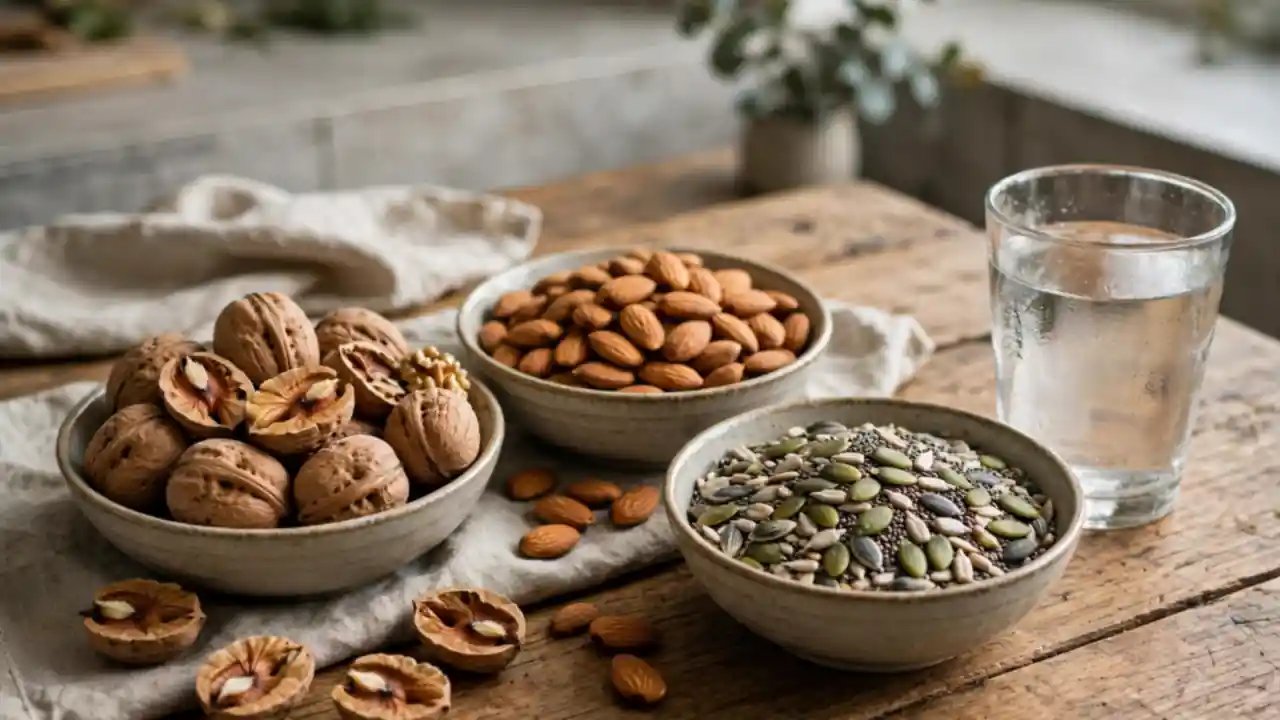
Nuts and seeds are small but mighty here. Almonds and hazelnuts provide vitamin E, an antioxidant that helps protect cells from oxidative damage, while walnuts provide omega-3s and antioxidants, and flaxseeds and chia seeds add healthy fats and fibre. A small randomised trial even found that almond snackers had less visible wrinkling after sixteen weeks, which is a modest finding, not a miracle, but it fits the wider pattern that regular, nutrient-dense snacking beats sugary snacking for skin.
Dark chocolate, at seventy percent cocoa or higher, is my favourite skin-friendly treat, because it provides antioxidant flavanols and feels like a pleasure rather than a prescription. I eat a small square after lunch most days, and I enjoy it without guilt, which is part of the point. A diet that feels like punishment never lasts, and skin health is a long game.
Sleep and movement support all of this too, which is why I link them whenever I write about skin. Good sleep helps skin repair overnight, so our guide to the best foods for better sleep is a natural companion to this article, and starting the day with protein helps as well, so the best high-protein breakfasts guide is worth reading next. Gentle exercise also boosts blood flow to the skin, and ideas from our strength training at home guide fit easily into a skin-friendly week.
What to Limit, Honestly
I will not pretend I never eat sugar or processed food, because I do, and perfection is not the goal. But I did learn that a high intake of ultra-processed foods, especially sweets and sugary drinks, has been linked to increased facial wrinkling, partly because added sugars can promote inflammation and the formation of compounds that stiffen collagen. Knowing that helped me cut back without feeling deprived, because I could see a reason beyond vague guilt.
Alcohol and smoking also work against skin health, and I mention them because they undo a lot of good eating. I reduced alcohol to occasional drinks, I never smoke, and I protect my skin from the sun every day, because sunscreen, protective clothing and shade remain the foundation of photoprotection, no matter how many blueberries I eat. Food supports skin, but it does not replace those basics.
Fermented foods deserve a quiet mention here too, because the gut-skin connection is increasingly studied, and foods like yogurt, kefir and kimchi may support the microbiome that influences skin. I eat plain yogurt most mornings, partly for my gut and partly because it is an easy protein source, and I see it as one more small habit in a wider pattern rather than a cure on its own.
Building Your Skin-Friendly Week
Here is the simple week I actually follow. I eat oily fish twice, I include a colourful vegetable at lunch and dinner, I snack on nuts or fruit instead of sweets most days, I drink water and green tea through the day, and I include protein at every meal. I do not count calories for my skin, I do not buy expensive powders, and I do not follow a rigid plan, because a flexible pattern I enjoy will always beat a perfect plan I abandon.
Shopping helps enormously. I buy frozen berries and fish, tinned sardines, sweet potatoes, carrots, peppers, eggs, yogurt, nuts and seeds, and dark chocolate, and with those in the house, skin-friendly meals almost cook themselves. When I am busy, a quick meal of tinned sardines on toast with a side salad, or eggs with avocado and peppers, is fast, cheap and genuinely good for my skin.
Try this tomorrow: Add one colourful vegetable to lunch, one source of healthy fat to dinner, and swap one sugary snack for a handful of nuts or a piece of fruit. That is it. Notice how you feel after a week of those three swaps, and then add one more, because skin health is built in small, repeatable steps.
Frequently Asked Questions
Can food really improve my skin?
Yes, gradually, as part of a wider pattern. Nutrients from food support your skin barrier, collagen production and antioxidant defences, but no single food transforms skin overnight. Consistent eating, sun protection, sleep and not smoking matter more together than any one ingredient alone.
What is the single best food for skin?
There is no single best food, despite what trends claim. Oily fish, colourful vegetables, nuts, seeds and protein-rich foods all contribute different nutrients, and variety matters more than any one item. If you forced me to pick a starting point, I would choose oily fish twice a week plus colourful vegetables daily.
Does sugar really affect skin?
High intakes of added sugar and ultra-processed foods have been linked to inflammation and increased wrinkling, partly through compounds that stiffen collagen. You do not need to eliminate sugar completely, but cutting back on sugary drinks and frequent sweets is a sensible step for skin.
Can food replace sunscreen?
No, absolutely not. Some foods may offer a small extra layer of defence against sun damage, but sunscreen, protective clothing and shade remain essential. Never skip sun protection because you ate well.
Do collagen supplements work?
The evidence is mixed. A recent meta-analysis found that non-industry-funded studies did not show significant improvements in hydration, elasticity or wrinkles, while industry-sponsored studies did show benefits, so the picture is unclear. Eating enough protein from real food is a safer first step, and supplements are a personal choice to discuss with a professional if you are considering them.
How long before I see a change from diet?
Skin changes slowly, so allow at least several weeks of consistent eating before judging results. Studies showing changes often run for sixteen weeks, which tells you this is a long-term habit, not a quick fix.
Final Thoughts
I wish I had learned earlier that my skin reflects how I live, not just what I buy. Eating well did not give me perfect skin, and I still have days when it looks tired, but it gave me steadier, calmer, healthier-looking skin, and it gave me a sense of control that no cream ever did. That feeling, of doing something kind for myself three times a day, is worth more than any single product.
So start with one swap tomorrow, be patient with yourself, and come back and tell me in the comments which food made the biggest difference for you. I read every comment, and I would love to hear what your skin teaches you as you feed it better.
React to this story