Key Points
Key Points
- Start with two or three herbs you actually eat, like basil, mint, and parsley.
- Most herbs need 4 to 6 hours of direct sunlight; south windows work best.
- Every pot needs drainage holes and light, well-draining potting mix.
- Water only when the top inch of soil feels dry, then empty the saucer.
- Harvest from the top, never more than a third at once, for bushier plants.
- Mint always gets its own pot because it spreads and crowds neighbours.
On This Page
- What You Will Learn in This Guide
- Start With the Easy Herbs, Not the Fancy Ones
- Subscribe to CAAW News
- Give Them Light, the One Thing You Cannot Fake
- Pots, Soil, and the Drainage Rule I Never Break
- Watering: Less Than You Think, Checked With Your Finger
- Feed Lightly, Harvest Often, and Your Plants Will Thank You
- Fixing Yellow Leaves, Leggy Stems, and Tiny Bugs
- Frequently Asked Questions
- How much sunlight do windowsill herbs really need?
- How often should I water indoor herbs?
- Can I grow several herbs in one pot?
- Should I start from seeds or buy seedlings?
- Why is my basil tall and thin instead of bushy?
- When can I start harvesting my herbs?
- Final Thoughts
- React to this story
I used to buy a bunch of fresh basil, use three leaves, and watch the rest turn black in my fridge. It felt wasteful every single time, and I kept thinking there had to be a better way. Then one spring morning I put a small pot of basil on my kitchen windowsill, and within weeks I was snipping fresh leaves straight into my pasta. That tiny pot changed how I cook, because fresh herbs taste brighter, smell stronger, and cost almost nothing once the plant is growing. In this guide, I will show you exactly how I grow herbs on my windowsill, even with no garden at all. If you have a sunny window and a little patience, this guide is for you. Let us grow something delicious together, starting today.
Trust nudge: I am not sponsored by any seed or pot brand here. The light, watering, and harvesting advice below matches public beginner herb guides I checked during my research, and where guides differ slightly, I tell you the range instead of pretending one number fits every home.
What You Will Learn in This Guide
- Which herbs grow best on a windowsill, and which to avoid at first
- How much light your herbs really need, and what to do without a sunny window
- Which pots and soil to use, and why drainage matters so much
- How to water without drowning your plants
- How to harvest so your plants grow bushier, not weaker
- How to fix yellow leaves, leggy stems, and tiny bugs
- Answers to the questions every beginner asks me
Start With the Easy Herbs, Not the Fancy Ones
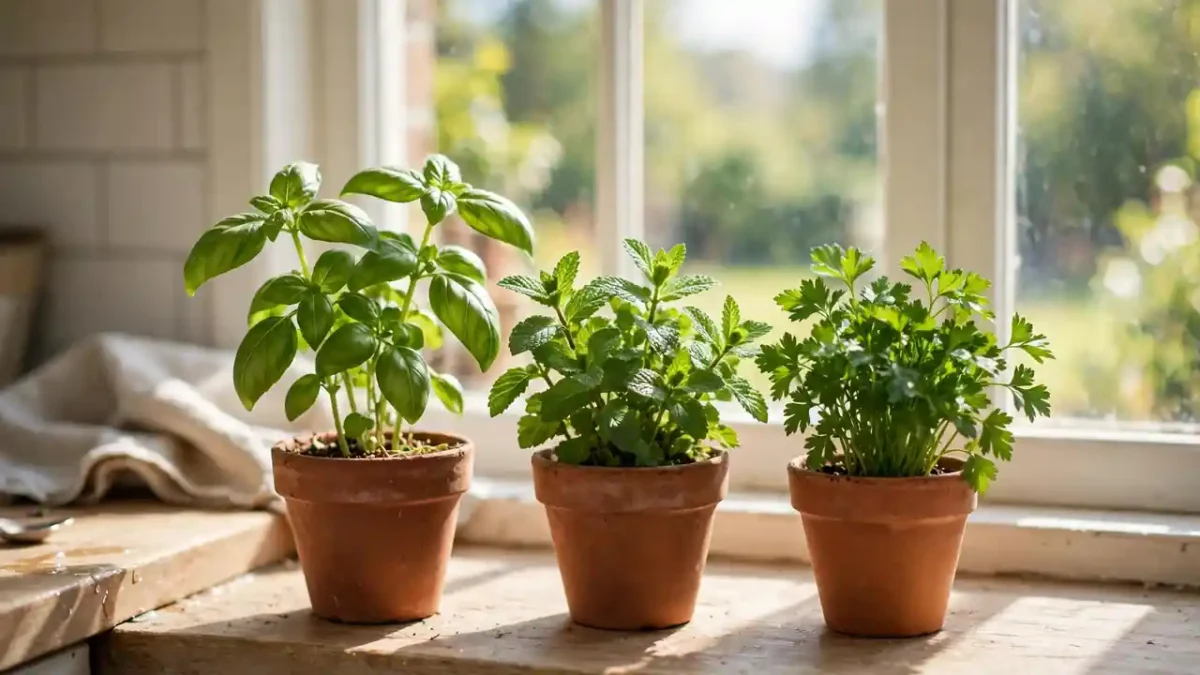
I made my first mistake by buying ten herbs at once, including fussy ones I had never cooked with. Half of them died, and I felt like a failure. Now I tell every beginner the same thing: start with two or three herbs you actually eat. For me, that was basil, mint, and parsley, and beginner guides agree these are among the easy, forgiving varieties suited to indoor conditions, along with thyme and chives. Basil loves warmth and sunlight, mint grows fast and prefers indirect light, and parsley is slow but hardy. Those three alone cover most of my cooking, from pasta to salads to tea.
Mint deserves a special warning from my own kitchen: never plant mint with other herbs. I once put mint in a shared pot and watched it take over the whole container within a month, crowding out everything else. Mint gets its own pot, always, and that single rule saved my later gardens. Thyme is another great beginner herb because it is compact and likes drier soil, which forgives a forgetful waterer. Coriander is lovely but prefers cooler spots indoors, so I grow it in spring and autumn rather than in the hottest weeks. Start small, learn your window, and add new herbs only when your first three are thriving.
Give Them Light, the One Thing You Cannot Fake
I learned quickly that light decides almost everything in a windowsill garden. Most indoor herbs need 4 to 6 hours of direct sunlight daily, with sun-lovers like basil and rosemary needing the full six hours, and south-facing windows usually give the best natural light. My own best window faces south, and the difference between that window and my darker north window is dramatic: the same basil grows twice as fast in the south window. If your brightest window gets less than four hours of direct sun, a simple LED grow light placed 6 to 12 inches above the plants for 12 to 16 hours a day fills the gap nicely, and that is the setup I use in winter.
I rotate my pots a quarter turn every week, because plants lean toward the light and grow lopsided if I forget. I also keep herbs away from cold drafts in winter, since basil especially hates cold air and sulks below about 15 degrees. If your windowsill sits above a radiator, raise the pots on a tray or move them slightly to the side, because hot dry air stresses leaves fast. Watch your plants and they will tell you about light: pale, stretched, leggy stems mean “more light, please,” while scorched brown edges mean the midday sun is too harsh and a sheer curtain would help. If you want to grow more outdoors too, my guide to starting a small garden on a balcony pairs well with this windowsill start.
Pots, Soil, and the Drainage Rule I Never Break
I used to plant herbs in pretty pots with no holes, and I wondered why they kept dying. The answer was simple: their roots sat in water and rotted. Now I never break the drainage rule. Every pot must have holes in the bottom and a saucer underneath to catch extra water, which I empty after watering. Beginner guides repeat this point everywhere because it matters more than any fancy fertiliser: containers must have enough holes for sufficient drainage, and the soil must be a light, well-draining potting mix, never heavy garden soil. I buy a bag labelled for indoor plants or herbs, and I leave about an inch of space at the top of each pot so watering does not wash soil everywhere.
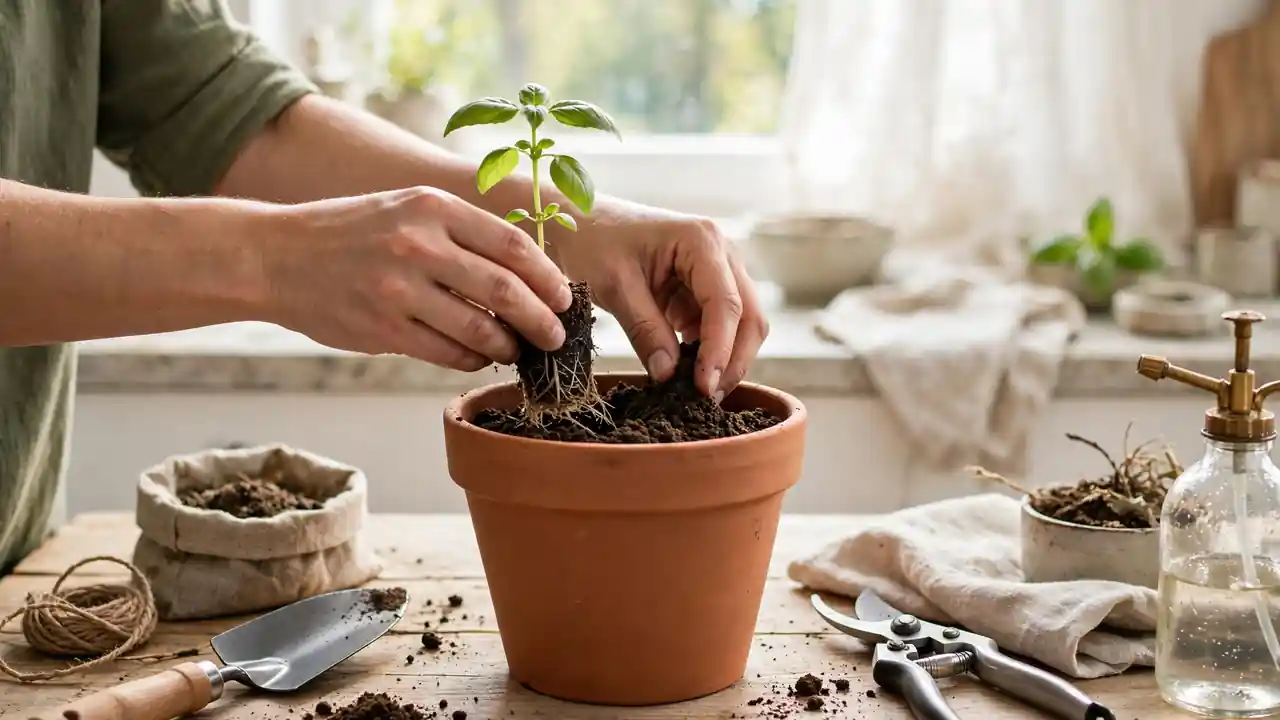
Pot size matters too, and I keep it simple. Most herbs are happy in a 6 to 8 inch pot of their own, which gives roots room without drowning them in a huge pot that stays wet for weeks. Terracotta pots are my favourite because they breathe and let soil dry a little between waterings, which suits Mediterranean herbs like thyme. Plastic pots hold moisture longer, which suits basil and parsley. When I plant, I fill the pot with mix, make a small hole, settle the seedling in at the same depth it grew before, press the soil gently, and water immediately. Then I label the pot, because three green seedlings look identical after a week and I have mixed up mint and basil more than once.
Watering: Less Than You Think, Checked With Your Finger
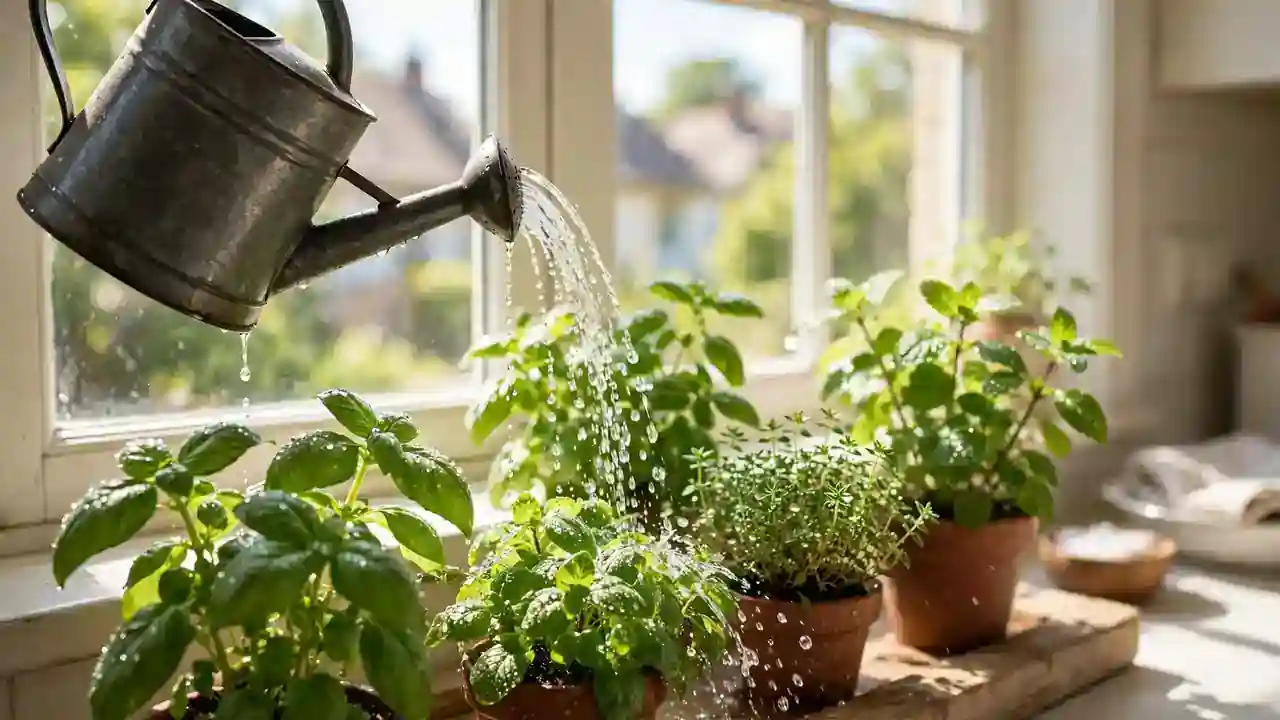
I killed more herbs by overwatering than by any other mistake, and I know I am not alone. Beginner guides agree that overwatering is the most common mistake with indoor herbs, leading to root rot and yellowing leaves, and the fix is wonderfully low-tech: water when the top inch of soil feels dry to the touch, typically every 3 to 5 days depending on humidity and pot size. I push my finger into the soil up to the first knuckle. If it feels dry, I water thoroughly until water runs from the drainage holes. If it feels damp, I wait. That finger test beats any calendar, because a sunny week and a cloudy week ask for different amounts of water.
Feed Lightly, Harvest Often, and Your Plants Will Thank You
I feed my herbs lightly, about once every two to four weeks, with a diluted organic liquid fertiliser, because too much food makes soft, weak growth with less flavour. In fact, many guides note that herbs taste best when they are not overfed, and I have found that true in my own kitchen: my lightly fed basil smells stronger than the heavily fed plant I grew one summer. I skip feeding in the darkest winter weeks when growth slows, and I start again when the days lengthen. Fresh herbs also make my cooking healthier and tastier, which is why I pair them with simple meals like those in my guide to healthy snacks for work and my beginner’s guide to the Mediterranean diet, where herbs replace salt and heavy sauces beautifully. The same flavour-first idea helps in my guides to the DASH diet and to how much sugar is too much, where fresh herbs do the work that salt and sugar used to do.
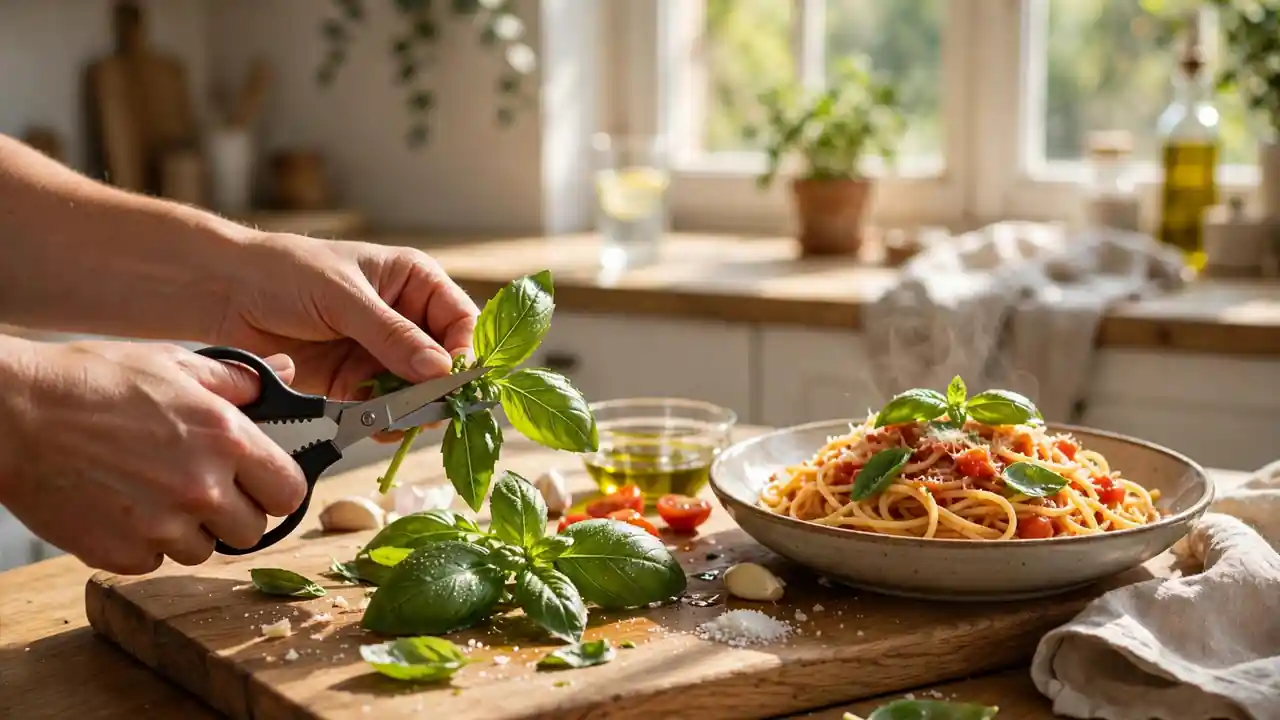
Harvesting is the happiest part, and it is also plant care. Guides advise harvesting when herbs are four to six inches tall and never trimming more than a third of the plant’s foliage at once, and I follow that rule closely. I snip from the top or the outer stems with clean scissors, which encourages the plant to branch and grow bushier instead of tall and thin. I harvest in the morning when the leaves are full of flavour, and I use them the same day when I can. Regular harvesting keeps basil and mint producing fresh leaves for months, which is the opposite of what I once feared: picking leaves does not hurt the plant, it helps it, as long as I leave enough leaves behind for it to keep growing.
Fixing Yellow Leaves, Leggy Stems, and Tiny Bugs
I used to panic at the first yellow leaf, but now I read it like a message. Yellow leaves with soggy soil mean too much water, so I let the soil dry and check the drainage holes. Yellow leaves with dry, pale growth can mean too little light or hunger, so I move the pot closer to the window and feed lightly. Leggy stems with big gaps between leaves mean the plant is stretching for light, so I move it to a brighter spot and pinch the top to encourage branching. Brown crispy edges usually mean dry air or a hot radiator nearby, so I move the pot and mist the air around it, not the leaves themselves.
Tiny bugs, especially aphids, appear on my herbs a few times a year, and I deal with them early and simply. I check the undersides of leaves weekly, and if I find a few aphids, I rinse the plant gently under lukewarm water or wipe the leaves with a damp cloth. I remove any badly affected stems rather than spraying chemicals on food I plan to eat. Good airflow helps a lot, so I do not crowd my pots together like a jungle. If one plant is badly infested, I isolate it from the others for a week, because pests spread fastest between touching leaves. Most problems are small when caught early, and that weekly two-minute check is the best pest control I own.
Frequently Asked Questions
How much sunlight do windowsill herbs really need?
Most herbs need 4 to 6 hours of direct sunlight a day, with basil and rosemary wanting the full six hours. A south-facing window is usually best, while east or west windows suit moderate-light herbs like parsley and chives. Below four hours, add an LED grow light 6 to 12 inches above the plants for 12 to 16 hours a day.
How often should I water indoor herbs?
Water when the top inch of soil feels dry, typically every 3 to 5 days, and water thoroughly until excess drains from the bottom. Always empty the saucer after watering, because roots sitting in water rot quickly. Your finger is a better guide than any fixed calendar.
Can I grow several herbs in one pot?
You can in a large container at least 12 to 16 inches wide, but beginners do better with one herb per 6 to 8 inch pot, because herbs have different water and light needs. Mint must always have its own pot, since it spreads fast and crowds out neighbours. Group herbs with similar needs, like thyme with sage, if you do mix them.
Should I start from seeds or buy seedlings?
Seedlings give you herbs weeks faster and are more forgiving for beginners, so I recommend them for your first garden. Seeds are cheaper and offer more varieties, but they need steady moisture and patience while germinating. Many beginners start with one supermarket pot, divide it into three or four clumps, and repot each one for instant plants.
Why is my basil tall and thin instead of bushy?
That is usually low light plus too little pinching. Move the plant to your brightest window, pinch the top stem regularly to force side branches, and harvest from the top. Leggy growth is a message, not a failure, and most plants recover quickly once light improves.
When can I start harvesting my herbs?
Start when plants are four to six inches tall, and take no more than a third of the foliage at once. Harvest in the morning for the best flavour, snip with clean scissors, and use the leaves fresh the same day when you can. Regular small harvests keep the plant producing for months.
Final Thoughts
I started this guide with a fridge full of black basil and a feeling of waste, and I want to end with the smell of fresh leaves in my kitchen every single day. My windowsill garden is small, just a few pots in sunlight, but it changed my cooking and my mood in a way no gadget ever did. You can do this too, even if you have never kept a plant alive before, because herbs are forgiving teachers and a sunny window is all the classroom you need. Start with one pot this week, just one, and see what happens. I am cheering for your first harvest, and I would love to hear in the comments which herb you planted first and what you cooked with it. Your story might be the push another beginner needs.
React to this story