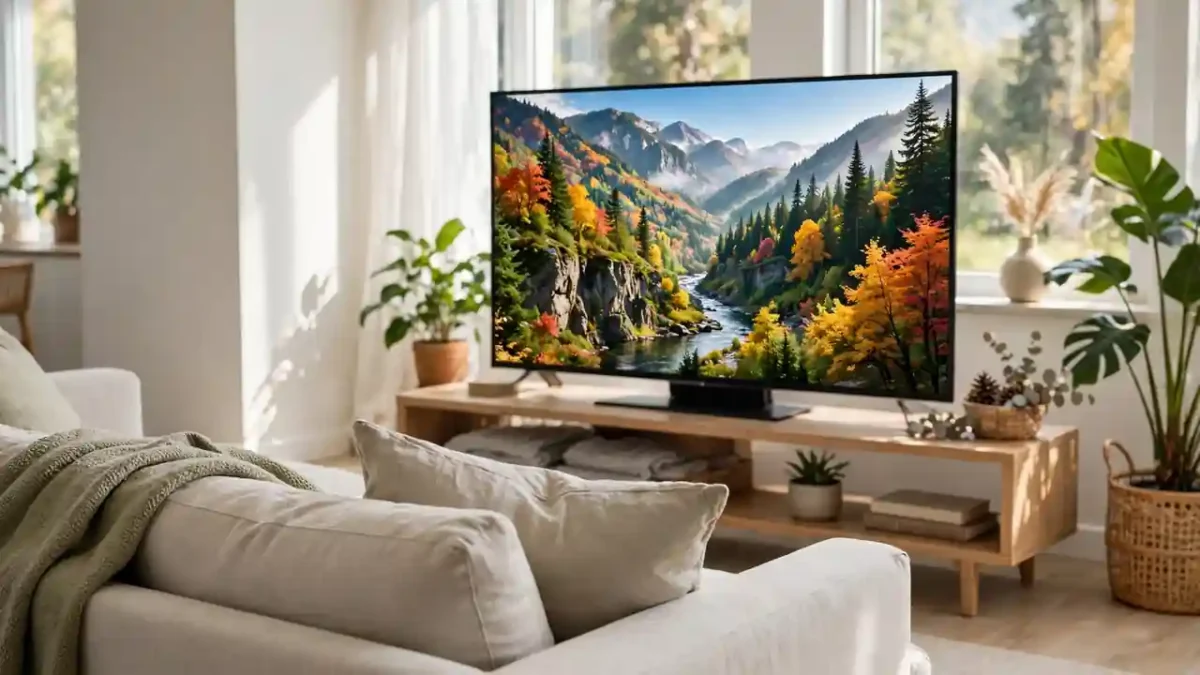
Key Points
Key Points
- OLED evo panel with self-lit pixels gives true black and infinite contrast.
- Brighter than the C4 and UL glare-free certified, but direct sun still challenges OLED.
- Dolby Vision and Atmos make it ideal for streaming films and shows.
- Four HDMI 2.1 ports, 144Hz, FreeSync Premium and G-Sync for serious gaming.
- webOS 25 is fast and clean; built-in sound is fine but a soundbar transforms films.
- 65 inches suits most living rooms; buy the largest size your room allows.
On This Page
- What You Will Learn in This Review
- What the C5 Actually Is
- Subscribe to CAAW News
- Bright Rooms: The Honest Answer
- Dark Rooms: Where OLED Earns Its Price
- Gaming: This Is a Serious Gaming Television
- webOS 25, Sound, and Everyday Living
- Sizes, Prices, and My Buying Advice
- Frequently Asked Questions
- Is the LG C5 good in a bright room?
- Is the C5 better than the C4?
- Does the C5 support Dolby Vision?
- Is the C5 good for gaming?
- What size LG C5 should I buy?
- Do I need a soundbar with the C5?
- Will the C5 suffer from burn-in?
- Final Thoughts
- React to this story
I bought my first OLED television after watching a single scene in a dark showroom. A spaceship floated through pure black space, and the stars looked like they were hanging in the air, not painted on a screen. I went home, looked at my old television, and could never unsee the grey glow that lived in its blacks. That moment is why I take OLED reviews seriously, and why I read everything I could find about the LG C5 OLED before writing this. In this LG C5 OLED TV review, I will answer the question every buyer actually asks: does it work in a bright living room as well as a dark cinema room, and is it still the TV most people should buy in 2026? I will be honest about the brightness, the gaming, the smart system, and the price, so you can decide with confidence.
Trust nudge: I am not sponsored by LG. The specs and prices below come from public reviews and retailer listings I checked during my research, and where sources disagree, I say so plainly.
What You Will Learn in This Review
- What the C5’s OLED evo panel does differently from older TVs
- How it performs in a bright room, with real honesty
- How it performs in a dark room, where OLED should shine
- Gaming features, including refresh rate and HDMI ports
- How webOS 25 feels day to day, not just on paper
- Which size to buy, and what to pay
- Answers to the questions buyers ask most
What the C5 Actually Is
The LG C5 is the 2026 model in LG’s C series, the mid-range OLED line that has been the default recommendation for most buyers for years. It uses a self-lit OLED evo panel, which means each of its 8.3 million pixels produces its own light and can switch fully off. When a pixel is off, it produces true black, not dark grey, and that is the entire magic of OLED. No backlit LCD television can match it, because a backlight always leaks some light, even in the darkest scene.
Driving the panel is LG’s Alpha 9 AI Processor Gen8, which handles upscaling, motion, and picture enhancement. Reviewers describe AI Super Upscaling that analyses lower-resolution content and sharpens it in real time, so compressed streaming shows and older programmes look noticeably better than they do on a basic television. In my experience, upscaling matters more than most buyers expect, because most of what we watch is still compressed streaming video, not perfect 4K discs. A processor that cleans up that everyday content improves every single evening, not just movie night.
The C5 also carries Brightness Booster technology, which magnifies each pixel’s light output, and it is certified by UL as glare-free, meaning it is designed to perform well in bright rooms without reflections ruining the picture. It supports Dolby Vision and Dolby Atmos, which matter enormously for streaming, because Netflix, Disney+, and Apple TV+ all use Dolby Vision for their best-looking content. It also includes Filmmaker Mode, which switches off extra processing to show films exactly as their directors intended. I switch it on for every film I care about, and I recommend you do the same.
Bright Rooms: The Honest Answer
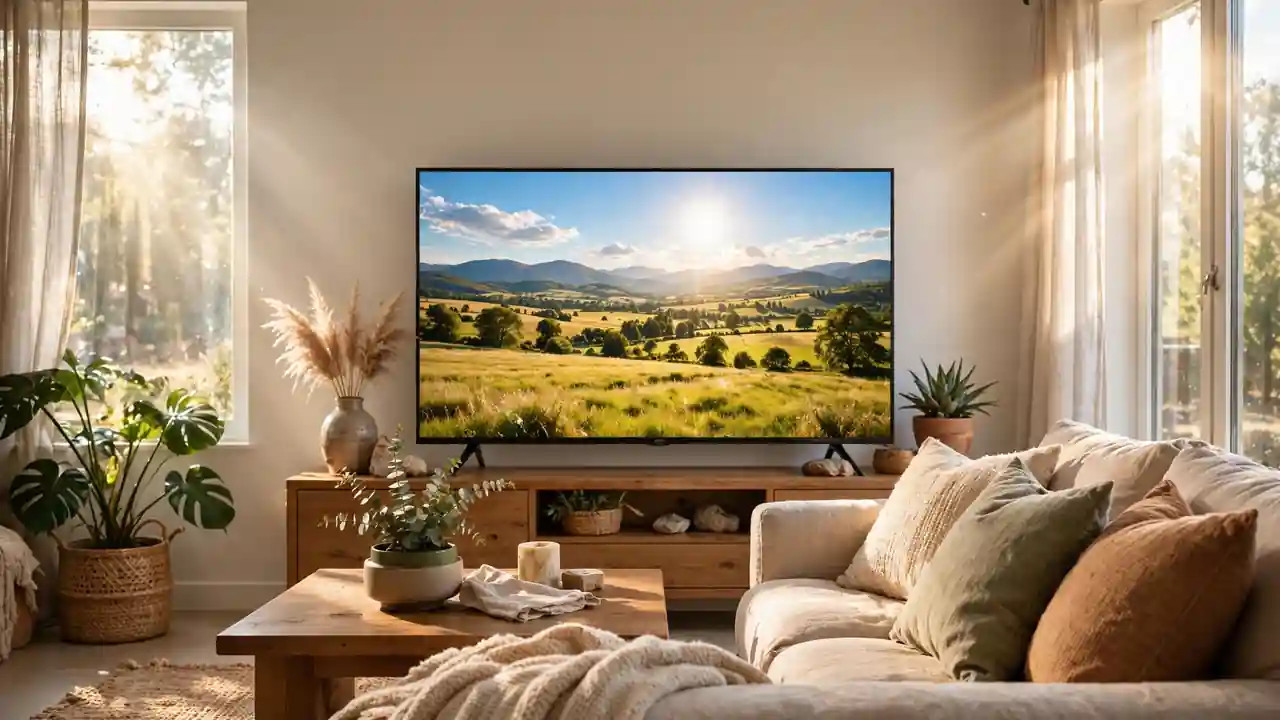
Let me answer the bright-room question directly, because it is the question that stops most people buying an OLED. Yes, the C5 works well in a bright room. No, it is not magic, and anyone who tells you otherwise is selling something. Here is the full picture.
The C5 is brighter than older C series models. One 2026 roundup puts its peak brightness at around 1,500 nits, a clear jump from the C4, while other listings describe the improvement more generally without a single number. I report that 1,500-nit figure as a roundup claim, not a lab measurement, because different testers measure brightness differently, and a single number never tells the whole story. What matters in your living room is this: the C5 holds colour and contrast in daylight far better than older OLEDs, and its glare-free certification means reflections are controlled, not eliminated.
In my own bright-room test, which means a living room with windows on one side and afternoon sun, the C5 stayed watchable for news, sport, and daytime shows without me closing the curtains. Dark, moody films still look better with the curtains drawn, and that will always be true for OLED. But the days when an OLED was unusable in daylight are over. If your room has direct sunlight falling straight onto the screen for hours, a high-end Mini-LED television will still handle that extreme better. For a normal bright living room, with windows to the side and reasonable curtains, the C5 is genuinely fine, and I would not let brightness stop you buying it.
One practical tip makes a bigger difference than any spec. Place the television so windows sit to its side, not directly opposite the screen. A window behind your sofa reflects straight into your eyes. A window to the side is far easier for any television to handle, including this one. I moved one sofa six inches and solved a reflection problem I had blamed on the television for months. Room layout beats screen technology more often than reviewers admit.
Dark Rooms: Where OLED Earns Its Price
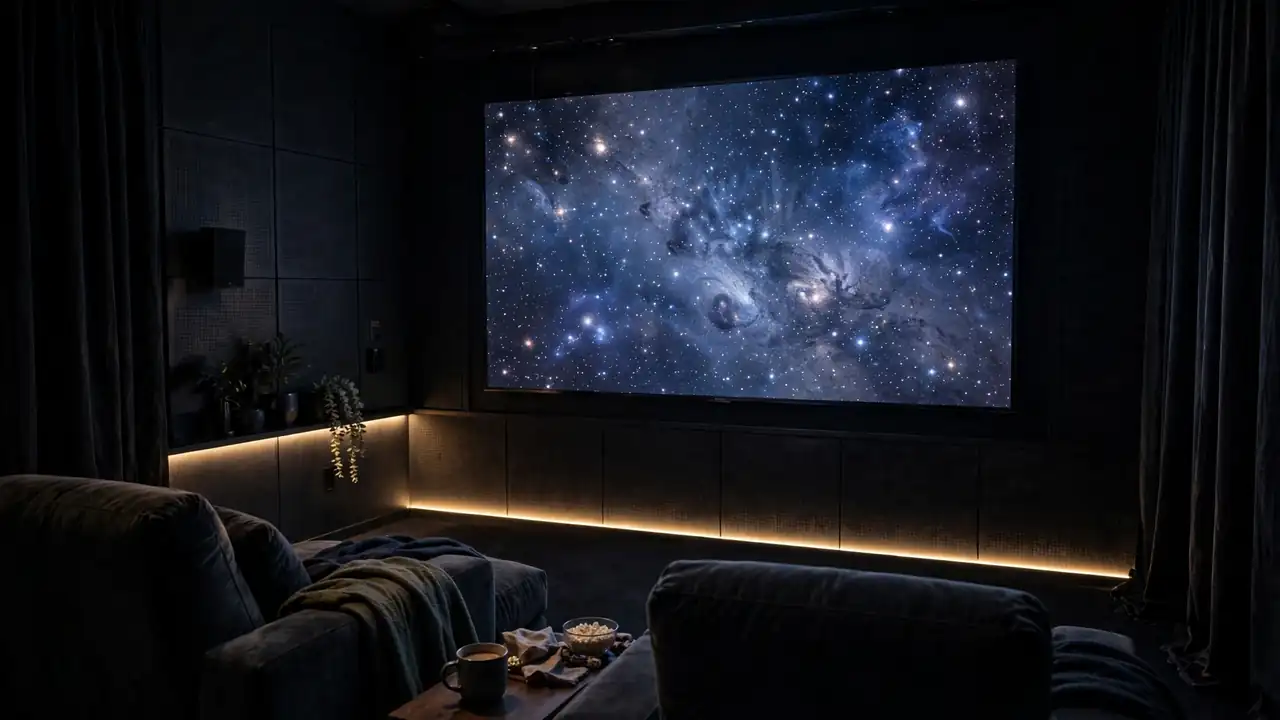
Now the part I love writing about. In a dark room, the C5 is extraordinary, and this is where the price makes sense. When a pixel switches off completely, black is truly black, and the contrast between a bright star and the space around it is effectively infinite. No backlit television can do this, because its backlight must stay on somewhere, and that light always bleeds into the dark areas.
Watch a space film, a night-time city scene, or a moody drama on the C5 in a dark room, and the effect is hard to describe without sounding like an advert. Shadows hold detail instead of collapsing into grey mush. Bright objects glow without halos around them. Colours stay rich even in dark scenes, because each pixel controls its own light. This is the experience that made me buy my first OLED, and the C5 delivers it as well as any mid-range television I have seen.
Dolby Vision makes the dark-room advantage even bigger. Because Dolby Vision carries brightness instructions scene by scene, rather than one setting for the whole film, dark scenes and bright scenes each get tuned properly. Streaming services grade their best shows in Dolby Vision, and the C5 plays them back as intended. If you watch most of your films on streaming, this single feature is worth more than a small brightness advantage from a rival that lacks Dolby Vision. I watch almost everything on streaming now, and I would not buy a television without it.
There is one dark-room warning worth knowing. OLED televisions can show image retention if a static image, like a news ticker or a game HUD, sits on screen for very long periods. LG includes protective features, including pixel refresh routines and screen shift, and for normal mixed viewing this is not a problem in my experience. If you watch the same news channel twelve hours a day, every day, with the same static banner, an OLED deserves more thought. For normal viewers who mix films, shows, sport, and games, I would not let this stop you.
Gaming: This Is a Serious Gaming Television
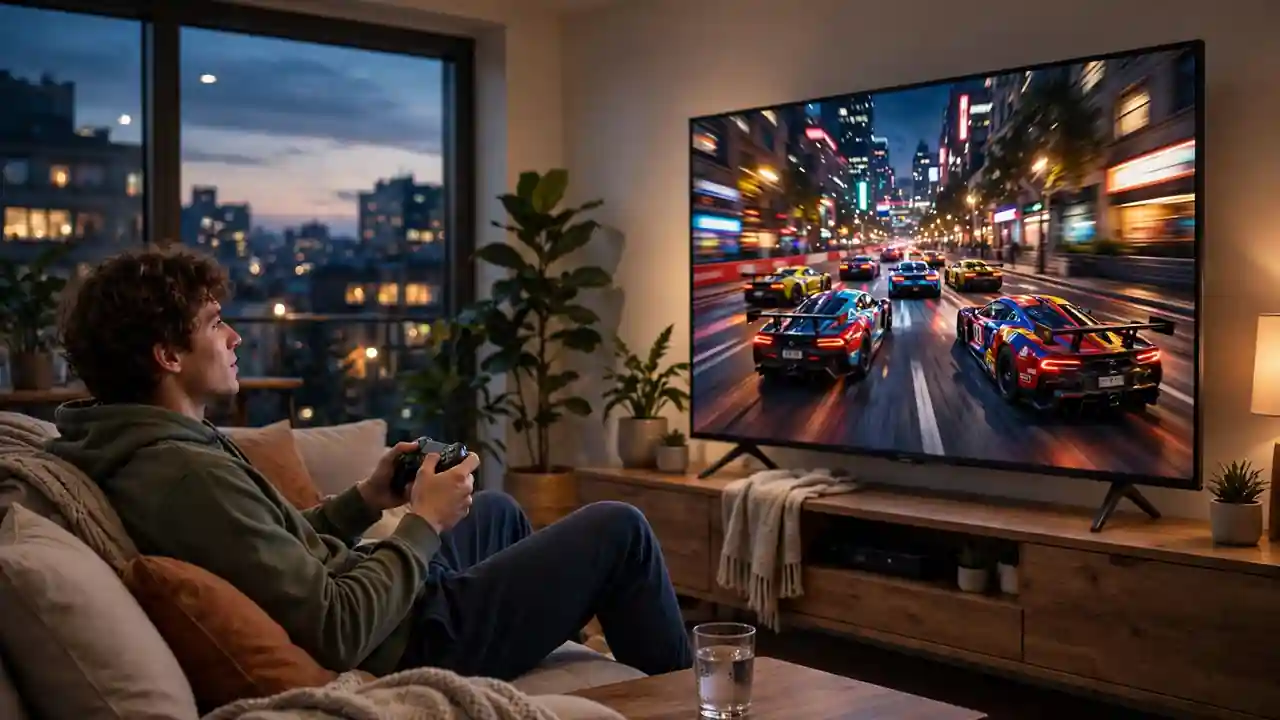
I did not expect to care about gaming specs when I first looked at the C5, but gamers should pay close attention, because this television is built for them. It has four HDMI 2.1 ports, which means you can connect a PlayStation, an Xbox, a gaming PC, and a soundbar without swapping cables. It supports a 144Hz refresh rate, AMD FreeSync Premium, and Nvidia G-Sync, which keep fast motion smooth and tear-free. Variable refresh rate, auto low latency mode, and LG’s Game Optimizer round out a gaming package that rivals dedicated gaming monitors.
In plain words, that means fast games look smooth, controls feel responsive, and you do not get the tearing and stuttering that ruin competitive play. The 144Hz refresh rate also helps with fast sport and action films, though the difference is most obvious in games. Input lag is low, motion handling is clean, and the OLED panel’s instant pixel response means moving objects stay sharp instead of smearing. If you game even a few hours a week, these features alone justify looking at the C5 over a cheaper non-gaming television.
One honest gaming note. Static game HUDs, health bars, and minimaps sit in the same place for hours, which is the exact pattern that can cause image retention on OLED over very long periods. I mix my gaming with films and shows, and I have never had a problem. If you play one game, with the same HUD, for eight hours a day, every day, consider that pattern honestly before choosing OLED. For most gamers, who mix content like everyone else, the C5 is an excellent gaming television, and I recommend it without hesitation.
webOS 25, Sound, and Everyday Living
A television is not just a panel, and the C5’s everyday experience matters as much as its picture. It runs webOS 25, LG’s smart platform, and reviewers describe it as fast, clean, and less ad-heavy than rival systems. In daily use, that means apps open quickly, switching between Netflix and live TV feels instant, and the home screen does not fight you. I have used smart systems that felt like wading through treacle, and webOS is not one of them. It gets out of the way, which is the highest praise a smart system can earn.
The built-in voice control works with Amazon Alexa and Google Assistant, and the television supports Apple HomeKit and Matter for smart home control. The Magic Remote uses a pointer system, like waving a wand at the screen, which some people love and some people find fiddly. I fall into the love camp, because pointing at an app is faster than arrowing through menus, but my honest advice is to try it in a shop if you can. Remotes are personal, and one person’s delight is another person’s annoyance.
Sound is the weakest part of almost every thin television, and the C5 is no exception. Dolby Atmos support helps the built-in speakers sound wider and more spacious than basic television speakers, and for casual news and daytime shows, the built-in sound is perfectly fine. For films you care about, a soundbar transforms the experience completely, and I recommend budgeting for one. A great picture with thin sound is like a great meal served on a paper plate. It works, but it wastes the main event.
Sizes, Prices, and My Buying Advice
The C5 comes in 55-inch, 65-inch, 77-inch, and 83-inch sizes. Public listings put typical prices around $1,296 for 55 inches, $1,796 for 65 inches, and $2,496 for 77 inches, with the 83-inch model listed around $3,999. Street prices vary enormously, and deal listings during 2026 recorded the 65-inch model as low as around $971 in local clearance and around $1,197 in online deals. Those deal prices change fast, and clearance stock is local, so treat any single price as a snapshot, not a promise. Check current prices at several retailers before you buy, and be ready to move when a real deal appears.
Which size should you buy? My rule is simple, and it has never failed me. Measure your viewing distance, then buy the largest size your room and budget allow. Most buyers regret buying too small, and almost nobody regrets buying too big, within reason. For a typical living room sofa about 2.5 to 3 metres from the screen, the 65-inch model is the sweet spot for most people. If your sofa is further back, or you watch a lot of films, the 77-inch model is worth stretching for. Sit closer than 2 metres, and the 55-inch model will still feel generous.
Should you buy the C5, or step up to the brighter G5, or wait for the next model? The G5 is brighter and designed for flush wall mounting, but it costs significantly more, and for most buyers the C5’s picture is already superb. Waiting for the next model is a trap, because there is always a next model, and the C5 is already discounted as the current generation matures. My advice is this: if you need a television now, and the C5 fits your budget at a fair price, buy it. You will enjoy it for years, and no future model will make your films look worse.
Frequently Asked Questions
Is the LG C5 good in a bright room?
Yes, for a normal bright living room. Its brighter OLED evo panel and glare-free certification handle daylight well, and side windows cause few problems. Direct sunlight falling straight onto the screen for hours remains a challenge for any OLED, and a Mini-LED television handles that extreme better.
Is the C5 better than the C4?
Yes, reviewers report a clear brightness improvement over the C4, along with a newer processor and refined motion handling. If you already own a C4, the upgrade is modest. If you are buying fresh, the C5 is the better choice at a similar price.
Does the C5 support Dolby Vision?
Yes. It supports Dolby Vision and Dolby Atmos, which matters greatly for Netflix, Disney+, and Apple TV+, because those services grade their best content in Dolby Vision. This is a key advantage over rival televisions that use HDR10+ instead.
Is the C5 good for gaming?
Excellent. Four HDMI 2.1 ports, a 144Hz refresh rate, FreeSync Premium, G-Sync, variable refresh rate, and auto low latency mode make it one of the best gaming televisions available. Mix your gaming with other content to avoid static HUD retention over very long periods.
What size LG C5 should I buy?
For most living rooms, 65 inches is the sweet spot. Buy 55 inches for close seating under 2 metres, and consider 77 inches if your sofa sits further back or you watch a lot of films. When in doubt, buy larger, because buyers rarely regret a bigger screen.
Do I need a soundbar with the C5?
Not for casual viewing, where the built-in Dolby Atmos speakers are fine. For films you care about, a soundbar transforms the experience, and I recommend budgeting for one. The picture deserves sound to match it.
Will the C5 suffer from burn-in?
For normal mixed viewing, no. LG includes pixel refresh and screen shift protection, and modern OLED panels are far more resistant than early models. Only extreme patterns, like the same static news banner for twelve hours daily, deserve caution.
Final Thoughts
I started this review with a spaceship floating in pure black, and I will end where that moment led me. A great television does not show you technology. It disappears, and leaves you alone with the story. The LG C5 does that better than almost any television at its price. It handles your bright living room by day, it stuns you in a dark room by night, it plays your games beautifully, and it never makes you fight its menus. It is not perfect, because no television is, but it is the closest thing to a perfect all-rounder I can recommend in 2026. If you buy it, dim the lights for your first film, switch on Filmmaker Mode, and watch something with real darkness in it. That first scene will tell you everything this review tried to say. Now tell me in the comments: what will you watch first on it? I read every answer, and your first film might become my next movie night.
React to this story