

Key Points
Key Points
- Quantinuum announced 99.9995% logical fidelity on October 19, 2026 — five errors per million operations on its Helios trapped-ion computer.
- The error rate is 10x better than its own September 2026 record and 100x better than the best published rival result (Google Quantum AI).
- Each increase in code distance cut remaining errors by a record factor of 12 — exponential error suppression, the key to scaling.
- The October record used the ‘color code’; September’s used the ‘Helix’ code — both on Helios, proving the architecture’s flexibility.
- Independent expert Robin Blume-Kohout (Sandia) called it ‘a logical qubit nearly 100x better than its component physical qubits’.
- CEO Dr. Rajeeb Hazra says the result validates the path to Apollo, the planned universal fault-tolerant quantum computer expected by 2029.
- A scaled-up system could reach useful fault tolerance with fewer than a million physical qubits, per the Sandia assessment.
On This Page
- Subscribe to CAAW News
- What you will learn
- What actually happened on October 19, 2026
- Why errors are quantum computing’s whole problem
- Decoding the numbers: 99.9995%, 10x, 100x, and the factor of 12
- Color code vs Helix code: why the method matters
- Who said what: Quantinuum’s CEO and Sandia’s independent voice
- The road to Apollo by 2029 — realistic plan or moonshot?
- Who Quantinuum actually is
- What this means for you (and what it does not)
- Your questions, answered
- What is quantum error correction in simple terms?
- What does 99.9995% fidelity actually mean?
- How much better is this than before?
- What is the difference between the color code and the Helix code?
- What is Apollo?
- Will quantum computers replace my laptop?
- Should I worry about quantum computers breaking encryption?
- Final thoughts
- React to this story
I cover quantum computing for a living, and I have a confession to make: most “quantum breakthroughs” that cross my desk are not breakthroughs at all. They are press releases wearing lab coats, and they usually mean nothing for your life for another decade. I have learned to be suspicious. But then October 19, 2026 happened. Quantinuum announced a quantum error-correction result so strong that an independent scientist at Sandia National Laboratories praised it on the record. And here is the thing: this one actually matters, and I am going to explain exactly why — in plain English, with every number sourced, so you never have to take my word for anything.
This piece is for you if you have ever read a quantum headline, felt your eyes glaze over, and moved on. I have been there too. Today I will walk you through what 99.9995% fidelity really means, why error correction is the entire ballgame in quantum computing, and whether Quantinuum’s promised fault-tolerant computer by 2029 is a real plan or just another poster on the wall.
Why you can trust this breakdown: every number below comes straight from Quantinuum’s October 19, 2026 announcement (NASDAQ: QNT) and from an independent comment by Robin Blume-Kohout of Sandia National Laboratories’ Quantum Performance Lab, who was not involved in the work. I have linked the announcement inline throughout. Where I give my opinion, I will say so clearly.
What you will learn
- What actually happened on October 19, 2026
- Why errors are quantum computing’s whole problem
- Decoding the numbers: 99.9995%, 10x, 100x, and the factor of 12
- Color code vs Helix code: why the method matters
- Who said what: Quantinuum’s CEO and Sandia’s independent voice
- The road to Apollo by 2029 — realistic plan or moonshot?
- Who Quantinuum actually is
- What this means for you (and what it does not)
- Your questions, answered
What actually happened on October 19, 2026
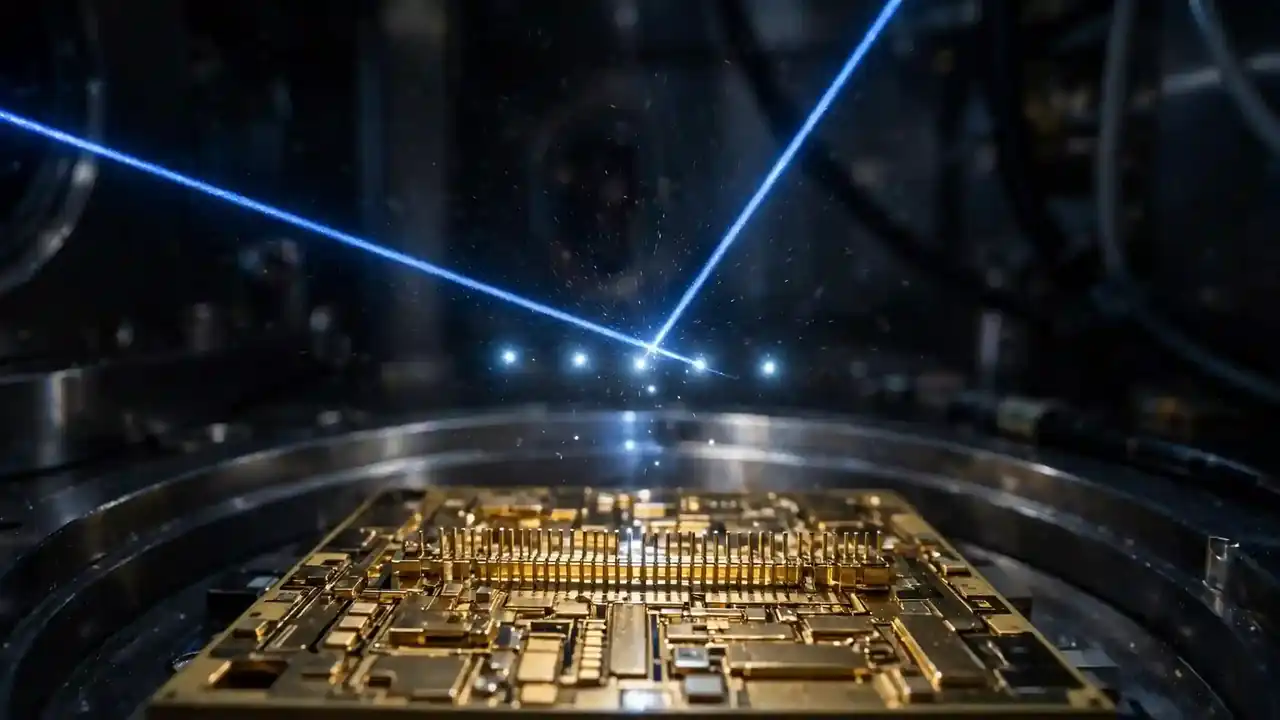
On October 19, 2026, Quantinuum — a quantum computing company listed on NASDAQ as QNT and headquartered in Broomfield, Colorado — announced a new world record in quantum error correction. Its Helios commercial computer achieved 99.9995% logical fidelity. Let me translate that: out of one million quantum operations, only five went wrong. Five. In a field where errors are the single biggest obstacle, that is like a baseball pitcher throwing a million strikes and missing the zone five times.
Why does the word “logical” matter so much? Because quantum bits — qubits — are fragile little things. They lose their quantum state at the slightest disturbance: a bit of heat, a stray vibration, even cosmic rays. A physical qubit is the actual hardware bit. A logical qubit is a team of physical qubits working together, constantly checking each other and correcting mistakes. The record was set on a logical qubit — meaning the error correction itself performed at 99.9995%. That is the part engineers have been chasing for decades.
Why errors are quantum computing’s whole problem
Here is the simplest way I can put it. Your laptop’s bits are like bricks — solid, reliable, they stay where you put them. Qubits are like soap bubbles — beautiful, powerful, and they pop if you look at them funny. A quantum computer can explore millions of possibilities at once, which is why it could one day crack problems no classical computer can touch: designing new drugs, new materials, unbreakable encryption. But none of that works if the bubbles keep popping mid-calculation.
This is why quantum error correction is not some niche subfield — it is the entire game. Without it, every quantum calculation longer than a few steps dissolves into noise. With it, you can build a fault-tolerant quantum computer: one whose logical qubits are so well protected that long, useful calculations become possible. Every serious quantum company on Earth is racing toward the same finish line, and this announcement is Quantinuum planting its flag a good stretch ahead of the pack.
The 10-second version: Quantinuum’s computer made only 5 errors per million operations — a new world record. That error rate is 10 times better than its own record from September 2026 and 100 times better than the best result anyone else has published. It ran on the company’s Helios trapped-ion machine, and the CEO says it validates the path to a universal fault-tolerant computer called Apollo by 2029.

Decoding the numbers: 99.9995%, 10x, 100x, and the factor of 12
Numbers in quantum press releases are designed to impress you before you understand them. Let us slow down and take them one at a time, because these ones genuinely deserve the attention.
99.9995% logical fidelity means five errors per million operations. I keep repeating this because it is the heart of the story. In September 2026 — barely a month earlier — Quantinuum set its previous world record. This new result is 10 times better than that. Improving by a factor of ten in a single month, at the cutting edge of physics, is not normal progress. That is a leap.
Now the bigger comparison. The error rate is 100 times lower than the best published result across all other hardware approaches — and that best result came from Google Quantum AI on a superconducting system, according to the announcement. Superconducting qubits are the technology Google and IBM bet on; trapped ions are Quantinuum’s bet. A 100x gap between the two approaches is the kind of margin that makes investors, researchers, and competitors sit up very straight.
And then there is my favourite number in the whole announcement: a factor of 12. Each time the team increased the code distance — roughly, how many physical qubits are teamed up to protect the logical qubit — the remaining logical errors fell by a factor of 12. This is exponential error suppression, and it is the thing that actually matters for scaling up. Why? Because it means adding more qubits gives you more than proportional improvement. It is the difference between climbing stairs one step at a time and taking an escalator. If that scaling behaviour holds as systems grow, you need far fewer physical qubits to reach useful fault tolerance than rival approaches require.
Color code vs Helix code: why the method matters
You might wonder why anyone cares how the record was set. Here is why I find this detail exciting. The October record used an error-correction scheme called the “color code.” The September record used a completely different scheme called the “Helix” code. Both ran on the same Helios trapped-ion hardware.
Think of it this way: if a chef wins a cooking competition with Italian food and then wins again a month later with Japanese food, you learn something bigger than “this chef is good at one cuisine.” You learn the kitchen itself is excellent. Running two different codes to world-record performance on the same machine shows the architecture’s flexibility — the hardware is not a one-trick pony tuned for a single demonstration. For a technology that must eventually run many different algorithms, that flexibility is a serious asset.
It also tells us the progress is not a fluke of one clever trick. Two codes, two records, one machine, one month apart. That is a pattern, not an accident.
My take: I have watched quantum announcements for years, and the ones that age well share a trait — they show scaling behaviour, not just a single shiny number. The factor-of-12 error suppression across code distances is the part of this announcement I will still be thinking about in a year. Single records get broken; scaling curves change industries.
Who said what: Quantinuum’s CEO and Sandia’s independent voice
Of course the company is enthusiastic — that is its job. CEO Dr. Rajeeb Hazra said the result proves Quantinuum has the error-correction architecture and trapped-ion technology needed for universal fault tolerance, and that it validates the path to Apollo, the company’s planned universal fault-tolerant quantum computer, expected by 2029. Strong words, but expected from a CEO.
What caught my eye was the independent voice. Robin Blume-Kohout, co-director of Sandia National Laboratories’ Quantum Performance Lab, was not involved in the study — and still called the result “a logical qubit nearly 100x better than its component physical qubits.” Read that again. The team of qubits, working together with error correction, performed nearly a hundred times better than any single qubit could on its own. That is error correction doing exactly what the textbooks say it should do, and it is genuinely hard to achieve.
Blume-Kohout added that a scaled-up system could reach useful fault tolerance with fewer than a million physical qubits. In the quantum world, where some roadmaps talk about needing tens of millions of qubits, “fewer than a million” is a strikingly modest number. It is the factor-of-12 scaling curve talking — fewer, better-protected qubits doing more work.
The road to Apollo by 2029 — realistic plan or moonshot?
So here is the question everyone is really asking: does this record mean a useful quantum computer arrives by 2029? My honest answer — and I want to be straight with you — is that a record is not a product. The distance between a world-record physics result and a machine that a pharmaceutical company can use to design drugs is still enormous. Engineering, manufacturing, software, and cost all have to be solved, and each is its own mountain.
But here is what the record does change. The hardest, most fundamental risk in quantum computing has always been: can error correction actually scale, or does it break down as systems grow? A result showing exponential error suppression — errors falling 12x with each step up in code distance — directly attacks that risk. It does not guarantee 2029. It does make 2029 look less like a fantasy and more like an engineering schedule. That shift, from “if” to “when and how fast,” is the real story.

Who Quantinuum actually is
A quick word on the company, because names in this space blur together. Quantinuum trades on NASDAQ under the ticker QNT and is headquartered in Broomfield, Colorado. It employs around 800 people, and more than 70% of its technical team hold PhDs or Master’s degrees — this is a research-heavy outfit, not a marketing shop. It has facilities across the US, UK, Germany, Japan, Qatar, and Singapore, which tells you the quantum race is genuinely global.
Its technology bet is trapped ions: individual charged atoms held in place by electric fields and controlled with lasers. The rival camp — Google, IBM — mostly bets on superconducting circuits. Both approaches have produced real machines. But after this announcement, the scoreboard for error correction reads decisively in trapped ions’ favour, at least for now. If you enjoyed our coverage of Oratomic’s $475 million raise — the biggest quantum bet of 2026 — think of this as the other half of that story: the money is flowing in, and the physics is starting to justify it.

What this means for you (and what it does not)
Let us be honest about the timeline. This record will not make your phone faster, your passwords safer, or your life different next week. Quantum computers will not replace your laptop — they are terrible at everyday computing and always will be. What they may do, once fault-tolerant machines arrive, is solve specific, enormously valuable problems: simulating molecules to design better medicines and batteries, optimising vast logistics networks, and — yes — breaking today’s encryption, which is why governments are already preparing post-quantum cryptography.
What this announcement means for you today is simpler: the field just cleared one of its biggest technical hurdles faster than almost anyone expected. If you are a student choosing what to study, a founder watching deep tech, or just someone who likes knowing where the future is being built — this is a genuine milestone, not hype. I have covered enough quantum “breakthroughs” to know the difference. This one cleared my bar.
For more on the science shaping our decade, see our 10 mind-blowing facts about the 2026 Nobel science prizes and the 2026 Nobel Physics Prize story.
Your questions, answered
What is quantum error correction in simple terms?
It is a way of teaming up many fragile physical qubits so they constantly check each other and fix mistakes, producing one sturdy “logical” qubit. Think of it as a group project where everyone proofreads everyone else’s work — the final answer is far more reliable than any single person’s.
What does 99.9995% fidelity actually mean?
It means only 5 errors per million quantum operations on the protected logical qubit. It is a world record, announced by Quantinuum on October 19, 2026, on its Helios trapped-ion computer.
How much better is this than before?
Ten times better than Quantinuum’s own previous record from September 2026, and one hundred times better than the best published result from any other hardware approach (Google Quantum AI’s superconducting system).
What is the difference between the color code and the Helix code?
They are two different mathematical schemes for organising the error-correction teamwork among qubits. The September 2026 record used Helix; the October record used the color code. Both ran on the same Helios hardware, showing the machine’s flexibility.
What is Apollo?
Apollo is Quantinuum’s planned universal fault-tolerant quantum computer — a machine whose qubits are fully protected by error correction. CEO Dr. Rajeeb Hazra says the new record validates the path to Apollo, expected by 2029.
Will quantum computers replace my laptop?
No — and they are not meant to. Quantum computers are specialised machines for specific hard problems like molecular simulation and optimisation. Your laptop will remain far better at everything you do daily.
Should I worry about quantum computers breaking encryption?
Not today, but the concern is real enough that governments and companies are already moving to post-quantum cryptography. A fault-tolerant machine like Apollo is exactly the kind of system that could one day threaten current encryption — which is why this record matters beyond the lab.
Final thoughts
I started this piece as a sceptic — it is my job to be one. I am ending it genuinely excited, and I do not say that lightly. Five errors per million operations. A tenfold jump in a month. A hundredfold lead over every rival approach. Exponential error suppression that says “give me more qubits and I will give you disproportionately fewer errors.” An independent scientist at Sandia confirming the achievement is real.
None of this means a useful quantum computer ships tomorrow. But it does mean the single hardest problem in the field — making error correction actually work at scale — just got a lot less hard. If you take one thing from this article, let it be this: watch the scaling curves, not the headlines. The curves are where the future lives.
Congratulations on making it to the end — you now understand quantum error correction better than 99% of people who will read about it this week. If this helped, share it with someone who thinks quantum computing is just hype, and drop a comment with your take: does Apollo land by 2029, or is that date optimistic? I read every one.
Published: October 22, 2026 | Updated: October 22, 2026
React to this story






1 Comment