On This Page
- The numbers: five years of Diwali air
- Subscribe to CAAW News
- The stations that went dark
- The politics of missing data
- The firecrackers: a narrow window, widely broken
- Punjab’s farm fires: the other half of the smoke
- The human cost: hospitals and fires
- What happens next
- What is confirmed and what is not
- Frequently asked questions
- How bad was Delhi’s air this Diwali?
- Why are people questioning the official AQI figures?
- Were the stations deliberately switched off?
- What caused the pollution — firecrackers or farm fires?
- How many people were hurt by firecrackers?
- React to this story
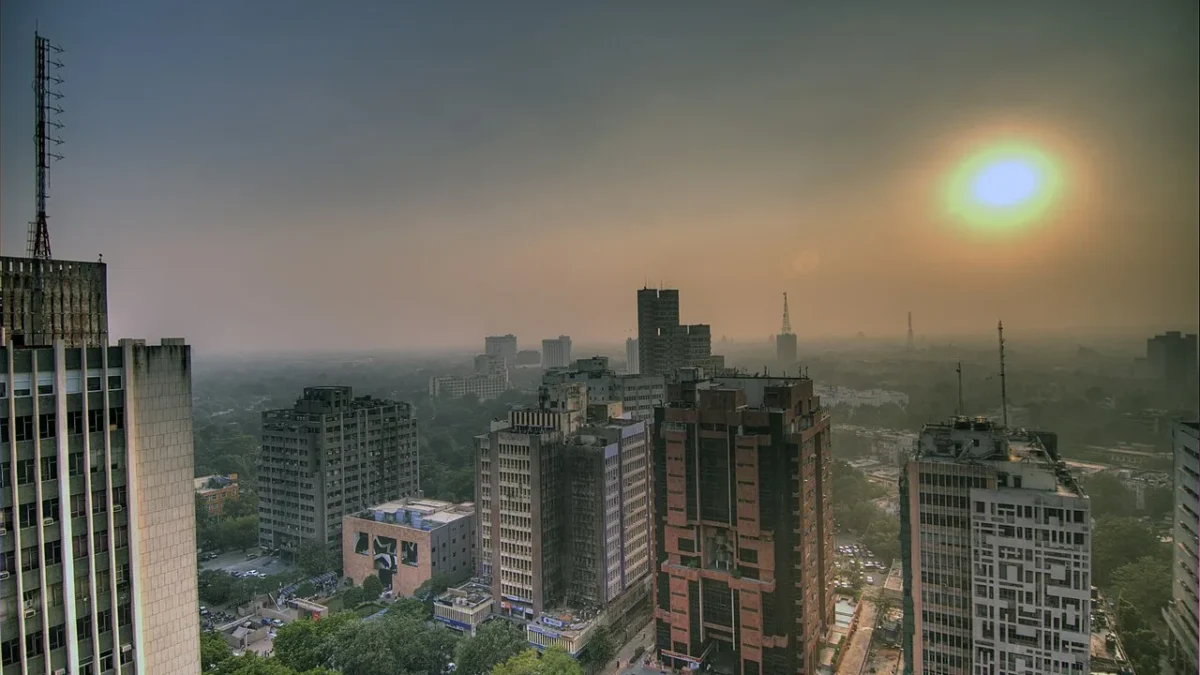
Delhi has recorded its most polluted Diwali in five years. The average Air Quality Index on Sunday, November 8, 2026, stood at 376 — in the “very poor” category — and the air barely improved the day after, at 371 on Monday morning. But the official number may not tell the whole story: as firecrackers lit up the capital, dozens of monitoring stations stopped reporting data, leaving the worst hours of the night partly unmeasured.
The combination — a five-year pollution record and a monitoring network that went dark at the worst possible moment — has turned a familiar annual crisis into a question about the data itself. Opposition leaders have accused the Delhi government of hiding the true scale of the pollution. The government has asked for details of the failed stations and promised action. Hospitals across the capital, meanwhile, treated nearly 400 burn injuries over the festival.
The numbers: five years of Diwali air
According to Central Pollution Control Board (CPCB) data, Delhi’s average AQI on Diwali day was 376, the highest on the festival day since 2021, when it stood at 382. The Diwali-day average was 345 in 2025, 328 in 2024, 218 in 2023 and 312 in 2022 — this year was 31 points higher than last year and 48 points higher than in 2024.
The morning after was no better. At 10 am on Monday, the overall AQI stood at 371 — also the highest for a post-Diwali day since 2021, when it was 462. Of the 51 stations that recorded data, 14 were in the “severe” category, four “poor” and 33 “very poor”. Delhi Technological University recorded the worst reading, at 439.
The fine particles behind those numbers were far above every health standard. Delhi’s average PM2.5 on Diwali was 257 micrograms per cubic metre — more than four times India’s national 24-hour standard of 60, and more than 17 times the World Health Organisation’s 24-hour guideline of 15. The CPCB portal does not display readings above 1,000 micrograms per cubic metre, so the worst station-level spikes never appear in public data. The Centre for Research on Energy and Clean Air (CREA) ranked this Diwali the fourth most polluted since 2016, and the fourth most polluted day of 2026. The Air Quality Early Warning System says the air is likely to stay severe over the next few days. Private platforms showed worse air: IQAir recorded a US-scale AQI of 245 on Monday morning, and AQI.in recorded 637.
The stations that went dark
The most troubling part of this year’s story is not the reading itself but the readings that never arrived. An analysis by CREA, based on Delhi’s 59 monitoring stations, found the number not reporting data rose sharply through Diwali night: one station missing at 7 pm on Sunday, seven by 10 pm, 23 by 11 pm, 29 by midnight, and 36 at 1 am on Monday — leaving just 23 of 59 stations providing data. At 2 am, 35 stations were still silent.
Several named stations stopped displaying readings after 9 pm, including RK Puram, Nehru Nagar, Mundka, Sonia Vihar and Dwarka. Before going dark, RK Puram recorded PM2.5 of 504 micrograms per cubic metre at around 8 pm, climbing to 924 by 9 pm. The Jawaharlal Nehru University station kept reporting: its PM2.5 rose from 161 at 8 pm to 786 by 11 pm.
The timing is what has drawn the sharpest criticism: the stations went offline during the peak period of firecracker use, when pollution was surging and the Supreme Court’s time restrictions were being widely flouted. The hourly AQI is calculated only from stations reporting in that hour, so the published average was built on the stations that happened to still be working. The Indian Express had already flagged data gaps on November 7, and Anumita Roychowdhury of the Centre for Science and Environment (CSE) criticised the failure to provide real-time data during a public health emergency.
The politics of missing data
The missing readings have become a political fight. The Aam Aadmi Party (AAP) alleged that dozens of stations run by the CPCB, the Delhi Pollution Control Committee (DPCC), the India Meteorological Department (IMD) and the Indian Institute of Tropical Meteorology (IITM) went offline as pollution rose on Diwali night and resumed the next morning. AAP leader Saurabh Bharadwaj accused the Delhi government of “data fraud”.
The allegation is not new: after Diwali last year, the AAP made the same claim against the BJP-led Delhi government. What has not been established is whether any station was deliberately switched off — no official explanation for the outages has been published, and the accusation remains an accusation, not a finding. Delhi cabinet minister Kapil Mishra asked reporters to share details of the non-functional stations, saying he would seek action. That is, so far, the government’s full public response.
The firecrackers: a narrow window, widely broken
The firecrackers were supposed to be limited. In an order dated October 29, 2026, a Supreme Court bench of Justices M.M. Sundresh and Prasanna B. Varale allowed certified green crackers in Delhi-NCR only on November 7 and 8, between 6 and 7 am and between 8 and 10 pm, with a complete ban returning from November 9. Only crackers certified by CSIR-NEERI and the Petroleum and Explosives Safety Organisation (PESO) were allowed, each box carrying a product-specific QR code. Online sales were barred, crackers joined in series — laris — were banned, as were crackers containing barium, and no bursting was allowed within 300 metres of hospitals, schools, old-age homes and notified silence zones.
The court also ordered CPCB daily air quality reports for the pre-Diwali, Diwali and post-Diwali periods — data that will now arrive with a hole in it. It had also flagged reports of conventional and uncertified firecrackers being sold openly, and asked the Additional Solicitor General to look into the violations. On the night itself, the time limits went up in smoke: the instantaneous AQI stood at 371 at 10 pm on Sunday, after the bursting deadline had passed, and the overall AQI was 373 at 11.05 pm, per CPCB data on the Sameer app.
Delhi was already in trouble before a single cracker was lit. The Commission for Air Quality Management (CAQM) invoked Stage II of the Graded Response Action Plan (GRAP) on November 2, after the AQI reached 324; Stage II applies when the AQI is between 301 and 400. The AQI had climbed from 117 on October 31 to 324 on November 2 and 350 on November 3.
Punjab’s farm fires: the other half of the smoke
Firecrackers were only half the story. Punjab recorded 1,152 farm fires on Diwali day — the highest single-day count of the paddy season, and the highest Diwali-day count in three years. The spike pushed the state’s seasonal total to 4,459, from 3,307 the day before: a jump of 34.8 per cent in 24 hours, and nearly seven times the 163 fires recorded on November 7. Sangrur recorded the most fresh fires, with 194 in a day, followed by Ferozepur with 157, Bathinda with 132, Patiala with 92 and Barnala with 91. Tarn Taran has the highest seasonal tally — reported as 654 by The Hindu and The Times of India, though India TV put it at 684, a discrepancy that has not been resolved.
The season’s numbers tell a story of progress reversed. Punjab had recorded 3,307 farm fires up to November 7, against 3,384 in the same period last year — still marginally ahead. The Diwali spike pushed the total to 4,459, against 3,622 on the same date in 2025, a rise of 23.1 per cent; the same-date totals were 22,981 in 2023 and 6,029 in 2024. Punjab accounted for 55 per cent of the 8,106 farm fires across seven states up to November 8. Enforcement has not stopped the burning: 884 first information reports have been filed, 1,017 red entries made in land records, and fines of more than 62 lakh rupees imposed in 1,228 cases. By November 8, 91.40 per cent of Punjab’s paddy area had been harvested. The fires have become a political row too: Delhi minister Kapil Mishra claimed satellite data showed farm fires rising from 100–125 over three days to around 1,200 on Diwali evening. Satellite data shows active fire events; it does not establish the motive or timing of individual burnings.
The human cost: hospitals and fires
Behind the AQI figures are the people who breathed the air and handled the fireworks. Safdarjung Hospital, home to the country’s largest burn unit, recorded 135 Diwali-related burn cases at its Burns Emergency on November 7 and 8 — 129 caused by firecrackers and six by diyas. Thirty-five children were treated in the outpatient department and one child was admitted; seven patients needed admission for major burns. Last year, Safdarjung recorded 129 burn injuries, including 108 from firecrackers and 11 from oil lamps.
At AIIMS, 42 burn cases had been reported by 11 am on Monday, including 11 seriously hurt; firecrackers caused 37, and two involved potash, including a 13-year-old. Across four major hospitals the total stood at 397: 42 at AIIMS, 142 at Safdarjung, 41 at RML and 172 at GTB. An eight-year-old with 45 per cent burns was reported in critical condition. The Delhi Fire Services received 257 emergency calls on Sunday, 214 fire-related, and reported seven major fire incidents.
What happens next
The air is not expected to clear quickly: the Early Warning System says Delhi’s air is likely to stay severe over the next few days, and the GRAP Stage II curbs invoked on November 2 remain in force, with the complete firecracker ban back from November 9. The Supreme Court’s demand for CPCB reports will have to record the dark hours, and the political argument will run until the operators publish an explanation — neither the CPCB nor the Delhi Pollution Control Committee has yet published one. For Delhi’s residents, the advice is unchanged and unwelcome: the air remains very poor, the official numbers come with a gap in them, and the next few days are forecast to stay severe. The festival is over. The smog is not.
What is confirmed and what is not
Confirmed: Delhi recorded its most polluted Diwali in five years, with an average AQI of 376 on November 8, the highest on the festival day since 2021. Confirmed: the morning after, the AQI stood at 371 at 10 am, also the highest for a post-Diwali day since 2021. Confirmed: between midnight and 2 am on Diwali night, more than 20 of Delhi’s 59 monitoring stations were not reporting data, peaking at 36 silent at 1 am. Confirmed: Punjab recorded 1,152 farm fires on Diwali day, the highest single-day count this season. Confirmed: Safdarjung Hospital treated 135 burn cases over November 7 and 8, and four major hospitals together treated 397. Confirmed: the Supreme Court allowed certified green crackers only between 6 and 7 am and 8 and 10 pm on November 7 and 8, with a full ban from November 9.
Not confirmed: whether any station was deliberately switched off — the AAP has alleged “data fraud”, but no evidence of intent has been published and no official explanation exists yet. Not confirmed: the true peak pollution during the dark hours, or Tarn Taran’s exact seasonal tally (654 per The Hindu and The Times of India, 684 per India TV). Not confirmed: the longer-term health toll. The numbers here are the official ones, with their gaps stated plainly, because the gap is part of the story.
Frequently asked questions
How bad was Delhi’s air this Diwali?
Delhi’s average AQI on Diwali day, November 8, 2026, was 376 — “very poor” — the highest on the festival day since 2021 (382). The morning after it stood at 371 at 10 am, also the highest for a post-Diwali day since 2021. Average PM2.5 was 257 micrograms per cubic metre, over four times India’s national standard.
Why are people questioning the official AQI figures?
Because stations stopped reporting during the worst hours: of Delhi’s 59 stations, 36 were silent at 1 am on Monday, leaving just 23 providing readings. The official hourly AQI is calculated only from stations reporting in that hour, so the published average was built on a shrinking network — while private platforms showed much worse air.
Were the stations deliberately switched off?
That has been alleged but not proven. The AAP has accused the Delhi government of “data fraud”, and made the same accusation after Diwali last year. No official explanation has been published, and no evidence of deliberate switching-off has been produced. Delhi minister Kapil Mishra has asked for details of the non-functional stations and promised action.
What caused the pollution — firecrackers or farm fires?
Both, on top of already bad air. The Supreme Court allowed certified green crackers only between 6–7 am and 8–10 pm on November 7 and 8, but the restrictions were widely flouted. Punjab recorded 1,152 farm fires on Diwali day, its highest single-day count this season. Delhi’s AQI was already 350 on November 3, before Diwali, under GRAP Stage II curbs.
How many people were hurt by firecrackers?
Four major Delhi hospitals treated 397 burn injury cases over Diwali: 42 at AIIMS, 142 at Safdarjung, 41 at RML and 172 at GTB. At Safdarjung alone, 135 cases were recorded on November 7 and 8 — 129 from firecrackers and six from diyas — including 35 children treated as outpatients and one child admitted. An eight-year-old with 45 per cent burns was reported in critical condition.
React to this story