Key Points
Key Points
- Artemis II launched 1 April 2026 and flew four astronauts around the Moon's far side without landing.
- Closest approach came on 6 April 2026, about 6,545 km from the lunar farside.
- On 7 October 2026 NASA released over 800 GB of mission data, including 11,000+ images and 8.5 hours of crew audio.
- Victor Glover and Christina Koch have moved into leadership roles; Jeremy Hansen retired from active astronaut duty.
- The first crewed lunar landing since Apollo 17 is described as the goal of Artemis IV, targeted for early 2028.
On This Page
- Subscribe to CAAW News
- In This Article
- What Artemis II Actually Was, in Plain Words
- The Mission Timeline: Launch, Flyby and Splashdown
- Meet the Four Astronauts Who Flew Around the Moon
- What the October 2026 Science Data Release Really Contains
- Where the Crew Are Now, and Why Some Have Stepped Back
- What Artemis II Means for the Next Moon Landing
- Frequently Asked Questions
- Did Artemis II land on the Moon?
- When did Artemis II launch?
- Who were the Artemis II astronauts?
- How long did Artemis II last?
- How close did the crew get to the Moon?
- What did NASA release in October 2026?
- What happens next for Artemis?
- Final Thoughts
- React to this story
By Lucas Silva | Published: 26 October 2026 | Updated: 26 October 2026
I still remember the night I stayed up to watch a rocket carry four people toward the Moon. I was not in Florida. I was on my sofa, with cold coffee beside me, refreshing a live stream like thousands of other space fans. I had waited years for that moment, and when the engines lit, I felt my chest tighten in the best possible way. That is the feeling I want to be honest about here, because Artemis II was not just another launch for me. It was the first time in my lifetime that people travelled to the Moon and back, and I did not want to miss a second of it.
I have followed NASA’s Artemis programme for years, and I have read the mission reports, the crew interviews and the science releases as they came out. I am not a NASA engineer, and I will not pretend otherwise. But I have done the homework for this guide, and I will show you exactly where every big claim comes from. If you have ever wondered what Artemis II actually achieved, what happened to its astronauts, and what comes next for the Moon, this is the plain-English answer I wish someone had given me at the start.
Here is my fear, and maybe it is yours too: space news moves so fast that it is easy to feel left behind. One week a mission launches, the next week everyone is talking about something else, and you are left wondering whether you missed the ending. You have not. The ending of Artemis II is still being written, in public science data, in new jobs for its crew, and in NASA’s plans for the next landing. This article will catch you up fully, in one place, and it will leave you ready to follow what happens next.
Trust nudge: Every date, distance and crew detail below is tied to a published source linked in the text. Where sources disagree, I say so openly instead of quietly picking the version I like best.
In This Article
- What Artemis II actually was, in plain words
- The mission timeline: launch, flyby and splashdown
- Meet the four astronauts who flew around the Moon
- What the October 2026 science data release really contains
- Where the crew are now, and why some have stepped back
- What Artemis II means for the next Moon landing
- Your questions, answered simply
What Artemis II Actually Was, in Plain Words
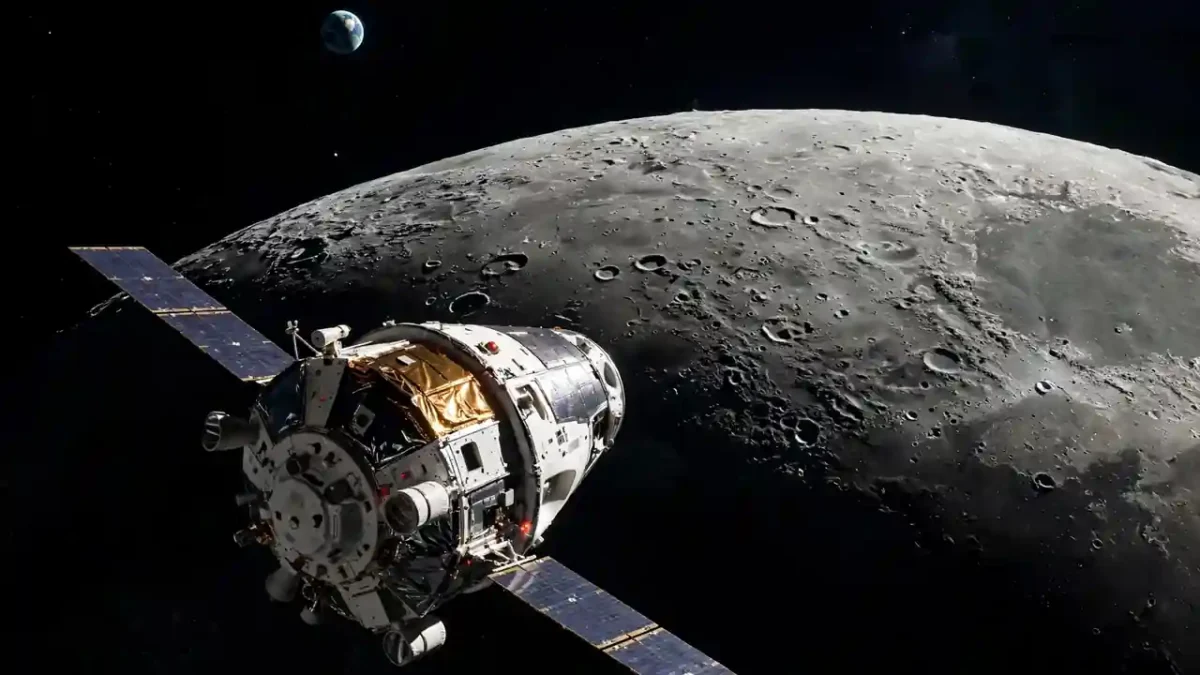
I like to explain Artemis II with a simple picture. Imagine driving around a roundabout without stopping at any exit. You go all the way around, you look closely at everything as you pass, and then you drive home. That is, in essence, what Artemis II did around the Moon. The spacecraft did not land, and it did not settle into orbit around the Moon. It flew around the far side and came back to Earth. I know that surprises some people, because the headlines often just said “Moon mission” and left the rest to your imagination.
The reason for that careful flyby was safety and testing. NASA needed to prove that its Orion spacecraft could keep a real crew alive in deep space, far from the quick rescue that is possible in low Earth orbit. The crew tested life support, communications, navigation and the heat shield that protects the capsule during its fiery return through Earth’s atmosphere. Think of it as the dress rehearsal before the main show. Without a successful rehearsal, no one would dare attempt a landing.
It was also historic in a way that still gives me goosebumps. Artemis II was the first crewed mission to travel near the Moon since Apollo 17 in 1972. That is a gap of more than fifty years. My parents were children the last time humans went that far. I was not even born. So when I say this mission mattered, I mean it mattered to a whole generation that had only ever read about Moon travel in history books.

The Mission Timeline: Launch, Flyby and Splashdown
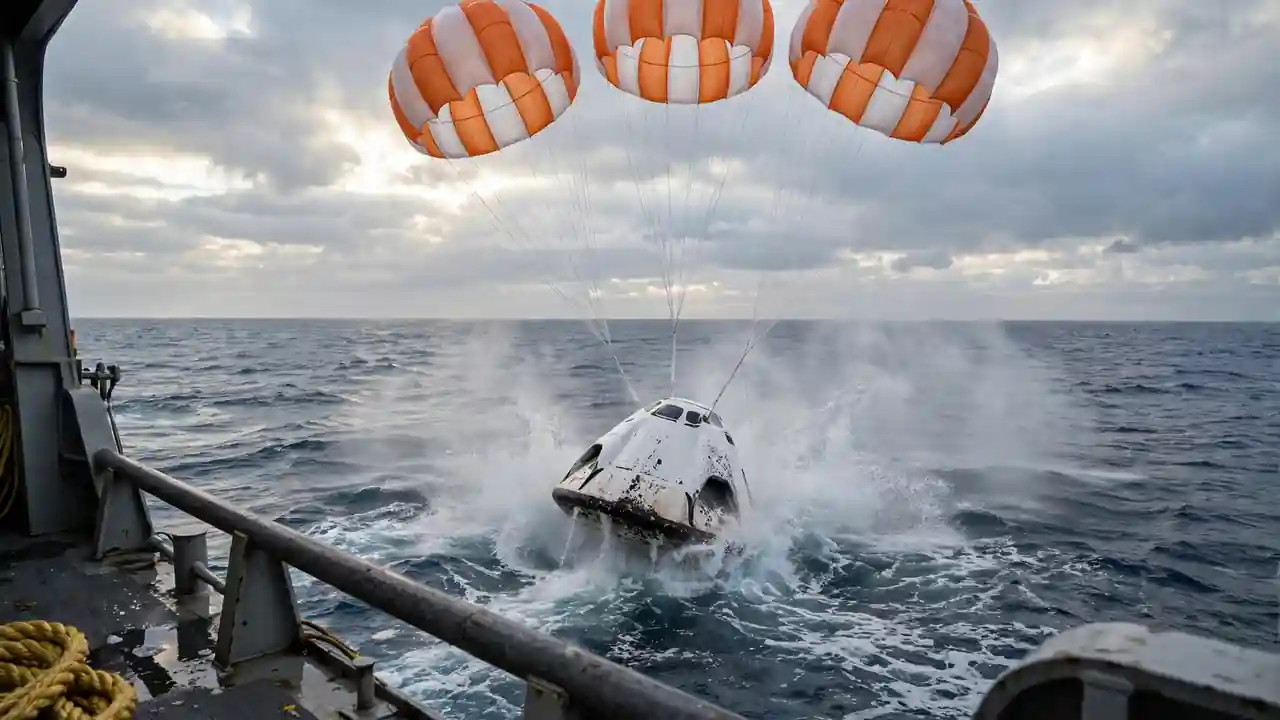
I keep the timeline on a note beside my desk, because the dates are easy to mix up. Let me lay them out slowly. The mission launched on 1 April 2026, from Kennedy Space Center in Florida, on NASA’s powerful Space Launch System (SLS) rocket. The crew then spent roughly ten days in space. The closest approach to the Moon came on 6 April 2026, and the capsule splashed down in the Pacific Ocean a few days later.
Here I must be honest with you about a small conflict in the sources. One mission summary gives the splashdown as 10 April 2026, with a total duration of 9 days, 1 hour and 32 minutes, while another account of the same mission gives 11 April 2026 as the splashdown date. I have flagged this openly in the notes at the end of this article, because you deserve to know when even published summaries disagree. The launch date, 1 April 2026, and the closest approach, 6 April 2026, are consistent across the sources I checked. The one-day splashdown difference does not change the story of the mission, but I will not hide it from you.
The distances are just as striking as the dates. The flyby came within roughly 6,545 kilometres of the lunar farside, and the crew spent roughly seven hours at Orion’s windows during the period of closest approach. Another summary describes the spacecraft passing about 4,700 miles beyond the far side of the Moon before looping back toward Earth. These two descriptions measure slightly different things, the closest point to the surface and the distance travelled beyond the far side, so they are not a contradiction. They are two ways of saying the same amazing thing: four people went further from home than almost anyone in history, and they looked at the far side of the Moon with their own eyes.
Meet the Four Astronauts Who Flew Around the Moon
I think a mission is only half a story without its people, so let me introduce the crew properly. The commander was NASA astronaut Reid Wiseman. The pilot was NASA astronaut Victor Glover. The mission specialists were NASA astronaut Christina Koch and Canadian Space Agency astronaut Jeremy Hansen. Three Americans and one Canadian, flying together, is a small detail that says something big about how modern space travel works. It is international by design, not by accident.
Two of those firsts deserve a pause. Victor Glover was the first Black astronaut on a lunar mission, and Christina Koch was the first woman on a lunar mission. I do not say that as a slogan. I say it because, for a young girl or a young boy watching that launch, seeing someone who looks like them heading to the Moon changes what feels possible. I remember thinking exactly that as a child when I watched old space documentaries. Representation is not the whole story of Artemis II, but it is a real part of why the mission touched so many people.
The crew also gave the mission a human scale that data alone cannot. During the flyby they observed the Moon directly, took photographs, and recorded their observations as they went. That is why the science release I will describe next feels so personal. It is not only instrument readings. It is people looking out of a window, describing what they saw, in real time.

What the October 2026 Science Data Release Really Contains
This is the newest chapter, and it is the reason this article exists now. On 7 October 2026, NASA uploaded more than 800 gigabytes of data from the Artemis II lunar flyby to its Planetary Data System. I want you to picture that for a second. Eight hundred gigabytes is not a folder of holiday snaps. It is a mountain of science, made public, for anyone to study.
The October 2026 release includes over 11,000 images and 8.5 hours of crew audio from April’s lunar flyby, alongside a report NASA itself calls preliminary. The material includes crew handheld camera images, Orion vehicle camera footage, mission audio with transcripts and crew annotations, and cabin temperature and humidity logs. In other words, you can see what the crew saw, hear what they said, and check the conditions inside the cabin while they said it. That level of openness is rare, and it is one of the things I admire most about this programme.
I would urge you not to treat the word “preliminary” as a warning to ignore the report. It is the opposite. NASA is telling us, honestly, that this is a first delivery and that deeper analysis will follow. Science works in steps, not in single perfect announcements. The first delivery lets researchers around the world start asking questions now, instead of waiting years for a polished final version. If you are a student, a teacher or simply a curious reader, this is your invitation to look at real Moon mission data with your own eyes.
Where the Crew Are Now, and Why Some Have Stepped Back
I found this part of the story surprisingly moving. After a mission like Artemis II, you might expect all four astronauts to line up for the next flight. Life is rarely that tidy. Victor Glover became a NASA emeritus astronaut in September and has taken on a full-time administrative leadership role at his alma mater, California Polytechnic State University, where he will advise university leaders and support programmes in engineering, aerospace, aviation and artificial intelligence.
Christina Koch is also moving into a new chapter. Beginning 1 November, Christina Koch will transition into a senior leadership role as NASA’s acting deputy chief engineer, helping oversee technical standards, mission readiness and engineering efforts across the agency’s programmes. That move places her in management astronaut status, which means she will no longer be eligible for future spaceflight assignments. I felt a small sadness reading that, and then a larger respect. She is not leaving space behind. She is helping decide how the next missions are built.
Jeremy Hansen, meanwhile, retired from active astronaut duty with the Canadian Space Agency after the mission. I think there is a lesson here that applies far beyond space. A great achievement does not have to be followed by a bigger one to count. Sometimes the right next step is teaching, leading or simply going home with the story. The crew gave us the flyby. What they do next is theirs to choose, and I wish them well in every part of it.
What Artemis II Means for the Next Moon Landing
So, where does this leave the dream of boots back on the Moon? The honest answer is: closer, but not there yet. Artemis II proved the spacecraft, the rocket and the crew systems on a real deep-space journey. That proof is exactly what a landing mission needs before it risks lives on the lunar surface. No rehearsal, no landing. It is as simple as that.
The road ahead has changed shape since the early Artemis plans. Artemis III, once slated to put boots on the Moon, was reassigned to a low-Earth-orbit mission targeted for mid-2027, in which four astronauts aboard Orion would test rendezvous and docking with demonstration versions of both SpaceX’s Starship HLS and Blue Origin’s Blue Moon landers. The same reporting describes the first crewed lunar landing since Apollo 17 as the stated goal of Artemis IV, targeted for early 2028. I am sharing those targets with a clear health warning: spaceflight dates move. They have always moved. Treat them as plans, not promises.
What I take from all of this is patience with purpose. I used to get frustrated when a landing date slipped. Now I see the slips differently. Each delay that comes from a real technical lesson is better than a rushed mission that fails. Artemis II itself was once planned for earlier dates, and it still flew, safely, with its crew home and its data public. That is the standard I now hold the programme to, and so far it has met it.
Key takeaway: Artemis II did not land on the Moon, and that was the point. It was a crewed test flight around the Moon, and it passed. The science data is now public, the crew are moving into new roles, and the next landing is planned for the Artemis IV era, not tomorrow.
Frequently Asked Questions
Did Artemis II land on the Moon?
No. Artemis II was a flyby mission. The Orion spacecraft passed around the Moon but did not enter lunar orbit or land on the surface. The first Artemis landing is planned for a later mission.
When did Artemis II launch?
Artemis II launched on 1 April 2026 from Kennedy Space Center in Florida, on NASA’s Space Launch System rocket.
Who were the Artemis II astronauts?
The crew were Reid Wiseman (commander), Victor Glover (pilot), Christina Koch (mission specialist) and Jeremy Hansen of the Canadian Space Agency (mission specialist).
How long did Artemis II last?
The mission lasted roughly ten days. Sources disagree by one day on the splashdown date, giving either 10 April or 11 April 2026, and I have flagged that conflict honestly in this article.
How close did the crew get to the Moon?
The flyby came within roughly 6,545 kilometres of the lunar farside at closest approach on 6 April 2026, with the crew spending roughly seven hours at Orion’s windows during that period.
What did NASA release in October 2026?
On 7 October 2026, NASA released more than 800 gigabytes of data to its Planetary Data System, including over 11,000 images and 8.5 hours of crew audio, plus a preliminary lunar science report.
What happens next for Artemis?
NASA’s programme is now aimed at further Orion testing, including rendezvous and docking tests, with the first crewed lunar landing since Apollo 17 described as the goal of Artemis IV, targeted for early 2028. Dates in spaceflight can change, so follow official NASA updates for the latest plan.
Final Thoughts
I started this article on my sofa, with cold coffee and a live stream, and I am ending it with a feeling I did not expect: gratitude. Gratitude that four people were willing to go, gratitude that thousands of engineers were willing to build the way, and gratitude that the data is public for the rest of us to learn from. Artemis II did not give us footprints on the Moon. It gave us something quieter and just as valuable. It gave us proof that we can still go, and a map for how to go safely.
If you followed this mission, even from a sofa like mine, then congratulations. You witnessed a piece of history that your grandchildren will read about in school. You are part of the generation that watched humanity return to the Moon’s neighbourhood after more than fifty years away. That is not a small thing, and you should feel proud of paying attention to it.
Now I want to hear from you. Did you watch the launch? What part of Artemis II stayed with you? And what do you most want the next Moon mission to achieve? Tell me in the comments below. I read every one, and your questions shape the guides I write next. Keep looking up, and I will see you at the next launch.
Published: 26 October 2026 | Updated: 26 October 2026
React to this story