Key Points
Key Points
- 10,000 steps came from a 1960s Japanese pedometer ad (Manpo-kei), not a lab.
- Meta-analyses show most benefits arrive by 7,000–8,000 steps; plateaus vary by age.
- 2026 studies: brisk pace (80–100 steps/min) can substitute for step volume.
- Under 60: target ~8,000–10,000; 60+: ~6,000–8,000; sedentary: add from baseline.
- Anchor walks to existing habits and add 2–3 brisk sessions weekly.
On This Page
- In This Guide
- Where 10,000 actually came from
- Subscribe to CAAW News
- What the biggest studies really found
- The 2026 twist: speed matters as much as steps
- Your real target, by age
- A practical plan to get there (without hating it)
- FAQ
- Is 10,000 steps a day actually necessary?
- Where did the 10,000-step rule come from?
- How many steps should I walk per day by age?
- Does walking speed really matter?
- Do steps offset a desk job’s sitting time?
- How long does it take to walk 10,000 steps?
- Are these studies proof that walking causes longer life?
- Final Thoughts
- React to this story
For two years I beat myself up over a number on my wrist. 10,000 steps — I’d hit 7,400 and feel like the day was a failure, even though I’d walked for over an hour. Then I read the actual research, and I got a little angry: the most famous fitness number in the world was invented by a Japanese marketing team in the 1960s, not a laboratory. Here’s why that should excite, not depress, you: the science we’ve gathered since — including two major 2026 studies — says the real thresholds are lower, more forgiving, and more interesting than the slogan. In this guide I’ll show you exactly where 10,000 came from, what the biggest studies actually found, and the 2026 twist that says how fast you walk may matter as much as how far. If you’ve ever felt guilty about your step count, this is your permission slip — backed by data. Let’s walk through it together.

Why trust this: every claim below is tied to named, published research — the Paluch meta-analysis in The Lancet Public Health, the JAMA Internal Medicine women’s study, and two 2026 studies in the British Journal of Sports Medicine — all linked. No cherry-picking, and I’ll flag where the evidence is observational.
In This Guide
- Where 10,000 actually came from
- What the biggest studies really found
- The 2026 twist: speed matters as much as steps
- Your real target, by age
- A practical plan to get there (without hating it)
- FAQ
Where 10,000 actually came from
Brace yourself: the 10,000-step rule was a slogan to sell a pedometer. In the run-up to the 1964 Tokyo Olympics, the Japanese company Yamasa launched a step counter called the Manpo-kei — literally “10,000-step meter.” The number was chosen because it was catchy and easy to remember, not because any researcher endorsed it. As The Daily Star’s 2026 explainer notes, even the kanji character for 10,000 — 万 — looks a little like a walking person, which may have helped seal the choice. It was advertising genius, not medicine.
Now here’s the twist that makes this story worth telling: the marketers accidentally landed close to something real. Decades of research since have shown that walking more is genuinely, powerfully good for you — just not at a magic cliff-edge of exactly ten thousand. The slogan survived because the underlying advice (walk a lot) was sound, even if the number was invented. That’s the charitable read, and honestly, I think it’s the right one. But it also means millions of people — me included — have felt like failures for missing a target that was never a medical threshold in the first place.
The honest reframe: 10,000 steps is a fine aspiration, not a pass/fail test. The research below shows most of the benefit arrives well before it — which means your 7,000-step day was never the failure your tracker implied.
What the biggest studies really found
Let’s look at the heavyweight evidence. In 2022, a team led by Amanda Paluch published a meta-analysis in The Lancet Public Health pooling 15 studies and 47,471 adults — the kind of study designed specifically to test the 10,000-step claim. Compared with the least-active group (about 3,500 steps a day), people averaging 5,800 steps had a 40% lower risk of dying during follow-up; at 7,800 steps the reduction was 45%; at 10,900 steps, 53% (Health Hustle Academy’s research summary). More steps helped — but the curve flattened. For adults 60 and older, benefits levelled off around 6,000–8,000 steps; for under-60s, around 8,000–10,000.

A second landmark: a 2019 study in JAMA Internal Medicine followed 16,741 women with an average age of 72, and found mortality benefits levelled off at around 7,500 steps a day. Then came the largest synthesis yet — a meta-analysis of over 226,000 people finding that each extra 1,000 daily steps lowered all-cause mortality risk by about 15%, with benefits plateauing around 7,000–8,000 steps (Puredine’s 2026 science guide). And a systematic review of 57 studies and 160,000+ adults put the maximum-benefit point at roughly 7,000 steps (The Daily Star).
Two honest caveats, because I promised no cherry-picking. First, these are observational studies — they show walking more goes along with better outcomes, not that steps alone cause them. People who walk more may differ in other ways. Second, the 2019 JAMA study covered women only. Still, when meta-analyses of hundreds of thousands of people converge on the same shape — steep early gains, plateau around 7,000–8,000 — that’s a signal worth respecting. If you’re pairing walking with strength work, our piece on 90 minutes of weekly lifting and longevity and the 4-minute daily workout study are worth your time.
The 2026 twist: speed matters as much as steps
This is the part that changed how I walk. Two studies published in 2026 suggest pace — how briskly you walk — can matter as much as the total count, which is liberating if you’re short on time.
First, reported in April 2026: researchers from the University of Sydney’s Charles Perkins Centre, publishing in the British Journal of Sports Medicine, analyzed 72,174 UK Biobank participants who wore wrist accelerometers for seven days. They found each increase in daily steps up to about 10,000 was linked to a 39% lower risk of death and lower cardiovascular disease risk — regardless of sitting time (Archynewsy). That’s a big deal for desk workers: steps seem to offset even heavy sitting.
Second — the headline grabber — a September 2026 BJSM study by Monash University and University of Sydney researchers examined 64,743 middle-aged adults and found that people logging fewer than 5,000 steps a day cut their risk of premature death by as much as 43% — if they walked briskly (ad-hoc-news). The key variable was “peak-30 cadence”: sustaining at least 80 steps per minute across your most active 30 minutes proved about as effective as 5,000–7,500 slower steps, and 90–100 steps per minute looked especially protective. USA Today reported the same study: hitting ~80 steps per minute in your best 30 minutes meant a 28% lower death risk than the slowest walkers. As ExpatGo’s October 2026 summary puts it: keep walking, walk a little more if you can, and when you get the chance, pick up the pace.

My take: this doesn’t demote step counts — the same study found the lowest overall death risk at 7,500–10,000 steps regardless of pace. It just gives you two levers instead of one. Short on time? Walk faster. Can’t walk fast? Walk more, gently. Either path works, and that’s the most practical fitness news I’ve read all year.
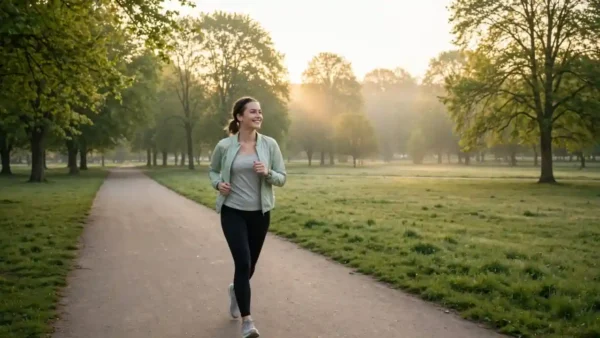
What “brisk” actually feels like: about 100 steps per minute — the pace where you can talk but not sing, and you’re slightly warm after 10 minutes. Most phone health apps show cadence; check yours on your next walk and you’ll know your number in one outing.
Your real target, by age
So what should you aim for? Here’s the evidence-based cheat sheet, synthesized from the studies above:
Under 60: benefits keep climbing to about 8,000–10,000 steps. Treat 8,000 as your evidence-backed target and 10,000 as a stretch goal — the slogan finally earns its keep here, just 20% lower than advertised. 60 and older: the sweet spot is roughly 6,000–8,000 steps; pushing past that adds little, so protect your joints instead of chasing digits. Currently sedentary (under ~3,500): don’t aim at any of those numbers yet. The steepest health gains in every study came from the first few thousand steps above baseline — going from 3,000 to 5,000 buys you more than going from 8,000 to 10,000 ever will.
And whatever your age: add the pace lever. Two or three brisk 10-minute walks — the “exercise snack” pattern — can deliver the cadence benefits without a single long outing. If walking is your main movement, consider adding the muscle side of the equation too; it protects the joints that carry those steps. Walking also does quiet work for the mind — there’s real overlap with what psychologists are seeing in the 2026 anxiety picture, and a daily walk is one of the cheapest interventions going.
A practical plan to get there (without hating it)
Knowledge without a plan is just trivia, so here’s the system that took me from 4,000 to 9,000 daily steps without a single “workout”: anchor walks to things you already do. A 10-minute walk after lunch (great for blood sugar too), a 15-minute walk while you take phone calls, and parking at the far end of every lot. That’s 30+ minutes before you’ve “exercised” at all.

Then add one brisk session three times a week — 20 to 30 minutes at that 90–100 steps-per-minute clip. Warm up easy for five minutes; your knees will thank you. Track cadence, not just steps, for these sessions. And build the habit the boring way: same time, same route, shoes by the door. Motivation is unreliable; a route you walk on autopilot isn’t. A good pair of wireless earbuds turns the brisk session into podcast time, which is how I stopped noticing the effort entirely.
One last thing — watch the food side of the equation too, because you can’t out-walk a bad diet forever. The 2026 research on ultra-processed foods and brain health is a sobering companion read. Steps handle the movement; the kitchen handles the rest.
The 2-week challenge: add 1,000 steps to your current daily average and one brisk 20-minute walk per week. That’s it. In 14 days, check how you feel — most people report better sleep first, then mood, then energy. The scale is the last thing to move, and that’s fine.
FAQ
Is 10,000 steps a day actually necessary?
No — it’s a marketing slogan from a 1960s Japanese pedometer, not a medical threshold. Research shows most mortality benefits arrive between 6,000 and 8,000 steps, with the exact plateau depending on age. 10,000 is a fine goal, not a requirement.
Where did the 10,000-step rule come from?
A pedometer called the Manpo-kei (“10,000-step meter”), launched by Japan’s Yamasa company around the 1964 Tokyo Olympics. The number was chosen to be catchy and memorable.
How many steps should I walk per day by age?
Evidence suggests roughly 8,000–10,000 for adults under 60, and 6,000–8,000 for those 60 and over. If you’re currently sedentary, the biggest gains come from the first few thousand steps above your baseline.
Does walking speed really matter?
Yes, according to 2026 research: brisk walkers taking fewer than 5,000 steps cut premature-death risk by up to 43%, and 80–100 steps per minute during your most active 30 minutes looks especially protective. Pace can partly substitute for volume.
Do steps offset a desk job’s sitting time?
Encouragingly, yes — the April 2026 University of Sydney study of 72,174 adults found step-related mortality benefits regardless of sedentary time. Walking still can’t fix everything, but it meaningfully blunts the harm of sitting.
How long does it take to walk 10,000 steps?
Roughly 80–100 minutes of total walking spread across the day for most adults — which is why anchoring short walks to existing habits beats one giant outing.
Are these studies proof that walking causes longer life?
Not exactly — they’re observational, so they show strong associations rather than proven causation. But when multiple meta-analyses covering hundreds of thousands of people converge on the same pattern, it’s a signal worth acting on.
Final Thoughts
I still wear the tracker, but I stopped letting it grade me. Some days I hit 10,000 and feel smug; other days I do a brisk 25-minute loop, land at 6,500, and know — actually know, from the research — that I got the important part. That’s the real gift of the 2026 science: it replaced a pass/fail slogan with something humane. Walk more than yesterday. Pick up the pace when you can. Protect the habit, not the number. The Japanese marketers accidentally pointed us in the right direction sixty years ago; the scientists have now drawn the actual map. Your move is beautifully simple: shoes by the door, same time tomorrow. I’ll see you out there — and tell me in the comments what your current daily average is. No judgment, only forward.
Published: 24 October 2026 · Updated: 24 October 2026
React to this story