On This Page
- Why the battery matters more than the panels
- Subscribe to CAAW News
- Lithium-ion vs lead-acid: the honest comparison
- Lithium-ion (LiFePO4)
- Tubular lead-acid
- Which one should you buy?
- How much storage do you actually need?
- What solar batteries cost in Pakistan right now
- Five things to check before you pay
- Where to buy
- Frequently asked questions
- Key takeaways
- React to this story
Pakistan is buying batteries faster than ever before. In the first half of 2026 alone, the country imported more than 4.5 gigawatts of battery storage equipment — almost half of everything it has ever imported, according to the Pakistan Solar Association at a parliamentary dialogue on 30 October 2026. Lithium-ion imports from January 2025 to May 2026 reached about 5.39 gigawatt-hours, worth roughly $256.94 million. The reason is simple: solar panels are now common on Pakistani roofs, and a panel without storage stops working the moment the sun sets.
But the battery is also the most expensive and most misunderstood part of a home solar system. Buy too small and your lights die at midnight. Buy the wrong chemistry and you replace it in two years. Buy from the wrong seller and the warranty is worth nothing. This guide explains, in plain language, how to pick the right solar battery for your home in 2026 — lithium-ion versus lead-acid, how much storage you actually need, how long each type lasts, and what the real prices look like right now.
Why the battery matters more than the panels
A solar panel makes power only while the sun shines. Your home uses power all evening — fans, lights, the fridge, the television, the water pump, and in summer, the air conditioner. Without a battery, every unit of evening power comes from the grid, at grid prices, and during load-shedding it does not come at all. The battery is what turns a daytime solar system into a round-the-clock one.
It is also where most of the money goes. A basic 5 kilowatt-hour lithium bank lists at Rs240,000 on SunTech Mall right now — more than many complete inverter setups. And unlike a panel, which sits on the roof for 25 years, a battery is a chemical device with a finite life. Choose well and it serves you for a decade or more. Choose badly and you buy it twice.
Lithium-ion vs lead-acid: the honest comparison
There are two battery families in Pakistani homes, and the difference between them is bigger than the price tag suggests.
Lithium-ion (LiFePO4)
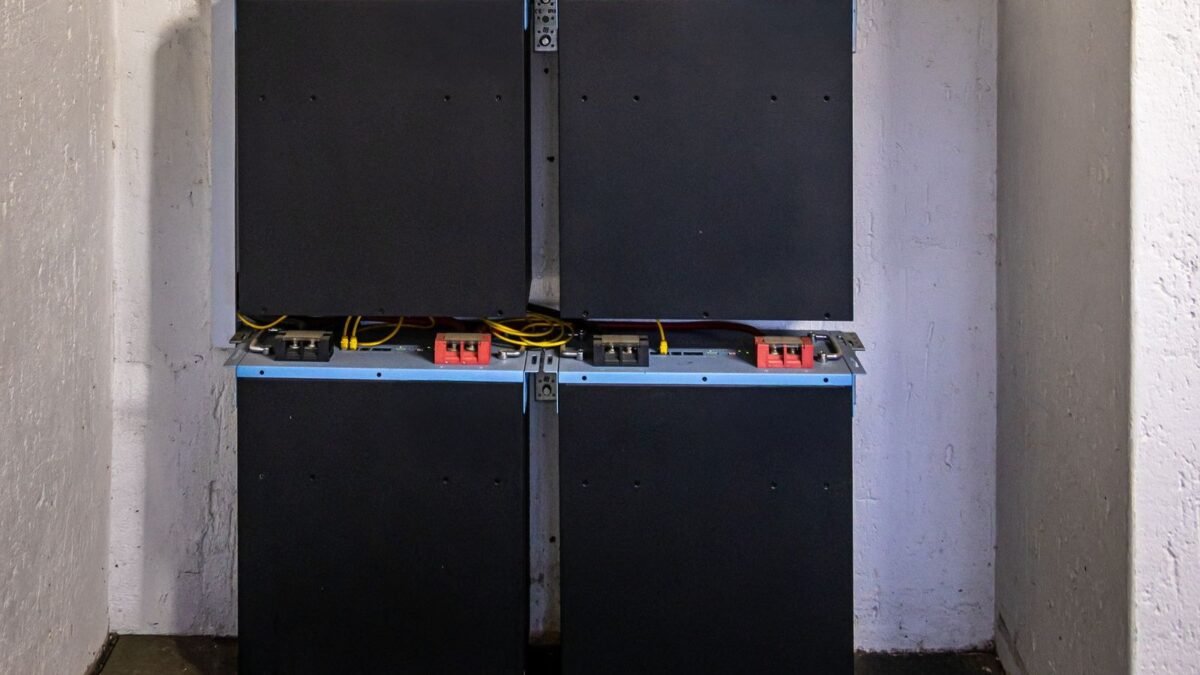
Modern home batteries are almost all lithium iron phosphate, written as LiFePO4. They are the same chemistry used in the Fronus Platinum series sold by SunTech Mall. A lithium battery can be discharged to 80 percent of its capacity, day after day, without damage. It charges fast, loses almost nothing in the charge-discharge round trip, needs no water top-ups, and takes up far less space than the equivalent lead-acid bank.
The headline number is cycle life. The Fronus LifePo4 Platinum 15 kWh battery is rated for 6,000 cycles at 80 percent depth of discharge, according to its official datasheet. One full cycle a day means about 16 years on paper; real life is shorter or longer depending on how deeply you discharge it and how hot it gets, but the order of magnitude is clear. Lithium costs more upfront and lasts far longer.
Tubular lead-acid
Tubular batteries are the older technology — the tall, heavy batteries that have powered Pakistani UPS systems for decades. They cost much less upfront, any technician in any town knows how to service them, and they work with almost any inverter. Their weaknesses are well known: you should only use about half their rated capacity, they need regular water top-ups and equalisation charging, they are heavy and bulky, and they die young in heat. SunTech Mall’s own UPS guide puts typical UPS battery life at two to three years, with heat and frequent deep discharges shortening it further. A well-maintained tubular bank often lasts three to five years — still a fraction of a lithium battery’s life.
Which one should you buy?
If you can afford lithium, buy lithium. The maths is simple: a lithium battery that lasts 6,000 cycles costs less per unit of stored energy than a lead-acid battery you replace three or four times, even before you count the maintenance and the wasted capacity. Lead-acid still makes sense in exactly two situations: your budget genuinely cannot stretch to lithium, or your inverter is an older model that does not support lithium’s battery management system. Never mix the two chemistries in one bank, and never mix old and new batteries together.
How much storage do you actually need?
Battery size is measured in kilowatt-hours, written as kWh. One kWh runs a 1,000-watt load for one hour, or a 100-watt load for ten hours. The sizing question is therefore a load question: what do you run at night, and for how long?
Start by listing your night load. A few ceiling fans and lights might be 300 watts. Add a fridge and you are near 500 watts. Add a television and a water pump and you pass 1,000 watts. An inverter air conditioner at night can add 800 to 1,500 watts on its own. Multiply watts by hours to get watt-hours, then divide by 1,000 to get kWh — and then divide again by the usable fraction of the battery. A lithium battery gives you about 80 percent of its rated capacity; a lead-acid battery gives you about 50 percent.
Worked example: a 500-watt night load for 8 hours needs 4,000 watt-hours, or 4 kWh of usable energy. On lithium, that means a 5 kWh bank — exactly the size of the Inverex Power Wall 5.1 kWh, which lists at Rs240,000. On lead-acid, the same load needs an 8 kWh bank, because half the capacity is off-limits. This is why comparing batteries by their headline kWh is misleading: usable kWh is the number that matters.
For most Pakistani homes, the practical sizes are 5 kWh for a small home with fans, lights and a fridge; 10 kWh for a medium home that adds a television and a pump; and 15 kWh for a large home, or any home that runs an air conditioner at night. The Fronus 15 kWh unit at Rs550,000 stores 15.36 kWh, of which about 12.3 kWh is usable at 80 percent depth of discharge — enough for a 1,500-watt load for about eight hours. If even that is not enough, the same battery can be connected in parallel — up to 15 units, according to the official datasheet — though your inverter’s limits matter more than the battery’s.
What solar batteries cost in Pakistan right now
Prices change, and any figure in an article is a snapshot. These are the live prices on SunTech Mall, checked on 11 November 2026 — check the live price before you buy, because it moves.
A small lithium bank, the Fronus LifePo4 Platinum 2.5 kWh, lists at Rs130,000. It suits a small backup setup or a 24-volt inverter. A mid-size bank, the Inverex Power Wall 5.1 kWh, lists at Rs240,000 — the natural size for a small family home. A large bank, the Fronus LifePo4 Platinum 15 kWh, lists at Rs550,000, for big homes and heavy night loads.
Three costs sit on top of the battery price. First, taxes and duties on battery storage equipment run at 35 to 40 percent, which is why imported lithium costs what it does. Second, installation: cables, a breaker, and a proper mount, done by someone who understands battery safety. Third, the inverter itself must match the battery — a 48-volt battery bank needs a 48-volt inverter, and a lithium battery needs an inverter that talks to its battery management system. SunTech Mall’s hybrid inverter guide explains the matching rules; if you bought your inverter first, check its battery voltage class before you order a battery.
Five things to check before you pay
1. Voltage class. Most modern home hybrids use a 48-volt battery bank; smaller models use 24 volts. The Fronus 15 kWh is a 51.2-volt battery, which is the 48-volt class. Match it to your inverter or it will not work.
2. Battery management system. A lithium battery has a BMS inside it that protects against overcharge, over-discharge and overheating. Ask whether your inverter communicates with that BMS. If it does not, the battery still works, but it will not be protected as well.
3. Fresh stock and manufacturing date. This matters most for batteries. Old stock can look perfect and perform terribly. Ask the seller for the manufacturing date before you pay, and buy only fresh stock.
4. Warranty and who honours it. A warranty is only as good as the seller behind it. Buy from an authorised dealer with a real shop and a service network, so a fault in year three is a repair, not an argument.
5. Usable capacity, not headline capacity. A 5 kWh lead-acid bank gives you about 2.5 kWh of usable energy. A 5 kWh lithium bank gives you about 4 kWh. Compare usable kilowatt-hours, and compare price per usable kilowatt-hour, and the cheaper battery often stops looking cheap.
Where to buy
SunTech Mall is Pakistan’s store for solar inverter and UPS spare parts, serving technicians, repair shops, solar installers and home users from its physical store in Charsadda, Khyber Pakhtunkhwa, and online across the country. Its Batteries category lists the lithium banks above with live prices and nationwide delivery, alongside the inverters they pair with. The Fronus LifePo4 Platinum 15 kWh, at Rs550,000, is listed with its full specification — 51.2 volts, 300 amp-hours, 6,000 cycles — on its product page. If you have not bought the inverter yet, read their hybrid inverter guide first, because the inverter and the battery must agree on voltage and communication.
Whatever you buy, and wherever you buy it, the rule is the same: size the battery to your real night load, buy lithium if you can afford it, check the voltage class and the manufacturing date, and buy from a seller who will still be there when you need help. Pakistan’s battery boom is real — the storage you buy today will decide how your solar system performs for the next decade.
Frequently asked questions
How long does a lithium solar battery last? The Fronus 15 kWh is rated for 6,000 cycles at 80 percent depth of discharge. At one full cycle a day that is about 16 years on paper; real life depends on discharge depth and temperature.
Is lithium better than lead-acid for solar? Yes, for most homes. Lithium gives you about 80 percent usable capacity against about 50 percent for lead-acid, charges faster, needs no maintenance, and lasts several times longer. Lead-acid wins only on upfront price.
What size battery do I need for my home? Add up your night load in watts, multiply by the hours you need backup, and divide by the usable fraction — 80 percent for lithium, 50 percent for lead-acid. A 500-watt load for 8 hours needs a 5 kWh lithium bank.
Can I add more batteries later? Yes, if your battery and inverter allow it. The Fronus 15 kWh supports up to 15 units in parallel, but always add identical batteries and check your inverter’s limits first.
Why are solar batteries so expensive in Pakistan? Taxes and duties on battery storage equipment run at 35 to 40 percent, and lithium cells are imported. The price per usable kilowatt-hour is what matters — lithium usually wins over its lifetime despite the higher upfront cost.
Will a solar battery work during load-shedding? Yes — that is the point. The battery stores daytime solar power and discharges it at night or during an outage, as long as your inverter is a hybrid or off-grid model with battery support.
Key takeaways
- Pakistan imported 4.5+ GW of battery storage equipment in H1 2026 — storage is now the decisive part of a home solar system.
- Lithium (LiFePO4) gives ~80% usable capacity and ~6,000 cycles; lead-acid gives ~50% and 2–5 years.
- Size by usable kWh: a 500W night load for 8 hours needs a 5 kWh lithium bank.
- Live SunTech Mall prices (11 Nov 2026): Fronus 2.5 kWh Rs130,000; Inverex 5.1 kWh Rs240,000; Fronus 15 kWh Rs550,000 — re-check at publish.
- Match voltage class (48V vs 24V), check the BMS, buy fresh stock, and buy from a dealer who honours warranties.
React to this story