
Key Points
Key Points
- The Sahara spans 9.2M sq km — yet only ~25% of it is actually sand.
- 'Sahara' comes from Arabic sahra meaning 'desert', so 'Sahara Desert' means 'Desert Desert'.
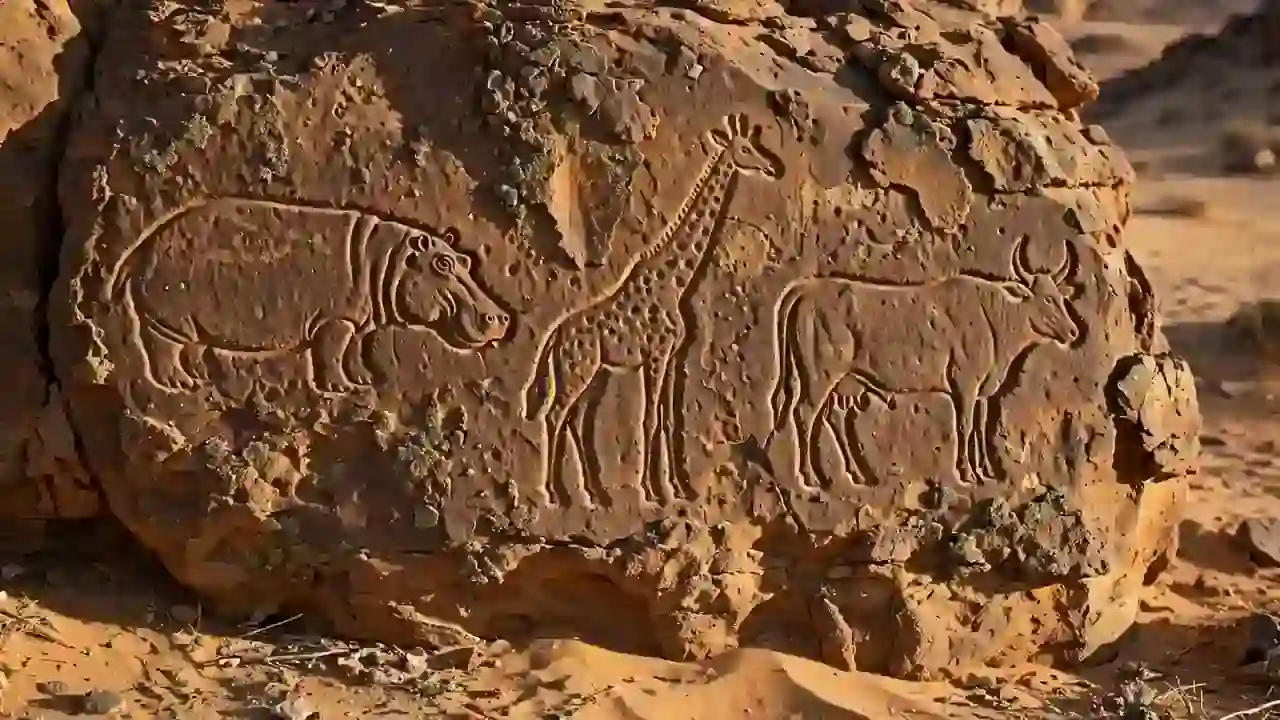
- 5,000 years ago the Sahara was green with lakes; Tassili rock art shows hippos and giraffes.
- NASA radar found ancient river channels buried beneath the sand.
- ~22,000 tonnes of Saharan dust cross the Atlantic yearly, fertilising the Amazon rainforest.
- The 50-km-wide Richat Structure in Mauritania is visible from space.
- Tunisia's Sahara was Star Wars' Tatooine; Niger's dunes hold Spinosaurus fossils.
On This Page
- What you will discover in this guide
- Fact 1–2: It is enormous — and barely any of it is sand
- Subscribe to CAAW News
- Fact 3: Its name literally means “Desert Desert”
- Fact 4: Within human history, the Sahara was green
- Fact 5: Ancient rivers still hide beneath the sand
- Fact 6: Saharan dust feeds the Amazon rainforest
- Facts 7–8: The highest, the lowest, and the tallest dunes
- Fact 9: A 50-km “eye” stares up from the desert — visible from space
- Facts 10–12: Dinosaurs, movie sets, and a 14th-century traveller
- The Sahara is growing — and it is not slowing down
- Sahara questions everyone asks
- How big is the Sahara Desert?
- Is the Sahara all sand?
- What does “Sahara” mean?
- Was the Sahara ever green?
- How does Sahara dust reach the Amazon?
- What is the Richat Structure?
- Where was Tatooine filmed?
- Is the Sahara still growing?
- Final thoughts
- React to this story
I used to picture the Sahara as one giant sandbox. Just sand, sand, and more sand, stretching forever. Then I started researching this article, and within an hour my mental image collapsed completely. Here is what actually blew my mind: the Sahara was once green and full of hippos. Its dust feeds the Amazon rainforest. And its name literally means “Desert Desert.” I spent days reading expedition reports, NASA satellite studies, and desert research from sources like satellite surveys and desert research guides — and I am not exaggerating when I say this desert is the most misunderstood place on Earth. In this guide I am sharing 12 verified facts that will completely change what you think a desert is. This is for every curious reader who loves having their assumptions shattered. Let’s walk into the sand together.
Why trust this? Every fact below is sourced from published research, satellite data, and expedition documentation — with links so you can verify each claim yourself. Where I share the fun interpretation (like “Desert Desert”), I show you the exact Arabic root so you can check my translation too.
What you will discover in this guide
- The desert that is bigger than you think — and mostly not sand
- Its name means “Desert Desert” (yes, really)
- The Sahara was once green — with hippos and giraffes
- Lost rivers still flow beneath the sand
- This desert feeds the Amazon rainforest
- The highest, lowest, and tallest of the Sahara
- The giant “eye” staring up from the desert floor
- Dinosaurs, movie stars, and ancient trade routes
- The Sahara is growing — and it will not stop
- Your Sahara questions, answered

Fact 1–2: It is enormous — and barely any of it is sand
Let’s start with scale, because the numbers are genuinely hard to picture. The Sahara is the world’s largest hot desert at 9.2 million square kilometres — roughly the size of the entire United States or China. But here is the twist: it is only the third-largest desert overall, because the Antarctic and Arctic polar deserts are even bigger. Yes — the frozen poles count as deserts too, because a desert is defined by dryness, not heat. That fact alone broke my brain a little, according to desert survey data.
And now the bigger surprise. When I say “Sahara,” you picture endless dunes, right? Wrong. Only about 25% of the Sahara is actually sand — those famous sand seas are called ergs. The rest is rocky plateau (called hamada), gravel plains (reg), dry riverbeds, rugged mountains, and glittering salt flats, per desert research. Three-quarters of the world’s most famous desert looks nothing like the postcards. If you ever visit, you are more likely to be crunching across black gravel than sliding down a golden dune. Here’s the thing: our imagination of the Sahara is mostly a movie set. The real thing is stranger.
Fact 3: Its name literally means “Desert Desert”
This one makes me laugh every time. The word “Sahara” comes from the Arabic word sahra, which simply means “desert.” So when we say “Sahara Desert” in English, we are literally saying “Desert Desert” — a tautology hiding in plain sight, noted by linguistic researchers. I have started noticing these everywhere now — “chai tea” (chai means tea), “naan bread” (naan means bread). Language is full of these little redundancies, and the world’s most famous desert carries one of the biggest.
Fact 4: Within human history, the Sahara was green
Okay, deep breath, because this is the fact that rewired my understanding of climate. The Sahara was green and wet within human history. During the African Humid Period, which ended only around 5,000 years ago, the desert held lakes, rivers, and grasslands. And we do not have to guess — the proof is painted on rock. At Tassili n’Ajjer in Algeria, ancient rock art shows hippos, giraffes, and cattle — animals that could not survive a single week in today’s Sahara, documented by desert researchers.
Let that sink in. Five thousand years ago — when humans were already building cities — you could have watched hippos wallow in Saharan lakes. The people who carved those images were not imagining fantasy creatures. They were drawing their neighbours. Climate change is not some distant future threat; it already redrew the largest hot desert on Earth in the blink of geological time. For more on how fast our climate is moving right now, see our coverage of the COP31 climate summit in Antalya.
Fact 5: Ancient rivers still hide beneath the sand
The green Sahara left fingerprints that we are only now learning to read. NASA satellite radar — which can peer beneath dry sand — has revealed ancient meandering river channels buried under the desert floor, including beneath the Safsaf Oasis, where a river once flowed across what is now open desert, per satellite survey data. The rivers are gone, but their ghostly channels remain, invisible to anyone standing on the surface.
I find this hauntingly beautiful. Somewhere under the dunes you might be walking on, a riverbed waits — carved by water, preserved by sand, seen only by machines in orbit. It is the same kind of hidden-history detective work as Japan’s MMX mission, which reads the history of the solar system from a tiny moon. We live on a planet that keeps its diaries buried.
Fact 6: Saharan dust feeds the Amazon rainforest
Here is my favourite fact in this entire article — the one I have told at three dinner parties already. Every year, about 22,000 tonnes of phosphorus-rich Saharan dust lifts off the desert, rides the trade winds across the entire Atlantic Ocean, and rains down on the Amazon rainforest — fertilising it. It is a nutrient lifeline between two landscapes on opposite sides of the planet, documented by desert researchers.
Think about that. The greenest, wettest forest on Earth partly depends on the driest, emptiest desert. Without Saharan dust, the Amazon’s famously poor soils would starve. Two places that could not look more different are locked in a partnership millions of years old. Nature does not do borders — only we do. If this amazes you, read our story on Brazil’s Amazon deforestation hitting a record low — the forest’s future is brighter than it has been in years.
Facts 7–8: The highest, the lowest, and the tallest dunes
The Sahara does extremes the way other places do weather. Its highest point is Emi Koussi — a volcano in Chad’s Tibesti Mountains — at 3,415 metres (11,204 ft). Its lowest point is Egypt’s Qattara Depression, which sits 133 metres below sea level. That is a vertical range of over 3.5 kilometres inside a single “flat” desert, per survey data.
And the dunes? When the Sahara does do sand, it does it properly. Erg Chebbi in Morocco and the Erg du Djouf in Mauritania hold dunes up to 180 metres high — nearly half the height of the Empire State Building, according to desert guides. Standing at the base of one, a human is an ant. I have stood on tall buildings; I cannot imagine standing under a mountain of wind-sculpted sand that tall.
Fact 9: A 50-km “eye” stares up from the desert — visible from space
Astronauts use it as a landmark. In Mauritania sits the Richat Structure — a 50-kilometre-wide circular formation so perfect it looks like a giant eye staring up from the desert floor, clearly visible from orbit. For decades, scientists thought it was a meteor impact crater. Today we know better: it is a deeply eroded dome of sedimentary rock, its concentric rings exposed by hundreds of millions of years of wind, documented by geological guides.
I love that science changed its mind here. The crater theory was neat and dramatic — and wrong. The real story, of ancient rock slowly unzipped by time, is quieter and far more wonderful. It is a good reminder: the best answer is not always the most exciting one.

Facts 10–12: Dinosaurs, movie sets, and a 14th-century traveller
The Sahara keeps its guest list weird and wonderful. Tunisia’s stretch of desert was the filming location for planet Tatooine in Star Wars — those iconic domed homes are real Tunisian architecture. And in Niger’s portion of the desert lie fossil beds holding Spinosaurus and Carcharodontosaurus — giant predators that stalked Saharan river systems back when the region was wet, per desert research. From movie magic to real monsters: the Sahara has range.
Humans have been crossing this “empty” place for a very long time. In the 14th century, the Moroccan traveller Ibn Battuta crossed the Sahara and left written records of the trans-Saharan trade caravans linking West Africa’s gold empires to the Mediterranean, documented by historical sources. Imagine it: months of walking, camels loaded with gold and salt, navigating by stars across a sea of sand and rock. Our age of instant delivery has nothing on those caravans. If you enjoy journeys through deep time, our piece on the Roman Empire covers another civilisation built on impossible logistics.
The Sahara is growing — and it is not slowing down
Here is the sobering finale. The Sahara has grown roughly 10% in the past century due to climate change and natural cycles, expanding steadily into the surrounding Sahel, per climate research. The desert that was green 5,000 years ago is now eating its neighbours’ farmland. Millions of people live in the Sahel, right in the path of that advance.
This is not ancient history — it is happening now, in our lifetimes. The same climate forces that greened and dried the Sahara before are at work again, and this time we are both the cause and the casualty. For the latest on what the world is doing about it, see how 2026 became Europe’s hottest summer on record.
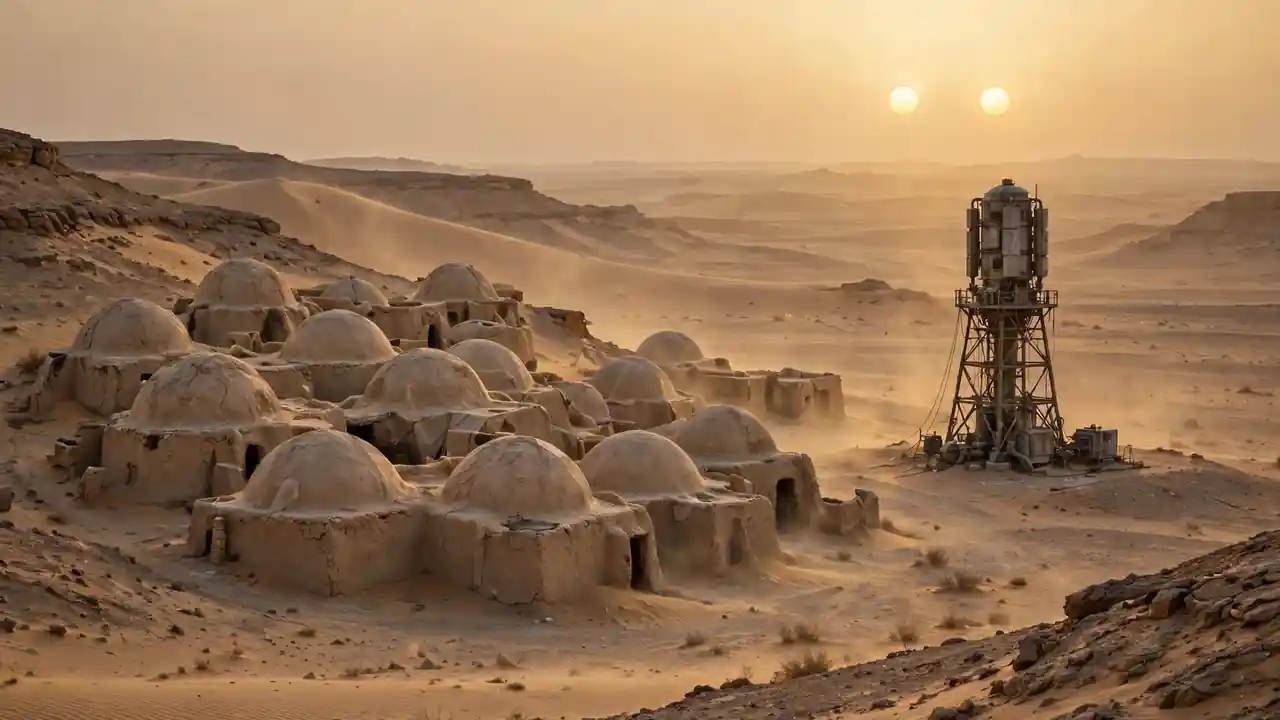
The takeaway box: The Sahara is not a sandbox — it is a green-turned-gold continent-sized climate machine that fertilises rainforests across an ocean, hides lost rivers, grows 10% bigger every century, and still has room for dinosaurs, movie sets, and medieval gold caravans. Never trust the postcard version of anything.
Sahara questions everyone asks
How big is the Sahara Desert?
About 9.2 million square kilometres — roughly the size of the United States or China. It is the largest hot desert in the world, but only the third-largest desert overall after the Antarctic and Arctic polar deserts.
Is the Sahara all sand?
No. Only about 25% is sand (ergs). The rest is rocky plateau (hamada), gravel plains (reg), dry riverbeds, mountains, and salt flats.
What does “Sahara” mean?
It comes from the Arabic word sahra, meaning “desert” — so “Sahara Desert” literally translates to “Desert Desert.”
Was the Sahara ever green?
Yes, within human history. During the African Humid Period, which ended around 5,000 years ago, it held lakes, rivers, and grassland. Rock art at Tassili n’Ajjer in Algeria depicts hippos, giraffes, and cattle.
How does Sahara dust reach the Amazon?
Trade winds lift about 22,000 tonnes of phosphorus-rich dust off the Sahara each year and carry it across the Atlantic, where it fertilises the Amazon rainforest’s nutrient-poor soils.
What is the Richat Structure?
A 50-km-wide circular formation in Mauritania, visible from space. Once thought to be a meteor crater, it is now understood to be a deeply eroded dome of sedimentary rock.
Where was Tatooine filmed?
In Tunisia’s portion of the Sahara. The domed troglodyte dwellings seen in Star Wars are real local architecture.
Is the Sahara still growing?
Yes — roughly 10% bigger over the past century, expanding into the Sahel due to climate change and natural cycles.
Final thoughts
I started this article thinking I knew the Sahara. I finished it realising I knew a postcard. A desert that was once green, that feeds a rainforest across an ocean, that hides rivers under its floor, that grows bigger every decade, that hosted dinosaurs and film crews and medieval gold caravans — that is not a wasteland. That is one of the most dynamic places on Earth.
So here is my question for you: which fact broke your mental image the hardest? The green Sahara with hippos? The “Desert Desert” name? The dust-to-Amazon pipeline? Tell me in the comments — I read every one, and the best answers shape what I research next. And if you love places that hide their history, do not miss our story of the colossal Ramesses II head found in Egypt’s Nile Delta.
Published: 22 October 2026 | Updated: 22 October 2026
React to this story