

Key Points
Key Points
- MARA's estimated Bitcoin production cost fell to $59,774 on October 14, down from $70,027 in February 2026, according to CryptoQuant.
- Bitcoin's 7-day hashrate rose from 909 EH/s in February to 1,007 EH/s by October 14, rising for two straight months after a nine-month decline.
- Three of the last four difficulty adjustments have been increases; current difficulty stands at about 132.72 trillion.
- Canaan mined 44 BTC in September, holds 1,875 BTC, and its 8 MW Nordic heating project now delivers mining waste heat to 2,800 homes.
- Binance will shut its Bitcoin mining pool on November 10 after its hashrate fell 65% since December to about 9.2 EH/s.
On This Page
While Bitcoin’s price struggles near $80,000, something encouraging is happening behind the scenes. The miners who secure the Bitcoin network are quietly turning profitable again, plugging more machines back in after a brutal nine-month slump. The numbers tell a story of an industry finally catching its breath.
The clearest sign came this week from CryptoQuant, the well-known blockchain analytics firm. Its chief executive, Ki Young Ju, reported that MARA Holdings, the biggest publicly listed Bitcoin miner in the world, can now produce one Bitcoin for an estimated $59,774. That is sharply down from the $70,027 per coin cost calculated in February 2026, and comfortably below Bitcoin’s current market price of around $81,000.
The estimate is based on MARA’s own published operating figures: analysts multiply the company’s average computing power by its cost per unit of power, then divide by the Bitcoin it mines each day. It is not a full measure of company profit, since it leaves out debt and overhead costs, but the direction is clear. Mining margins are improving for the first time in a long while.
More machines coming online is another bullish sign. The Bitcoin network’s hashrate, the total computing power devoted to mining, climbed from a low of 909 exahashes per second in February to 1,007 exahashes per second by October 14, according to Hashrate Index data. That is a rebound of more than 10% in eight months.
“More mining rigs = miners are bullish,” Ki Young Ju wrote, noting that the hashrate has now been rising for two straight months after falling for nine. It is still below the all-time peak of around 1,115 exahashes per second seen in October 2025, when Bitcoin traded at its record high, but the trend has finally turned.
Why mining economics matter for the price
Mining economics matter because miners are some of the most consistent sellers in the Bitcoin market. Every day, the network creates about 450 new Bitcoins, and miners must sell part of that to pay electricity bills and staff. When miners are losing money, they are forced to sell more of their reserves, adding downward pressure on the price.
That pressure is now easing. According to a CryptoQuant report cited by HTX Insights, the network hashrate rose from 899 exahashes per second on July 31 to 962 exahashes per second, while the rate of decline in the hashrate slowed from 18% to 13%. The recovery has been powered by Bitcoin’s price itself, which rose roughly 45% from its July low near $58,000 to above $83,000.
Daily miner revenue now sits between $30 million and $45 million, according to CoinCentral’s October mining statistics. Transaction fees make up only about 0.69% of that revenue, with the rest coming from the 3.125 Bitcoin block reward paid roughly every 10 minutes. That low fee share is both a relief and a worry: it means miners are surviving on the subsidy alone, but it also shows how thin the margin is if prices fall again.
The United States remains the world’s top mining country with about 35.6% of the global hashrate, while the network consumes roughly 138 terawatt-hours of electricity per year, about 0.54% of all global electricity. A hopeful statistic: an estimated 52.4% of that power now comes from sustainable sources.

Difficulty is climbing again
There is a catch to the recovery. Bitcoin’s mining difficulty, the automatic setting that keeps new blocks arriving every 10 minutes, has started rising again. After several cuts in the past year, three of the last four difficulty adjustments have been increases. The current difficulty stands at about 132.72 trillion.
Rising difficulty is a double-edged sword. On one hand, it confirms more miners are joining the network, which is a sign of health. On the other, it squeezes profit margins for everyone, because each miner now gets a smaller slice of the same Bitcoin pie. The miners that survive will be the ones with the cheapest electricity and the most efficient machines.
Canaan: 1,875 Bitcoin and heat for 2,800 homes
The shift toward efficiency was on full display this week in Canaan’s monthly update. The Singapore-listed mining company reported on October 15 that it mined 44 Bitcoin in September, lifting its total treasury to 1,875 Bitcoin at month-end.
That happened even as network difficulty kept rising. Canaan’s installed computing power outside its joint ventures held steady at 10 exahashes per second, while its joint-venture operations ran 4.87 exahashes installed and 4.18 exahashes operating.
What stood out was the company’s energy strategy. Canaan announced that its 8-megawatt Nordic district heating project is now fully operational, delivering waste heat from its mining machines to about 2,800 homes. In Canada, a greenhouse heat-recovery project is moving toward deployment pending site inspections.
“Bitcoin markets continued to demonstrate resilience in September, navigating macroeconomic and policy uncertainty while institutional participation remained steady,” said Nangeng Zhang, Canaan’s chairman and CEO. “Hashprice extended its recovery from August, pointing to improving mining economics and offering a cautiously encouraging signal for the market.”
Hashprice, the revenue miners earn per unit of computing power, is the industry’s favorite health check. Its recovery from the August lows suggests the worst of the mining recession may be over.
BitFuFu shifts toward self-mining
BitFuFu, the Nasdaq-listed miner backed by industry giant Bitmain, also published its September update this week. The company held 1,388 Bitcoin at the end of September, up 15 coins from August, and produced 167 Bitcoin during the month, down slightly from 174 in August.
The interesting detail was the mix. Self-mining, where BitFuFu runs its own machines and keeps all the rewards, jumped to 98 Bitcoin from 88 the month before. Cloud mining, where customers rent computing power, fell to 69 Bitcoin from 86. The shift suggests the company is keeping more of the profitable work for itself.
Its total computing power under management slipped to 19.4 exahashes per second from 20.6, with 3.8 exahashes owned directly. Fleet efficiency held at 16.7 joules per terahash, and power capacity eased to 324 megawatts from 344.
BitFuFu’s holdings remain well below the 1,959 Bitcoin it held a year earlier, a reminder that even improving miners have had to sell reserves to survive the downturn.
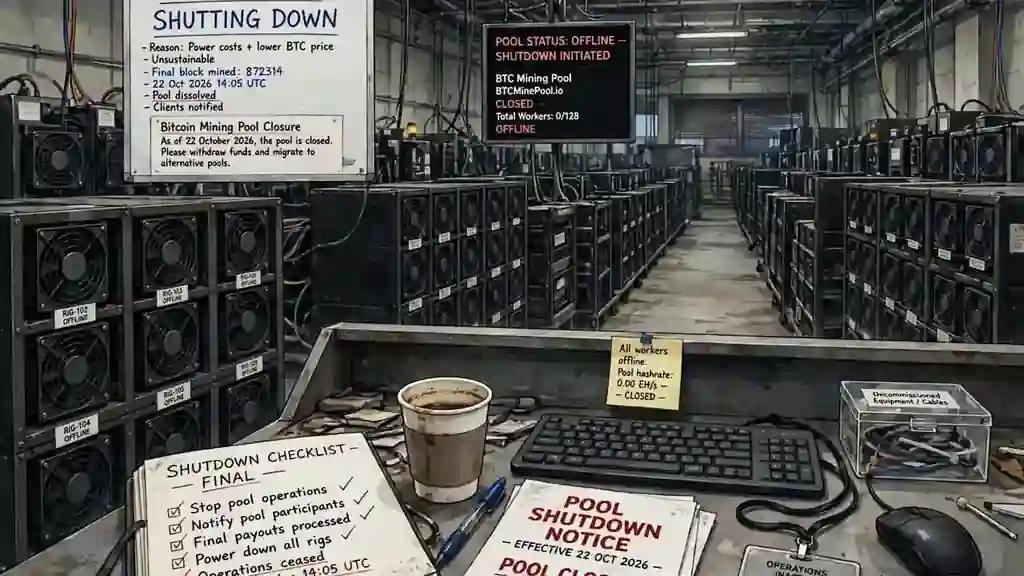
The other side: Binance Pool calls it quits
Not every miner is celebrating. Binance, the world’s largest crypto exchange, announced it will shut down its Bitcoin mining pool and related services on November 10, giving miners about four weeks to move their computing power elsewhere.
The numbers explain why. Binance Pool’s computing power has fallen about 65% since December, from 26 exahashes per second to roughly 9.2 exahashes per second, less than 1% of the Bitcoin network. The pool once handled 2.3% of all Bitcoin mining. Its slow fade shows how hard the business has been for operators without cheap power or the newest machines.
The closure is a clear sign of consolidation. The weak are leaving, and the strong are getting bigger. For Bitcoin’s long-term security, that is not necessarily bad: hashrate is still near record levels, and the network keeps producing blocks on schedule.
It is also worth noting that Binance’s own finances remain strong elsewhere. The exchange’s latest proof of reserves showed it holding 691,000 Bitcoin for users, so the pool shutdown looks like a business decision, not a sign of trouble.
What the recovery means for investors
History suggests that miner recoveries and Bitcoin price recoveries often feed each other. When prices rise, miners earn more and can afford to hold coins instead of selling, which reduces selling pressure and helps prices further. When prices fall, the reverse happens in a painful spiral.
That loop may now be turning positive. Large holders have already been buying the dip as Bitcoin slid from its $87,000 peak, and fresh demand could arrive from new markets too: Thailand opened the door to Bitcoin ETFs starting October 16, adding another source of institutional-style buying.
But investors should stay realistic. CryptoQuant’s Ki Young Ju was careful to say that falling production costs at MARA suggest improved margins, not guaranteed company-wide profitability. Miners still carry debt, their machines age quickly, and difficulty keeps rising.
The honest summary: Bitcoin mining is healing, not healed. The hashrate rebound, falling costs, and smarter energy plays all point in the right direction. If Bitcoin’s price holds above $80,000 and demand keeps growing, miners could enter 2027 in their strongest shape in years. If it doesn’t, the next difficulty increase will separate the survivors from the rest all over again.
Sources
- The Market Periodical — Bitcoin Mining Cost Falls to $59,774 at MARA, Says CryptoQuant
- CoinDesk — Bitcoin mining pool once handling 2.3% of network shuts after hashrate falls 65%
- Morningstar — Canaan Inc. Provides September 2026 Bitcoin Production and Mining Operation Updates
- HTX Insights — Pressure from Bitcoin Miners on Sellers Has Significantly Decreased
React to this story


2 Comments