Key Points
Key Points
- The Wall fell on 9 Nov 1989 after a bungled announcement sent tens of thousands to the checkpoints
- Peaceful Monday demonstrations and candlelit marches defeated a police state
- 2026 marked 65 years since construction: 30 m installation at the Brandenburg Gate, Aug 13-16
- Berlin's 'Freedom Week' gathered 200 dissidents from 60 countries for the 36th anniversary
- The AfD is weaponising East German nostalgia - record 32% in the former East
- Over 100 people died trying to escape during the Wall's 28+ years
- November 9th is also the anniversary of the 1938 Reichspogromnacht - memory cuts both ways
On This Page
- Subscribe to CAAW News
- In this article
- The night it fell: what actually happened on 9 November 1989
- How the Wall went up: “No one has any intention to build a wall”
- Lesson 1: Peaceful people power beat a police state
- Lesson 2: History sometimes turns on an accident
- Lesson 3: Memory is a choice — and Germany keeps choosing it
- Lesson 4: The past can be weaponised
- Lesson 5: What 2026’s commemorations tell us
- Lesson 6: The walls of today look different
- Lesson 7: Anniversaries can hide as much as they reveal
- Frequently asked questions
- When did the Berlin Wall fall?
- How long did the Berlin Wall stand?
- Why was 2026 significant for Berlin Wall commemorations?
- What is East German nostalgia (Ostalgie) and why does it matter now?
- Where can I see the Berlin Wall today?
- What is the biggest lesson of 1989?
- Final thoughts
- React to this story
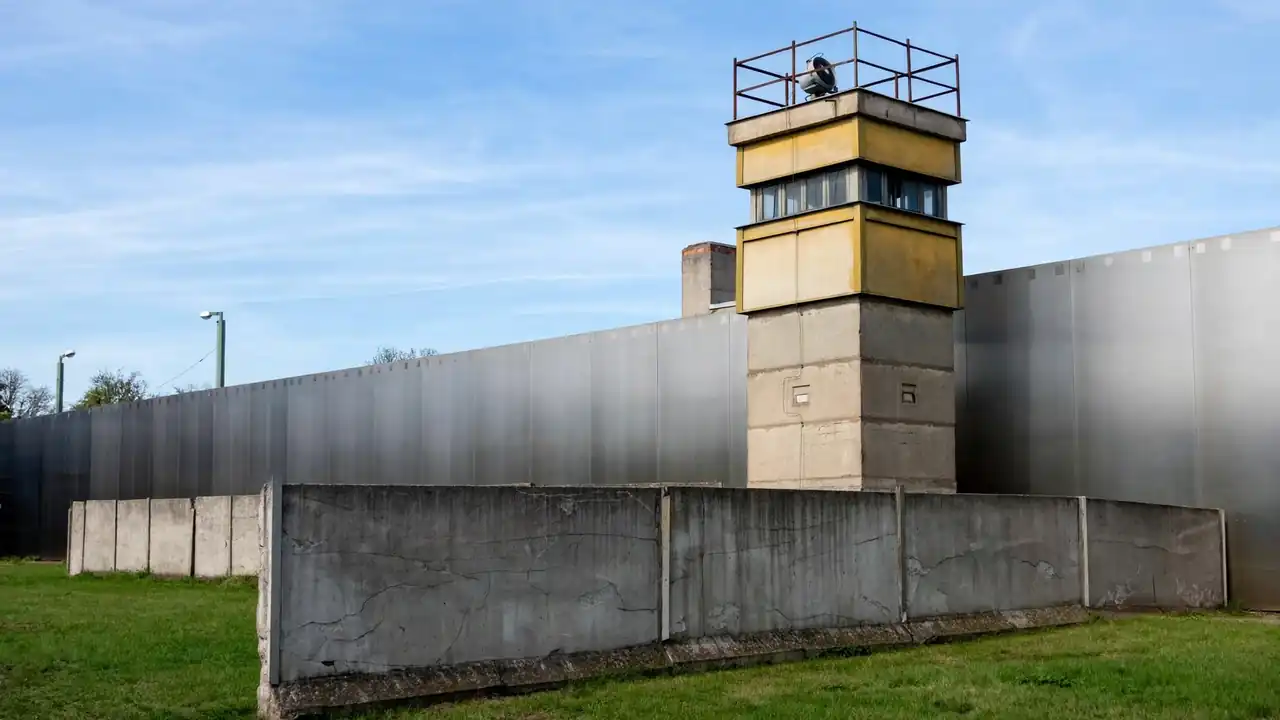
I’ve stood at the Berlin Wall Memorial on Bernauer Strasse, and I’ll tell you something the history books don’t: it’s quieter than you expect. A strip of green grass where the “death strip” ran, a watchtower, steel crosses for the people who died trying to cross. Tourists take photos and move on. But 37 years after the Wall fell — on 9 November 1989 — the lessons of that night are louder than ever, and some of them are uncomfortable.
I wrote this article because 2026 has been a year of remembering. Berlin marked 65 years since the Wall’s construction in August, commemorated the 36th anniversary of its fall with a brand-new “Freedom Week”, and watched a political party trade in East German nostalgia win 32% of the vote in the former East. What 1989 teaches us isn’t just history — it’s a manual for right now. Here are the lessons, the facts, and the things we’re still getting wrong.
Why trust this? I built this article from 2026 reporting I could verify: Berlin’s official 65th-anniversary programme (Kulturprojekte Berlin and the Stiftung Berliner Mauer), the Munich Eye’s coverage of the 36th-anniversary commemorations, the Gulf Times on East German nostalgia and the AfD, the Berlin Spectator on Governing Mayor Kai Wegner’s August 2026 address, and historian analysis from Washington University. Every claim is sourced. Every lesson is earned.
In this article
- The night it fell: what actually happened on 9 November 1989
- How the Wall went up: “No one has any intention to build a wall”
- Lesson 1: Peaceful people power beat a police state
- Lesson 2: History sometimes turns on an accident
- Lesson 3: Memory is a choice — and Germany keeps choosing it
- Lesson 4: The past can be weaponised
- Lesson 5: What 2026’s commemorations tell us
- Lesson 6: The walls of today look different
- Lesson 7: Anniversaries can hide as much as they reveal
The night it fell: what actually happened on 9 November 1989
Here’s the thing most people get wrong: nobody planned for the Wall to fall on 9 November 1989. East Germany’s government, the GDR, was under enormous pressure from mass demonstrations throughout the autumn of 1989 — citizens demanding political reform and personal freedoms. To ease the pressure, the government decided to relax travel restrictions. At a press conference that evening, spokesman Günter Schabowski announced that all GDR citizens could cross the border — effective immediately, or so it sounded. Tens of thousands of East Berliners streamed to the checkpoints. The border guards, overwhelmed and without clear orders, eventually opened the gates. People climbed the Wall. Strangers wept on each other’s shoulders. Within a year, German reunification was formally completed — the peaceful revolution had done what decades of confrontation could not (The Munich Eye).
How the Wall went up: “No one has any intention to build a wall”
To understand the fall, you have to feel the weight of the construction. On 15 June 1961, East German leader Walter Ulbricht told an international press conference: “No one has any intention to build a wall.” Barely two months later, in the early hours of 13 August 1961, the SED regime began enclosing West Berlin with barbed wire and barricades. The Wall cut through the city for more than 28 years — eventually fortified with watchtowers, patrols, and guard dogs — separating families, friends, and neighbours. More than 100 people died trying to escape to the West. Berlin’s Governing Mayor Kai Wegner, marking the 65th anniversary of the construction on 13 August 2026, called it “one of the darkest days in the history of our city” — a day that “tore families apart, separated friends, destroyed life plans, and locked millions of people inside the SED dictatorship” (The Berlin Spectator). That same ceremony remembered Peter Fechter, the teenage bricklayer shot on 17 August 1962 and left to bleed to death at the Wall — the 64th anniversary of his death fell on the same day.
Lesson 1: Peaceful people power beat a police state
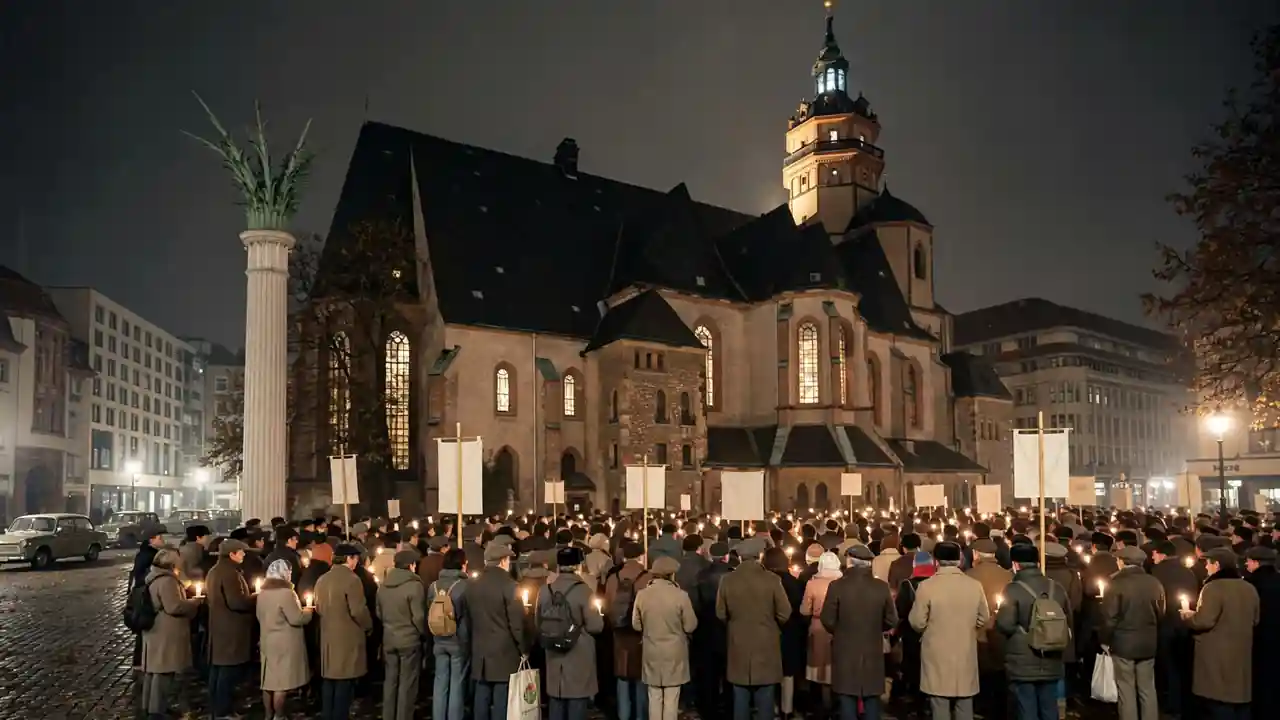
My first lesson is the most important, and the one 2026 keeps underlining. The Wall wasn’t brought down by armies or sanctions. It was brought down by ordinary people standing in the streets — the Monday demonstrations in Leipzig, the candlelit marches, the crowds at the checkpoints who refused to be afraid. The 2025 “Freedom Week” (the 36th anniversary) was built around exactly this: eyewitnesses, activists, and artists across 130+ events at 80 venues, with a World Liberty Congress bringing together 200 dissidents from around 60 countries living under authoritarian regimes (The Munich Eye). The message Berlin keeps sending is that freedom isn’t inherited — it’s practised. Germany’s parliamentary president Julia Klöckner said in 2026 that “the Wall left its mark on Germany, influencing our paths to this day.” Civic courage, repeated weekly for months, is what moved a concrete wall.
Lesson 2: History sometimes turns on an accident
I find this both thrilling and terrifying. Schabowski’s announcement was bungled — he hadn’t been fully briefed, and his improvised answer suggested the borders were open immediately. The crowds acted on the misunderstanding; the guards improvised; the Wall opened. If he’d read the statement correctly, or if a commander had ordered the guards to hold the line that night, history might have taken a different road. The lesson? Systems that look permanent are often one misread memo away from collapse — and one act of human decency away from peace. The guards who opened the gates chose not to shoot. That choice mattered as much as any policy. If you’re interested in how Europe’s politics look today, Brussels’ €1.76 trillion budget fight shows how the continent’s divisions have moved — but not vanished.
Lesson 3: Memory is a choice — and Germany keeps choosing it
Walk through Berlin in 2026 and memory is everywhere by design. The Berlin Wall Memorial at Bernauer Strasse, museums, exhibitions — institutions that “bear witness to the courage and determination of individuals who strived for change, often at great personal risk.” For the 65th anniversary of the construction (13–16 August 2026), Kulturprojekte Berlin and the Stiftung Berliner Mauer ran a citywide programme: a 30-metre installation at the Brandenburg Gate that appears transparent or impenetrable depending on where you stand — recalling the Wall’s physical presence while insisting it could not divide the city forever — plus the open-air exhibition “Views of the Wall: Berlin 1961–1990” of everyday life in the divided city (official press release). Germany treats remembrance as maintenance work on democracy. The uncomfortable question 1989 asks the rest of us: what are we choosing to remember — and what are we letting fade?
Lesson 4: The past can be weaponised
Here’s the lesson that stings. In 2026, there are warnings of nostalgia for East Germany being exploited politically. The anti-immigration AfD — which scored a record 32% of the vote in the former East at the last federal election — has leaned into “Ossi” symbolism: in Saxony-Anhalt, lead candidate Ulrich Siegmund sang the old East German national anthem at a campaign event and rides a vintage East German Simson motor scooter; supporters wave the GDR flag and hammer-and-compass emblem (Gulf Times). Polls suggested the AfD could form its first-ever state government in Saxony-Anhalt. Despite a narrowing income gap with the west, many eastern Germans still feel disadvantaged and sidelined — and that resentment is being harvested. 1989 teaches us that freedom won. 2026 warns us that its memory can be rented out to the highest bidder. The Wall fell; the grievances didn’t.
Lesson 5: What 2026’s commemorations tell us
I watched how Berlin chose to remember this year, and it told me a lot. The 65th-anniversary programme explicitly linked the history to the present: remembering the victims, explaining the history, and asking about “border regimes, freedom and democratic values, also in our own present times.” The Brandenburg Gate installation plays with transparency and perspective — from one angle permeable, from another impenetrable — deliberately provoking thoughts about the walls and borders that exist today. That’s the mature version of remembrance: not just “look what happened,” but “look what’s happening.” The 2025 Freedom Week’s World Liberty Congress did the same, giving the stage to living dissidents from 60 countries. Berlin isn’t running a museum. It’s running a warning system.
Lesson 6: The walls of today look different
Let me ask you something uncomfortable: where are today’s walls? They aren’t always concrete. They’re border fences, visa regimes, firewalls, algorithmic bubbles, and the quiet walls between “us” and “them” in every polarised society. The 2026 installation at the Brandenburg Gate makes this point physically — you see through it or you don’t, depending on where you stand. The East Germans of 1989 could see the other side of their wall from their windows; the cruelty was its visibility. Today’s walls are often invisible to the people they protect and brutally visible to the people they exclude. 1989’s lesson isn’t “walls fall.” It’s “walls are a choice” — and we keep choosing new ones. On how technology is reshaping these boundaries, the EU’s AI Act enforcement in 2026 is worth your time.

Lesson 7: Anniversaries can hide as much as they reveal
My last lesson is the most honest one, and it comes from historians. As Washington University’s history department notes, fixating on the flag-waving crowds of 9 November risks forgetting the before and after — the protesters of 4 November, the power relationships that followed, and the temptation to read the Wall’s fall as the “inevitable victory” of one system over another. November 9th is also the anniversary of the Reichspogromnacht (1938) and Hitler’s failed 1923 putsch — a date heavy with German history in every direction. Commemoration is necessary, but it can also be comfortable. The real work of 1989 isn’t the celebration. It’s the unglamorous, everyday defence of the freedoms that night made possible — in parliaments, in newsrooms, in classrooms, and at the ballot box.

The bottom line: 37 years ago, a bungled press conference and a crowd that refused to go home ended the Cold War’s most famous symbol. 2026 shows us the victory wasn’t permanent — it’s a lease, and the rent is eternal vigilance. That’s not pessimism. That’s what the people of 1989 were trying to tell us.
Frequently asked questions
When did the Berlin Wall fall?
9 November 1989. After the GDR announced relaxed travel rules, tens of thousands of East Berliners gathered at checkpoints and the overwhelmed border guards opened the gates. German reunification was formally completed less than a year later.
How long did the Berlin Wall stand?
More than 28 years — from 13 August 1961, when East Germany began sealing off West Berlin with barbed wire, until 9 November 1989. Over 100 people died trying to escape to the West.
Why was 2026 significant for Berlin Wall commemorations?
2026 marked 65 years since the Wall’s construction (13 August 1961), with a citywide programme from 13–16 August including a 30-metre installation at the Brandenburg Gate. It also followed the 36th anniversary of the fall, marked by Berlin’s new “Freedom Week” with 130+ events and a World Liberty Congress of 200 dissidents from 60 countries.
What is East German nostalgia (Ostalgie) and why does it matter now?
“Ostalgie” is nostalgia for aspects of East German life. In 2026, politicians — notably the AfD in eastern Germany — have used GDR symbols (the anthem, the flag, vintage scooters) to channel lingering resentment among eastern Germans who feel disadvantaged despite a narrowing income gap. The AfD won a record 32% in the former East at the last federal election.
Where can I see the Berlin Wall today?
The Berlin Wall Memorial at Bernauer Strasse (preserved wall, watchtower, documentation centre), the East Side Gallery (the longest surviving stretch, painted by artists), and Checkpoint Charlie’s museum are the main sites. The 100-mile Berlin Wall Trail traces the former border around West Berlin.
What is the biggest lesson of 1989?
That peaceful, persistent civic courage can defeat a seemingly permanent system — but that freedom’s victory is a lease, not a deed. It has to be renewed by every generation, in parliaments, newsrooms, classrooms, and at the ballot box.
Final thoughts
Standing at Bernauer Strasse, what struck me wasn’t the Wall. It was the grass — ordinary, green, slightly patchy grass growing where people once died trying to run. That’s what 37 years does: it turns a death strip into a park. But parks need gardeners.
The people of 1989 gave us the easy part — the dramatic night, the falling concrete. They left us the hard part: keeping it fallen. Congratulations on reading this far — now tell me, which lesson hit you hardest? Leave a comment. I read every one, and on this topic, I especially want to hear from you.
Published: 24 October 2026 · Updated: 24 October 2026
React to this story