Key Points
Key Points
- Paraguay's Senate voted to remove President Santiago Peña on Friday after the collapse of Ueno Bank locked nearly three million people out of their savings. Prosecutors then placed him under house arrest, and Vice President Pedro Alliana was sworn in to serve until August 2028.
On This Page
What happened in Paraguay on Friday?
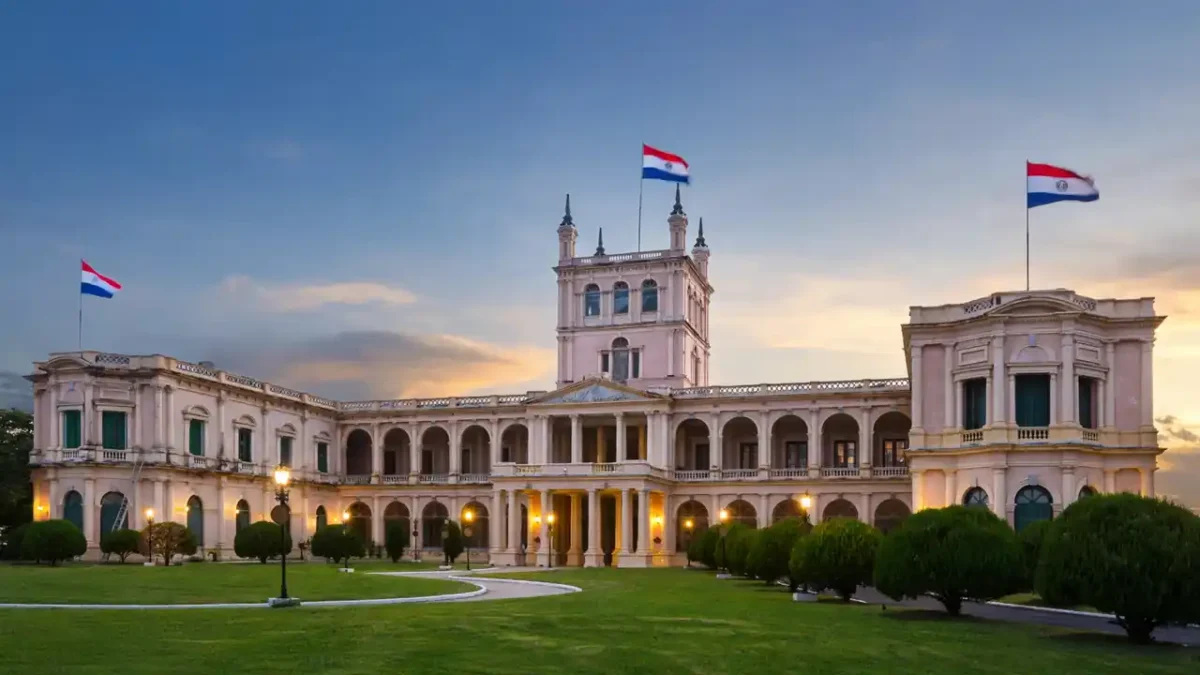
Paraguay lost its president in a single day. On Friday, 6 November 2026, the Senate voted to remove President Santiago Peña from office over the collapse of Ueno Bank, and prosecutors placed him under house arrest hours later. Vice President Pedro Alliana was sworn in as the new president the same day — the fastest fall of a sitting president in the country’s recent history, just three days after regulators seized the bank.
I will explain the vote, the bank, the charges, and what happens next — in plain words, with the numbers checked against several major news outlets.
Why you can trust this post: the vote count, the house arrest order and the bank figures come from the Associated Press, CNN, the South China Morning Post and Geo.tv, all reporting the same core facts.
In this post
The vote in plain numbers; how a bank brought down a president; the charges against Peña; why impeachment, not resignation; who runs Paraguay now; what happens next; your questions; my final thoughts.
The vote in plain numbers
The Senate gave a clear verdict. All 44 senators present voted to remove Peña for misconduct, with one senator absent out of 45. Senate President Basilio Núñez declared him “guilty of poor performance in his duties.” Lawmakers from Peña’s own party backed his removal, and Peña did not attend the trial, despite earlier pledging to defend himself.
Peña is 47. He had offered his resignation on Thursday, but Congress rejected it. Lawmakers pressed ahead with impeachment instead, and that choice matters: by impeaching him rather than accepting his resignation, they stripped him of the lifetime Senate seat the Constitution grants to elected former presidents — and the immunity that comes with it.
How a bank brought down a president
The crisis began with a bank most people outside Paraguay had never heard of. Ueno started as a small fintech and grew fast with a digital-first model, attracting customers who had never had a bank account before. It became one of Paraguay’s largest banks, handling state pensions and the accounts of several state bodies. At the end it served about 2.9 million customers in a country of about 6.1 million people — nearly half the population.
On Tuesday, 3 November, Paraguay’s Central Bank took control of Ueno, saying its solvency ratio had fallen below 50% of the required minimum. The intervention froze accounts and bank cards, and around three million people suddenly could not reach their savings. Protests broke out across the country, and the crisis became Paraguay’s worst political crisis in more than a decade.
Lawmakers accused Peña of steering hundreds of millions of dollars in public funds into Ueno while regulators looked away from risky insider lending. The charges also cite his stake in Ueno’s holding company, sold under pressure last year, and his appointment of former Ueno executive Carlos Carvallo to run the Central Bank that regulated the bank. Peña has denied any wrongdoing, and he apologised to the nation on Thursday.
The charges against Peña
Prosecutors ordered Peña held at home until he appears before the Attorney General’s Economic Crimes and Anti-Corruption Unit, due on Saturday morning. Attorney General Emiliano Rolón Fernández has opened three criminal cases: on the bank’s supervision, the placement of public funds in it, and the actions of state officials. The charge behind the house arrest order is breach of trust, carrying up to five years in prison, or up to ten in serious cases.
Prosecutors have also charged 27 people, including Ueno’s controlling shareholder Miguel Vázquez, with breach of trust and attempted fraud. Six bank directors are in pretrial detention, and an arrest warrant was issued on Friday for Carvallo, the former central bank chief. The exact charges against Peña are still being set, but they could include influence peddling.
One figure stands out: reports cite a $355 million public pension fund (the IPS fund) among the money under investigation. Prosecutors will have to prove that in court, and Peña’s side will dispute it. For now, it is an allegation under investigation, not a proven fact.
Why impeachment, not resignation
Peña tried to leave on his own terms, announcing his resignation on Thursday after the bank was shut down. Congress refused to accept it. Lawmakers wanted the impeachment vote because it does something a resignation cannot: it takes away the lifetime Senate seat and the immunity that comes with it.
Peña is only the second Paraguayan president removed by impeachment since the country returned to democracy in 1989. The first was Fernando Lugo, removed in June 2012. That rarity is why the vote drew so much attention across South America.
Elsewhere this week, voters delivered verdicts of their own: the Democrats swept Congress in the 2026 midterms, while in Israel no bloc won enough seats to form a government. But in Paraguay, a banking collapse — not an election — ended a presidency.
Who runs Paraguay now
Pedro Alliana, the vice president, was sworn in as president on Friday, hours after the Senate vote. He will serve out the rest of Peña’s term, which ends in August 2028 — nearly two years under a leader who was not elected to the top job. His first task is the hardest: calming a country where millions cannot access their money, and where trust in banks and politics has taken a heavy blow.
The immediate question is what happens to Ueno’s customers. The Central Bank now controls the bank, but the government has not yet said when depositors will get their money back. For families who depended on those accounts for pensions and daily spending, that answer matters more than anything the Senate decided.
What happens next
Three things to watch. First, Peña’s appearance before prosecutors on Saturday, and the formal charges that follow. Second, the three criminal cases, which will test whether the money trail can be proved in court. Third, the fate of Ueno’s depositors, and whether the government can restore access to their savings without a wider banking panic. The crisis moved fast — a bank seized on Tuesday, a president under house arrest on Friday. The fallout will move much more slowly.
Frequently asked questions
Why was Santiago Peña impeached? For misconduct in office over the Ueno Bank collapse. Lawmakers accused him of steering public funds into the bank, overlooking risky lending, and appointing a former Ueno executive to run the Central Bank. All 44 senators present voted to remove him.
What is Ueno Bank? A digital-first bank that grew from a small fintech into one of Paraguay’s largest lenders, serving about 2.9 million customers. The Central Bank seized it on 3 November 2026 after its solvency fell below half the required minimum.
What happens to customers’ money? Still unclear. The Central Bank now controls Ueno, but the government has not yet said when depositors will get their savings back. Around three million people are affected.
Who is Pedro Alliana? Paraguay’s vice president, sworn in as president on Friday after Peña’s removal. He serves the rest of the term, which ends in August 2028.
Will Peña go to prison? That depends on the criminal cases. He is under house arrest on suspicion of breach of trust, carrying up to five years in prison, or up to ten in serious cases. He denies wrongdoing, and no court has found him guilty.
Final thoughts
A bank failed on Tuesday, and by Friday a president was under house arrest. Nearly half of Paraguay’s people banked with Ueno, and many had never had a bank account before. Their trust was the bank’s real asset, and it is gone. Peña’s fate will now be decided in court — but the harder job belongs to his successor: giving millions of people their money back, and a reason to trust a bank again.
React to this story