Key Points
Key Points
- Twenty minutes a day is enough to begin yoga, because frequency of practice predicts benefit better than session length.
- A complete beginner routine: three minutes of breathing, a gentle warm-up, standing and seated poses, floor work and two minutes of rest.
- Flexibility is a result of yoga, not a requirement: bent knees, cushions and chair support make every pose accessible.
- A gentle stretch is expected; sharp pain, pinching or numbness means backing off or skipping the pose.
- On hard days, five minutes counts: the habit of showing up matters more than a perfect session.
- Morning practice energises and evening practice releases tension; the time you will keep is the best time.
On This Page
- Subscribe to CAAW News
- Why Twenty Minutes Is Enough to Start
- What You Actually Need, and What You Do Not
- Your Complete Twenty-Minute Routine
- When a Pose Feels Wrong, Change the Pose
- What Changes, and When Should You Expect It?
- Morning or Evening, Studio or Home?
- How to Keep Going After Week Two
- Your First Two Weeks, Day by Day
- Frequently Asked Questions
- Do I need to be flexible to start yoga?
- Is twenty minutes of yoga a day really enough?
- What type of yoga should a beginner choose?
- When is the best time to practise?
- Can yoga help with stress and sleep?
- What if I cannot do a pose at all?
- Do I need a studio, or can I learn at home?
- How soon will I notice a difference?
- Final Thoughts
- React to this story
I used to believe yoga was not for people like me. I was not flexible. I did not own special clothes. I could not sit still for an hour without thinking about my emails. So I never started, and every year I told myself the same story. Then a friend challenged me to try twenty minutes a day for two weeks, no studio, no fancy poses, just a mat in my living room. I am not telling you this as a miracle story. I am telling you because those two weeks changed how I sleep, how my back feels at my desk, and how I handle stress, and I want you to have a fair, honest version of that start.
Here is my promise for this guide. Twenty minutes a day is enough to begin, and it is enough to help, if you practise most days and keep the routine simple. By the end you will have a complete twenty-minute routine you can do tomorrow morning, clear guidance on what to do when a pose feels wrong, and a realistic idea of what changes in two weeks, four weeks, and three months. This guide is for you if you are a complete beginner, short on time, and a little sceptical, just as I was.
Trust nudge: I am not a yoga teacher or a doctor. I have built this guide from published beginner guidance and small published studies, and I name them honestly, including their limits. If you have an injury, a heart condition, high blood pressure, or you are pregnant, check with a health professional before you start.
In this guide, you will learn: why twenty minutes works when an hour feels impossible; what to wear and what you actually need; the full twenty-minute routine, minute by minute; how to modify every hard pose; and how to keep the habit alive after week two.
Why Twenty Minutes Is Enough to Start
I failed at yoga for years because I set the bar at an hour. An hour felt like a project, so I kept postponing it until a calmer week that never came. Twenty minutes felt different. Twenty minutes fits before breakfast, after work, or while dinner cooks. I could say yes to twenty minutes on a bad day, and saying yes on bad days is how a habit survives.
Research supports that instinct, with an important honesty note. Experts emphasise that consistency matters more than duration for beginners, and short daily routines are easier to maintain than longer, less frequent sessions. A small study found that a twenty-minute yoga session improved participants’ speed and accuracy on tests of working memory and focus, and they performed better than people who had done vigorous aerobic exercise for the same time. That study was small, and one study never proves everything, but it matches what beginners report again and again. A short, regular practice beats a heroic practice you quit.
A larger study of more than one thousand yoga students found something even more useful for us. It was the frequency of home practice that best predicted better mindfulness, wellbeing, sleep, and fatigue, more than the number of years practised or the number of studio classes attended. In plain words, doing a little often beats doing a lot rarely. That is the whole idea behind this guide.
What You Actually Need, and What You Do Not
I started with a mat, a cushion, and clothes I could already move in. You do not need special yoga clothes, and you certainly do not need to be flexible first. Flexibility is a result of yoga practice, not a requirement for it. Waiting until you are flexible to start yoga is like waiting until you are fit to start exercise. It keeps you stuck.
Choose a quiet corner with enough room to lie down and stretch your arms wide. A mat helps your feet grip, but a rug or a towel on a non-slip floor works for your first weeks. Keep a cushion or folded blanket nearby for sitting and for supporting your knees. Keep water nearby. Turn your phone face down, not because yoga demands purity, but because a buzzing phone breaks the calm you are trying to build.
Wear clothes that stretch and do not distract you. Bare feet usually grip best, and socks on a smooth floor can slip, so try bare feet first. Eat lightly before you practise. A full meal makes forward bends uncomfortable, and an empty, shaky stomach makes balance harder. A small snack an hour before is usually right for me.
Your Complete Twenty-Minute Routine
I practise this routine in the morning, because it sets a calm tone for my day, but evening practice works just as well if it helps you release tension and sleep. Pick the time you will actually keep, and keep it for two weeks before you judge it.
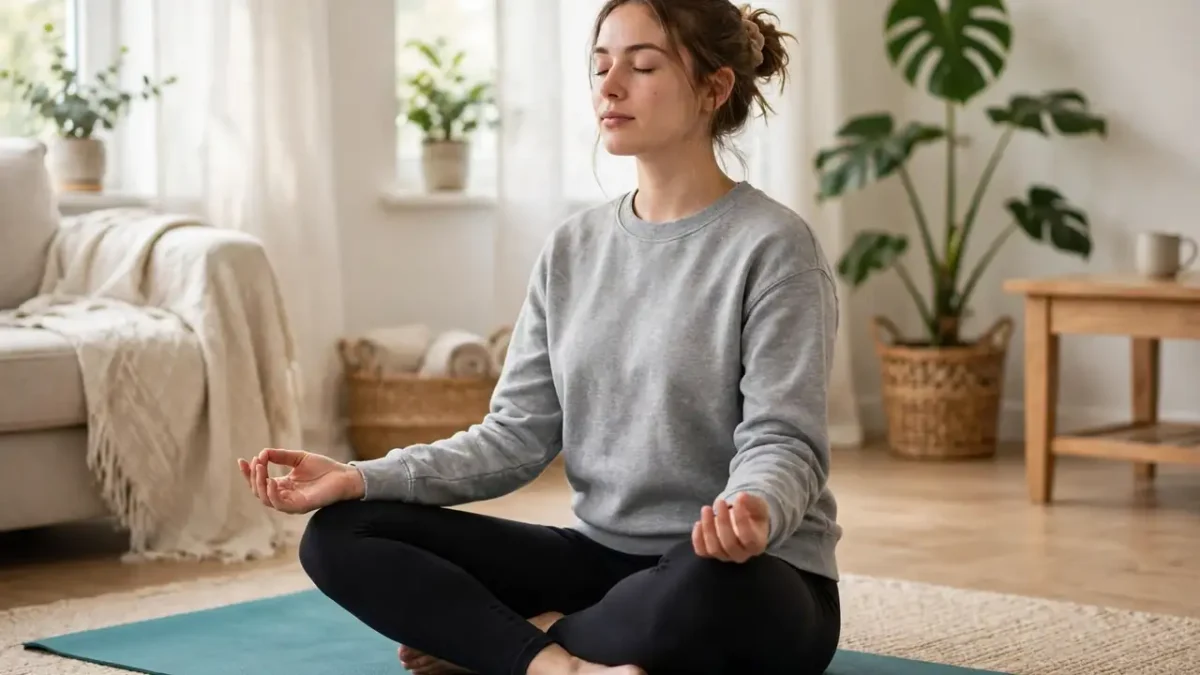
Minutes zero to three: breathing. Sit comfortably, tall but not stiff, with your hands on your knees. Breathe in slowly through your nose for a count of four, and out slowly for a count of four. If your mind wanders, and it will, bring it back to the breath without scolding yourself. I spent my first week thinking about groceries during this part, and it still helped. You are training attention, not achieving perfection.
Then try alternate nostril breathing for a minute if it feels comfortable. Close one nostril gently with a finger, breathe in through the other, switch, and breathe out. If it feels fiddly or uncomfortable, skip it and return to simple slow breathing. Yoga should never feel like a test you can fail.
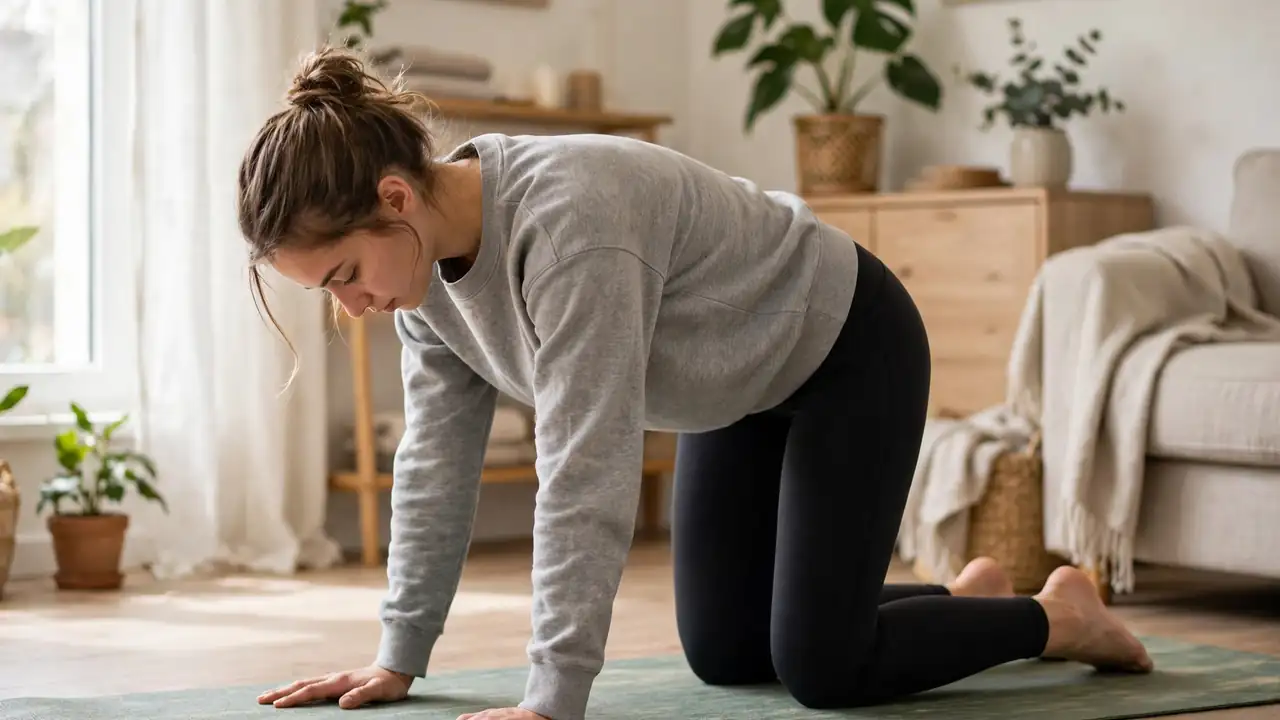
Minutes three to six: gentle warm-up. Roll your neck slowly, a few circles each way, keeping the movement small and pain-free. Roll your shoulders forward and back. Then move into cat-cow on hands and knees. Breathe in as you let your belly drop and lift your head, breathe out as you round your back and tuck your chin. Move slowly, and let your breath lead the movement. This is the part where my stiff morning back starts to loosen, and I have learned not to rush it.
Minutes six to fourteen: standing and seated poses. Start with mountain pose. Stand tall, feet hip-width apart, arms relaxed, shoulders down. It looks too simple to count, and that is the point. Stand and notice your weight in your feet, your breath, and your posture. Good posture is a practice, not a pose you strike once.
Move into a gentle warrior one. Step one foot back, bend your front knee, keep your back heel grounded if you can, and raise your arms overhead or rest your hands on your hips. Hold for four or five breaths, then swap sides. If your balance wobbles, hold a chair or a wall. Using support is not cheating. It is smart practice.
Next, a standing forward fold with bent knees. Stand, bend your knees generously, and fold forward, letting your arms hang. Bent knees matter here, because straight legs pull hard on tight hamstrings and low backs. Hang for four or five breaths, then roll up slowly, one vertebra at a time, with your knees still soft.
Then sit for a seated twist. Sit tall with both feet flat, or cross-legged on a cushion if that is comfortable. Place one hand on the opposite knee and the other behind you, and twist gently from your waist. Hold for four breaths, breathe normally, and swap sides. Twists feel good after a day at a desk, and they teach you to move your spine in more than one direction.
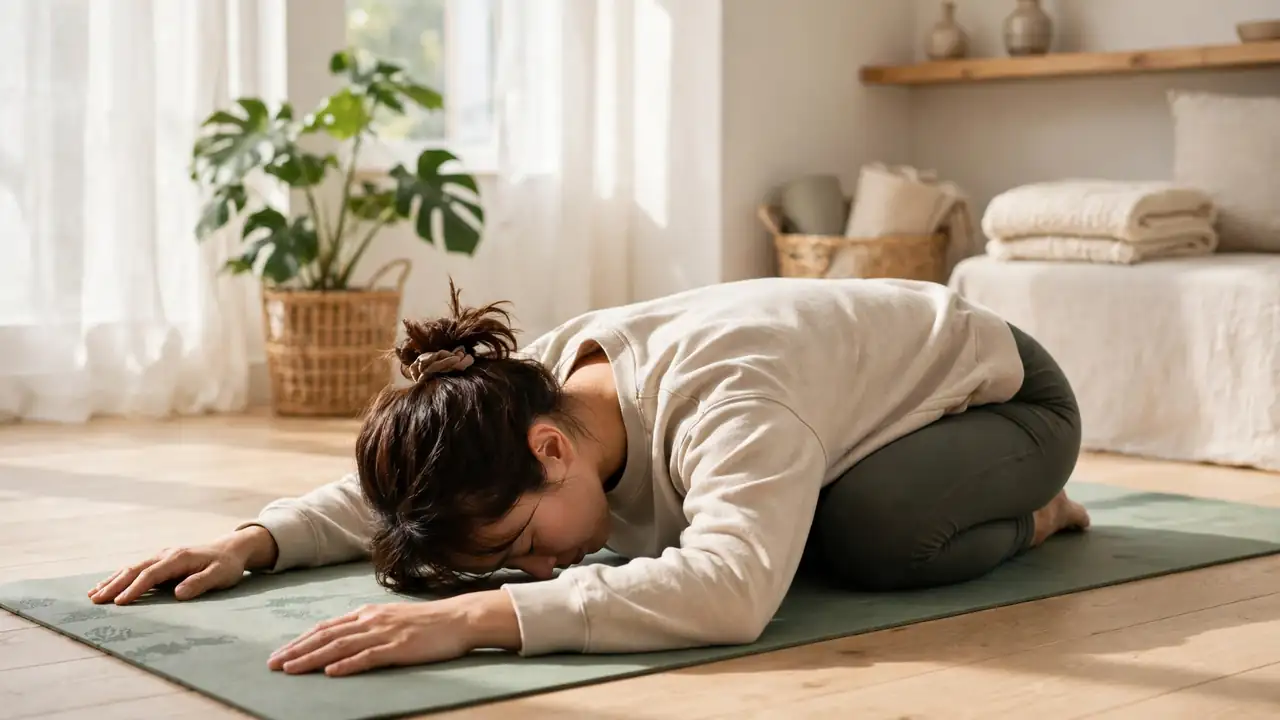
Finish the active section with child’s pose. Kneel, sit back toward your heels, stretch your arms forward, and rest your forehead on the mat or a cushion. Stay for five slow breaths. I used to skip this pose because it felt like doing nothing. Now I know it is the pose that teaches your nervous system to settle, and it is often the one I need most.
Minutes fourteen to eighteen: floor work and stretching. Lie on your back for a gentle bridge. Bend your knees, feet flat, press through your heels, and lift your hips a comfortable amount. Hold for three breaths, lower slowly, and repeat twice. Then hug one knee to your chest, hold for four breaths, and swap sides. This is simple, quiet work, and it is where my lower back thanks me.
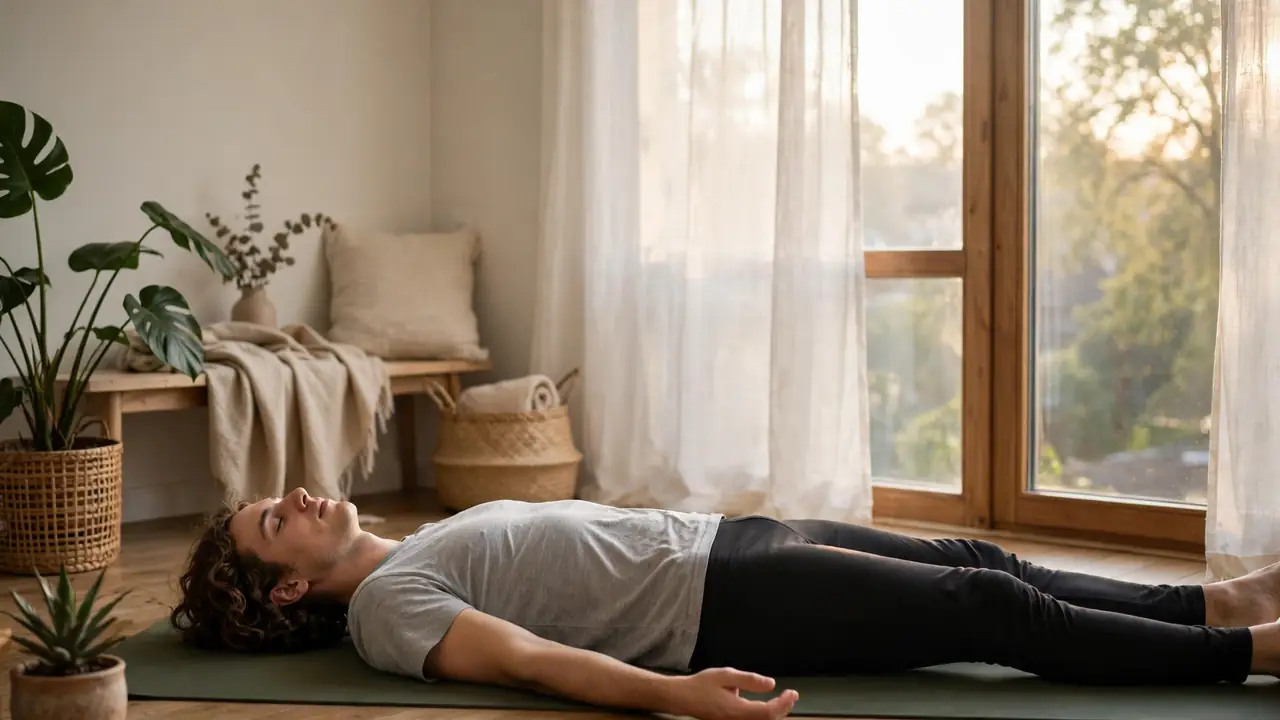
Minutes eighteen to twenty: rest. Lie flat, arms relaxed, eyes closed, and simply breathe. This final rest, called savasana, is not optional decoration. It is where your body absorbs the practice and your mind learns to be still for two whole minutes. Set a gentle timer so you do not watch the clock, and when it ends, roll to one side and sit up slowly.
When a Pose Feels Wrong, Change the Pose
I hurt my wrist once by forcing a pose my body was not ready for, and it taught me the rule I now live by. Pain is information, not a challenge. A gentle stretch is expected. A stretch that feels good, a little intense, and still lets you breathe normally is usually fine. Sharp pain, pinching, numbness, or pain that stays after you stop is your signal to back off, change the pose, or skip it entirely.
Almost every beginner pose has a kinder version. Bend your knees in forward folds. Use a chair for balance in standing poses. Put a cushion under your knees in child’s pose. Rest your hands on blocks, books, or your hips instead of forcing them to the floor. Shorten a hold instead of enduring it. Yoga teachers call these modifications, and experienced practitioners use them all the time. Modifications are not a beginner’s crutch. They are good yoga.
Skip inversions, deep backbends, and any pose that loads your neck until a qualified teacher shows you in person. Online videos are wonderful for a simple routine like this one, but they cannot see your form. If a pose keeps causing trouble, ask a local teacher for one session. One hour of personal guidance can save you months of guessing.
What Changes, and When Should You Expect It?
I want to be honest about timelines, because exaggerated promises are why many beginners quit. In the first two weeks, most beginners notice small things first. Your breathing feels slower during practice. Your shoulders sit a little lower. Your sleep may improve a little, and your morning stiffness may ease a little. These are small wins, and they are real wins.
By four weeks of near-daily practice, many beginners notice better flexibility in the poses they repeat, easier balance, and a calmer response to small stresses. You may catch yourself breathing slowly before you react to an annoying email, and that is not a small thing. It is the practice spilling into your life, which is exactly what yoga is for.
By three months, the changes feel more settled. Your routine feels like part of your day rather than a task. Your posture, your sleep, and your mood often feel steadier, though not perfect. Yoga does not remove stress from your life. It changes how your body and mind meet stress, and that change builds slowly, session by session.
Morning or Evening, Studio or Home?
I get asked this often, and my answer is boring in the best way. Do what fits your life. Morning practice energises you and sets a calm tone for the day. Evening practice releases tension and prepares you for rest. Both work, because what matters most is that you practise, not when you practise.
Home practice suits this twenty-minute routine perfectly. It costs nothing, it fits your schedule, and it removes the fear of looking silly in a room full of strangers. A studio class later, when you feel ready, adds community, personal correction, and new poses. Neither path is superior. Home practice builds the habit, and a class deepens it when you want more.
Do not compare your practice to videos of advanced practitioners. Social media yoga is often performance, not practice. A beginner doing a gentle twenty-minute routine with full attention is doing real yoga. A flexible person forcing an extreme pose while holding their breath is not.
How to Keep Going After Week Two
Week two is where most habits die, and mine nearly did. The novelty fades, life gets busy, and one missed day becomes three. Here is what saved my practice. First, I attached yoga to an existing habit. I practise right after I brush my teeth, so I never have to decide when to start. Decision is the enemy of habit.
Second, I lowered the bar on hard days. My rule is that five minutes counts. If I only do breathing and cat-cow, I still count the day, because the habit of showing up matters more than a perfect session. Most days, once I start, I finish the full twenty minutes anyway.
Third, I tracked simply. I put a tick on a paper calendar for every day I practised. Watching the chain of ticks grow felt better than any app badge, and breaking the chain felt like a small, honest nudge rather than a failure.
Fourth, I forgave missed days quickly. One missed day is a missed day, not a ruined habit. Two missed days is a signal to shrink the routine, not to quit. The people who keep a practice for years are not the people who never miss. They are the people who return gently after they miss.
My honest take: Twenty minutes will not make you a different person in a week. It will make you a slightly calmer, slightly looser, slightly steadier person, day after day, until one morning you notice the difference and wonder why you waited so long to start.
Your First Two Weeks, Day by Day
Days one to three are about learning the routine, not mastering it. Follow the sequence above, use every modification you need, and finish every session with the two-minute rest, even if the rest feels strange. Strange is normal at first.
Days four to seven are about rhythm. Practise at the same time each day, and notice which poses feel easier. Do not add new poses yet. Repetition is how your body learns, and adding variety too soon only adds confusion.
Days eight to fourteen are about noticing. Keep the same routine, and write one line after each session about how you feel. Sleep, stiffness, mood, or energy, just one line. At the end of two weeks, read those lines back. That is your evidence, and it is worth more than any promise in this guide.
Frequently Asked Questions
Do I need to be flexible to start yoga?
No. Flexibility is a result of yoga practice, not a requirement. Every pose in this guide works with bent knees, cushions, and chair support, and modifications make each pose accessible whatever your current range of motion.
Is twenty minutes of yoga a day really enough?
For a beginner, yes, as a starting practice. Research and expert guidance both point to frequency mattering more than duration, and short daily sessions are easier to maintain than long, rare ones. Twenty minutes daily is a strong foundation, and you can extend it later if you want to.
What type of yoga should a beginner choose?
Gentle Hatha or beginner yoga suits most newcomers, because the pace is slow and the poses are simple. For stress relief, slower, restorative styles are often better than vigorous hot yoga, which raises cortisol during practice even though many people find it enjoyable.
When is the best time to practise?
The time you will actually keep. Morning practice energises and calms the day ahead, while evening practice releases tension and aids sleep. Consistency matters more than the clock.
Can yoga help with stress and sleep?
Regular practice helps regulate the nervous system, supporting the calming rest-and-digest response and reducing overactivity of the stress response. Many beginners report better sleep and lower stress, though results vary, and yoga is not a replacement for medical care for anxiety, depression, or sleep disorders.
What if I cannot do a pose at all?
Skip it, modify it, or rest in child’s pose until the next pose begins. A practice that respects your body’s limits is a good practice. Forcing a pose through pain is not dedication, it is how injuries happen.
Do I need a studio, or can I learn at home?
You can start at home with a simple routine like this one. A studio class later adds community and personal correction, and one session with a qualified teacher is valuable if a pose keeps troubling you.
How soon will I notice a difference?
Small changes often appear within two weeks, such as easier breathing, less morning stiffness, and slightly better sleep. Steadier changes in flexibility, balance, and stress response usually build over four to twelve weeks of regular practice.
Final Thoughts
I started yoga to prove a sceptical friend wrong, and I stayed because it quietly made my days better. My back complains less at my desk. My sleep is steadier. My temper is slower to rise. None of that happened in a single dramatic session. It happened in twenty-minute pieces, morning after morning, until the pieces added up to something I could feel.
Your turn starts tomorrow, not someday. Roll out a mat, or a towel, or just clear a corner of floor. Breathe for three minutes. Move gently for fifteen. Rest for two. Then do it again the next day. I am cheering for you, and I would love to hear in the comments which part of the routine surprised you most.
Sources: guidance on twenty-minute daily practice and stress benefits is drawn from published expert guidance on a twenty-minute daily routine, reporting on whether twenty minutes a day improves health, and research reporting on a twenty-minute Hatha yoga session and focus. This article is general information only and is not medical advice.
React to this story